
Let’s be honest for a second. When you hear the phrase “import and export business,” what’s the first image that comes into your head?
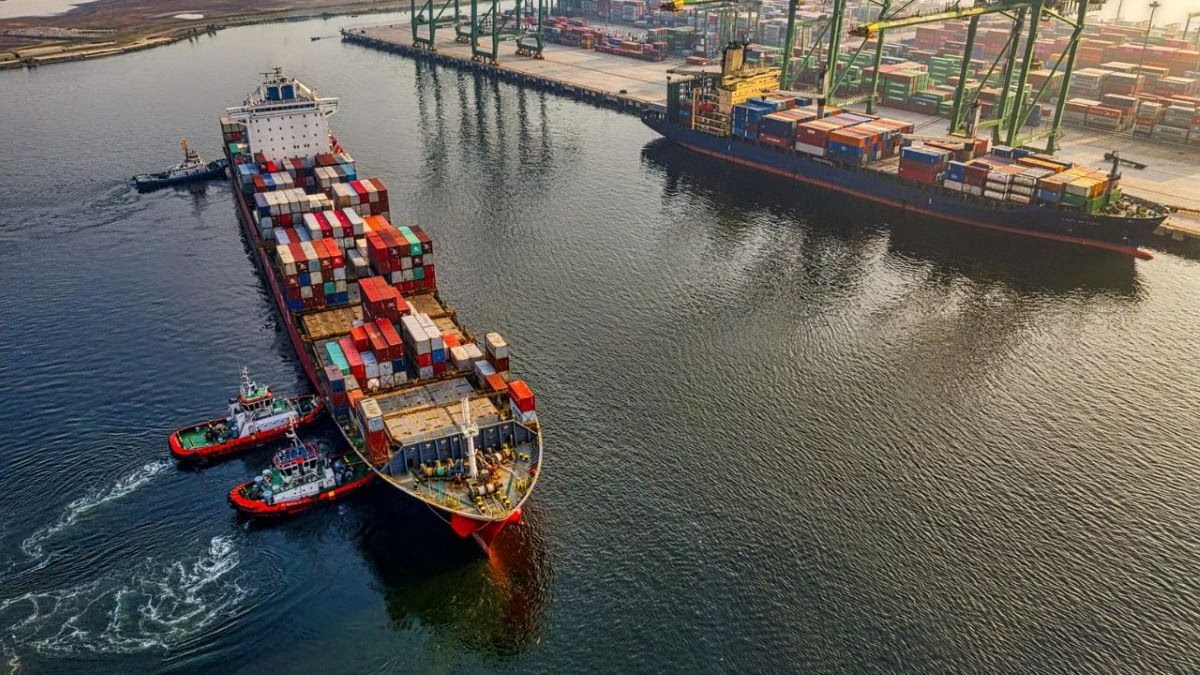
For years, whenever I thought about how to start import export business, I pictured massive, rusting cargo ships docking at a foggy port in Mumbai and Visakhapatnam and brain twisting export procedures.
I imagined serious looking men in expensive suits carrying leather briefcases, shouting into phones about “letters of credit” and “bill of lading.” It felt like an exclusive club a high share game played by billionaires and industrial tycoons where the average person didn’t stand a chance.
It felt complex. It felt risky. And frankly, it felt completely out of the league.
If you are reading this, you probably feel the same way. You might be Wondering Can a regular person really start selling Indian products to the world? Or is this just another dream?
I’m here to tell you loud and clear that the “exclusive club” mentality is a myth. It’s a relic of the past.
India is an absolute powerhouse right now. Supplying the world with everything from spicy turmeric and Basmati rice to high precision engineering parts and beautiful handicrafts. The world is hungry for what India make. And the best part? You don’t need to be a tycoon to feed that hunger.
Over the last decade, the landscape has shifted under our feet. Everything has gone digital. Government incentives have improved. B2B platforms have made connecting with a buyer in Germany as easy as chatting on WhatsApp. The barrier to entry has never been lower.
But I know that “accessible” doesn’t mean “easy.” You need a roadmap to how to export from India. You need to know where the potholes are before you drive your car into them.
So, forget the dry textbooks and the motivational fluff that tells you to “just believe in yourself.” Let’s get real.
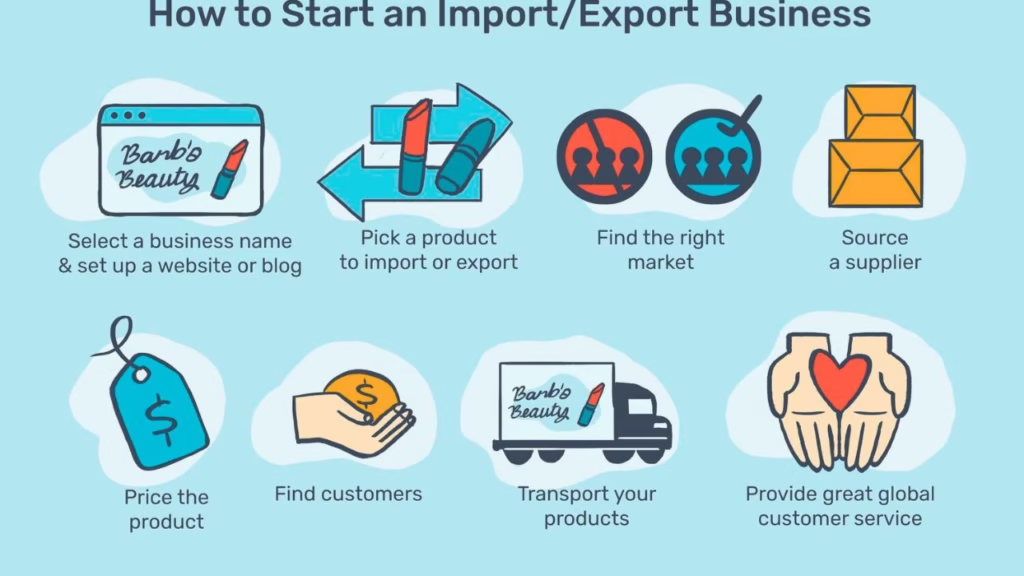
In this guide, I’m going to walk you through exactly how to start import and export business in India and export business ideas step by step.
Table of Contents
What Exactly Is This Business?
Before we start filling out forms, we need to strip this business down to its basics. What are we actually doing here?
At its core, an import and export business is just trade. It’s buying and selling. The only difference is the geography.
- Exporting: You take goods or services from India and sell them to a buyer in another country. They pay you in foreign currency (Dollars, Euros, Pounds), and you ship the goods out.
- Importing: You buy goods from another country to sell here in India.
It sounds simple on paper, right? Buy low, sell high, ship it across the ocean. But the confusion and the fear usually starts when we think about the logistics and import export business ideas. How do I get it there? What about customs? What if they don’t pay me?
We will get to all of that. But first, I need to kill a myth that stops 90% of people before they even start.
The “Factory” Myth That Holds You Back
I can’t tell you how many times I’ve heard someone say, “But I can’t export… I don’t own a factory!”
Let me say this as clearly as I can: You do not need a factory to be an exporter.
This is a massive misconception. People think you need to manufacture the product to sell it. That is simply not true. In fact, some of the most successful exporters I know have never manufactured a single screw or stitched a single shirt in their lives.
There are two main ways to play this game:
- Manufacturer Exporter: This is the traditional route. You own the factory, you make the product, and you export it. This gives you high margins, sure. But it also comes with massive headaches labor laws, machinery maintenance, electricity bills, raw material sourcing, and huge capital investment.
- Merchant Exporter (The Smart Way for Beginners): This is where you want to be. As a Merchant Exporter, you are a trader. You find a manufacturer in India who makes great products but doesn’t know how to start export business in India and how to do export business (or doesn’t want to). You buy from them, brand it (or not), and export it.
Think of yourself as the bridge. The manufacturer knows how to make the product you know how to find the market. Your value isn’t in production it’s in connection. This approach keeps your risk low.
If the market for leather shoes crashes, you aren’t stuck with a leather shoe factory. You just switch to sourcing ceramic tiles instead.
Step 1: The Foundation – Market Research and Product Selection
If you take nothing else away from this guide, please remember this Don’t fall in love with a product fall in love with the profit.
This is the classic beginner mistake. I’ve seen people decide they want to export, say, “Handmade Jute Bags,” just because they personally like them or because their uncle makes them.
They spend months setting up the business, only to realize later that the demand in their target market is saturated or the shipping costs kill the margin.
You have to work backward. Don’t start with what you have start with what the world wants.
When I look at a product, I put it through a tough interrogation. I ask:
- Is there consistent demand? Is this a fad, or do people actually need this?
- Can I source it reliably? If my buyer orders 10,000 units, can I actually get them?
- What are the regulations? Does this product need special FDA approval in the US? Does it need fumigation?
- The Golden Question: What is the real margin? After I pay for the product, the packaging, the truck to the port, the customs agent, and the shipping… is there any money left for me?
What Should You Sell?
If you are a complete beginner, I usually suggest sticking to sectors where India already has a strong reputation. You don’t want to be the first person trying to sell Indian electronics to Japan. Stick to our strengths.
Here are a few categories that are beginner friendly:
- Spices: The world runs on Indian spices. Turmeric, cumin, chilly powder demand is eternal.
- Textiles: Cotton garments, home furnishings, towels.
- Handicrafts: This is tricky because it’s niche, but the margins can be huge if you find the right buyer who values “handmade.”
- Leather Goods: Wallets, belts, bags.
- Imitation Jewelry: Lightweight, easy to ship, high value.
My advice? Pick one product. Just one. Master it. Learn everything about it the HS code, the packaging standards, the seasonal price fluctuations. Once you understand the flow of one product, adding a second one is easy.
Step 2: Making It Official – Registration and Legal Structure
Okay, let’s get the boring stuff out of the way. You cannot export under your personal name. You can’t just show up at the port with a box and your Aadhar card. You need a business entity.
Thinking Should I be a Private Limited Company? An LLP? A Partnership?
Here is my honest take: Keep it simple.
For 99% of beginners, a Sole Proprietorship is the best way to start.
Why?
- It’s cheap: You can set it with less effort.
- It’s fast: Less paperwork means you start sooner.
- Less Compliance: You don’t have to file complex annual returns with the MCA (Ministry of Corporate Affairs) like you do with a Pvt Ltd company.
You can always upgrade later. If you hit the jackpot and start doing crores in turnover, go ahead and convert to a Private Limited Company. But don’t let the cost of incorporating a company stop you from starting.
Step 3: The Golden Ticket – Your Import Export Code (IEC)
If your business was a car, the IEC would be the ignition key. You aren’t going anywhere without it.
The Import Export Code (IEC) is a 10-digit number issued by the DGFT (Directorate General of Foreign Trade). It is mandatory. Without it, your goods will get stuck at customs, your bank won’t accept foreign payments, and you won’t get any government incentives.
The good news? Getting an IEC used to be a nightmare of physical files. Now, it is fully online.
- Cost: The government fee is just Rs. 500.
- Process: It’s linked to your PAN card. You go to the DGFT website, fill out Form ANF 2A, upload your documents, pay the fee, and boom you usually get it instantly or within a day.
Please, don’t pay an “agent” Rs. 5,000 to do this for you. It is incredibly easy to do yourself.
Step 4: The Money Trail – Opening a Current Account
You cannot use your personal savings account for this. You need a Current Account in the name of your business.
Don’t do like…”Opening your first current account at the branch closest to your house just because it’s convenient is a mistake”.
That was dumb.
In the export procedure, your relationship with your bank is critical. You aren’t just depositing checks you are dealing with foreign inward remittances, forex rates, and e BRCs (Electronic Bank Realization Certificates).
You need to interview your bank. Ask them:
- “What are your Forex conversion charges?” (Banks love to hide fees here).
- “How fast do you process inward remittances?”
- “Does this branch have a dedicated trade desk?”
Trust me, when you are waiting for a $20,000 payment from a client in Dubai and it’s stuck in delay, you don’t want to be dealing with a branch manager who has never seen a foreign transaction before.
Step 5: The Scary Part – Understanding Documentation
This is where the panic usually starts. “Paperwork.”
It sounds scary. You hear terms like “Commercial Invoice” and “Bill of Lading,” and you gets confused. But here is the secret It’s just a checklist. Once you do it for one shipment, the next fifty are exactly the same.
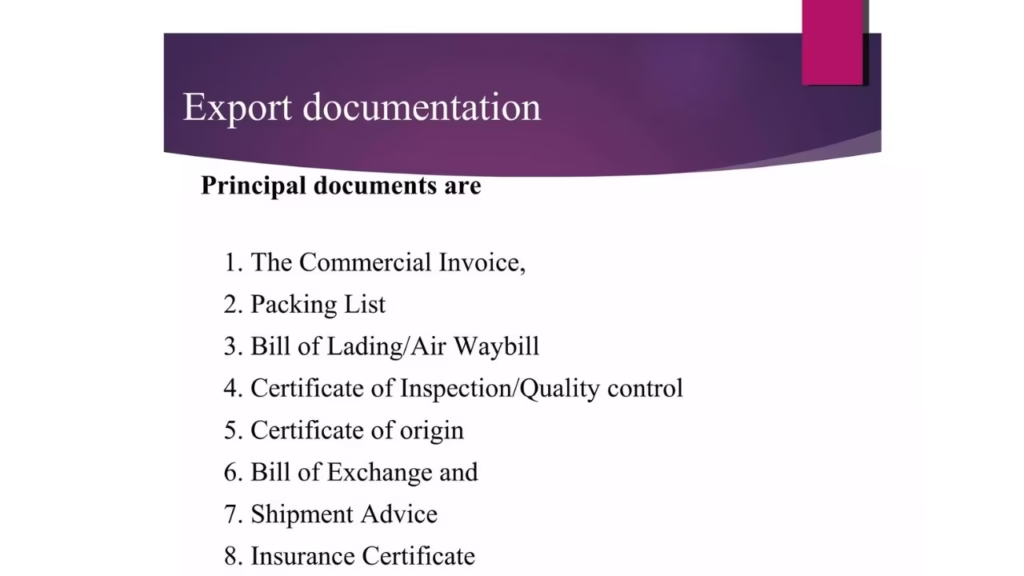
Let’s simplify the key documents required for export:
- Commercial Invoice: This is just a bill. It tells the buyer what they bought and how much they owe you.
- Packing List: This tells the customs officer and the buyer exactly what is in each box. (e.g., “Box 1 contains 50 blue shirts, Box 2 contains 50 red shirts”).
- Shipping Bill: This is the document you file with Indian Customs to get permission to load your goods.
- Bill of Lading (B/L): This is super important. It’s the receipt given by the shipping line (the ship captain, essentially) saying, “I have your goods.” It is also the title of ownership. Whoever holds the original B/L owns the goods.
- Certificate of Origin: Some countries have trade agreements with India (like Japan or UAE) where they get lower import duties on Indian goods. This certificate proves your product was actually made in India.
Do not try to ignore this. A spelling mistake on a Bill of Lading can cost you thousands of dollars in fines and delays. When you are starting, work closely with a good Custom House Agent (CHA). They do this for a living and will save your neck.
Step 6: Getting Certified – The RCMC
You might think, “I have my IEC, I’m good to go!” Not quite.
To get the real benefits of being an exporter specifically the government incentives you need an RCMC (Registration Cum Membership Certificate).
This certificate proves you are a registered member of an Export Promotion Council (EPC). The government has different councils for different products.
- Selling Rice? You register with APEDA.
- Selling Spices? Spices Board.
- Selling Engineering Parts? EEPC.
- General products? FIEO (Federation of Indian Export Organizations).
Why bother? Because the government gives “duty drawbacks” and other incentives (like RoDTEP) where they essentially refund some of the taxes you paid. You can’t claim that free money without an RCMC. Plus, these councils help you with data and take you to trade fairs.
Step 7: The Million Dollar Question – Finding Buyers
I left this for later, but this is actually the heartbeat of your business. You can have all the licenses in the world, but if nobody buys your stuff, you don’t have a business you have a hobby.
“How do I find international buyers?” is the number one question that bothers me also.
It requires patience. You are a new player. Nobody knows you. Why should a guy in London trust you with his money?
Here is how you build that trust:
- B2B Platforms: Create profiles on Alibaba, IndiaMART, TradeKey, and Go4WorldBusiness. Yes, there is a lot of noise there, but real leads do exist.
- LinkedIn: This is secret weapon. Don’t just spam people. Use the search bar. Look for “Procurement Manager” + “Textiles” + “USA”. Connect with them. Send a professional message. Do not say “Sir I want to sell.” Say, “I noticed you source cotton textiles I run a specialized sourcing firm in India and would love to share our catalog.”
- Trade Fairs: Nothing beats face to face. If you can afford to visit a trade show (like the Canton Fair or specialized fairs in Germany/Dubai), do it. The government even subsidizes the cost for exporters through the MAI scheme!
- EPC Data: Your RCMC council often has lists of importers. Use them!
A word of caution on scams: The export world is full of sharks. If a buyer sends you a massive first order but asks for 100% credit (pay later), run away. If their email is “@gmail.com” instead of a company domain, be suspicious. Always verify. Google their address. Call their landline. Better safe than bankrupt.
Step 8: The Price is Right – Costing and Incoterms
Pricing in exports is an art form. It is not just “Cost + Profit.”
You have to calculate the Landed Cost. This means you need to account for:
- Product cost
- Packaging (export packing is expensive!)
- Transport from factory to port
- CHA fees
- Terminal handling charges at the port
- Freight (shipping cost)
- Insurance
- Bank charges
- Your profit
If you miss one of these, you will lose money.
You also need to understand Incoterms. These are the global rules of “Who Pays What.”
- FOB (Free On Board): You pay to get the goods onto the ship in India. After that, the buyer pays for the ship and insurance. (I recommend this for beginners).
- CIF (Cost, Insurance, Freight): You pay for everything until the goods reach the buyer’s port. This is riskier for you because you are responsible for the shipping.
And finally, Payment Terms.
- Advance Payment: This is heaven. The buyer pays you before you ship. Hard to get as a beginner, but try for at least 30-50% advance.
- Letter of Credit (LC): This is the safest way for large orders. The buyer’s bank guarantees to pay you if you submit the right documents. It’s complex but secure.
Step 9: Moving the Goods – Logistics
You don’t need to own a truck or a ship. You need a Freight Forwarder.

Think of a freight forwarder as your travel agent for cargo. They book the container, they arrange the truck, they handle the customs clearance.
A good freight forwarder is worth for the risk. In busy ports like Nhava Sheva or Chennai, things go wrong. Containers get bumped. Customs officers ask difficult questions. A good forwarder handles this stress so you don’t have to.
Interview a few. Ask for quotes. Compare them. But don’t just pick the cheapest one pick the one who answers his phone when you call.
Step 10: Ship, Get Paid, and Grow
Once the goods are on the ship, you get the Bill of Lading. You take that (and your other documents) to your bank. Your bank sends them to the buyer’s bank. The buyer pays, and the documents are released to them so they can pick up the goods.
You get the money in your account (Foreign Inward Remittance).
Do not forget: Once the money comes in, talk to your bank to generate the e BRC (Electronic Bank Realization Certificate). This is proof to the Indian government that you actually brought dollars into the country. It closes the loop.
After that? You apply for your incentives (RoDTEP/Drawback) and celebrate. You are now an exporter.
Some Export Ideas to Get Your Brain Moving
Still stuck on what to sell? Let me some suggestions with some sectors where India is killing it right now.
1. Agricultural Products:
India is the grocery store of the world.
- Rice: Basmati is the king, but non basmati rice exports are massive too.
- Fresh Fruits/Veg: Onions, mangoes, grapes.
- Pros: Huge volume, repeat orders (people eat every day).
- Cons: It rots. Perishable. If your container gets stuck, your product dies. You need cold chain experience.
2. Textiles and Garments:
From Tirupur to Surat, and other textile giants.
- Garments: T-shirts, kidswear.
- Home Textiles: Bedsheets, curtains, towels.
- Pros: Non perishable, good margins.
- Cons: Fashion changes fast. Competition from Bangladesh and Vietnam is intense.
3. Handicrafts:
- Brassware: Moradabad is famous for this.
- Wooden Toys: Channapatna toys are gaining global attention.
- Incense Sticks (Agarbatti): massive demand in Latin America and Africa.
- Pros: High margins. Buyers love the “story” behind the product.
- Cons: Harder to scale. Quality consistency can be an issue with handmade goods.
4. Engineering Goods:
Believe it or not, this is India’s largest export sector by value.
- Auto Components: Gears, shafts, bearings.
- Industrial Machinery: Pumps, valves.
- Pros: Very professional buyers, high order value.
- Cons: Technical knowledge required. Strict quality standards.
You Are Not Alone: Resources That Help
You don’t have to figure this all out in a dark room by yourself. The ecosystem is there to support you.
- DGFT (Directorate General of Foreign Trade): They set the policy. Their website is your knowledge base.
- EPCs (Export Promotion Councils): Join them. Use their data. Go to their seminars.
- India Trade Portal: A fantastic government site where you can type in a product (HS Code) and see the import duties in other countries. It helps you find which country is cheaper to sell to.
- ECGC (Export Credit Guarantee Corporation): I cannot stress this enough. Get insurance. ECGC offers policies that cover you if the foreign buyer goes bankrupt or refuses to pay. For a tiny premium, you sleep better at night.
The Bottom Line
Starting an import export business in India is not a mystery. It is a procedure. It is a series of logical steps: Registration -> Product -> Buyer -> Logistics -> Payment.
The people who fail are the ones who treat it like a “get rich quick” scheme. They skip the research. They don’t verify buyers. They guess on their pricing.
The people who succeed? how to export goods from India, They start small. They focus on import export documentation. They act as Merchant Exporters, keeping their overheads low. They find one good product and one good buyer, and they service the hell out of that relationship.
I won’t lie to you your first shipment will be scary. You will check your email every five minutes. You will worry about the ship sinking. You will stress about the payment.
But when that first payment hits your account in Dollars or Euros and you realize you just sold something from your hometown to a person on the other side of the planet?
There is no feeling like it.
The world is waiting for India’s products. Why shouldn’t you be the one to sell them?
Go get your IEC. Do your research. And let’s get those containers moving.
Easy Break down of exactly how to start an import export business for beginners. No jargon, just real steps on registration, finding buyers, and not losing money.
FAQ’s
Q1. Do I need a factory to start an export business?
No. This is a common myth. You don’t need to own a factory to export. You can start as a Merchant Exporter, where you source products from manufacturers and sell them internationally. Think of yourself as the bridge between the maker and the market.
Q2. How do I find international buyers for my products?
Finding buyers takes effort, but it’s important. Start by creating profiles on B2B platforms like Alibaba or IndiaMART. Use LinkedIn to connect with procurement managers in your target industry. Attend trade fairs and leverage your Export Promotion Council (EPC) for importer data. Building trust is key, so always verify buyers before committing.
Q3. What is an Import Export Code (IEC), and how do I get one?
The IEC is a mandatory 10-digit code issued by the DGFT that allows you to legally export or import goods. It’s easy to get online through the DGFT website. The process is straightforward, costs just ₹500, and you can do it yourself no need to hire an agent.
Q4. What are the best products to export from India?
India majorly exports spices, textiles, handicrafts, leather goods, and engineering parts. Start with products that have consistent global demand and align with India’s strengths. Do your research to ensure there’s a market for your chosen product.
Q5. What’s the biggest challenge for beginners in the export business?
The biggest challenge is often understanding the logistics and documentation. Terms like “Bill of Lading” and “Shipping Bill” can feel overwhelming at first. But once you handle your first shipment, it becomes routine. Partnering with a good Custom House Agent (CHA) and freight forwarder can make this process much smoother.
About the Author
Hi, I’m Sriharsha Thota, founder of shxhub.in.
I focus on explaining export business topics in a practical, beginner friendly way, based on how exports actually work on the real ground especially documentation, quality control, and buyer expectations.

25 thoughts on “How to Start Import Export Business in India: The Complete Guide”