
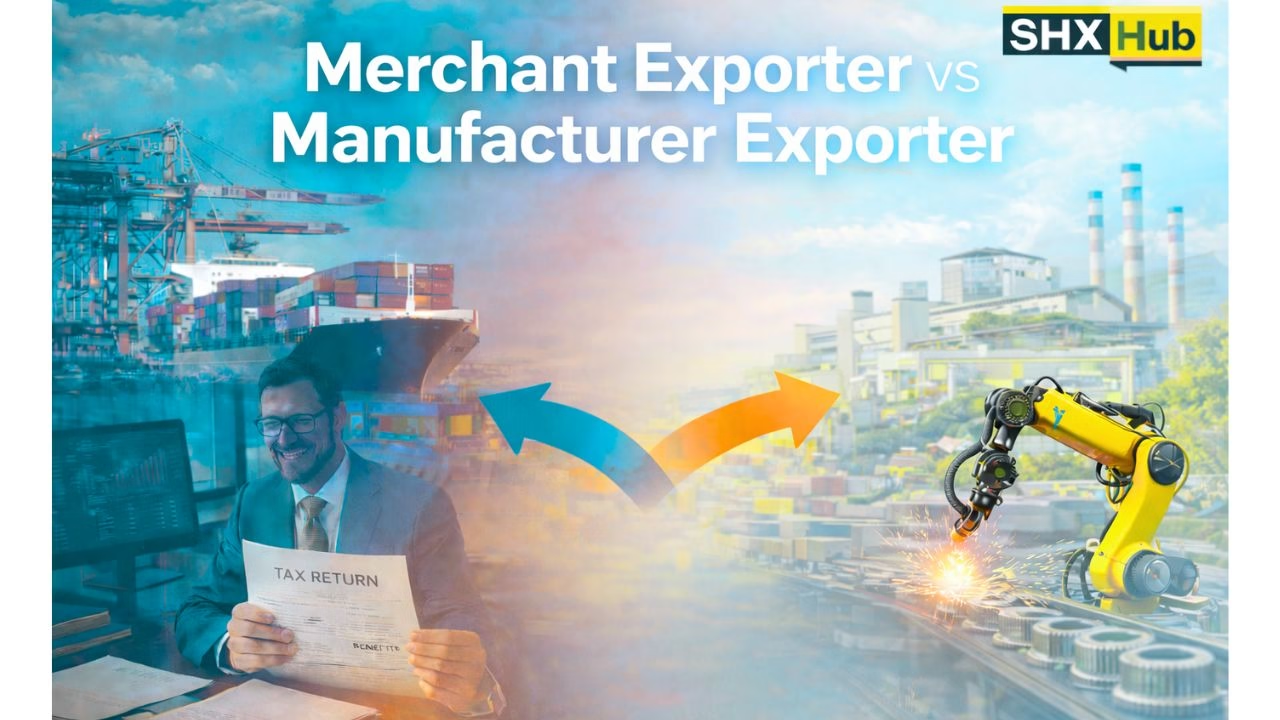
So you’ve decided to export. You’ve got the product, maybe even a buyer. You’ve Googled “how to start export business in India,” survived the IEC rabbit hole, and now you’re staring at a form that’s asking you something nobody warned you about
Are you a manufacturer exporter or a merchant exporter?
Most beginners either guess or worse, pick the wrong one and spend months untangling the mess.
Here’s why it matters more than you think the model you choose shapes everything. Your GST treatment, your capital requirement, how much documentation you’ll wrestle with, how much risk you carry, and how fast you can scale.
Two exporters, same product, same destination but completely different operating realities. This isn’t just a checkbox on a form. It’s a business decision.
By the time you finish reading, you’ll know exactly what each model means, how they differ in practice, and most importantly which one is the right fit for where you are right now.
Let’s get into it.
Table of Contents
Why This Distinction Matters
Here’s something that trips up almost every first time exporter in India a manufacturer exporter and a merchant exporter look identical on the surface. Both hold an IEC (Importer Exporter Code). Both ship goods out of India. Both deal with the same ports, the same freight forwarders, the same foreign buyers.
But beneath that surface? Entirely different animals.
India’s Foreign Trade Policy, administered by the DGFT, treats these two exporter types differently. The GST framework applies different rules to each affecting how you buy goods, how you claim refunds, and how much working capital you need to lock up at any given time.
The documentation trail is different. The risk exposure is different. Even your long term growth ceiling is shaped by which model you operate under.
In short the distinction isn’t administrative noise. It’s the difference between a business that’s structured right from day one and one that’s constantly playing catch up.
Read this carefully. The ten minutes you invest here could save you months of expensive confusion later.
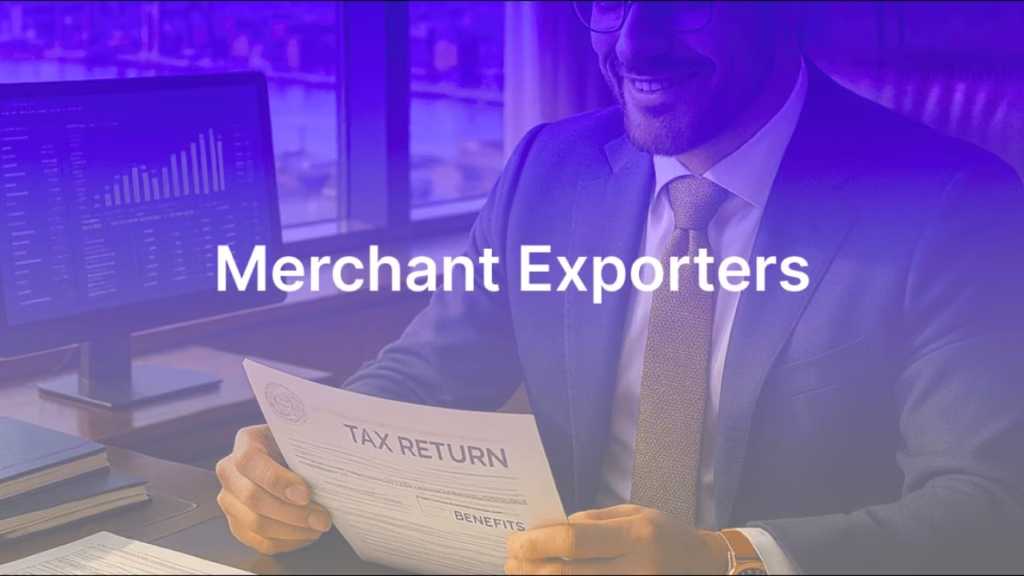
What Is a Merchant Exporter?
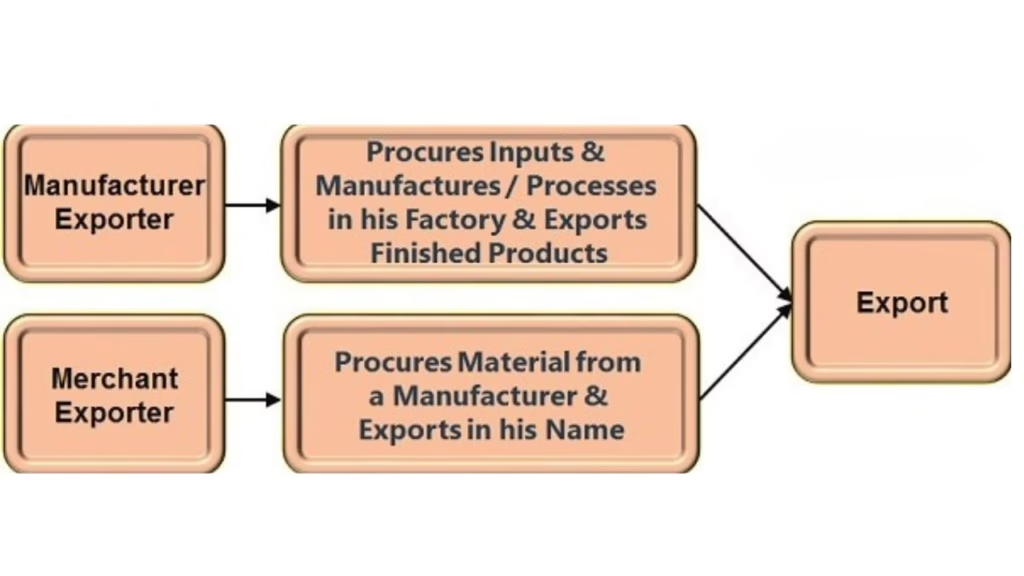
A merchant exporter is a business or an individual that exports goods he didn’t manufacture.
Simple as that.
You source finished goods from an Indian manufacturer or supplier. You sell those goods to a foreign buyer. You handle the pricing, the paperwork, the logistics, and the relationship. The factory does the making. You do the exporting.
This is why the most accurate merchant exporter meaning is simply a trader who exports.
A quick merchant exporter example to make it concrete:
Say you identify a spice supplier in Kerala producing premium cardamom. You negotiate a price, place an order, arrange the packaging, handle the shipping documentation, and export the goods to a buyer in Dubai all under your own IEC.
You never touched a production line. You never owned a machine. Yet you are, by every definition, a merchant exporter.
And here’s what makes this model so accessible especially for beginners. A merchant exporter does NOT need:
- A factory or production unit
- Industrial machinery or equipment
- A manufacturing workforce
- A production license or factory registration
What you do need is sharp sourcing instincts, solid supplier relationships, and a working knowledge of export documentation. The manufacturing? That’s someone else’s department.
What Is a Manufacturer Exporter?
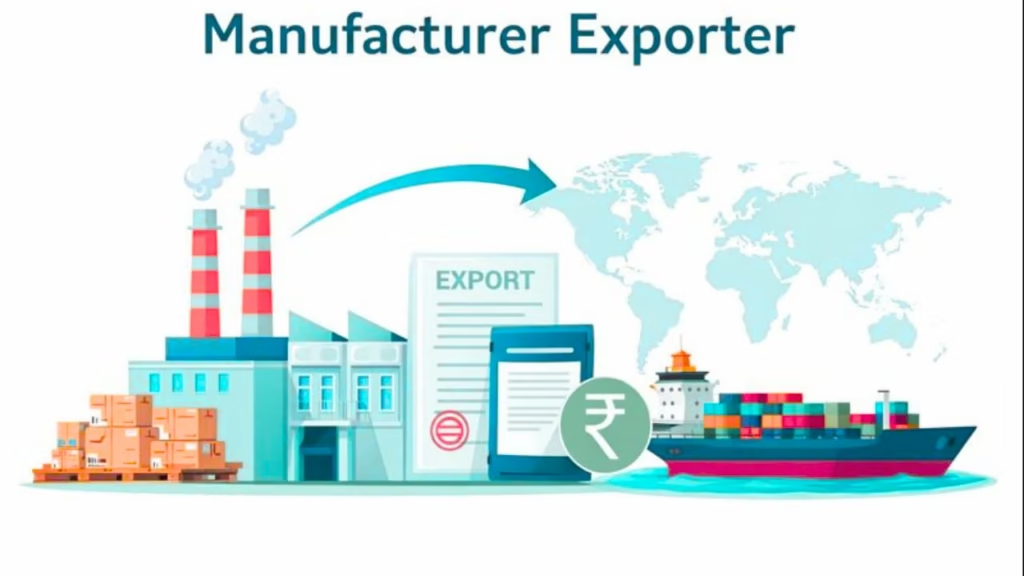
A manufacturer exporter is a business that makes its own goods and exports them directly to foreign buyers all under the same roof, the same entity, the same IEC.
The cleanest way to understand the manufacturer exporter meaning this is a business that controls both the production floor and the export invoice.
The examples are everywhere. A garment factory in Tiruppur that stitches and ships its own apparel to European retailers. A rice mill in Punjab that processes and exports basmati directly to Middle Eastern distributors. A leather goods unit in Agra that crafts and sells its own products to buyers in the US.
In each case, the same business that makes the product is the one putting it on the ship. One thing beginners often get wrong manufacturer exporter in India is not an exclusive club for large corporations. Small scale units, cottage industries, and MSME registered manufacturers all qualify.
If you own or operate a production unit even a modest one and you’re exporting what you make, you are a manufacturer exporter.
What defines this model isn’t the size of your factory. It’s the fact that production and export happen under one entity, with no supplier in the middle.
The Core Differences (Deep Dive)
Now that both models are clearly defined, it’s time to get into the real substance the differences that actually affect your business day to day. This is where the choice between merchant exporter and manufacturer exporter stops being theoretical and starts having real consequences for your money, your compliance, and your growth.
Factory & Production Ownership — The Foundational Difference
Every other difference between these two models flows from this one.
A merchant exporter does not own the production process. The goods are made by someone else a third party manufacturer or supplier and the merchant exporter steps in at the sourcing stage. The merchant controls the buyer relationship, the pricing negotiation, the documentation, and the logistics. But the factory floor belongs to someone else.
A manufacturer exporter owns the entire chain. Raw materials come in, finished goods go out, and every step in between quality control, packaging, production timelines is managed internally.
Why does this matter so much? Because ownership of production determines your control over quality, your flexibility with customization, your ability to meet buyer specific requirements, and your response time when something goes wrong.
When a buyer in Germany wants a modification to the product spec with a three week lead time, the manufacturer exporter can act immediately. The merchant exporter has to negotiate with a supplier first and hope the supplier cooperates.
Here’s a quick look at how the two models stack up at a foundational level:
| Dimension | Merchant Exporter | Manufacturer Exporter |
| Owns factory | No | Yes |
| Controls production | No | Yes |
| Product sourced from | Third party suppliers | Own manufacturing unit |
| Quality control | Dependent on supplier | Internal and direct |
| Customisation flexibility | Limited | High |
| Response to buyer changes | Slower (supplier dependent) | Faster (in-house) |
Capital Investment & Entry Barrier
This is the dimension that matters most if you’re just getting started.
The merchant exporter path is deliberately low barrier. You don’t need to buy land, build a factory, purchase machinery, or hire a production workforce. Your capital goes into working capital buying goods from your supplier, covering freight, managing documentation costs, and bridging the payment cycle between when you pay your supplier and when your foreign buyer pays you.
For many first time exporters in India, this is what makes the merchant model so attractive. You can enter the export business with a fraction of the capital that manufacturing would demand, test an international market, build buyer relationships, and generate revenue all before you’ve committed to a single piece of industrial equipment.
The manufacturer exporter path demands serious upfront investment. Factory construction or lease, machinery, raw material inventory, skilled labor, compliance with manufacturing regulations, quality certifications these costs accumulate quickly and don’t pause while you’re still finding your first buyer.
The payoff, however, is structural once your production is running efficiently, your cost per unit drops, your margins improve, and your dependency on external suppliers disappears entirely.
The honest framing for beginners, merchant exporting is the faster, safer, cheaper entry point. For businesses that already have production capacity, or those with deep enough pockets to build it, the manufacturer model offers long term advantages that compound over time.
GST Treatment — Where Most Beginners Get Burned
This is the section most export blogs skip over or oversimplify. Don’t. GST treatment is one of the sharpest practical differences between merchant and manufacturer exporters and getting it wrong is expensive.
Merchant Exporter GST Rate — The 0.1% Concessional Route
When a merchant exporter buys goods from a manufacturer specifically for export, they can do so at a concessional GST rate of just 0.1% instead of the standard rate that would otherwise apply. This benefit exists under specific GST notifications designed to support the merchant export ecosystem and reduce working capital burden.
But this concessional rate comes with strict conditions. The goods must be exported within a defined timeline. The supplier’s invoice must be correctly structured. The shipping bill must be filed properly. If any of these conditions are not met even due to a documentation error the concessional rate benefit is disallowed, and the full GST liability falls back on the transaction.
LUT — The Other Route Merchant Exporters Use
The second option for merchant exporters is exporting under a Letter of Undertaking (LUT), which allows zero rated exports without paying GST at all and without needing to claim a refund afterward. The LUT is filed on the GSTN portal annually and is the preferred route for exporters with regular, recurring export volumes.
Common GST Mistakes Merchant Exporters Make
- Missing the export deadline after buying goods at 0.1% triggering full GST liability
- Supplier invoice not mentioning the export destination or shipping bill reference
- Failing to file LUT before the export takes place
- Incorrectly claiming input tax credit on goods bought under the concessional rate
- Mismatch between supplier invoice value and the shipping bill declared value
Each of these mistakes can trigger a GST notice, delay your refund, or result in a demand for the differential tax amount. The compliance margin in merchant export GST is thin precision matters.
Manufacturer Exporter GST — Simpler by Design
For manufacturer exporters, the GST treatment is more straightforward. The manufacturer produces the goods internally, exports them as a zero rated supply under GST, and either files an LUT for upfront zero rating or pays IGST and claims a refund afterward.
Because there’s no third party supplier involved in the export transaction, the compliance chain is shorter and the risk of documentation mismatch is significantly lower.
In simple terms the manufacturer exporter’s GST compliance is cleaner because there are fewer parties whose paperwork needs to align perfectly.
Pricing Power & Profit Margins
Here’s a myth worth dismantling right away merchant exporters don’t automatically earn less than manufacturer exporters. The margin story is more complex than that.
Where the merchant exporter makes money is in the gap between what they pay the supplier and what the foreign buyer pays them adjusted for logistics, documentation, and currency. A merchant exporter with strong sourcing skills, volume consolidation capability, and good buyer relationships can earn very healthy margins. The levers are negotiation, efficiency, and market access not production cost.
The additional plays available to smart merchant exporters include consolidating orders from multiple small suppliers to achieve better pricing, adding value through superior packaging or private labelling, and building proprietary buyer relationships that the supplier cannot access directly. These strategies convert a seemingly simple trading operation into a defensible, margin rich business.
Where the manufacturer exporter makes money is in the elimination of the supplier margin. When you control production, you control your cost of goods. You can absorb volume fluctuations, optimize raw material procurement, and pass on cost efficiencies directly to your buyer as competitive pricing while protecting your own margin. At scale, this is a powerful structural advantage.
The catch a manufacturer exporter’s fixed costs are high and constant. A slow export month still means the factory runs, the workforce gets paid, and the machinery depreciates. Merchant exporters, by contrast, have a more variable cost structure when orders slow down, their costs contract naturally.
Risk Profile — Knowing What You’re Signing Up For
Every business model carries risk. The question is which risks you’re better equipped to manage.
Merchant exporter risks are largely external and relational:
- Supplier dependency risk — if your supplier delays, your shipment delays. If they compromise on quality, your buyer relationship suffers.
- Quality rejection risk — without direct control over production, maintaining consistency across shipments requires constant supplier oversight.
- Third party coordination risk — the more parties involved in a shipment, the more points of failure exist. A single miscommunication between supplier, CHA, and freight forwarder can lead to a customs query or a delayed vessel.
- Supplier poaching risk — once a supplier identifies your foreign buyer, there’s always the possibility they attempt to establish direct contact and cut you out of future orders.
Manufacturer exporter risks are largely internal and operational:
- Inventory holding risk — raw materials and finished goods sitting in a warehouse tie up capital and carry the risk of becoming outdated.
- Machinery downtime risk — a production line stoppage has a direct, immediate impact on shipment schedules.
- Fixed cost pressure — high overheads don’t pause during slow periods, compressing margins when export volumes dip.
- Market concentration risk — manufacturers often produce a narrower product range, making them more vulnerable to demand shifts in specific categories.
For beginners, the merchant exporter’s risk profile is generally easier to manage not because it’s smaller, but because it’s more visible and more controllable with good supplier management. The manufacturer’s risks, by contrast, require operational depth and financial resilience to absorb.
Documentation & Compliance Load
Export documentation is non-negotiable and both models require it. But the complexity of managing that documentation is significantly different.
As a merchant exporter, you are the coordinator between multiple independent parties, each generating their own paperwork:
- Your supplier issues the tax invoice
- Your Customs House Agent (CHA) files the shipping bill
- Your freight forwarder issues the bill of lading or airway bill
- Your buyer expects a commercial invoice, packing list, and certificate of origin all aligned
The problem: every document in this chain must be consistent. The product description, quantity, value, and HSN code on the supplier’s invoice must match the shipping bill must match the commercial invoice must match the packing list. A single mismatch even a spelling difference in a product name can trigger a customs query, delay your cargo, or hold up your GST refund.
At busy ports like JNPT (Mumbai) or Chennai, where hundreds of shipments are processed daily, documentation errors are one of the most common causes of avoidable delays. Experienced merchant exporters develop rigorous document checklists and verify every document before the goods leave the supplier’s premises.
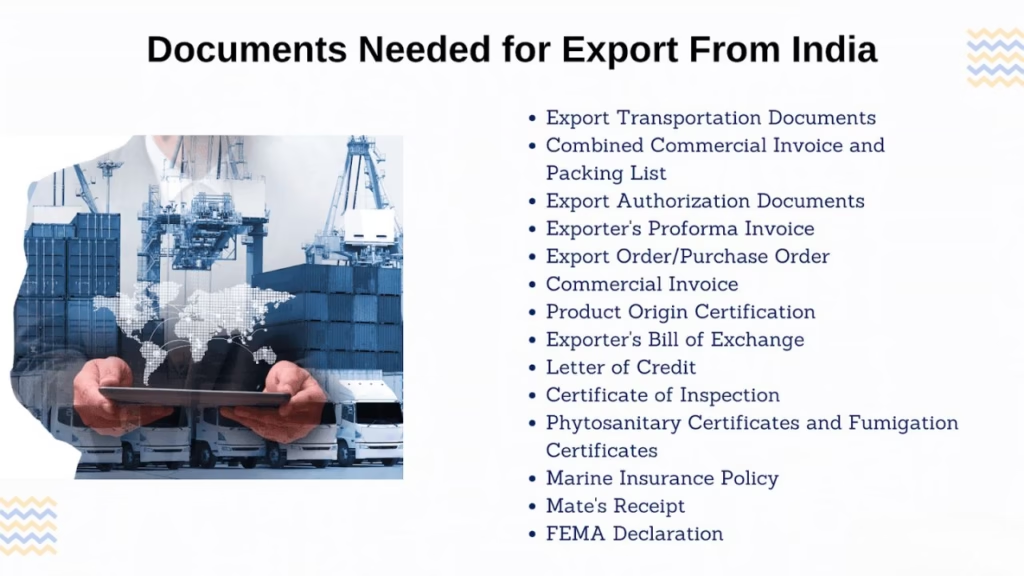
Core documents for any export shipment:
- Commercial Invoice
- Packing List
- Shipping Bill (filed by CHA)
- Bill of Lading / Airway Bill
- LUT or GST payment proof
- Certificate of Origin (if required by the buyer’s country)
- Any product specific certificates (FSSAI for food, BIS for electronics, etc.)
As a manufacturer exporter, the documentation load is the same in terms of what’s required but the coordination is internal. Your production team, accounts team, and logistics team are all under one entity, making it far easier to ensure alignment. Errors still happen, but the feedback loop is tighter and the resolution is faster.
Scalability & Long Term Growth Path
Here’s where the bigger picture comes into focus and where the choice between these two models has its most lasting consequences.
The merchant exporter’s growth path is flexible and not product specific. Because you’re not tied to a specific production capability, you can add new product categories, test new markets, and pivot your supplier base as global demand shifts.
Many of India’s most successful export houses started as merchant exporters building deep buyer relationships and market expertise before ever investing in manufacturing.
The long term scaling plays for merchant exporters include:
- Private labelling — developing your own brand identity on sourced products, building brand equity with foreign buyers
- Backward integration — once you understand demand patterns and quality requirements deeply, investing in your own production becomes a calculated, informed decision rather than a speculative one
- Partner factory models — exclusive sourcing agreements with manufacturers that function like ownership without the capital commitment
- Multi category consolidation — becoming a one stop export house for foreign buyers across product categories
The manufacturer exporter’s growth path is deeper but narrower. The competitive moat is harder to build but once built, it’s harder to breach. Manufacturer exporters who invest in international quality certifications (ISO, HACCP, GOTS, etc.).
Establish long term supply contracts with foreign buyers, and build a recognizable brand in their category create export businesses that are genuinely difficult to replicate.
The most common evolution seen across Indian export businesses start as a merchant exporter, learn the ecosystem thoroughly, build buyer trust and market knowledge, then either acquire manufacturing capacity or invest in building it.
This graduation from merchant to manufacturer is not a sign of failure in the first model it’s the natural, smart progression of an export business that’s grown confident enough to go deeper.
Both paths are valid. Both can be highly profitable. The key is honest self assessment where are you right now, and which model gives you the best chance of surviving, learning, and growing from that starting point?
Side By Side Comparison Table
Before we get to the verdict, here’s everything we’ve covered distilled into one scannable reference. Bookmark this, screenshot it, share it this table answers the merchant exporter vs manufacturer exporter question at a glance.

| Dimension | Merchant Exporter | Manufacturer Exporter |
| Factory required | No | Yes |
| Capital needed | Low | High |
| GST route | 0.1% concessional / LUT | Zero rated supply (direct) |
| Quality control | Supplier dependent | Fully in house |
| Documentation complexity | Higher — multi-party coordination | Lower — internal alignment |
| Compliance risk | Higher (more parties, more mismatches) | Lower (fewer moving parts) |
| Pricing flexibility | Dependent on supplier cost | Controlled at production level |
| Profit margin structure | Variable, negotiation-driven | Structural, cost-driven |
| Risk type | External (supplier, logistics, coordination) | Internal (inventory, machinery, fixed costs) |
| Best suited for | Beginners, traders, market testers | Established producers, capital-ready businesses |
| Scalability | Flexible, product-agnostic, pivotable | Deep, brand-buildable, harder to replicate |
| Buyer preference | Works for most buyers | Preferred for large, long-term contracts |
| Time to first export | Faster | Slower (setup required) |
| Long term brand potential | Strong (via private label + integration) | Very strong (direct brand ownership) |
One thing this table doesn’t show and what the rest of this blog has tried to make clear is that neither column is inherently superior. The right model is the one that fits your current resources, risk appetite, and growth ambitions. Which brings us to the question most readers have been building toward.
Which Is Better for Beginners? The Verdict
If you’re starting your export journey in India today without an existing factory, without deep manufacturing experience, and without the capital to absorb a slow first year the answer is clear:
Start as a merchant exporter.
Not because it’s the easier option. But because it’s the smarter one.
Here’s what the merchant exporter model gives a beginner that manufacturing simply cannot speed, flexibility, and a forgiving learning curve. Your first export shipment will teach you more about documentation, buyer communication, freight logistics, and payment terms than any course or textbook ever will.
And as a merchant exporter, you get that education without a factory’s worth of fixed costs sitting on your shoulders while you figure it out. The capital you save by not building a production unit is capital you can deploy where it actually matters early on like working capital, market research, trade fair participation, buyer relationship building.
The graduation path looks like this enter as a merchant exporter → master the documentation ecosystem → build a reliable supplier base → establish trust with foreign buyers → understand exactly what quality standards and volumes your target market demands → then make the manufacturing investment with full confidence, not blind optimism.
This is not a consolation prize for those who can’t afford a factory. It’s the route that the most seasoned exporters in India quietly recommend to anyone serious about building something that lasts.
The binary of merchant vs manufacturer is ultimately a false one. Think of it instead as Phase One and Phase Two of the same export journey. The exporters who skip Phase One and jump straight into manufacturing are the ones who build factories before they’ve found buyers.
Start where you are. Scale when you’re ready. The market rewards patience and preparation far more than it rewards early commitment to the wrong model.
Common Myths to Ditch Right Now
The merchant exporter vs manufacturer exporter debate comes loaded with misconceptions most of them passed around by people who’ve never actually exported anything. Let’s clear the air.
Myth #1: “Manufacturer exporters are more legitimate.” False. Both models are equally recognized under India’s Foreign Trade Policy. The DGFT does not rank one above the other. Legitimacy comes from compliance not from owning a factory.
Myth #2: “Merchant exporters can’t win big buyers.” False. Large international buyers including Fortune 500 procurement teams routinely work with merchant exporters. What they vet is your reliability, your documentation quality, and your ability to deliver consistently. Your factory status rarely comes up.
Myth #3: “You need a factory to be taken seriously in export.” False. Some of India’s largest export houses operate entirely on the merchant model. Market access, supplier networks, and buyer relationships are what command respect not square footage of production space.
Myth #4: “Merchant exporting is just a middleman hustle.” This one is particularly misguided. Merchant exporters provide genuine value market access for manufacturers who can’t navigate international trade, logistics coordination, documentation expertise, and currency risk management. That’s not hustling that’s a legitimate, skilled business function.
What buyers actually care about — regardless of your exporter type:
- Consistent product quality across every shipment
- On time delivery without excuses
- Clean, accurate documentation
- Clear, responsive communication
- Competitive pricing that holds
Get those five things right, and no serious buyer will ever ask whether you own a factory.
How to Register & Get Started
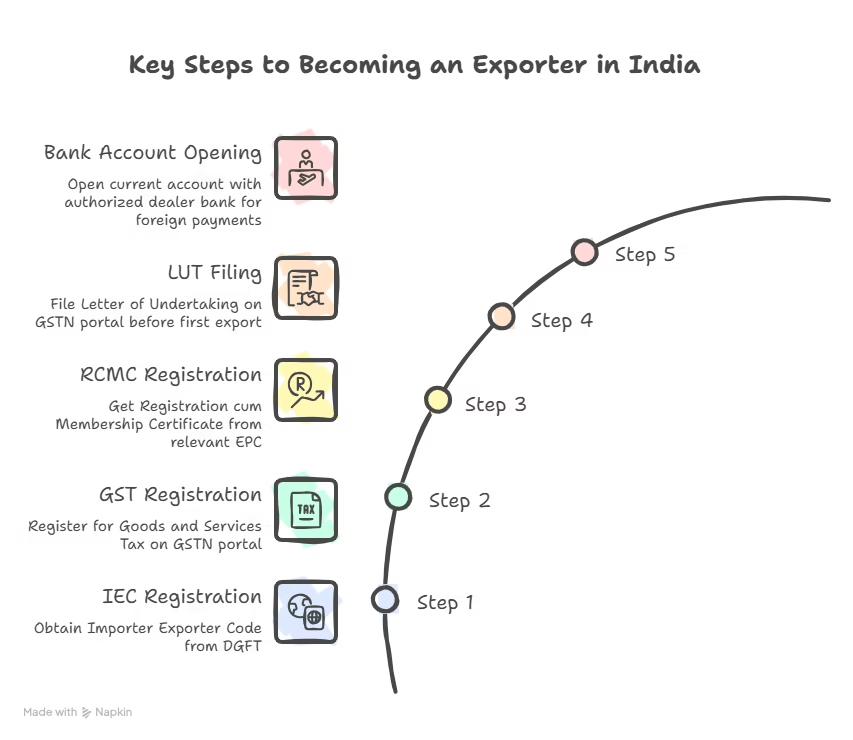
Whether you’ve decided to go the merchant route or the manufacturer route, the registration process starts in the same place. Here’s a clean, step by step breakdown of how to become an exporter in India without the administrative delays.
Step 1 — IEC Registration (Importer Exporter Code)
The IEC is non-negotiable. Every exporter in India merchant or manufacturer must have one. It’s issued by the DGFT (Directorate General of Foreign Trade) and is essentially your passport into international trade. Without it, no customs clearance, no foreign remittance, no legal export. The good news is IEC registration is now fully online via the DGFT portal, relatively affordable, and doesn’t require renewal.
Step 2 — GST Registration
If you’re exporting goods commercially, GST registration is mandatory. It’s also what enables you to file an LUT, claim GST refunds, and operate under the zero rated export framework. Register on the GSTN portal and ensure your business category is correctly identified from the start.
Step 3 — RCMC (Registration cum Membership Certificate)
The RCMC is issued by Export Promotion Councils (EPCs) relevant to your product category APEDA for agricultural products, FIEO for general merchandise, EEPC for engineering goods, and so on. While not always mandatory, the RCMC unlocks access to export incentives, government schemes, and buyer directories that are genuinely useful, especially early on.
Step 4 — LUT Filing
If you plan to export without paying GST upfront which most exporters prefer you need to file a Letter of Undertaking (LUT) on the GSTN portal. This must be done before your first export shipment of the financial year. The LUT is what allows you to ship goods as zero rated supplies without blocking working capital in GST payments while you wait for a refund.
Step 5 — Open a Current Account with an Authorized Dealer Bank
Foreign payments for exports must flow through a bank authorized by the RBI to deal in foreign exchange. Set this up early your buyer’s payment, your FIRC (Foreign Inward Remittance Certificate), and your export documentation are all tied to this account.
Your go to resources for all of the above:
- DGFT Portal — dgft.gov.in — for IEC registration, LUT filing, and Foreign Trade Policy guidance
- GSTN Portal — gst.gov.in — for GST registration and LUT
- Indian Trade Portal — indiantradeportal.in — for export setup guides, HS code lookup, and market access information
- Relevant Export Promotion Council — for RCMC and sector specific support
Getting these registrations in order before your first shipment isn’t just good practice it’s the difference between a smooth first export and a compliance scramble that costs you a buyer.
CONCLUSION
At its core, the difference between a merchant exporter and a manufacturer exporter comes down to one thing who controls the production. Everything else GST treatment, capital requirement, documentation load, risk profile, and growth trajectory flows from that single distinction.
Neither model is superior. One gives you speed and flexibility. The other gives you depth and control. The right choice is the one that honestly matches where your business stands today not where you hope it will be in five years.
Start where you are. Build what you know. And when the time is right, scale into the next stage with the confidence of someone who’s already navigated the export ecosystem not someone who’s still figuring it out.
Ready to take the next step? Read our guides on IEC registration, export documentation, and GST for exporters to get your export business set up the right way from day one.
FAQ
Can a merchant exporter get a GST refund?
Yes. Merchant exporters who pay GST on their purchases and export goods under a shipping bill are eligible to claim a GST refund. The refund can be claimed either on the accumulated input tax credit or on the IGST paid at the time of export. Clean documentation and timeline compliance are essential for a smooth refund process.
Do merchant exporters need to register with DGFT?
Every exporter merchant or manufacturer needs an IEC, which is issued by the DGFT. Beyond the IEC, merchant exporters may also register with the relevant Export Promotion Council to obtain an RCMC, which unlocks access to government incentives and export schemes. It is not mandatory in all cases, but strongly advisable.
Which exporter type is preferred by foreign buyers?
Most foreign buyers prioritize consistent quality, accurate documentation, and reliable delivery timelines not your factory status. That said, large buyers placing high-volume, long term orders sometimes prefer working directly with manufacturer exporters for greater supply chain control. For small to mid size orders, merchant exporters win business every day based purely on service quality and communication.
Is it possible to switch from merchant to manufacturer exporter?
Absolutely and it happens more often than you’d think. Many of India’s established manufacturer exporters started their journey as merchant exporters, learned the market, built buyer confidence, and then invested in their own production facilities. The transition is entirely legal, relatively straightforward from a compliance standpoint, and strategically smart when done at the right stage of growth.
What is the GST rate for merchant exporters buying from manufacturers?
Under specific GST notifications, a merchant exporter can purchase goods from a manufacturer at a concessional GST rate of 0.1% significantly lower than the standard applicable rate provided the goods are meant for export and all conditions of the notification are strictly met. These conditions include defined export timelines, correct invoice structuring, and proper shipping bill filing. Missing any condition can void the concessional benefit entirely.
About the Author
Hi, I’m SriHarsha, founder of shxhub.in.
I focus on explaining import export business topics in a practical, beginner friendly way, based on how exports actually work on the real ground especially documentation, quality control, and buyer expectations.

1 thought on “Manufacturer Exporter and Merchant Exporter: Which One Are You and Which Should You Be?”