
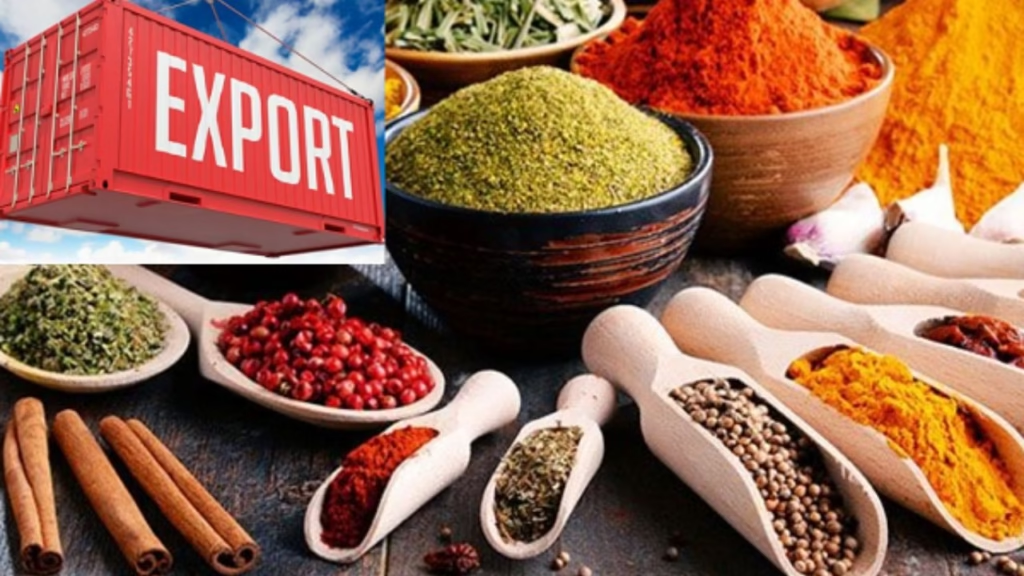
India and spices have been connected for centuries. Long before modern trade routes existed, merchants crossed oceans just to reach Indian ports and buy spices. Today that story hasn’t changed much. What has changed is the scale.
India is now the largest producer and exporter of spices in the world, supplying hundreds of spice varieties to global markets. From everyday kitchen essentials to premium culinary ingredients, Indian spices are shipped to more than a hundred countries every year.
This is why spices export from India continues to attract attention from entrepreneurs, traders, and small businesses. The demand is not limited to one or two products. Global buyers consistently import spices like chilli, turmeric, cumin, and cardamom, which are known for their strong aroma, rich flavor, and consistent quality.
Several international markets rely heavily on Indian spices. Countries such as USA, UAE, UK, Germany, Saudi Arabia, and Malaysia import large volumes every year to support food industries, restaurants, and retail markets. The rise of global cuisines and processed food industries has only increased this demand.
What makes this opportunity even more interesting is that the Indian spices export business is accessible even to beginners. Unlike many industries that require heavy infrastructure, a spice export business can start with a small setup as long as the exporter follows the right compliance, sourcing, and shipping procedures.
The reality is that the process becomes straightforward once you understand the steps involved from choosing the right spice to completing documentation and delivering the shipment safely.
This guide breaks down the complete process so you can clearly understand how the spices export from India works and how new exporters can enter this global trade with the right approach.
Table of Contents
Understanding the Indian Spice Export Industry
To understand how to export spices from India, it helps to first understand the scale of the industry itself. India is not just another supplier in the spice trade. It is the backbone of the global spice market.
The country produces a wide range of spices across different climatic zones, making it possible to supply everything from hot chillies to aromatic cardamom. Because of this diversity, the Indian spice export market plays a crucial role in meeting international demand.
One major reason for India’s dominance is geography. Different regions specialize in specific spices, creating strong supply chains and consistent quality. For example, Andhra Pradesh produces some of the world’s most widely exported chillies, while Kerala is known for premium spices such as pepper and cardamom.
Global demand for spices has also increased steadily over the past decade. International food industries, packaged food brands, and restaurants depend on imported spices to maintain flavor consistency. This demand directly strengthens the spice export business in India, making it one of the most stable agricultural export sectors.
Another important factor is trust. International buyers prefer Indian spices.
Because they offer:
- Strong aroma and flavor
- Wide variety of spice types
- Competitive pricing
- Established supply chains
Because of these advantages, many buyers specifically look for spices exported from India rather than alternatives from other producing countries.
Major Spices Exported from India
India exports dozens of spice varieties, but a few products dominate global shipments.
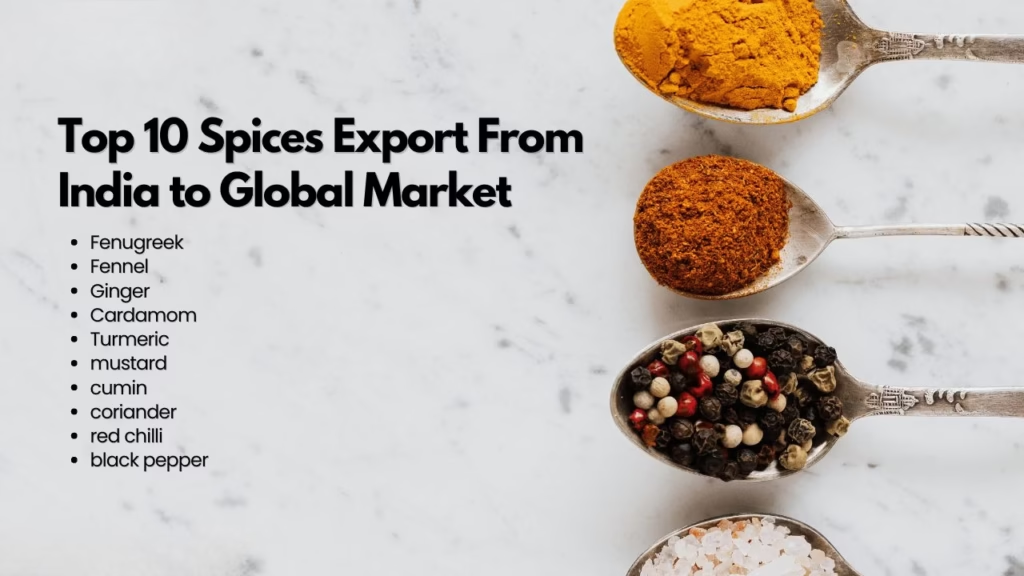
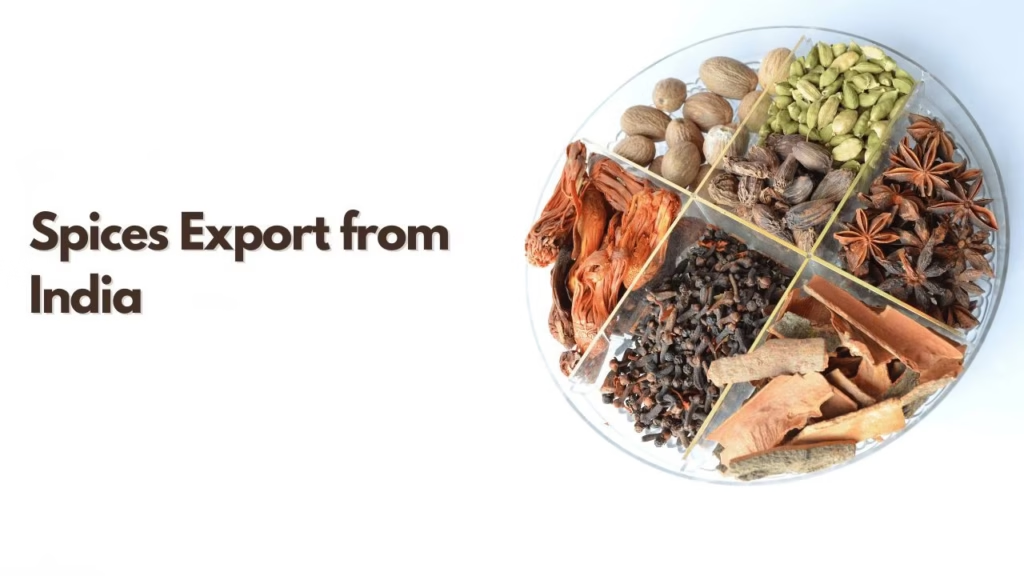
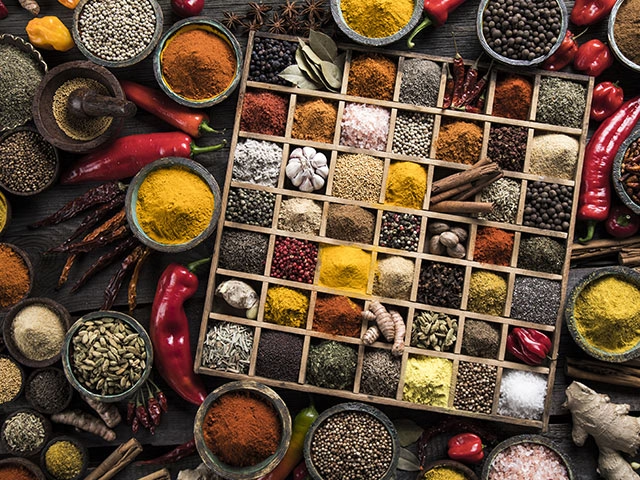
Some of the top spices exported from India include:
Chilli – Guntur, Andhra Pradesh
Guntur chillies are famous worldwide for their color and heat. They are widely used in food processing industries and spice blends.
Turmeric – Erode, Tamil Nadu
Erode is one of India’s major turmeric hubs. The region supplies turmeric used in cooking, pharmaceuticals, and health products.
Cumin and Coriander – Gujarat and Rajasthan
These spices are essential ingredients in global cuisines and are exported in large quantities every year.
Cardamom and Pepper – Kerala
Kerala produces premium quality cardamom and black pepper, which are highly valued in international spice markets.
These spice producing regions form the foundation of the Indian spice export market, enabling exporters to source products efficiently and supply international buyers consistently.
Understanding where spices come from and how they move through the supply chain is the first practical step before starting a spice export business in India.
Step 1: Choose the Right Spice for Export
Here’s the thing most beginners get wrong. They assume any spice can be exported easily. That’s not how the market works. The product you choose directly affects demand, pricing, compliance, and profit margins.
If you pick the wrong product, you’ll struggle to find buyers. If you choose a spice with stable international demand and reliable sourcing, the spice export business becomes much easier to manage.
Focus on High Demand Spices
The safest starting point is to export spices that already have consistent global demand. These products move faster in international markets and are easier to sell.
Some of the best spices to export from India include:
- Chilli
- Turmeric
- Cumin
- Coriander
- Black pepper
- Cardamom
These spices are used daily by food manufacturers, restaurants, and retail spice brands worldwide. That steady demand is what makes them part of the most profitable spices export.
Importance of Sourcing Regions
Another factor that directly affects export success is where the spice is sourced. Buyers often prefer products from regions known for quality and consistency.
Example 1: Guntur Chillies
Guntur in Andhra Pradesh is globally recognized for producing chillies with strong color and heat levels. Many exporters specifically source chilli from this region because international buyers already trust the quality.
Example 2: Erode Turmeric
Turmeric from Erode in Tamil Nadu is widely traded because of its high curcumin content and consistent quality. This makes it easier to sell in markets that require strong flavor and natural color.
Choosing the right sourcing region improves buyer confidence and helps maintain product consistency.
Understanding HS Codes for Spices Export
Every product exported from India must be classified under an HS code (Harmonized System code). Customs authorities use these codes to identify products and apply tariffs, documentation requirements, and compliance checks.
Knowing the correct HS code for spices export prevents delays during customs clearance.
Examples:
- Chilli – HS Code 09042211
- Turmeric – HS Code 09103030
Using the correct HS classification ensures that shipping documents, customs declarations, and international trade records remain accurate. Even a small mistake in HS codes can delay shipments or create compliance issues.
Choosing the right product, sourcing it from the correct region, and using the proper HS classification forms the first practical step in building a reliable spices export from India business.
Step 2: Select the Right Export Market
Once you decide which spice to export, the next critical step is choosing the right destination market. This decision affects everything from pricing and profit margins to compliance requirements and shipment procedures.
Different countries have different import regulations. Some markets demand strict quality certifications, while others prioritize faster supply and competitive pricing. Understanding this difference is essential when planning how to export spices from India successfully.
Countries Importing Spices from India
Several countries consistently import large volumes of Indian spices every year. These markets support a wide range of products and create strong opportunities for exporters.
Major countries importing spices from India include:
- United States
- United Arab Emirates
- United Kingdom
- Germany
- Saudi Arabia
- Malaysia
Each of these markets has its own regulations and demand patterns.
Export Spices from India to USA
The United States is one of the largest importers of Indian spices. However, this market comes with strict regulatory requirements.
Exporters who export spices from India to USA must comply with:
- Food safety regulations
- Product testing requirements
- FDA prior notice submission
Buyers in this market usually demand consistent quality, proper packaging, and complete documentation. The advantage is that pricing and margins are often higher for exporters who meet these standards.
Export Spices from India to UAE
The UAE is another important trading hub for Indian spices. Compared to Western markets, the UAE offers faster trade movement and large volume demand.
Many exporters choose to export spices from India to UAE because:
- Logistics routes are shorter
- Import procedures are relatively faster
- The region has strong demand for Indian food ingredients
Dubai in particular acts as a re-export hub, meaning spices imported there may later be distributed to other Middle Eastern and African markets.
Choosing the right destination market allows exporters to balance compliance requirements, pricing opportunities, and shipment efficiency, which directly influences the long term success of the spices export business.
Step 3: Business Registration Required to Export Spices
Before you ship a single kilogram of spice abroad, you need to set up your export business legally. Many beginners try to jump straight into finding buyers, but without proper registration you cannot complete export documentation or receive international payments.
If you’re serious about how to start spices export business in India, the first step is creating a legal business structure and preparing the financial setup required for exports.
Choose a Suitable Business Structure
There are several ways to register an export business in India. The structure you choose mainly depends on how large you plan to scale the business and whether you will operate alone or with partners.
Common business structures used in the Indian spices export business include:
Sole Proprietorship
This is the simplest option and often preferred by beginners. It requires minimal compliance and allows individuals to start exporting with lower operational complexity.
Partnership Firm
A partnership is useful when two or more individuals want to run the export business together and share responsibilities.
LLP (Limited Liability Partnership)
An LLP provides legal protection to partners while maintaining flexibility in business operations.
Private Limited Company
This structure is generally used when exporters plan to build a larger export company with higher credibility and long term growth plans.
For many new exporters, a sole proprietorship is enough to start the spice export business, especially during the early stages.
Basic Setup Required for Exporters
Regardless of the business structure, some fundamental requirements must be completed before exporting.
PAN (Permanent Account Number)
Every export business must have a PAN issued by the Income Tax Department. This acts as the primary financial identity for the company.
Current Bank Account
Export payments must be received through a current account linked with your business. Banks also monitor export proceeds according to RBI and FEMA regulations.
Export Documentation Readiness
Your business should be prepared to handle standard export documents such as invoices, packing lists, and shipping documents. These documents are required during customs clearance and international shipments.
Completing this export business registration in India creates the foundation needed to start dealing with international buyers and preparing shipments legally.
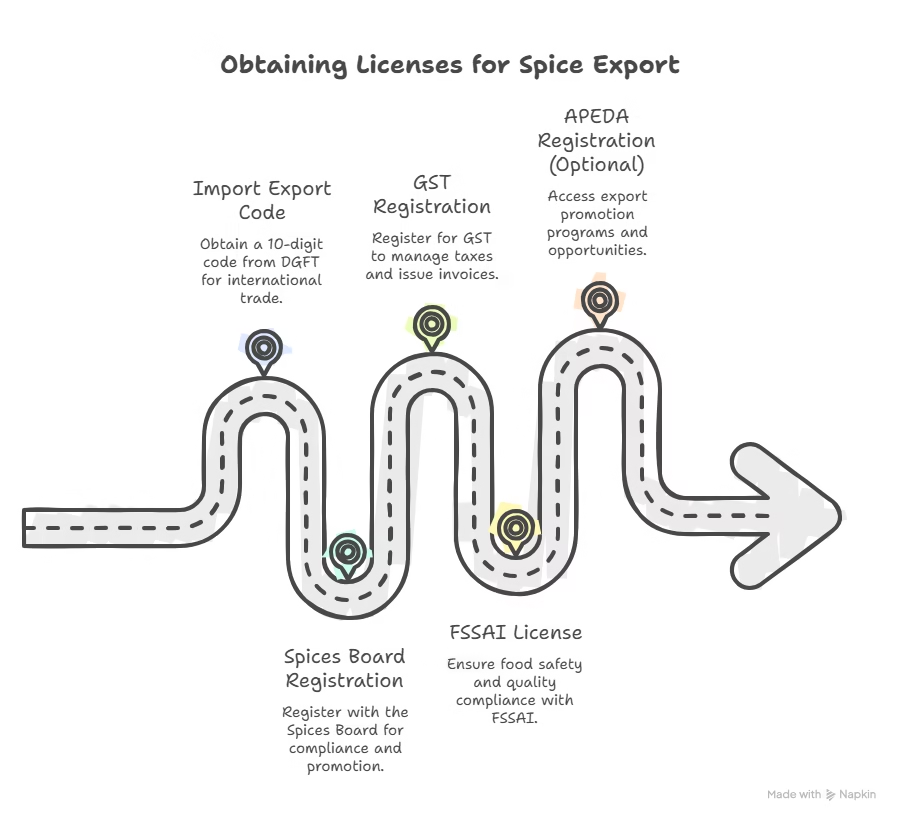
Step 4: Mandatory Licenses for Spices Export from India
Once your business is registered, the next step is obtaining the licenses required for exporting spices. These registrations ensure that your export operations comply with government regulations and international trade standards.
Understanding the licenses required to export spices from India is essential because missing even one registration can delay shipments or cause customs clearance issues.
Import Export Code (IEC)
The most important requirement for any exporter is the Import Export Code (IEC).
This code is issued by the Directorate General of Foreign Trade (DGFT) and acts as the primary identification number for exporters.
Key details about IEC:
- It is a 10 digit code
- Mandatory for all export and import activities
- Required for customs clearance and international transactions
Without an IEC for spice export, businesses cannot legally ship goods outside India.
Spices Board Registration (RCMC)
For anyone involved in spices export from India, registration with the Spices Board is mandatory.
Exporters must obtain the RCMC (Registration Cum Membership Certificate) from the Spices Board of India. This registration officially recognizes the exporter within the spice export industry.
The spices board registration for exporters helps with:
- Export compliance and monitoring
- Quality regulation
- Participation in export promotion programs
This certificate is a critical requirement for exporters dealing with international spice trade.
GST Registration
Although exports are generally zero rated under GST, but businesses still require GST registration to issue export invoices and manage tax compliance. GST registration also allows exporters to claim input tax credit and manage financial documentation properly.
FSSAI License
Since spices are classified as food products, exporters must comply with food safety regulations. This is where the FSSAI license becomes important.
The Food Safety and Standards Authority of India ensures that food products, including spices, meet safety and quality requirements before being exported.
For spice exporters, FSSAI certification confirms that the product is safe for consumption and processed according to regulatory standards.
Optional Registration: APEDA
While not mandatory in every case, some exporters also obtain APEDA registration. The Agricultural and Processed Food Products Export Development Authority supports exporters dealing with agricultural commodities.
APEDA registration can provide access to export promotion programs, training, and international trade opportunities.
Together, these registrations form the regulatory backbone of the spices export from India industry. Once these licenses are in place, exporters can move forward with sourcing products, preparing documentation, and arranging international shipments.
Step 5: Quality Standards and Compliance for Export
Here’s where many new exporters underestimate the process. Finding a buyer is not the hard part. Meeting international quality standards is. One rejected shipment can destroy profit margins and damage buyer relationships.
In the spices export industry, quality consistency is not optional. International buyers expect spices to meet strict food safety standards, moisture limits, pesticide regulations, and packaging requirements.
Why Quality Consistency Matters
Buyers purchase spices for food manufacturing, restaurants, and packaged food brands. If the product quality varies between shipments, buyers may cancel future orders.
Example 1: Moisture Control
If turmeric or chilli powder contains excess moisture, it can develop fungal contamination during shipping. This can lead to shipment rejection in strict markets like the EU.
Example 2: Pesticide Residue Limits
Many European countries test spices for pesticide residues. If levels exceed the allowed limits, the entire shipment can be rejected at the port.
Because of these risks, exporters must maintain strict quality checks before shipping.
Certification Requirements for Spice Export
To meet global buyer expectations, exporters often follow several internationally recognized certifications. These certifications confirm that spices meet food safety and quality requirements.
Important certification for spice export includes:
FSSAI Certification
The Food Safety and Standards Authority of India regulates food products, including spices. Exporters must ensure their products meet FSSAI safety standards.
ISO 22000
This international food safety management system ensures that food products are processed, handled, and packaged safely.
HACCP (Hazard Analysis and Critical Control Points)
HACCP focuses on identifying and controlling food safety risks during production and processing.
Organic Certification (NPOP)
For exporters targeting organic markets, certification under the National Programme for Organic Production allows spices to be sold as organic products internationally.
Halal Certification
This certification is important when exporting to Muslim majority countries where halal compliance is required for food products.
These certifications strengthen credibility and help exporters meet the spice export quality standards required by international buyers.
Country Specific Compliance Rules
Different countries also apply their own import regulations.
EU Markets
European countries maintain strict pesticide residue limits for spices. Exporters must ensure their products comply with these limits to avoid shipment rejection.
United States
When exporting spices to the United States, exporters must comply with FDA food safety regulations, including prior notice for shipments entering the country.
Understanding these country specific regulations ensures that shipments pass customs inspection smoothly and maintain long term buyer relationships.
Step 6: Documents Required to Export Spices from India
Once quality and compliance requirements are met, the next critical step is preparing the correct documentation. Export shipments cannot move through customs without proper paperwork.
For anyone learning how to export spices from India, understanding the documents required for spice export is essential. Each document serves a specific purpose during customs clearance and international shipping.
Core Export Documents
Below are the most important documents required in the export documentation for spices process.
Commercial Invoice
The commercial invoice is the primary document used in international trade. It contains details such as the product description, quantity, price, and total shipment value. Customs authorities and buyers use this document to verify the transaction.
Packing List
The packing list provides detailed information about how the spices are packed. It includes the number of packages, weight, packaging type, and shipment contents. Customs officers use this document during inspection.
Bill of Lading / Airway Bill
This document acts as proof that the shipment has been handed over to the shipping company.
- A Bill of Lading is used for sea shipments.
- An Airway Bill is used for air cargo.
It also functions as a transport contract between the exporter and the shipping carrier.
Certificate of Origin
The certificate of origin confirms that the spices were produced in India. Many importing countries require this document to determine applicable tariffs and trade benefits.
Phytosanitary Certificate
Spices are agricultural products, so importing countries require confirmation that they are free from pests and plant diseases. The phytosanitary certificate verifies that the shipment meets these plant health standards.
Health Certificate
Some countries require an additional health certificate confirming that the food product is safe for human consumption and meets food safety regulations.
Shipping Bill
The shipping bill is the primary customs document filed with Indian customs authorities. It contains detailed shipment information and allows goods to be cleared for export.
AD Code Registration
The AD Code (Authorized Dealer Code) is issued by the exporter’s bank and registered with customs. This code allows banks to track export payments and ensures that export proceeds are received through authorized banking channels.
Proper documentation ensures smooth customs clearance and prevents shipment delays. For exporters involved in spices export, maintaining accurate documentation is just as important as product quality and buyer relationships.
Step 7: How to Find Buyers for Indian Spices
At this stage many new exporters hit a wall. They have the product, the registrations, and the documentation ready, but they don’t know how to find buyers for spices export.
Here’s the reality. Exporting does not work without consistent buyer sourcing. You don’t just wait for buyers to appear. You actively place your product where spice buyers all over the world are searching.
There are several proven ways exporters can connect with global buyers.
B2B Platforms
B2B marketplaces are one of the fastest ways for new exporters to reach international buyers. These platforms allow suppliers and buyers to connect directly and negotiate deals.
Two widely used platforms include:
Example 1: IndiaMART
IndiaMART is one of the largest B2B platforms in India. Exporters list their spice products with specifications, pricing details, and contact information. International buyers searching for Indian spices often browse these listings to identify suppliers.
Example 2: TradeIndia
TradeIndia is another B2B platform where exporters can showcase their spice products and receive inquiries from buyers across different countries. Many small exporters use this platform to build their first export relationships.
These platforms help exporters generate leads and build a network of potential spice buyers.
Trade Fairs and International Exhibitions
Trade fairs remain one of the most effective methods to build long term export relationships. At these events, exporters can directly meet importers, distributors, and food companies.
For example, international food exhibitions and spice trade shows attract buyers from multiple countries who are actively looking for suppliers.
Face to face interaction often builds stronger trust compared to online communication.
Spices Board Export Promotion Events
The Spices Board of India regularly organizes export promotion events and buyer seller meets. These programs connect Indian exporters with international importers.
Participating in these events helps exporters:
- Showcase their products
- Understand buyer requirements
- Build long term export partnerships
For new exporters trying to understand how to find buyers for spices export, these official programs can provide valuable industry exposure.
Online Marketplaces and Digital Channels
Apart from B2B platforms, exporters can also explore online marketplaces and digital communication channels to reach global buyers.
Many international importers search online for suppliers, compare product quality, and contact exporters directly. Having a strong digital presence helps exporters attract buyer inquiries and build credibility in the Indian spices export business.
Finding buyers is not a one time activity. Successful exporters continuously expand their network and maintain relationships with multiple buyers across different countries.
Step 8: Packaging and Labeling Requirements
Packaging is not just about presentation. In the spices export business, packaging protects the product during long distance transportation and ensures compliance with international import regulations.
Poor packaging can lead to contamination, loss of aroma, or even shipment rejection at the destination port.
Why Proper Packaging Matters
Spices are sensitive agricultural products. During international shipping, they travel long distances and may be exposed to humidity, temperature changes, and handling during transportation.
Proper packaging helps in:
Maintaining Aroma and Freshness
Spices lose quality if exposed to air or moisture. Export packaging must protect the natural aroma and flavor throughout the shipping process.
Example 1: Turmeric Powder
If turmeric powder is packed in low quality bags, moisture may enter during shipping. This can cause clumping and reduce product quality.
Example 2: Whole Chilli
Whole chillies require breathable yet protective packaging to maintain color and prevent fungal growth during long sea shipments.
Avoiding Contamination
International buyers expect spices to be clean and safe for consumption. Packaging must protect the product from dust, pests, and external contamination during storage and transportation.
Many exporters use food grade packaging materials such as laminated pouches, vacuum packs, or multi layer export bags to maintain product safety.
Meeting Import Country Regulations
Different countries also enforce specific spice export packaging requirements. These rules ensure that food products are transported safely and traceability is maintained. Failure to follow these standards can lead to customs delays or shipment rejection.
Labeling Rules for Spice Export
In addition to packaging, exporters must follow proper labeling rules. Labels provide essential product information required by import authorities and buyers.
Typical label details include:
- Product name
- Net weight
- Batch number
- Country of origin
- Exporter name and address
These details help customs authorities trace the shipment and allow buyers to verify product information. Proper packaging and labeling ensure that spices arrive safely, meet international compliance standards, and maintain the quality expected by global buyers.
Step 9: Logistics and Shipping Process
Once the buyer confirms the order and your spices are ready for dispatch, the next stage is managing the shipment. This is where planning matters. Even if the product and documentation are correct, poor logistics coordination can delay exports.
Understanding the spices export procedure helps ensure that shipments move smoothly from your warehouse to the buyer’s destination.
The export shipping process India generally follows a structured workflow.
Receive Order and Issue Proforma Invoice
The process begins when the buyer confirms the purchase. Before production or sourcing starts, exporters typically send a proforma invoice to the buyer.
This document includes:
- product description
- quantity
- pricing
- delivery terms
- payment terms
Once the buyer accepts the proforma invoice, the order becomes confirmed.
Source and Package the Spices
After order confirmation, the exporter sources the spices from suppliers, farmers, or processing units. At this stage, quality checks and proper packaging are completed according to export standards. Spices are cleaned, graded, packed, and labeled before shipment preparation.
File the Shipping Bill
The shipping bill is the primary export document filed with Indian customs. It contains detailed shipment information such as product description, HS code, quantity, and export value. Without the shipping bill, customs will not allow the cargo to leave the country.
Customs Clearance
After filing the shipping bill, customs authorities review the documentation and may inspect the shipment if required. Once the inspection process is complete, the cargo receives export clearance. At this stage, the shipment is officially approved for export.
Freight Booking with Shipping Line
Next, the exporter or freight forwarder books cargo space with a shipping line or airline.
Example 1: Sea Freight
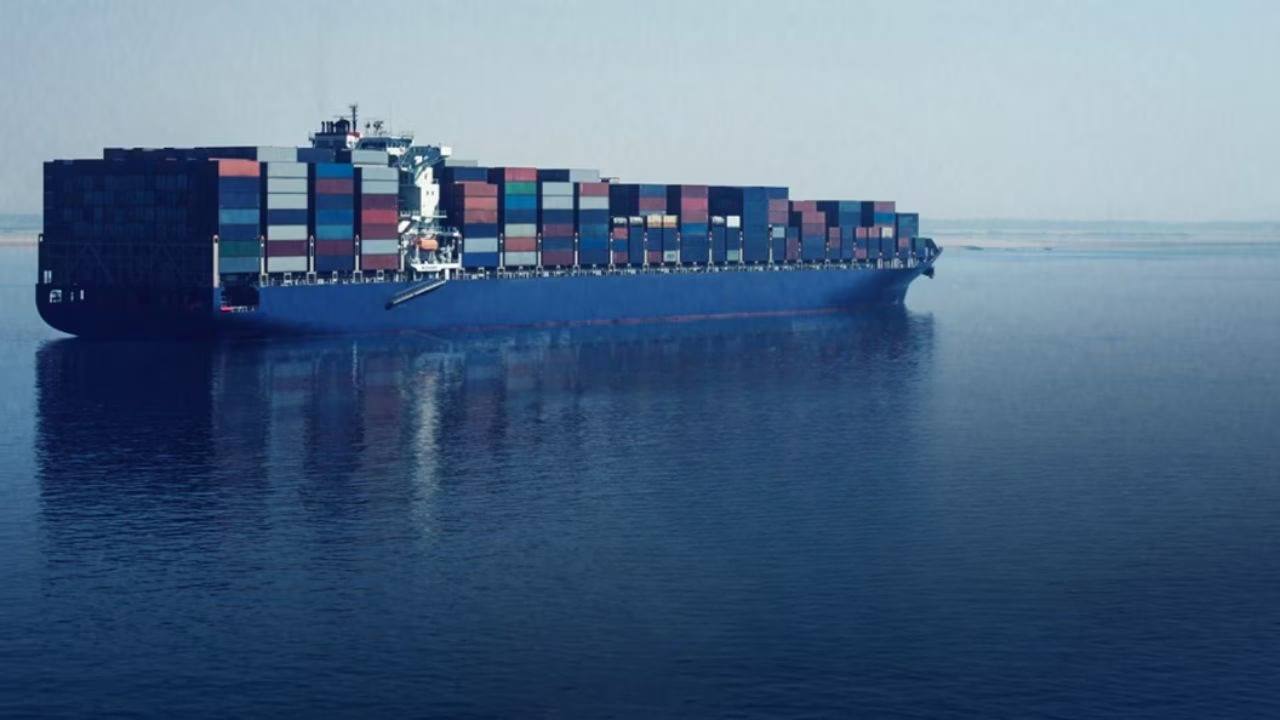
Most spice shipments move through sea freight because it is cost effective for bulk quantities.
Example 2: Air Freight
Air freight is usually used for smaller shipments or urgent orders where faster delivery is required.
Cargo Shipment by Sea or Air
Once the cargo is loaded onto the vessel or aircraft, the shipping carrier issues the transport document.
- Bill of Lading for sea shipments
- Airway Bill for air cargo
These documents act as proof that the shipment has been dispatched.
Payment Received Through Bank
After shipment, the exporter submits the required documents to the bank according to the agreed payment terms. The buyer then completes payment through international banking channels.
Once payment is received, the export transaction is considered successfully completed. Following this structured workflow helps exporters manage the spices export procedure efficiently and reduces the risk of delays during the shipping process.
Payment Methods in Spice Export
Exporting spices involves international financial transactions, so choosing the right payment method is critical. Payment terms determine the level of risk for both the exporter and the buyer.
Understanding export payment methods helps exporters protect their business while maintaining trust with buyers.
Several payment systems are commonly used in international trade.
Advance Payment
Advance payment is the safest option for exporters. In this method, the buyer pays the exporter before the shipment is dispatched.
Example:
- A buyer places an order for turmeric and transfers the full payment before the shipment leaves India.
- The buyer pays a partial advance to confirm the order, and the remaining balance is paid before dispatch.
This method eliminates the risk of non-payment for exporters.
Letter of Credit (LC)
A Letter of Credit (LC) is a secure payment mechanism used in international trade. In this system, the buyer’s bank guarantees payment to the exporter once the required export documents are submitted.
This method protects both parties because the bank acts as an intermediary.
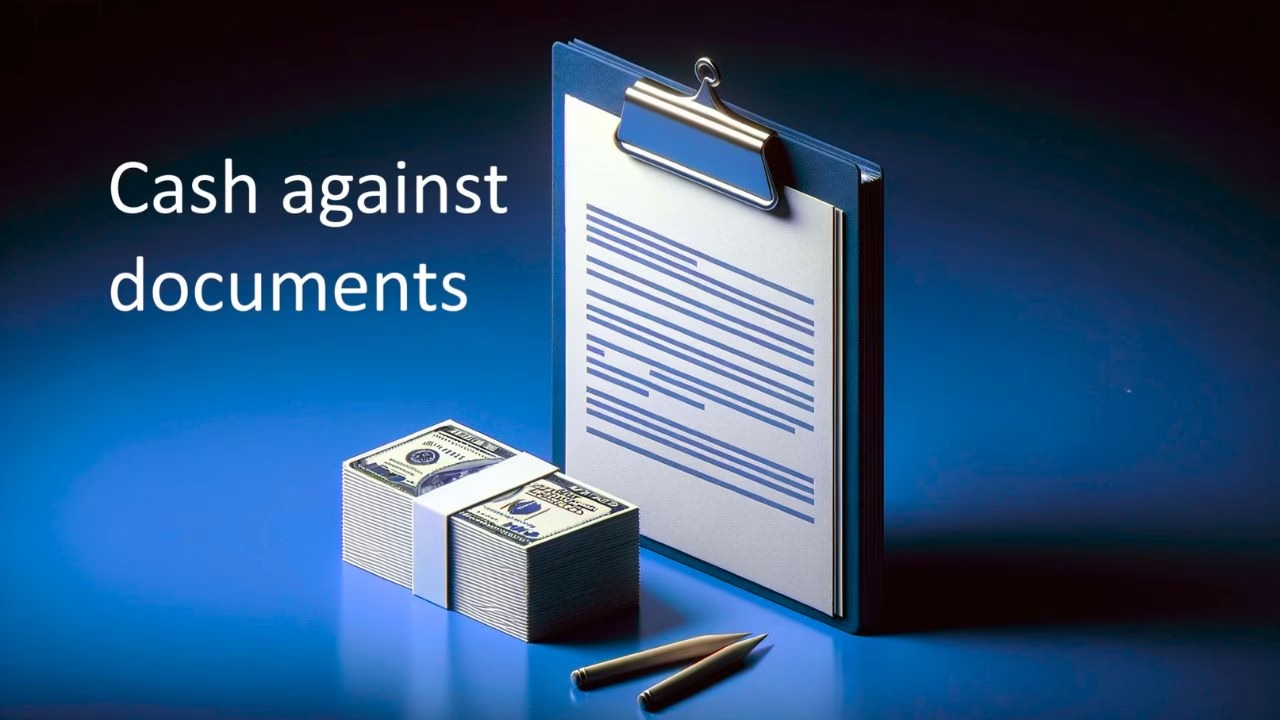
Documents Against Payment (DP)
Under DP terms, the exporter’s bank releases shipping documents to the buyer only after the buyer makes the payment. The buyer cannot claim the goods without completing payment, which offers moderate protection to exporters.
Documents Against Acceptance (DA)
In DA transactions, the buyer receives shipping documents after accepting a bill of exchange. Payment is made at a later agreed date. This method carries higher risk because the exporter ships goods before receiving payment.
Telegraphic Transfer (TT)
Telegraphic Transfer is a direct bank to bank payment system. Buyers transfer funds electronically to the exporter’s bank account. TT payments are commonly used in international trade because they are fast and widely accepted.
Importance of AD Code Compliance
Every exporter must register their AD Code (Authorized Dealer Code) with customs. This code is issued by the exporter’s bank and links export transactions with the banking system. The AD code allows banks to track export payments and ensures that foreign currency proceeds are received through authorized banking channels.
Understanding how exporters receive payment and selecting the right payment method helps protect profit margins and build reliable international trade relationships.
Common Mistakes New Spice Exporters Make
Starting a spice export business looks simple on paper. Find a buyer, ship the product, receive payment. In reality, many beginners lose money because they ignore small but critical details.
Understanding the mistakes in spice export business early can save exporters from shipment rejections, financial loss, and damaged buyer relationships.
Below are some of the most common mistakes new exporters make.
Exporting Without Spices Board Registration
Many beginners assume that having an IEC alone is enough to start exporting spices. That’s incorrect. For spice exports, registration with the Spices Board of India is mandatory.
Example 1
An exporter secures a buyer and prepares the shipment but later realizes that customs requires Spices Board registration. The shipment gets delayed because the required certification was not obtained beforehand.
Example 2
A trader attempts to export spices using another company’s registration. This creates compliance risks and can lead to legal complications. Without proper spices board registration, exporters may face serious operational issues.
Poor Packaging Leading to Shipment Rejection
Packaging mistakes are another frequent problem in the spices export industry. Spices are sensitive products and require proper packaging to maintain quality during transportation.
Example 1
Turmeric powder packed in low quality bags absorbs moisture during sea transport, resulting in clumping and reduced quality.
Example 2
Whole spices packed without protective lining attract pests or contamination during storage and shipping.
Poor packaging can cause shipments to fail quality inspections in importing countries.
Using the Wrong HS Code
HS codes are used by customs authorities to classify exported products. Using the wrong classification can create customs delays or incorrect tariff calculations.
Example 1
An exporter mistakenly uses a general spice HS code instead of the specific code for chilli exports. Customs authorities request corrections before allowing shipment.
Example 2
Incorrect HS codes in export documents lead to mismatched customs records, causing delays during clearance.
Accurate product classification is essential for smooth export operations.
Ignoring Quality Testing
Some exporters skip laboratory testing to reduce costs or speed up shipments. This often backfires.
Example:
- A shipment of chilli powder fails pesticide residue tests at the destination port.
- Spices that appear clean visually fail microbial contamination tests during import inspection.
Ignoring testing requirements can result in rejected shipments and financial losses.
Avoiding these common mistakes in spice export helps exporters build credibility and maintain long term relationships with international buyers.
Is Spices Export from India Profitable?
Many entrepreneurs ask one simple question before entering the export market is spice export profitable?
The answer is yes, but only when the business is managed properly. The global demand for spices remains strong, and India continues to dominate supply in many international markets. This creates significant opportunities for exporters who maintain quality and compliance.
However, the spice export business profit depends on several important factors.
Product Choice
Choosing the right product directly affects profitability. Some spices have stable international demand and consistent pricing.
Example 1
Turmeric is widely used in food, health supplements, and cosmetics, making it a popular export product.
Example 2
Cumin seeds are in high demand across Middle Eastern and European markets, creating steady export opportunities.
Selecting the right spice helps exporters maintain stable sales.
Export Destination
Different markets offer different pricing structures and compliance requirements.
Example:
- Exporting spices to the United States often provides higher margins but requires strict compliance with FDA regulations.
- Middle Eastern markets such as the UAE may offer faster trade movement and higher volume orders.
Choosing the right destination market can significantly influence profit margins.
Quality Consistency
In the spice export industry, quality consistency determines whether buyers place repeat orders. Exporters who maintain uniform product quality build stronger reputations and long-term contracts.
Inconsistent quality often results in lost buyers and lower profits.
Buyer Relationships
Exporting is not just about one shipment. Successful exporters focus on building long term relationships with international buyers. Reliable communication, timely delivery, and consistent quality encourage buyers to place repeat orders.
Over time, these relationships help exporters grow their market presence and increase profitability. When these factors are managed correctly, the spices export industry can become a stable and scalable business opportunity.
Resources for Spice Exporters in India
Exporting spices involves several regulations, certifications, and documentation processes. Instead of relying on outdated information or third party advice, exporters should regularly check official government resources.
These institutions provide updated guidelines, export policies, and support programs for exporters. Knowing where to get reliable information helps avoid compliance mistakes and keeps exporters updated with industry changes.
Spices Board India
The Spices Board of India is the primary authority regulating spice exports from the country. It operates under the Ministry of Commerce and plays a central role in monitoring quality, registering exporters, and promoting Indian spices globally.
Exporters interact with the Spices Board for several reasons:
- Registration Cum Membership Certificate (RCMC) for spice exporters
- Quality monitoring and testing support
- Export promotion programs and trade events
- Market intelligence and export statistics
The board also operates export portals and organizes buyer seller meets that help Indian exporters connect with international spice buyers.
DGFT (Directorate General of Foreign Trade)
The Directorate General of Foreign Trade (DGFT) manages India’s import and export policies. Exporters must obtain their Import Export Code (IEC) from DGFT before they can legally start exporting goods.
DGFT also provides:
- Export policy updates
- trade notifications and regulatory changes
- export incentives and schemes
Checking DGFT announcements regularly helps exporters stay aligned with current export regulations.
APEDA
The Agricultural and Processed Food Products Export Development Authority (APEDA) supports exporters dealing with agricultural and food products. While spices primarily fall under the Spices Board, APEDA still provides useful export development support.
Exporters can benefit from:
- export training programs
- international trade promotion activities
- market research reports
- export infrastructure development initiatives
These programs help exporters expand their reach in international markets.
FSSAI
The Food Safety and Standards Authority of India (FSSAI) regulates food safety standards within the country. Since spices are food products, exporters must comply with FSSAI guidelines to ensure product safety.
FSSAI provides:
- licensing and food safety compliance standards
- packaging and labeling guidelines
- updates on food safety regulations
Staying updated with FSSAI rules helps exporters maintain compliance with both domestic and international food safety standards. Together, these organizations form the regulatory and support framework that guides the spices export industry.
Conclusion
Exporting spices from India is a structured process that combines regulatory compliance, quality control, and market access. While the opportunity is significant, success depends on following the right steps rather than rushing into shipments without preparation.
The process generally begins with selecting the right spice and identifying the right international market. Exporters then complete business registration, obtain the necessary licenses, prepare documentation, and ensure the product meets global quality standards.
Once these foundations are in place, shipments can be arranged through proper logistics and payment systems. However, three factors ultimately determine long term success in the Indian spices export business.
Compliance
Export regulations, documentation, and certifications must be handled correctly. Ignoring compliance requirements can delay shipments or lead to penalties.
Quality
International buyers expect consistent quality. Proper sourcing, processing, and packaging help maintain the aroma, safety, and authenticity of Indian spices.
Strong Buyer Relationships
Exporting is not just about one shipment. Long term success depends on building reliable relationships with international buyers and delivering consistent products over time.
For new exporters, the best approach is to start small, understand the process step by step, and gradually expand operations. With proper compliance, reliable sourcing, and strong buyer networks, the spice export business in India can grow into a stable and scalable international trade opportunity.
Frequently Asked Questions (FAQs)
1. What license is required to export spices from India?
To start spices export from India, exporters must obtain an Import Export Code (IEC) from DGFT and register with the Spices Board of India (RCMC). Since spices are food products, an FSSAI license is also required to meet food safety regulations.
2. Which spices are most exported from India?
Some of the top spices exported from India include chilli, turmeric, cumin, coriander, pepper, and cardamom. These spices have strong global demand and are widely used in food processing and international cuisines.
3. Which countries import spices from India?
Major countries importing spices from India include the USA, UAE, UK, Germany, Saudi Arabia, and Malaysia. These markets import Indian spices regularly due to their strong flavor, quality, and reliable supply.
4. Is the spice export business profitable in India?
Yes, the spice export business in India can be profitable if exporters maintain consistent quality, choose the right export markets, and build strong relationships with international buyers.
5. How do exporters find buyers for spices?
Exporters usually find spice buyers international through B2B platforms like IndiaMART and TradeIndia, trade fairs, export promotion events organized by the Spices Board, and online business networking.
About the Author
Hi, I’m SriHarsha, founder of shxhub.in.
I focus on explaining import export business topics in a practical, beginner friendly way, based on how exports actually work on the real ground especially documentation, quality control, and buyer expectations.




2 thoughts on “How to Export Spices from India: Licenses, Documents, Buyers & Process Explained”