
Exporting food products isn’t complicated, but it’s strictly regulated. Miss one document or certification and your shipment sits at port burning money. Food products exporting gives you entry to the global markets that’s already hungry for Indian rice, spices, tea, coffee, and processed foods.
This guide walks you through the exact step by step process from market research to getting paid. It’s built for beginners, small exporters, and freelancers entering export who want a structured approach, not random advice.
Table of Contents
Step 1: Market Research for Food Export
Most beginners rush to registration and skip this step. That’s a mistake. If you choose the wrong product or wrong country, everything else fails.
Your goal here is pick the right product, for the right market, at a profit, with manageable regulatory requirements.
Identify High Demand Export Products
Start with what India already dominates globally. You don’t need to reinvent anything.
Rice export from India
- Basmati rice demand in Middle East and Europe
- Non-basmati rice bulk exports to Africa and Southeast Asia
Spices export business
- Whole spices like turmeric, cumin, coriander
- Processed spice powders for retail brands abroad
Tea and coffee export
- Assam and Darjeeling tea for premium markets
- Indian coffee beans for USA and European roasters
If your product isn’t already in demand globally, you’re making your life harder for no reason.
Analyze Target Export Markets
Once you shortlist products, you match them with the right countries. Each market has different rules, tastes, and price expectations.
USA food import rules
- Strict FDA compliance
- detailed labeling and ingredient transparency
UAE food import demand
- high demand for rice, spices, ready to eat foods
- faster clearance but strong documentation checks
Saudi Arabia food import regulations
- halal compliance
- shelf life and packaging requirements are strict
Pick markets where your product has demand and your compliance burden is realistic.
Validate Profitability and Feasibility
This is where most beginners lie to themselves. Demand alone doesn’t mean profit.
Pricing vs logistics cost
- Example 1: exporting basmati rice works because volume offsets shipping cost
- Example 2: exporting low value snacks fails because freight eats your margin
Compliance difficulty per product
- Example 1: whole spices are easier compared to processed food with preservatives
- Example 2: fresh fruits need cold chain + phytosanitary checks which increases risk and cost
If your margins disappear after logistics and compliance, it’s not a business, it’s a hobby.
If you get this first step right, everything else becomes easier. If you get it wrong, no license, certificate, or marketing trick will save you.
Step 2: Business Registration for Food Export
You can’t export anything without the basic legal setup. Skip this and you’re not an exporter, you’re just sending parcels internationally and hoping customs ignores you.
Core requirement: a registered business + IEC + GST + APEDA (for most food categories)
Choose Business Structure
Pick something simple and scalable. Don’t overcomplicate it.
Sole proprietorship
- fastest to start, lowest compliance
- best if you’re testing exports with 1–2 products
LLP / Private Limited
- better for scaling and partnerships
- more credibility with international buyers
Here’s the thing structure doesn’t get you buyers, but it affects your ability to handle contracts, payments, and liability.
Examples
- A solo exporter testing spice exports to UAE → sole proprietorship is enough
- A group sourcing rice in bulk for Middle East contracts → LLP or Pvt Ltd makes more sense
Get Import Export Code (IEC)
Without IEC, you legally cannot export from India. This is non-negotiable.
DGFT IEC online process
- apply on DGFT portal
- fill business details, bank details, PAN
- verify via OTP + DSC (if applicable)
Cost and documents required
- government fee is zero
- basic documents: PAN, address proof, bank certificate or cancelled cheque
Approval is usually quick if your details are clean.
Examples
- You want to export turmeric to USA → IEC is required before your first shipment
- You receive an inquiry from a Dubai buyer → you still can’t ship until IEC is issued
GST Registration for Exporters
A lot of beginners think exports are zero rated so GST is not needed. That’s wrong.
Why GST is still required
- needed for documentation and invoicing
- required to claim refunds and incentives
- linked with shipping bill and customs clearance
Examples
- You export rice without GST registration → you can’t claim input tax credit
- You ship processed food → GST helps you manage input costs and refunds
APEDA Registration (RCMC)
If you’re exporting agricultural and food products, APEDA registration is standard.
Cost
- around ₹5,000 + GST (one-time)
Eligibility
- exporters dealing in scheduled food products (rice, fruits, vegetables, processed foods, etc.)
Benefits
- access to export promotion schemes
- financial assistance programs
- credibility with foreign buyers
Examples
- exporting basmati rice → APEDA registration is expected
- exporting mango pulp or pickles → APEDA helps with compliance + support
Step 3: Food Export Certifications and Compliance
This is where most shipments fail. Not because the product is bad, but because compliance is weak. You’re dealing with food. Every country takes that seriously.
FSSAI Central License for Export
This is mandatory for anyone exporting food from India.
Mandatory requirement
- you cannot export food without FSSAI license
- central license is required for export businesses
How to apply
- apply through FOSCOS portal
- submit business details, product category, premises info
- inspection may happen depending on category
Examples
- exporting packaged snacks → FSSAI license required
- exporting spice powders → still requires FSSAI approval
Product Specific Certifications
Different products need different certificates. Don’t assume one license covers everything.
Health Certificate
- confirms product safety and hygiene
- issued by Export Inspection Council or relevant authority
Phytosanitary Certificate
- required for plant based products
- confirms product is pest and disease free
Organic / GlobalGAP
- required if buyer demands organic or global standard produce
Examples
- exporting fresh fruits → phytosanitary certificate is mandatory
- exporting organic spices → organic certification required by buyer
Labeling and Packaging Compliance
Your product might be perfect. Your labeling might still get it rejected Every country has its own labeling laws.
Destination country rules
- USA → FDA labeling standards
- EU → ingredient disclosure, allergen labeling
- Middle East → halal + Arabic labeling in many cases
Labeling standards include
- ingredient list
- manufacturing and expiry date
- country of origin
- nutritional information
Examples
- sending packaged snacks to USA without FDA compliant label → shipment gets blocked
- exporting spice powder to UAE without proper Arabic label → product rejected or delayed
Get this step right and customs clearance becomes routine.
Get it wrong and your shipment sits at port while your buyer loses patience.
Step 4: How to Find Buyers for Food Export
No buyers means no business. Simple as that. Most beginners hide behind registrations and certificates because it feels productive. It’s not. You need real buyers who will place orders. Your job is to put your product in front of importers who are already buying from India.
Use B2B Platforms
These platforms already have international buyers searching for suppliers. Use them properly, not lazily.
Alibaba
- create a strong supplier profile with product specs, MOQ, pricing range
- respond fast to RFQs (request for quotations)
IndiaMART
- works well for connecting with smaller importers and traders
- good for testing demand and getting early leads
Amazon Global Selling
- useful for packaged food, spices, tea, coffee
- better for branded retail exports than bulk shipments
Examples
- listing basmati rice on Alibaba → you get bulk inquiries from Middle East buyers
- listing spice powders on Amazon Global → you sell directly to end customers in USA
Attend Trade Fairs and Export Events
If you’re serious about scaling, you need to meet buyers face to face. Trust builds faster offline than online.
World Food India
- large platform with international buyers
- good for networking and understanding demand trends
Export promotion councils
- APEDA and other councils host buyer seller meets
- helps you connect with verified importers
Examples
- attending World Food India → you meet 10+ potential buyers in 2 days
- APEDA buyer meet → you connect with distributors looking for long term supply contracts
Direct Outreach Strategy
This is where most beginners fail because they either don’t do it or do it badly.
Email pitching
- find importers using directories and trade data
- send short, clear emails with product specs and pricing
Social media
- LinkedIn for B2B buyers
- Instagram for branded packaged food
Agents / distributors
- local agents in UAE, USA, Saudi Arabia who already have distribution networks
Examples
- emailing 50 rice importers in UAE → you get 3–5 serious responses
- partnering with a Saudi distributor → they handle local sales while you supply consistently
If you’re not doing outreach every week, don’t complain about no orders.
Step 5: Documentation Required for Food Export
This is where your shipment either moves smoothly or gets stuck for weeks. Documentation isn’t paperwork. It’s proof that everything is legal, compliant, and traceable.
Miss one document and customs won’t clear your goods.
Core Export Documents
These are the basic documents required for every shipment.
Commercial Invoice
- details of buyer, seller, product, value
- used for customs valuation
Packing List
- details of quantity, weight, packaging type
Bill of Lading / Airway Bill
- issued by shipping line or airline
- acts as proof of shipment and ownership
Examples
- incorrect invoice value → customs holds your shipment for reassessment
- mismatch in packing list vs actual cargo → delay at port
Regulatory Documents
Food exports require extra documentation because safety is involved.
Certificate of Origin
- proves goods are made in India
FSSAI / APEDA certificates
- confirms compliance with Indian food export standards
Health / Phytosanitary certificates
- confirms product is safe and pest free
Examples
- exporting spices without health certificate → buyer country rejects shipment
- missing certificate of origin → buyer can’t claim import benefits
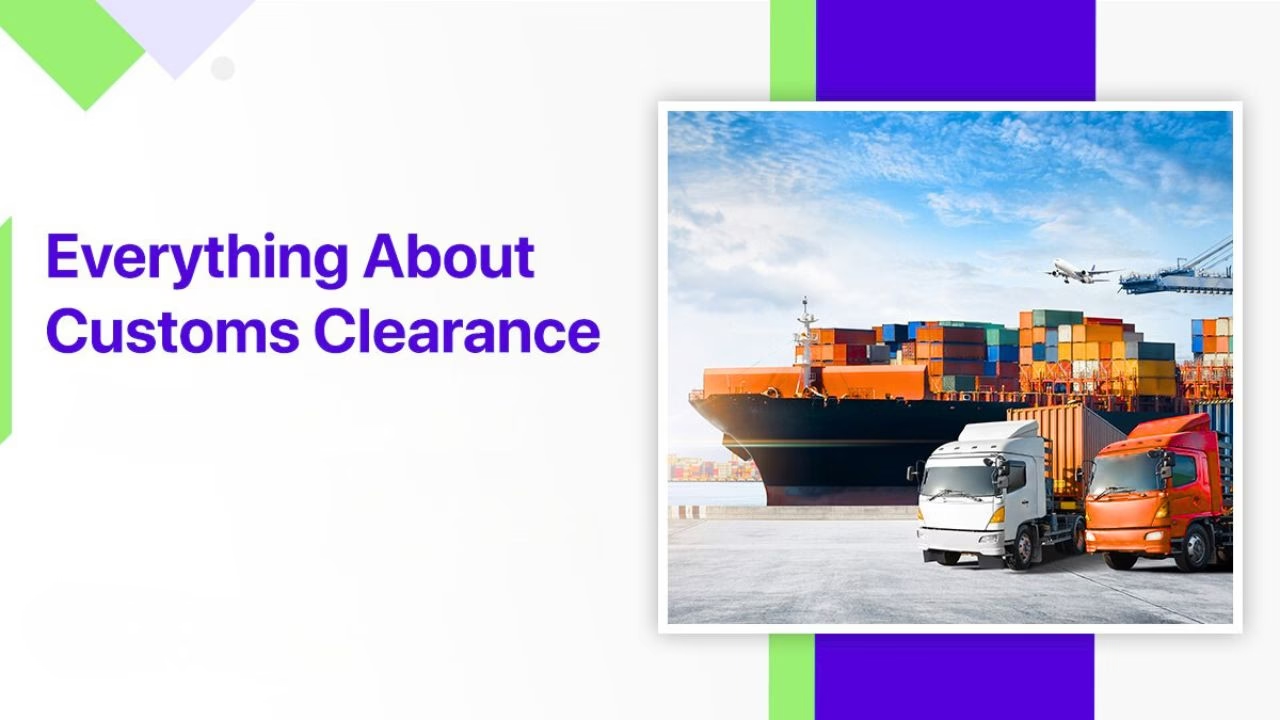
Customs Filing
Everything you prepare finally goes into the customs system.
Shipping Bill via ICEGATE
- filed electronically
- required for customs clearance and export incentives
Examples
- wrong HS code in shipping bill → wrong duty calculation and delays
- incomplete filing → shipment stuck until correction is made
Finding buyers brings revenue. Documentation ensures you actually get paid without delays or disputes.
Step 6: Logistics and Shipping Process
This is where your product becomes an actual export. Up to this point, it’s planning. Here, mistakes cost money fast. Choose the wrong shipping method or mess up logistics and your margins disappear.
Choose Shipping Mode
You have two main options sea freight or air cargo. The right choice depends on product type, urgency, and margin.
Sea freight
- best for bulk goods like rice, spices, coffee beans
- lowest cost per unit
- longer transit time
Air cargo
- used for high value or time sensitive goods
- expensive but fast
- useful for samples or premium products
Examples
- exporting 20 tons of basmati rice → sea freight is the only logical option
- exporting premium organic spices in small batches → air cargo makes sense for faster delivery
If your product value is low and weight is high, air shipping will kill your profit.
Freight Forwarders and Booking
You don’t handle shipping yourself. You use a freight forwarder who manages containers, documentation, and movement.
What they do
- book vessel or flight
- handle port coordination
- assist with customs clearance
Platforms like Maersk
- allow you to check routes, pricing, schedules
- direct booking for container shipping
Examples
- working with a local freight forwarder in Andhra → they manage Krishnapatnam port shipment
- booking container through Maersk → you track vessel schedule and delivery timeline
A good forwarder saves you time. A bad one causes delays you pay for.
Cold Chain and Packaging
Food isn’t like electronics. Temperature and packaging decide whether your goods arrive usable or wasted.
Reefer containers for perishables
- temperature controlled containers
- used for fruits, frozen foods, dairy products
Packaging requirements
- moisture protection
- vacuum sealing for spices
- strong export grade cartons
Examples
- exporting fresh mangoes without cold chain → product spoils before arrival
- exporting spice powders in poor packaging → moisture ruins product quality and buyer rejects shipment
Incoterms for Export
Incoterms define who pays for what and who carries risk.
FOB (Free on Board)
- you handle costs until goods are loaded on ship
- buyer handles freight and insurance
CIF (Cost, Insurance, Freight)
- you handle shipping + insurance until destination port
- buyer receives goods at destination
Examples
- new exporter choosing FOB → reduces risk and responsibility
- experienced exporter using CIF → adds margin by controlling freight and insurance
If you don’t understand Incoterms, you will lose money in negotiations.
Step 7: Payment Methods and Export Incentives
Shipping goods is useless if you don’t get paid properly. Payment structure and government incentives decide your real profit.
Secure Payment Options
You need payment methods that reduce risk.
Letter of Credit (LC)
- bank guarantees payment once documents are verified
- safest option for new exporters
EEFC account
- lets you hold foreign currency earnings
- protects you from exchange rate loss
Examples
- first time deal with unknown buyer → use LC to secure payment
- regular buyer sending USD payments → hold funds in EEFC to manage forex timing
If you ship goods without secure payment terms, you’re risking your money.
Government Export Incentives
India offers incentives to make exports profitable. If you ignore them, you’re leaving money on the table.
APEDA Financial Assistance Scheme
- support for branding, packaging, quality improvement
RoDTEP (Remission of Duties and Taxes on Exported Products)
- refunds embedded taxes on exported goods
Duty drawback
- refund of customs duties paid on inputs
Examples
- claiming RoDTEP on rice export → increases your net margin
- using APEDA assistance → reduces your marketing and packaging cost
Claiming Benefits
Incentives don’t come automatically. You have to file and claim them.
DGFT portal
- used for IEC, RoDTEP and export related filings
APEDA portal
- used for RCMC and financial assistance claims
Examples
- filing export returns on DGFT → you receive RoDTEP credits
- applying through APEDA portal → you get reimbursement for export promotion activities
Logistics controls your cost.
Payment controls your risk.
Incentives control your profit
Handle these three properly and your export business actually makes money instead of just moving goods.
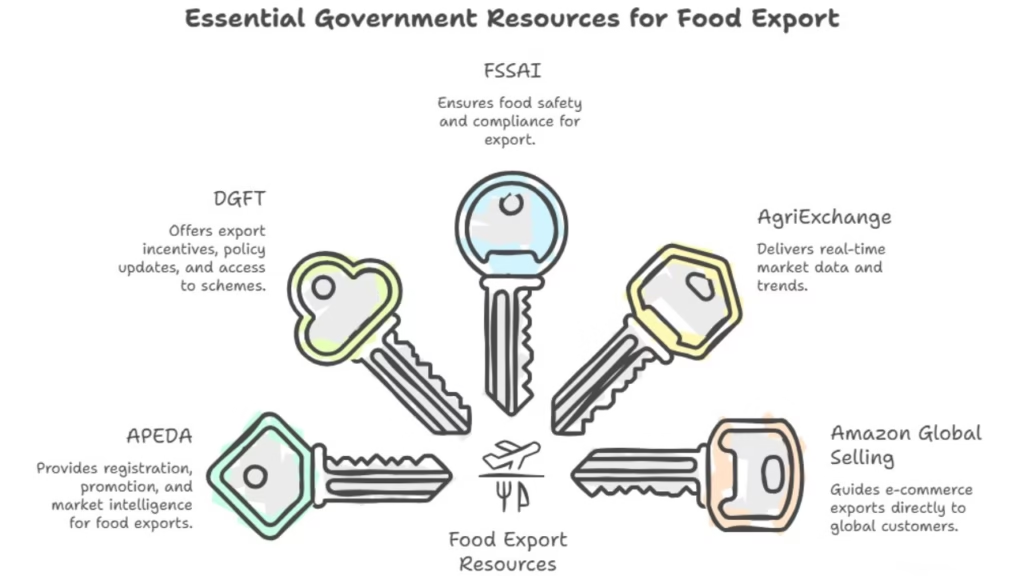
Key Government Resources for Food Export
These are the exact platforms serious exporters use to get data, approvals, and support.
APEDA (Agricultural and Processed Food Products Export Development Authority)
- registration (RCMC), export promotion schemes, buyer seller meets
- market intelligence and product guidelines
DGFT (Directorate General of Foreign Trade)
- IEC registration, export incentives, policy updates
- access to RoDTEP and other schemes
FSSAI (Food Safety and Standards Authority of India)
- food safety license for export
- compliance, labeling, hygiene standards
AgriExchange (APEDA portal)
- real time export data, demand trends, pricing
- helps you decide which product and market make sense
Amazon Global Selling Guide
- useful if you want to export packaged food directly to global customers
- step by step for listing, logistics, and compliance for e-commerce exports
Examples
- using AgriExchange data → you identify rising demand for Indian spices in UAE before entering the market
- using DGFT portal → you claim RoDTEP benefits and improve your profit margin per shipment
If you’re not using these resources, you’re operating blind.
Common Mistakes Beginners Make in Food Export
Most people don’t fail because exporting is hard. They fail because they ignore the basics.
Ignoring Compliance
They assume documentation and certification can be handled later. That’s how shipments get rejected.
Examples
- exporting packaged snacks without FSSAI export license → shipment blocked at customs
- sending spices without proper labeling for USA → FDA rejects the consignment
Following rules isn’t optional. It’s the entry ticket.
Choosing the Wrong Market
Beginners pick countries randomly based on hype and their personal interests instead of data.
Examples
- trying to export premium organic food to a price sensitive market → no buyers
- targeting a country with strict import bans on certain food additives → shipment gets rejected
Right product, wrong market equals zero sales.
Weak Documentation
Small errors create big delays. Customs doesn’t care that you’re new.
Examples
- mismatch between invoice and packing list → customs holds shipment for verification
- wrong HS code in shipping bill → duty issues and clearance delays
Documentation is not admin work. It’s risk control. If you avoid these three mistakes, you’re already ahead of 70% of new exporters who quit after their first failed shipment.
Final Checklist Before Your First Shipment
Before your first shipment leaves the port, run through this like a pilot before takeoff. If one item is weak, you fix it now, not after your goods get stuck.
Registration done
- IEC from DGFT active
- GST and APEDA registration in place
Examples
- IEC approved but bank details not updated → payment issues later
- APEDA not registered for rice export → buyer questions credibility
Certifications ready
- FSSAI central license active
- product specific certificates prepared (health, phytosanitary, etc.)
Examples
- exporting spices without health certificate → shipment delayed at destination
- exporting fresh produce without phytosanitary clearance → rejected at port
Buyer confirmed
- written purchase order
- clear agreement on price, quantity, Incoterms, payment terms
Examples
- verbal agreement only → buyer backs out after shipment
- unclear Incoterms → dispute over who pays freight and insurance
Logistics booked
- freight forwarder assigned
- container or cargo space confirmed
- packaging and labeling completed
Examples
- last minute booking during peak season → freight cost doubles
- weak packaging → product damage during transit
Payment secured
- Letter of Credit or advance payment terms set
- bank and EEFC account ready to receive foreign currency
Examples
- shipping without LC or advance → buyer delays or defaults payment
- wrong bank details in documents → payment stuck for weeks
Conclusion
Exporting food products from India isn’t complicated. It’s structured. There’s a system and if you follow it, it works.
Focus on three things compliance, buyer, logistics. Everything else is secondary.
Start simple. One product. One market. One buyer. Execute properly, learn from the first shipment, then scale. That’s how real exporters build stable businesses instead of chasing random orders and burning money.
FAQ’s
Do I need FSSAI license for export?
Yes. If you’re exporting food from India, a central FSSAI license is mandatory. Without it, your shipment won’t clear customs or meet buyer compliance standards. For example, exporting packaged spice powder requires an active FSSAI license before dispatch, and ready-to-eat snacks need both FSSAI approval and proper labeling compliance to be accepted in international markets.
Which food products are easiest to export from India?
Start with non-perishable, high-demand products that have simple compliance requirements. Items like rice, whole spices, tea, coffee, and dry processed foods are the easiest to handle and ship. For example, exporting turmeric and cumin seeds is low risk and easy to store, while basmati rice has strong global demand and an established supply chain.
How much investment is required to start food export?
There’s no fixed amount, but you need capital for product sourcing, documentation, packaging, and logistics. A small spice shipment via air cargo needs lower upfront money but has higher freight cost per unit, while a full rice container requires higher investment but offers better margins. Start with small shipments first to test the process before scaling.
Can I export food without APEDA registration?
If your product falls under APEDA’s scheduled category, then you cannot skip registration. Buyers and authorities expect APEDA RCMC for credibility and compliance. For example, basmati rice exports require APEDA registration, and products like mango pulp or processed foods also need it to access incentives and meet export norms.
How long does it take to complete your first food export shipment?
Your first shipment usually takes a few weeks because you’re setting everything up from scratch. Registrations and certifications may take some time, while finding a buyer depends on your outreach effort. For example, a first-time spice export to UAE can take 30–45 days, while a rice shipment with a ready buyer and supplier can move in 2–3 weeks.
About the Author
Hi, I’m SriHarsha, founder of shxhub.in.
I focus on explaining import export business topics in a practical, beginner friendly way, based on how exports actually work on the real ground especially documentation, quality control, and buyer expectations.