
The scent of Guntur chilies doesn’t just belong in Andhra Pradesh it belongs in kitchens across the globe. The demand for Indian produce from the golden turmeric of the south to the Basmati rice of the north is skyrocketing. But for many aspiring entrepreneurs and farmers, the gap between a local harvest and a foreign supermarket shelf feels like an unbridgeable barrier.
It isn’t.
Exporting is not a secret club reserved for massive corporates. It is a structured, logical process that anyone with patience and the right paperwork can master. Whether you’re looking to ship shipments of mangoes to the Middle East or organic millets to Europe, the pathway is clear if you know where to look.
This guide will walk you through exactly how to export agriculture products from India. We will strip away the confusion of regulatory acronyms, dive deep into the APEDA registration process, and explain the complexities of export logistics for agriculture.
By the end, you will have a roadmap to turn your local produce into a global brand no matter the size of your operation.
Table of Contents
The Global Appetite: Why Export Now?
India is rightly called the “granary of the world.” Its immense size and varied climates let us produce almost everything the world eats from fragrant spices and pulses to tropical fruits, rice, and wheat. As incomes rise and more countries diversify their food supply chains, opportunities for Indian exporters are multiplying.
India’s government has recognized this potential, setting aggressive annual growth targets for agricultural exports. Various policy incentives, port infrastructure upgrades, and digital platforms facilitate the expansion of exports.
In 2023–24, India’s agricultural exports crossed $50 billion, led by rice, spices, marine products, and fresh fruits.
But why should you consider exporting?
- Access to New Markets: Expanding overseas lets you tap into buyers willing to pay premium prices for quality Indian produce.
- Diversification Reduces Risk: If you’re dependent on a single domestic market, you’re highly exposed to local price fluctuations. Exporting reduces that vulnerability.
- Government Incentives: Schemes like RoDTEP, Duty Drawback, and APEDA(Agricultural and Processed Food Products Export Development Authority) grants lower your effective costs, so your margins rise.
However, entering the global market for Indian spices, cereals, and fruits requires a shift in mindset. You’re no longer selling to a neighbor who can inspect the goods on the spot. You’re selling to a buyer thousands of miles away who relies entirely on your certifications, your packaging, your ability to deliver on time, and your business ethics.
Trust is your currency. Compliance is your language.
Step 1: Laying the Legal Foundation To Export Agriculture Products from India
Before sending your crops abroad, you must ensure your business is recognized and registered with India’s regulatory bodies especially the Directorate General of Foreign Trade (DGFT) and any product specific boards. Let’s break down the necessary steps:
The Passport of Trade: Import Export Code (IEC)
Think of the IEC as your business’s passport. Without it, you cannot legally export anything from India.
How to Obtain Your IEC
- Where to Get It: Apply online on the DGFT portal. The website provides step by step instructions and the application is fully digital and you want to know how apply iec simply, easily read this.
- What You Need:
- PAN card for your business or you as an individual
- Bank account in the same name as the business
- Canceled cheque for verification
- Business or personal address proof
- Digital signature certificate (DSC) for certain entities
- Processing Time: Usually 1–3 working days if all documents are in order.
- Cost: Approximately ₹500
Once issued, the IEC is valid for a lifetime. There are no annual renewal hassles. However, remember to notify DGFT if you change your business address or ownership structure.
Why Is the IEC So Important?
- No exporter can clear shipments through Indian customs without it.
- It is needed to open foreign currency accounts for remittances.
- It is required for any financial transaction involving exports, including government incentives and subsidies.
Mastering the APEDA Registration Process
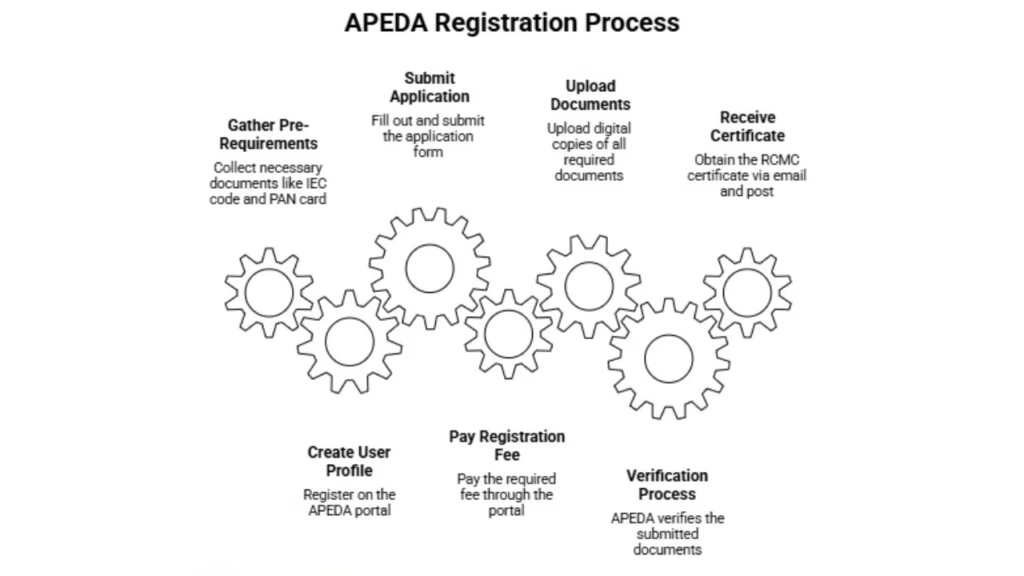
If you intend to export “scheduled products” fruits, vegetables, rice, cereals, meat, poultry, and floriculture registration with APEDA is mandatory. The APEDA registration process is now entirely online and fairly simple if you prepare the documents in advance.
Step by Step APEDA Registration
- Pre-Requirements:
- Valid IEC code
- PAN card
- Bank certificate/statement
- Address proof
- Canceled cheque
- Telephone and email details
- Application:
Go to the APEDA portal and create a user profile. - Fee Submission:
Pay the registration fee typically ₹5,000 plus applicable GST. - Document Upload:
Upload digital copies of all documents, ensuring clear scans for quick processing. - Verification:
APEDA may request clarifications or additional documents. If all is well, they process the application within 1–2 weeks. - Certificate:
On approval, you receive the Registration-Cum-Membership Certificate (RCMC) by email and also via post.
Benefits of APEDA Registration
- Access to APEDA’s export promotion schemes, such as subsidies (e.g. cold storage infrastructure subsidy, bar coding and labeling support).
- Entry into exclusive trade exhibitions and buyer seller meets.
- Help with compliance and quality standards for foreign markets.
- Market intelligence and buyer databases.
- Priority for government incentives and fast track documentation at ports.
Other Essential Badges
Depending on your product, you may need additional registrations. Here’s what you should consider:
- Spices Board: For those focusing on major and minor spices (cardamom, pepper, chilies, etc.).
- FSSAI: A Food Safety and Standards Authority license is essential for any food exports, especially processed or packaged goods.
- AGMARK: Certification proves grading and quality standards for products like ghee, honey, pulses, and edible oils.
- GST Registration: Mandatory for all businesses with annual turnover above the threshold.
- MSME/Udyam Registration: Not required for export, but helpful for securing loans and support schemes.
- Organic Certificates (NPOP): National Programme for Organic Production is Essential for exports to markets that regulate claims like “organic” (EU, USA, Japan).
Quick Case Example
Suppose you want to export turmeric from Andhra Pradesh to Germany. You’ll need:
- IEC from DGFT
- APEDA registration
- FSSAI license
- GST number
- Organic certificate (if labeling as organic)
- Potentially, a GLOBAL GAP certificate for large supermarket chains
Step 2: Product Selection and Market Intelligence
Exporting “everything” is a common mistake. The best exporters focus tightly, often down to a single commodity, region, or variety.
Choosing Winning Crops and Products
Self-Audit: Start with your strengths. Which products can you procure at scale directly from your farm or local aggregators?
Ask:
- Is the crop in demand abroad?
- Can you guarantee regular supply throughout the year?
- Can the product survive the export journey without spoilage?
- Are you able to meet global quality and pesticide residue standards?
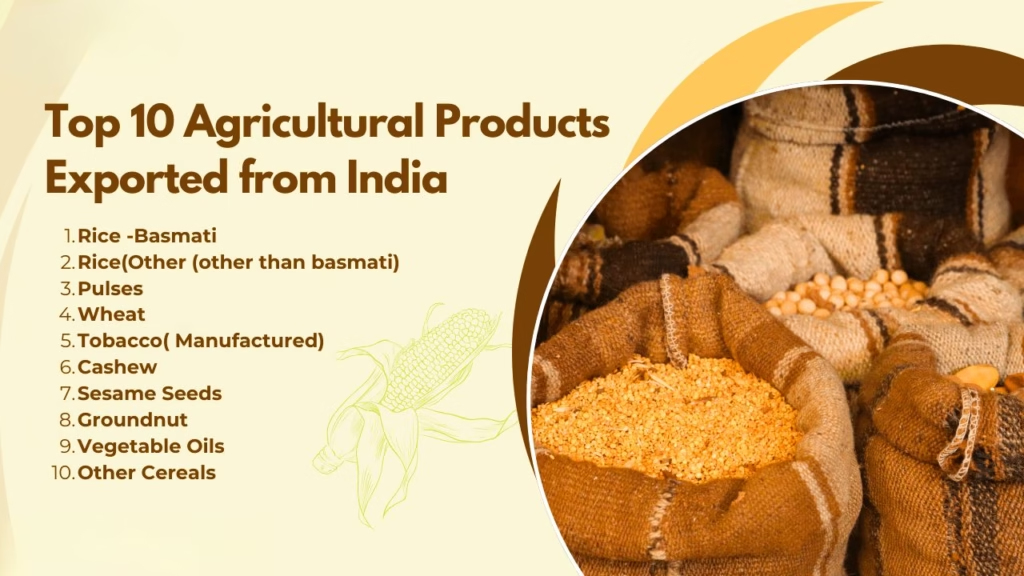
Most Exported Agricultural Products from India
| Product Category | Top Destinations | Noteworthy Features |
| Non-Basmati Rice | Africa, Southeast Asia | Bulk, stable shelf life |
| Basmati Rice | Middle East, Europe | Aroma, premium market |
| Chilies | China, US, Vietnam | SHU specific demand |
| Spices (turmeric, cumin) | US, Europe, Arabia | High value, strict residue |
| Fresh fruits (mango) | Middle East, Europe | Perishable, seasonal |
| Vegetables (onion, okra) | Southeast Asia, Arabia | Semi perishable |
| Processed foods | Worldwide | Value added, label sensitive |
| Millets, pulses | Africa, Europe | Health/niche demand |
Andhra Pradesh Case Study
Andhra Pradesh is a leading example of focused export strategy:
- Rice: Krishna and East Godavari districts supply premium non-Basmati varieties to Africa and Middle East.
- Spices: Guntur red chilies command top global prices for their heat and color.
- Fruits: Banganapalli mangoes from the region are exported to the US and Europe using advanced cold chain logistics.
Action Point: Sourcing
Develop a supply chain for your product using:
- Farmer producer organizations (FPOs)
- Aggregators in key producing regions (e.g. Machilipatnam for rice, Guntur for chilies)
- Tie ups with mandis or large farms
Deep Dive Market Research
Choosing a product is only step one. Next, pinpoint your export markets.
How to Find High Growth Export Destinations
- APEDA Trade Data Portal: Explore real time and historic data on product wise and country wise demand.
- UN Comtrade & Trademap: Analyze which countries import what volumes and from which origins.
- Niryat Bandhu & Niryat.gov.in: Indian government portals offering training, webinars, and statistics.
- Access2Markets: The EU portal lets you research import tariffs, sanitary standards, certifications, and labeling requirements for exports to every EU country.
- Direct Buyer Outreach: Attend trade fairs (e.g. Gulf Food Expo, Fruit Logistica Berlin) and use APEDA’s buyer seller directory.
Example: Understanding Buyer Needs
Suppose you plan to export mangoes to Europe. You learn:
- EU buyers prize uniform ripeness, absence of pesticides, and specific labeling.
- Tariff rates differ depending on the country and seasonal surcharges may apply.
- Special handling, such as vapor heat treatment, is needed for certain countries.
- Sweden and Germany import larger volumes per capita than France.
- Quality failures are publicly listed in Europe’s “Rapid Alert System for Food and Feed” (RASFF), so you can see the most common reasons for rejections.
Focused Niche Opportunities
Explore trends like:
- Demand for millets after the UN declared the International Year of Millets
- Growing vegan and organic food movement, especially in Europe and the US
- Ready to cook and processed foods Indian frozen parathas, curries, gravies
Tariff and Regulatory Mapping
- Use APEDA or Access2Markets to check tariffs, quota limits, and regulatory alerts.
- Look up product codes (HS Codes) for detailed requirements.
- Check quarantine regulations and required treatments (e.g. fumigation, irradiation).
Step 3: The Paper Trail (Documentation & Certification)
Even small mistakes in paperwork can result in significant losses. Let’s break down all necessary export documents and certifications.
The Commercial Suite
1. Commercial Invoice:
A legally binding bill issued by you, the exporter, stating full product details including value, quantity, buyer and seller info, shipment terms (e.g. CIF vs FOB), and payment instructions.
2. Packing List:
Details item wise contents, net/gross weight, and packaging description. Used by customs to verify physical cargo.
3. Bill of Lading/Air Waybill:
Issued by the shipping line/airline as proof of receipt and shipment. It acts as a transferable “title” to the goods, especially critical for Letter of Credit payment.
4. Shipping Bill:
Generated and filed electronically on ICEGATE as the core document for Indian customs clearance and export duty assessments.
5. Certificate of Origin:
Issued by local Chambers of Commerce or APEDA certifies country of origin needed for availing tariff concessions in the importing country.
The Critical Phytosanitary Certificate
What is Phytosanitary Certificate?
A government issued certificate that verifies the product is free of regulated pests, diseases, and meets all import requirements of the destination country.
Process:
- Apply at the local Plant Quarantine station (in every major port and airport).
- Inspector checks samples or entire loads for pests, diseases, and chemical residues.
- Product is either cleared, conditionally cleared (subject to treatment), or rejected.
- Certificate, sealed and signed, is shipped with the export consignment.
Tip:
Apply for inspection well before shipment date. If quarantine officers detect a pest or disease, you may need to fumigate or treat your cargo, which could introduce delays or extra costs.
Health, Safety & Niche Certifications
1. FSSAI Health Certificate:
FSSAI is Mandatory for food exports, especially perishables. Certifies processing/packaging safety.
2. AGMARK:
Required for categories like honey, ghee, and pulses. Confirms grade/quality complied with Indian standards.
3. GLOBAL GAP & USDA Organic:
Often required by major overseas retailers. GLOBAL GAP covers on farm food safety, environmental, and worker standards USDA Organic is needed for US buyers.
Organic Certification Example:
- For Europe, only products with a valid NPOP Transaction Certificate can be labeled or marketed as “organic.”
- Certification is tied to individual consignments, and traceability is verified via Tracenet.
Step 4: Quality Control and Packaging
High quality produce and perfect packaging are non negotiable if you want to succeed in international markets.
The Quality Imperative
Lab Testing and Inspection:
- EIC(Export Inspection Council) and APEDA recognized labs test for pesticide residues, heavy metals, bacteria, and other international compliance parameters such as MRLs(Maximum Residue Limit).
- For processed foods, labs check shelf life, packaging integrity, and microbiological safety.
Sampling Examples:
- For rice, samples are tested for moisture content (must not exceed 14%), foreign matter, broken grain percentage, and possible contamination.
- For mangoes, sugar content (measured in Brix), firmness, and appearance are checked.
- For spices, capsicum oleoresin content (in chilies), curcumin percentage (in turmeric), and pathogens are analyzed.
Rejection Rates:
- The EU and US routinely inspect food imports even a minor violation (especially with pesticide residues) can result in your shipment appearing on the RASFF alert list weakening your reputation.
Packaging That Survives (and Sells!)
Protection:
- Fruits/vegetables: Use ventilated, food grade crates or boxes lined with absorbent material to prevent bruising and spoilage.
- Spices/grains: Use moisture resistant, food safe bags with inner linings.
- Labels must include product name, net/gross weight, HS code, production date, country of origin, storage instructions, and, if applicable, “organic” certification number.
Innovation Makes a Difference:
- Modified atmosphere packaging (MAP) extends shelf life for fresh produce.
- QR coded labeling aids traceability and impresses buyers concerned about supply chain integrity.
International Standards:
- Comply with packaging rules like ISPM-15 for wooden crates (fumigation or heat treatment mandated).
- Check destination country specific rules, e.g. multi lingual labeling or recyclable packaging mandates in the EU.
Practical Tip
Keep packaging samples approved by your buyer before mass shipping. This avoids last minute rejections due to non standard sizes or labels.
Step 5: Logistics and Shipping Mastery
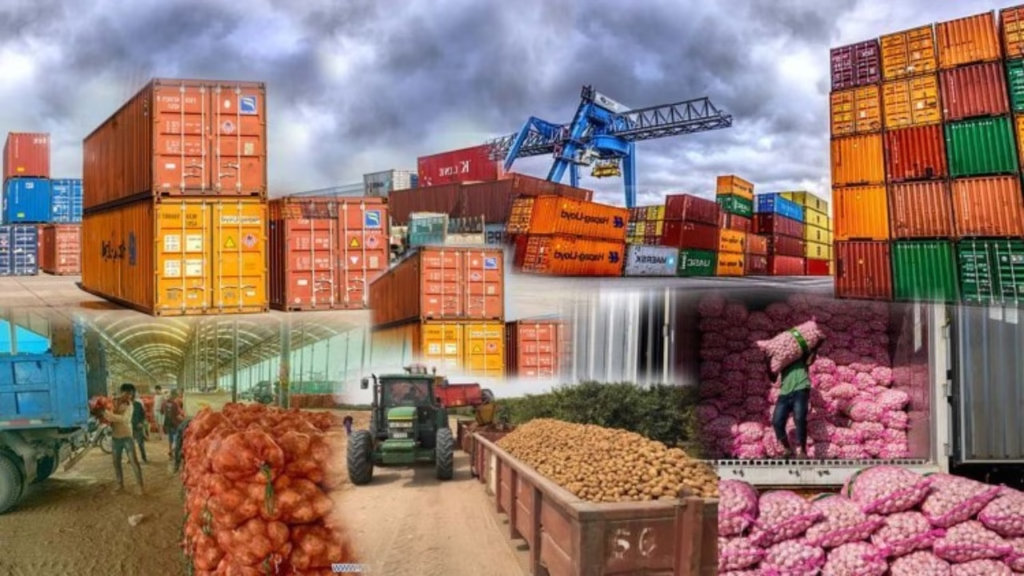
Flawless execution in export logistics for agriculture is a competitive advantage. Rapid transit and maintaining product condition are fundamental to profitability.
Choosing the Right Mode
Sea Freight:
- For shipments over 1,000 kg, containers (20-foot or 40-foot) are standard.
- Schedule bookings with trusted freight forwarders avoid peak season (pre-harvest/post-festival) to minimize costs.
- Common Indian agri export ports Krishnapatnam, Kakinada, Mundra, JNPT, Chennai.
Air Freight:
- Used for products with high perishability or high value to weight ratio (mangoes, pomegranates, cut flowers).
- Coordinate cargo arrival time at airport to avoid expensive warehousing surcharges.
- Consolidated air cargo (grouped shipments) can lower per kg rates for small exporters.
Mastering the Cold Chain
Cold Chain Elements:
- Pre-cooling at farm gate after harvest
- Cold storage/warehouses near aggregation centers
- Refrigerated transport (reefer trucks)
- Reefer containers on ships or aircraft
Real World Example:
- Andhra Pradesh’s mango exporters install forced air cooling to lower field heat rapidly, reducing spoilage in transit to Middle East markets.
Ensuring Traceability:
- Document temperature logs and invest in basic sensors to monitor temperature/humidity within containers. Many international buyers request temperature printouts as proof.
Understanding Incoterms
Incoterms Simplified:
- FOB (Free On Board): Buyer arranges freight/insurance after goods are loaded at Indian port. Exporter bears costs/risks until loading.
- CIF (Cost, Insurance, Freight): Exporter covers all costs until goods reach importer’s port. Price cargos accordingly.
- EXW (Ex Works): Buyer arranges everything from your warehouse a rare choice for agri exports.
- DAP (Delivered at Place): Exporter handles entire journey to buyer’s premises. High risk and for experienced exporters only.
Customs Clearance Process:
- File shipping bill and packing list via ICEGATE.
- Submit documents to Custom House Agent (CHA).
- Pay applicable export duties, get clearance.
- Supervising officer verifies goods before final gate in at the port.

Step 6: Finance, Payments, and Government Incentives
Receiving timely and secure payment is one of the foundations of sustainable export operations. Export finance also determines your capacity to scale.
Secure Payment Methods
1. Letter of Credit (LC):
Establishes a binding agreement that payment will be released only after the bank sees proof (documents) that shipment has occurred and all terms are met. Types include:
- Sight LC (payment is immediate after docs submission)
- Usance LC (payment after agreed credit period, e.g., 30 or 60 days)
2. Advance Payment:
Best case scenario, particularly for new relationships. Payment is received (often a percentage upfront) before you initiate shipment.
3. Documents Against Payment (DP)/Documents Against Acceptance (DA):
The buyer must pay (DP) or accept a bill of exchange (DA) to get documents to clear customs. DA involves credit risk avoid unless relationship is firmly established.
4. Open Account:
Goods are shipped without guarantee of payment. Use only with highly trusted, repeat buyers.
Export Credit Insurance:
The ECGC (Export Credit Guarantee Corporation) insures exporters against losses due to non payment, bankruptcy, or buyer country risks. Highly recommended, especially as you scale.
Incentive Landscape
- RoDTEP: Refunds embedded duties and taxes on exported products. Apply via ICEGATE/mapping portal.
- Transport and Marketing Assistance (TMA): Reduces costs for shipping agri and processed food products to specific regions (notably Africa, CIS, Latin America).
- Duty Drawback: Refunds a portion of customs duties incurred on inputs used to make exported goods.
- Interest Equalization Scheme: Offers concessional interest rates on export finance.
- APEDA Schemes: Funding for infrastructure packhouses, cold storage, testing labs, barcoding equipment.
Filing Export Returns:
- Report every shipment on the DGFT/APEDA portals. Timely returns determine eligibility for all benefits.
- Remittance tracking under FEMA (Foreign Exchange Management Act) compliance is a must.
Step 7: Navigating Real World Challenges
Exports are rewarding, but every path encounters roadblocks. Knowledge and preparation minimize risk.
The Rejection Nightmare
Common Causes:
- Excess pesticide residues
- Undeclared pest/disease presence
- Faulty/incorrect documentation
- Incorrect labeling (mismatched HS code/country of origin)
What to Do:
- Use pre-shipment inspection agencies (SGS, Intertek, Bureau Veritas) to independently verify shipments.
- Carry insurance for re-shipment or destruction.
Policy and Regulatory Shocks
The regulatory environment is dynamic. Overnight changes can defeat plans.
- Local bans India’s periodic onion export bans, wheat restrictions during poor monsoon years.
- Importing country rules EU changing deforestation laws or the US tightening pesticide limits.
Staying Prepared:
- Regularly follow DGFT trade notices and APEDA advisories.
- Engage with exporter associations for faster industry updates and peer support.
Supply Chain Disruptions
- Strikes at ports, container shortages, vessel delays, or sudden labor unrest.
- Weather disruptions unseasonal rain can halt harvest, affecting shipment timelines.
Mitigation:
- Build extra time into shipping schedules never promise just in time delivery on perishables.
- Use multiple aggregator contacts for sourcing avoid putting all your eggs in one basket (or crate).
Digital Tools for Smart Exporters
Leverage digital platforms to streamline your operations:
- Maersk, MSC cargo tracking—real-time vessel monitoring
- e-SANCHIT—paperless documentation submission at Indian customs
- APEDA traceability software—linking farm to export batches, vital for organics
Leveraging E-Commerce and D2C Exports
Platforms like Amazon Global Selling allow you to export food products, especially packaged snacks or spices, to overseas retail buyers with minimal setup. This is increasingly important for SMEs and new exporters.
Conclusion: From Local Farm to Global Table
Exporting agricultural products from India demands knowledge, patience, and discipline but it is entirely achievable for any dedicated entrepreneur. By focusing on documentation, compliance, and strategic market targeting, you will gradually master the process and build a sustainable export business.
Final Actionable Next Steps:
- Apply for your IEC and product specific registrations today.
- Pick a specific product market pair for your export debut.
- Invest in quality control don’t compromise if aiming for recurring business.
- Engage a reputable logistics and CHA partner to avoid shipment nightmares.
- Participate in APEDA and government exporter training to stay up to date on incentives and compliance.
- Join exporter forums, WhatsApp groups, and trade associations to keep learning.
- Explore digital export platforms for small consignments and global reach.
- Track your payments, file compliance returns, and claim every possible incentive.
The world is hungry. India’s fields are ready. The only missing piece is you. Take the first step and build your export legacy one shipment at a time.
Frequently Asked Questions (FAQ)
Q1. Is APEDA registration mandatory for all agricultural exports from India?
No. APEDA registration is required only for certain products like fruits, vegetables, and cereals. Always get an Importer-Exporter Code (IEC) first.
Q2. What is a phytosanitary certificate and why is it important?
It proves your agricultural shipment is free from pests and diseases. Most countries require it without it, your goods can be rejected.`
Q3. How can I find reliable international buyers?
Use APEDA and government portals, attend trade fairs, or list on B2B platforms. Indian embassies can also provide contacts.
Q4. What is the safest payment method for a first-time exporter?
An Irrevocable Letter of Credit (LC) via banks is safest. Partial advance payments offer extra security.
Q5. What most often causes shipment rejections, and how can I avoid it?
Rejections are usually due to pesticide residues or pests. Test your products, get proper certifications, and consider a pre-shipment inspection.
About the Author
Hi, I’m SriHarsha, founder of shxhub.in.
I focus on explaining import export business topics in a practical, beginner friendly way, based on how exports actually work on the real ground especially documentation, quality control, and buyer expectations.




4 thoughts on “How to Export Agriculture Products from India: 7 Proven Steps”