
Imagine this a single shipment of untreated grains arrives at a port, carrying tiny, invisible pests. Within weeks, those pests spread, destructing local crops and threatening an entire country’s food supply. Sounds dramatic? It’s not. This is exactly why phytosanitary certificates exist.
These certificates aren’t just governmental rules or procedures they’re the frontline defense against biological risks crossing borders. They ensure that plants, seeds, and other agricultural products are pest free and safe for import, protecting ecosystems and economies alike.
If you’re an exporter dealing with anything remotely plant related, understanding phytosanitary certificates isn’t optional it’s essential. Without one, your shipment could face rejection, destruction, or worse, long term inspections from customs.
Let’s dive into what these certificates are, why they matter, and how they keep global trade running smoothly.
A phytosanitary certificate is an official government issued document that confirms a shipment of plants or plant based products is free from harmful pests and diseases and meets the importing country’s plant quarantine rules.
That’s it.
- It’s not a quality certificate.
- It’s not a commercial document.
- It’s a compliance clearance that tells the importing country this shipment won’t damage your agriculture.
If you’re exporting any plant related, this phyto certificate is often the single document standing between smooth customs clearance and an outright rejection.
Table of Contents
Why This Certificate Exists at All
Here’s the thing. Phytosanitary rules exist because plant diseases don’t respect borders, and exporters don’t always know what they’re carrying.
What problem phytosanitary rules solve in global trade
International trade moves pests faster than nature ever could.
Example 1:
A single untreated grain shipment can carry insects that wipe out local crops once unloaded. Countries don’t take that risk lightly.
Example 2:
Wood packaging infested with larvae can introduce invasive species that permanently damage forests. This has happened before. That’s why inspections are mandatory.
Phytosanitary certification is the filter. It stops biological risks at the border before they turn into national problems.
Why plant quarantine matters more than most exporters realize
Most exporters treat plant quarantine like paperwork. That’s a mistake.
Example 1:
A missing or incorrect phytosanitary certificate doesn’t cause delays. It causes shipment rejection or destruction. No appeal, no refund.
Example 2:
Repeated plant quarantine violations can get exporters flagged, meaning every future shipment gets extra inspection. More inspections, more costs, more delays.
Plant quarantine isn’t about you. It’s about protecting the importing country’s food supply and ecosystem. Your shipment is guilty until proven clean.
Who needs a phytosanitary certificate and when
If you export plants, plant products, or anything regulated under plant quarantine laws, you need it before shipment.
Example 1:
Exporting fresh fruits, seeds, grains, or vegetables? A phytosanitary certificate is mandatory in most cases.
Example 2:
Shipping processed plant products or wooden packaging? You may still need a phyto certificate depending on the destination country’s rules.
What this really means is simple:
If customs can classify your product under plant quarantine, assume a phytosanitary certificate is required unless officially exempt.
What Is a Phytosanitary Certificate?
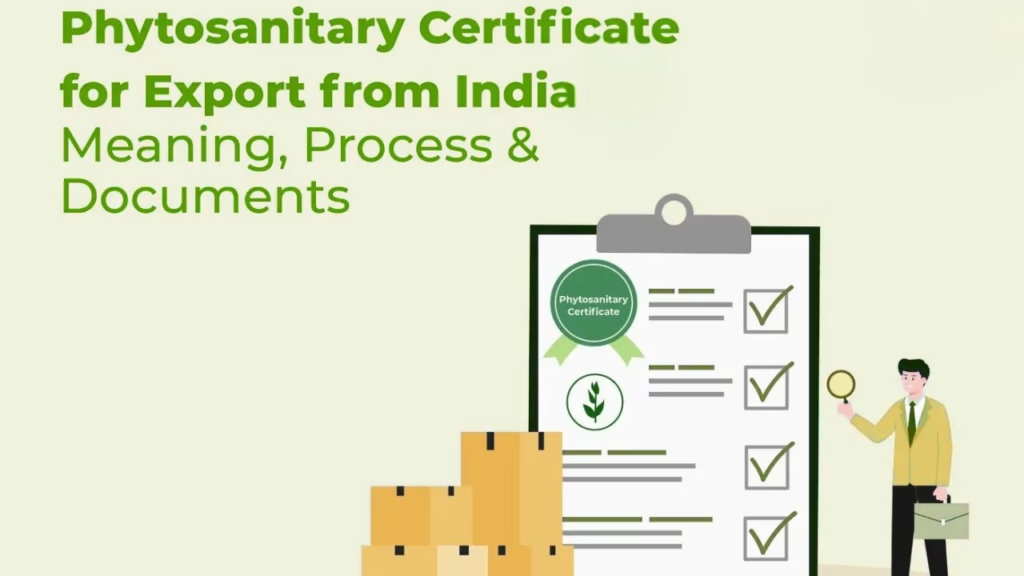
A phytosanitary certificate is a government issued plant quarantine certificate that confirms a specific export consignment has been inspected and found free from regulated pests and diseases, in line with the importing country’s phytosanitary rules.
Read that again.
It applies to one shipment, not your business, not your product category, and not your past compliance record.
Official definition in practical terms
In real world terms, a phytosanitary certificate tells customs authorities one thing only:
this consignment does not pose a plant health risk.
Example 1:
If you export mangoes, the certificate confirms this batch of mangoes was inspected and meets the importing country’s plant quarantine conditions.
Example 2:
If you export rice, the pq certificate confirms the shipment is free from regulated pests and has undergone inspection or treatment if required.
No inspection, no certificate. No certificate, no clearance.
What a phytosanitary certificate certifies and what it does not
This is where exporters get sloppy.
What it certifies:
- Pest free status at the time of inspection
- Compliance with plant quarantine regulations
- Completion of required treatments, if any
What it does not certify:
- Product quality or grade
- Commercial value or pricing
- Food safety or human health standards
Example 1:
A shipment can be low quality and still pass plant quarantine. That’s not customs’ problem.
Example 2:
A premium grade shipment can be perfectly edible and still get rejected if pests are detected. Plant quarantine overrides everything.
Quality assumption vs pest free status
Exporters often assume “good quality” equals “compliant.” That assumption is wrong.
Example 1:
Visually clean grains can still carry microscopic pests that trigger rejection despite looking market ready.
Example 2:
Well packaged wooden pallets can fail inspection if untreated, even if the product itself is untouched.
A phytosanitary certificate proves biological safety, not market quality. Mixing those up costs money.
Who Issues a Phytosanitary Certificate?
Authority matters here. A phytosanitary certificate is valid only when issued by the exporting country’s National Plant Protection Organization (NPPO).
No exceptions.
Role of the National Plant Protection Organization (NPPO)
The NPPO is the legally recognized government body responsible for plant quarantine enforcement and phytosanitary certification.
Its job is to:
- Inspect export consignments
- Order treatments when required
- Issue or refuse the phytosanitary certificate
Example 1:
If pests are detected during inspection, the NPPO can deny the pq certificate outright.
Example 2:
If treatment is required, the NPPO supervises or verifies it before certification.
This authority is non transferable.
Examples of issuing authorities by country
- United States: APHIS (Animal and Plant Health Inspection Service) under the USDA (U.S. Department of Agriculture)
- India: PPQS (Directorate of Plant Protection, Quarantine & Storage) under the plant and quarantine system of the Government of India
PPQS operates through designated plant quarantine stations and issues certificates via official systems, not intermediaries.
Keywords matter here for a reason: ppqs, plant and quarantine, plant quarantine are not optional concepts. They define legal authority.
Why private agencies cannot issue it
This is not a service certificate. It’s a primary declaration.
Example 1:
A private inspection agency can examine your goods, but its report has zero legal value at customs.
Example 2:
Freight forwarders and consultants can assist with documentation, but they cannot replace the NPPO’s signature.
If the phytosanitary certificate does not originate from the official plant quarantine authority, customs will treat it as nonexistent.
No stamp, no clearance.
Why Importing Countries Demand It
Importing countries don’t demand a phytosanitary certificate to make trade harder. They demand it to protect themselves from damage that is expensive, irreversible, and politically unacceptable.
Agricultural risk and ecosystem protection
Plant quarantine exists to stop biological threats before they cross borders.
Example 1:
A single pest introduced through an agricultural shipment can spread faster than regulators can contain it, destroying crops across regions.
Example 2:
Fungal diseases carried in seeds or fresh produce can contaminate soil for years, making entire farming zones unusable.
Once that damage happens, there’s no recall. No fix. Just loss.
How one infected shipment can cause national level damage
Exporters tend to think in container level risks. Governments think in country level outcomes.
Example 1:
An infested grain shipment doesn’t just affect the importer. It threatens domestic food security and farmer livelihoods.
Example 2:
Invasive insects entering through untreated plant material can wipe out native plant species, disrupting ecosystems beyond agriculture.
That’s why phytosanitary enforcement is aggressive. The cost of being wrong is national, not commercial.
Legal consequences of missing or incorrect certificates
Plant quarantine laws leave no room for “minor errors.”
Example 1:
A missing phytosanitary certificate usually results in shipment rejection, destruction, or forced re-export at the exporter’s cost.
Example 2:
Incorrect details like product description mismatches or treatment errors can trigger penalties and long term exporter flagging.
Customs doesn’t negotiate on phytosanitary compliance. Either the paperwork is right, or the shipment doesn’t move.
What Products Require a Phytosanitary Certificate?
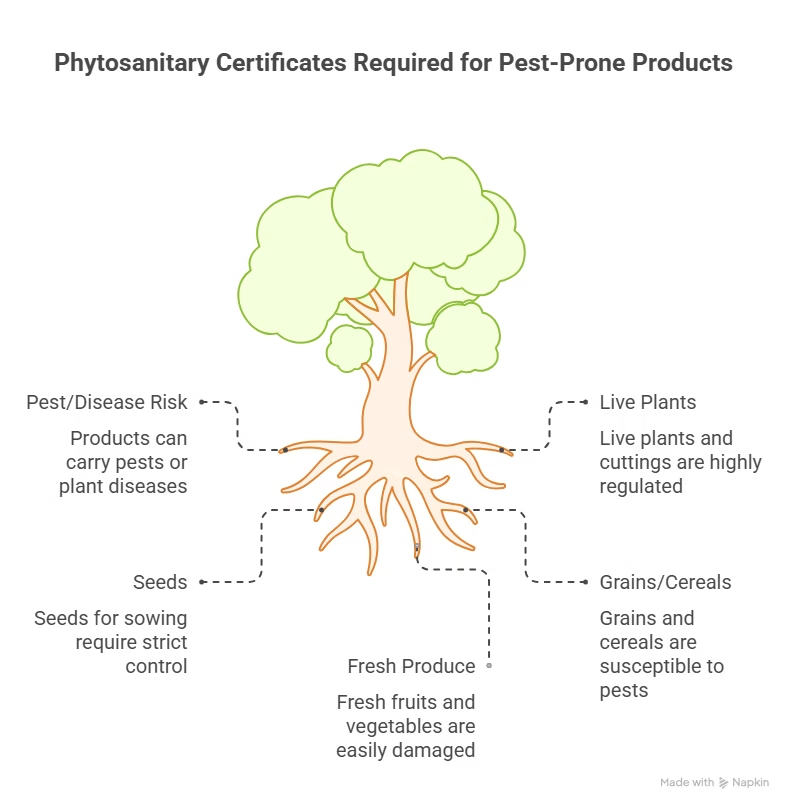
If a product can carry pests or plant diseases, assume a phyto certificate may be required.
Common products that typically require certification
These categories almost always fall under phytosanitary control:
- Live plants and plant cuttings
- Seeds for sowing
- Grains and cereals
- Fresh fruits and vegetables
Example 1:
Exporting basmati rice or wheat? A phytosanitary certificate is standard.
Example 2:
Shipping fresh mangoes or onions? Plant quarantine clearance is non negotiable.
Processed vs unprocessed plant products
Processing level matters, but it doesn’t guarantee exemption.
Example 1:
Raw agricultural goods like unprocessed grains or fresh produce almost always require a phytosanitary certificate.
Example 2:
Highly processed items such as roasted coffee or refined plant oils may be exempt, depending on the importing country’s rules.
The case here is “may.” Exemptions are country specific, not universal.
When a phyto certificate is usually not required
There are limited scenarios where certification is not needed.
Example 1:
Fully manufactured products with no biological risk, such as plant based chemicals or finished textiles, are often exempt.
Example 2:
Certain processed foods sealed and sterilized at high temperatures may not require phytosanitary documentation.
What this really means is simple:
Never assume exemption. Check the importing country’s plant quarantine rules before shipping. One wrong assumption can kill the entire deal.
What Information Is Included in a Phytosanitary Certificate?
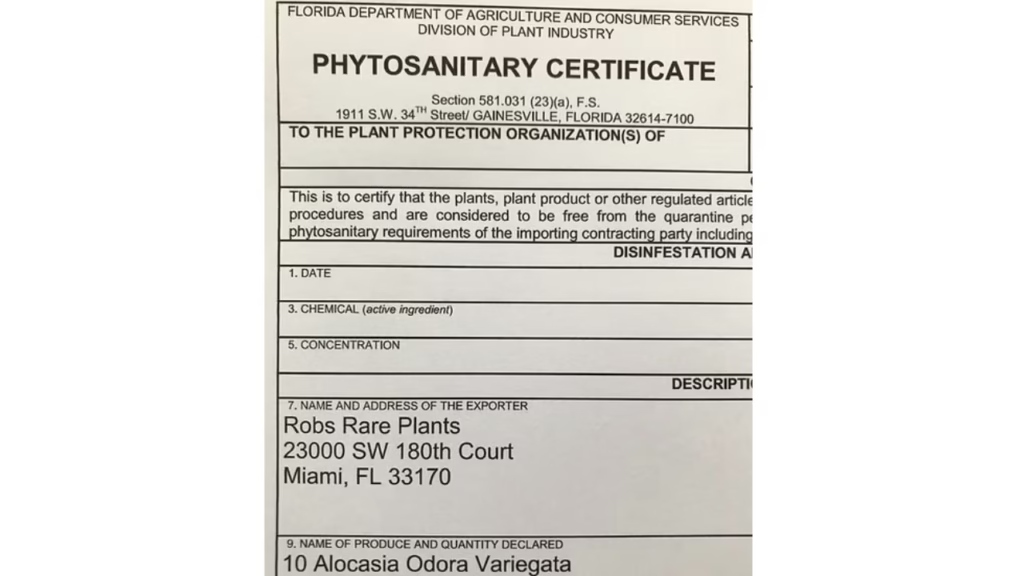
A phytosanitary certificate is not a generic letter. It’s a tightly structured legal document. Every field exists for a reason, and errors are treated as compliance failures.
Exporter and importer details
This section identifies accountability.
- Exporter name and address
- Importer name and destination country
Example 1:
If the exporter name on the phytosanitary certificate doesn’t match the commercial invoice, customs flags it.
Example 2:
Wrong consignee details can invalidate the pq certificate even if the inspection itself was clean.
Accuracy here is non negotiable.
Consignment description and quantity
This ties the certificate to a specific shipment.
- Product name and botanical description where required
- Quantity, weight, and packaging details
Example 1:
Declaring “grains” instead of “parboiled rice” is enough to trigger rejection.
Example 2:
Mismatch between packed quantity and declared quantity raises suspicion of certificate misuse.
The certificate applies to one consignment only. Nothing more.
Inspection date, place, and treatment details
This proves compliance, not intent.
- Inspection date and inspection location
- Treatment type, method, and date if applied
Example 1:
An inspection done before packing may be rejected if the importing country requires post packing inspection.
Example 2:
Missing fumigation details when treatment is mandatory invalidates the phytosanitary certificate instantly.
No inspection trail, no credibility.
Official declaration and signature
This is the legal core of the document.
- Declaration of pest free status
- Signature and stamp of the authorized plant quarantine officer
Example 1:
Unsigned certificates are treated as fake, regardless of inspection history.
Example 2:
Certificates not issued by the recognized authority don’t legally exist.
This declaration is why a pq certificate carries highest weight.
Phytosanitary Certificate Issuance Process (Step by Step)
Most exporters lose time and money here because they guess instead of following the process.
Application through PQMS or NPPO portal
The process starts online.
- Exporters apply through PQMS or the official NPPO portal
- Access is granted via a registered pq login
Example 1:
In India, applications outside the PQMS system are not accepted.
Example 2:
Using someone else’s pq login risks rejection and audit issues.
The system creates traceability. That’s the point.
Document submission requirements
Paperwork supports inspection, not the other way around.
Typical documents include:
- Commercial invoice
- Packing list
- Shipping or booking details (Shipping Bill or Airway Bill)
Example 1:
Missing invoices delay inspection scheduling.
Example 2:
Inconsistent product descriptions across documents trigger re verification.
Garbage in, delays out.
Physical inspection and possible treatment
This is where approval is earned.
- Plant quarantine officers inspect the consignment
- Treatments like fumigation may be ordered
Example 1:
Detection of live pests results in immediate treatment or rejection.
Example 2:
Refusing mandated treatment means no phytosanitary certificate, period.
Inspection outcomes decide everything.
Certificate issuance timeline
Timelines depend on compliance, not luck.
Example 1:
Clean consignments with complete documents can receive certificates within days.
Example 2:
Shipments requiring treatment or re inspection can take weeks.
The takeaway is simple:
Apply early. Plant quarantine timelines do not bend for shipping deadlines.
What Is PQMS and PQ Login? (India Specific)
This is where Indian exporters get confused and waste time. Let’s clean it up.
What PQMS actually is
PQMS is the government’s online Plant Quarantine Management System.
It’s the official platform used to apply for and manage plant quarantine services in India.
Example 1:
If you’re applying for a phytosanitary certificate in India, PQMS is not optional. No PQMS application, no inspection.
Example 2:
Inspection scheduling, treatment records, and certificate issuance all flow through PQMS. Email requests don’t count.
PQMS exists to create traceability. Every action leaves a record.

Who needs PQ login access
Anyone exporting regulated plant products needs a pq login.
Example 1:
Exporters filing their own phytosanitary certificate applications must have direct PQ login credentials.
Example 2:
Consultants or CHA assisted filings still require the exporter to be registered in PQMS. You can’t outsource responsibility.
No login means no application. It’s that simple.
Common exporter mistakes during application
Most delays are self brought.
Example 1:
Incorrect product classification or unclear descriptions like agro products lead to rejection or reinspection.
Example 2:
Applying too late, after cargo stuffing or vessel cutoff, results in missed sailings because plant quarantine timelines don’t adjust.
PQMS doesn’t forgive bad planning. It documents it.
Difference Between Phytosanitary Certificate and Plant Quarantine Certificate
These terms are often used interchangeably, and that’s where confusion starts.
Official usage vs casual usage
Officially, the phytosanitary certificate is the document issued for exports. Casually, exporters and logistics agents often call it a plant quarantine certificate.
Example 1:
When customs asks for a phytosanitary certificate, submitting any other document name won’t work.
Example 2:
Calling it a plant quarantine certificate in conversation doesn’t change the legal requirement.
Names matter only at clearance.
Export vs import control perspective
The difference comes from direction, not substance.
Example 1:
For exports, authorities issue a phytosanitary certificate to satisfy the importing country’s rules.
Example 2:
For imports, plant quarantine controls ensure incoming goods don’t introduce pests.
Same system. Different direction.
When they refer to the same compliance outcome
In practice, both terms point to the same objective plant health protection.
Example 1:
An exporter saying “plant quarantine certificate” usually means the phytosanitary certificate required for export.
Example 2:
Regulators focus on compliance outcome, not the casual label used by traders.
If you’re exporting, the legally correct document is the phytosanitary certificate, even if people call it something else.
Validity and Re-Export Scenarios
These are the edge cases exporters ignore until they lose money.
Typical validity period
A phytosanitary certificate is time sensitive.
Example 1:
Most importing countries accept certificates issued within 7 to 14 days before shipment. After that, the pq certificate may be rejected even if the cargo hasn’t moved.
Example 2:
Some destinations tie validity to inspection date, not issue date. Miss that detail and the certificate expires on paper while the shipment is still in port.
Validity is defined by the importing country, not the exporter’s convenience.
When re-export certificates are required
Re-exports change the rules.
Example 1:
If goods enter a country and are then exported again without processing, authorities may require a re-export phytosanitary certificate confirming the original certificate’s integrity.
Example 2:
If the consignment is split, repacked, or stored, a fresh inspection and new pq certificate may be mandatory.
Assuming the original certificate carries forward is how re-exports get stuck.
Risks of expired or mismatched certificates
Customs doesn’t “partially accept” phytosanitary documents.
Example 1:
An expired certificate usually leads to rejection, destruction, or forced re-export at the exporter’s cost.
Example 2:
Mismatch between certificate details and shipping documents triggers suspicion of reuse or fraud.
Expired or inconsistent paperwork is treated as no paperwork.
Common Mistakes Exporters Make
These errors show up again and again, even among experienced traders.
Assuming the certificate is optional
This is the most expensive assumption.
Example 1:
Exporters rely on past shipments clearing without inspection and skip the phytosanitary certificate, only to have the next shipment blocked.
Example 2:
Assuming exemptions apply universally instead of country by country leads to instant non-compliance.
Plant quarantine rules don’t reward optimism.
Incorrect product description
Lack of clarity kills clearance.
Example 1:
Declaring “agricultural products” instead of a specific commodity invites inspection delays.
Example 2:
Using trade names instead of regulated product names and HS Codes causes classification errors under plant quarantine rules.
Precision is not optional.
Applying too late in the shipment cycle
Timing mistakes cost sailings.
Example 1:
Applying after cargo stuffing leaves no time for inspection or treatment.
Example 2:
Assuming same day issuance ignores the reality of plant quarantine scheduling.
A phytosanitary certificate should be planned before logistics, not after.
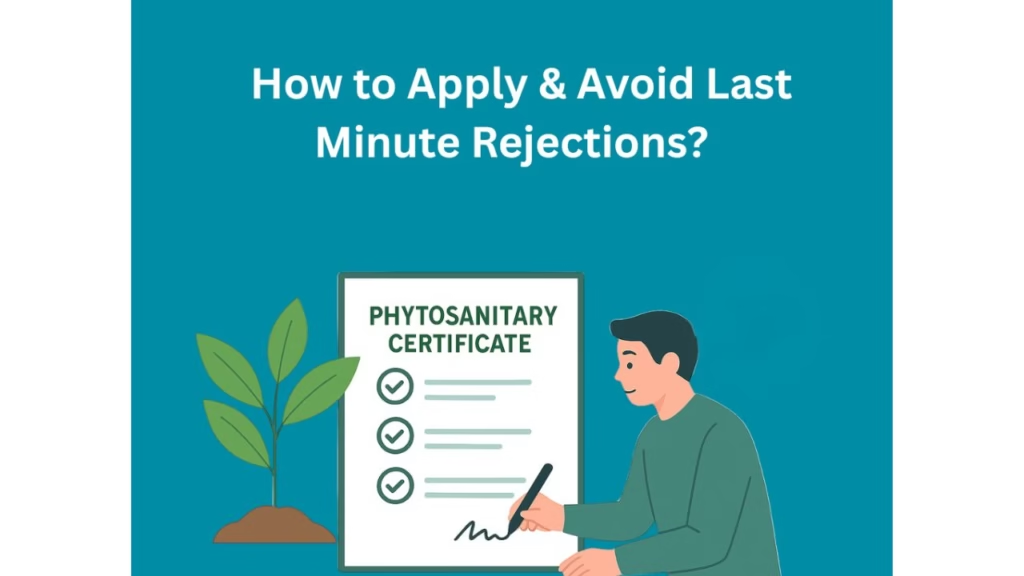
H2: Final Takeaway: When and Why You Cannot Skip This Certificate
Strong close.
- Situations where it’s legally unavoidable
- Why treating it as paperwork is a bad idea
- One sentence exporter checklist
FAQs
Q1. Is a phytosanitary certificate mandatory for all exports?
No. It’s mandatory only for products regulated under plant quarantine laws.
Example 1: Fresh fruits, grains, seeds usually require it.
Example 2: Fully manufactured goods with no plant material often don’t.
The mistake exporters make is assuming exemption without checking the importing country’s rules.
Q2. How long does it take to get a phytosanitary certificate?
It depends on compliance, not luck.
Example 1: Clean consignments with complete documents can be approved within a few days.
Example 2: Shipments requiring treatment or re-inspection can take weeks.
Apply early or accept delays.
Q3. Can one phytosanitary certificate be used for multiple shipments?
No. One certificate equals one consignment.
Example 1: Splitting a shipment voids the original certificate.
Example 2: Reusing a certificate across containers is treated as misuse.
This is non-negotiable.
Q4. Is a phytosanitary certificate the same as a plant quarantine certificate?
Legally, for exports, the correct document is the phytosanitary certificate.
Example 1: Exporters often say plant quarantine certificate in conversation.
Example 2: Customs still expects a phytosanitary certificate at clearance.
Different words, same compliance outcome
Q5. What happens if pests are found during inspection?
The shipment doesn’t move until the issue is resolved.
Example 1: Authorities may order treatment like fumigation.
Example 2: In severe cases, the certificate is refused outright.
Inspection results decide everything.
About the Author
Hi, I’m Sriharsha, founder of shxhub.in.
I focus on explaining import export business topics in a practical, beginner friendly way, based on how exports actually work on the real ground especially documentation, quality control, and buyer expectations.


4 thoughts on “Phytosanitary Certificate Explained: 11 Critical Rules Exporters Must Follow”