


When people first step into exporting, their attention goes straight to the obvious things finding buyers, negotiating prices, arranging shipping. Documents feel like paperwork that comes later. That assumption is wrong.
In International trade, documents quietly control the entire shipment. Ports, customs authorities, freight forwarders, and buyers rarely see the cargo itself. What they see first is the paperwork. If the documents are clear, your shipment moves. If they are confusing or inconsistent, everything slows down.
This is why export documentation sits at the center of every shipment. It connects the exporter, customs officials, logistics teams, and the buyer on the other side of the world. Every one of these parties depends on the same set of international trade documents to understand what is being shipped and how it is packed.
The problem is that beginners often underestimate one document in particular the packing list. At first glance, it seems basic. Just cartons, weights, and quantities. Nothing complicated.
But here is the reality.
Customs officers use it to verify cargo before clearance. Freight forwarders use it to calculate space and weight. Warehouse staff rely on it to count cartons correctly. Even the buyer uses it to check if the shipment arrived exactly as promised.
- If the packing list says 500 cartons but the container shows 498, questions start immediately.
- If the invoice weight shows 10,000 kg but the packing list says 9,700 kg, the shipment may get flagged for inspection.
Small mismatches like these can delay containers, trigger customs queries, or force manual cargo checks. What looked like a simple list suddenly becomes the document everyone is arguing about.
That is why understanding the packing list early matters. Once you know how it works, a large part of export operations becomes easier to manage.
Table of Contents
What is an Export Packing List?
An export packing list is a document that describes the physical structure of a shipment. Instead of focusing on price or payment, it explains exactly how the goods are packed and organized.
The export packing list meaning is It answers one practical question:
What exactly is inside the shipment and how is it packed?
This document lists details such as:
- number of cartons or packages
- type of packaging used
- product descriptions
- carton numbers or markings
- net weight and gross weight
- dimensions or volume
In other words, the packing list in export works like a map of the cargo. This is where many beginners get confused. They assume the packing list and invoice are the same thing. They are not.
The commercial invoice focuses on financial information like price, currency, payment terms, and product value. The packing list focuses entirely on physical cargo information cartons, weight, packaging, and dimensions.
Both belong to the group of essential export shipping documents, but they serve different purposes.
To make this clearer, look at two simple shipment examples.
Example 1: Garment Export
An exporter ships 500 cartons of cotton T-shirts to a buyer in Europe. The cartons are packed on pallets inside a container.
The packing list shows:
- carton numbers from 1 to 500
- pieces per carton
- pallet count
- net weight and gross weight
- carton dimensions
Customs officers can quickly understand how the cargo is arranged without opening every box.
Example 2: Spice Export
A spice exporter ships 200 bags of turmeric powder to Dubai. The packing list mentions:
- 200 bags
- 25 kg per bag
- total net weight 5,000 kg
- gross weight including packaging
- bag markings and shipment reference
When the shipment arrives, the buyer’s warehouse team uses the it to count the bags and verify the shipment.
That is the real role of this document. It does not sell the product and it does not handle payment. Instead, it explains the physical reality of the shipment, making it easier for customs, logistics teams, and buyers to handle the cargo correctly.

Why the Export Packing List is Important in International Trade
A packing list looks like a basic document. Just cartons, weights, and package numbers. But in real export operations, it quietly drives several critical decisions across the supply chain.
From customs officers to warehouse staff, multiple people rely on the same document to understand the physical structure of a shipment. That’s why the importance of packing list in export becomes obvious the moment a shipment reaches the port.
Let’s break down where it actually matters.
Customs Verification
Customs authorities use this document as one of the key customs clearance documents to verify shipments.
It helps them check:
- number of packages
- product description
- weight and packaging details
If something looks unusual, customs can quickly identify which cartons need inspection without opening the entire container.
Example 1
A shipment arrives with 500 cartons of garments. Instead of unloading the entire container, customs officers may randomly select cartons 120, 235, and 401 based on the packing list numbers. This saves time while still allowing inspection.
Without a clear mentioning, customs may decide to inspect a larger portion of the cargo.
Freight Cost Calculation
Freight forwarders use the packing list to estimate shipping space and weight.
Shipping charges depend on factors like:
- gross weight
- carton dimensions
- total volume (CBM)
These details allow logistics providers to plan container space correctly and calculate freight costs accurately.
Inventory Management for Importers
Once the shipment reaches the destination port, the buyer’s warehouse team depends heavily on the packing list.
It allows them to:
- count cartons quickly
- verify product quantities
- organize warehouse storage
Without it, the importer has to open and manually check each carton.
Example 2
A buyer receives a shipment containing 200 cartons of spices. The packing list shows cartons numbered 1 to 200. During unloading, the warehouse team notices cartons 87 and 88 are missing. Because the document provides exact carton numbers, the issue can be identified immediately.
Insurance Claims and Dispute Handling
In international shipping, cargo damage or shortages can happen. When disputes arise, the packing list becomes an important reference.
It helps determine:
- how many cartons were shipped
- how the cargo was packed
- whether weights and quantities match
Insurance companies often request the packing list along with other international shipping documents to evaluate claims related to cargo damage or loss.
In simple terms, the packing list provides a clear physical record of the shipment. That record becomes extremely valuable whenever something goes wrong.
Key Information Included in an Export Packing List
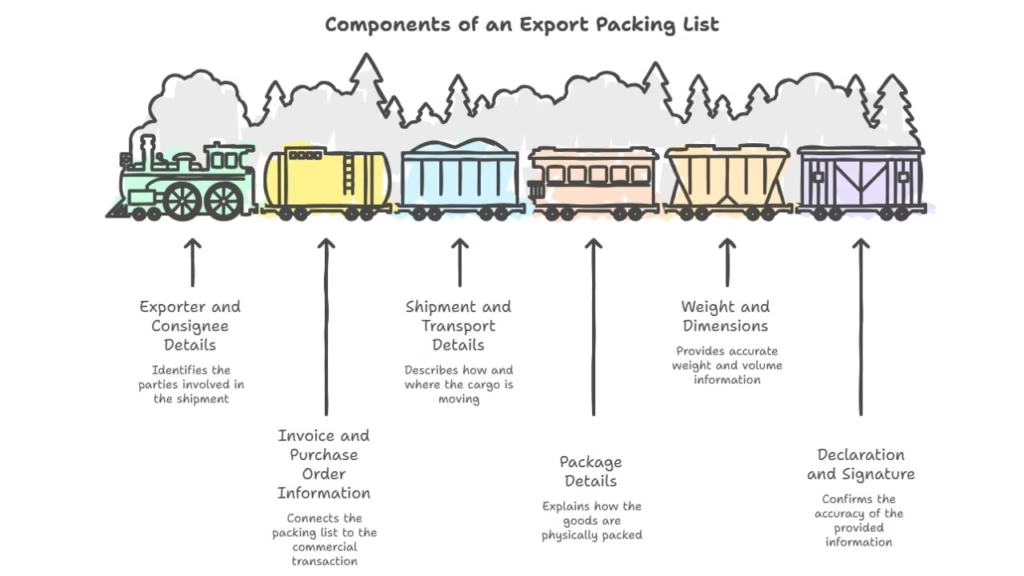
An export packing list works best when it follows a clear structure. While there is no universal template, most exporters include a common set of fields so customs and logistics teams can easily understand the shipment.
Below are the main sections typically included in an export packing list format.
Exporter and Consignee Details
This section identifies the two main parties involved in the shipment.
Typical details include:
- exporter name and address
- buyer or consignee name and address
These details link the packing list to the correct shipment and ensure that the cargo reaches the intended recipient.
Invoice and Purchase Order Information
The packing list must always connect to the commercial transaction behind the shipment.
Common details include:
- commercial invoice number
- purchase order (PO) number
- shipment date
This information helps customs and logistics teams match the packing list with other export shipment information such as invoices, shipping bills, and bills of lading.
Shipment and Transport Details
This section describes how and where the cargo is moving.
Typical details include:
- port of loading
- port of discharge
- vessel name or flight number
- country of origin
These details allow freight forwarders and customs officers to quickly identify the route and transport method of the shipment.
Package Details
This is the core of the packing list because it explains how the goods are physically packed.
Important elements include:
- carton or package numbers
- package markings or labels
- number of packages or cartons
These details help customs officers select packages for inspection and allow warehouse staff to count cargo accurately.
Weight and Dimensions
Accurate weight information is essential for both customs and logistics planning.
Common fields include:
- net weight (weight of the goods only)
- gross weight (goods plus packaging)
- volume or CBM (cubic meter)
Freight forwarders rely on these numbers when calculating freight charges and allocating container space.
Declaration and Signature
The final section confirms that the information provided is accurate.
It usually includes:
- exporter declaration statement
- authorized signature
- company stamp
This declaration confirms that the details provided are correct and consistent with the shipment being exported.
Export Packing List Format
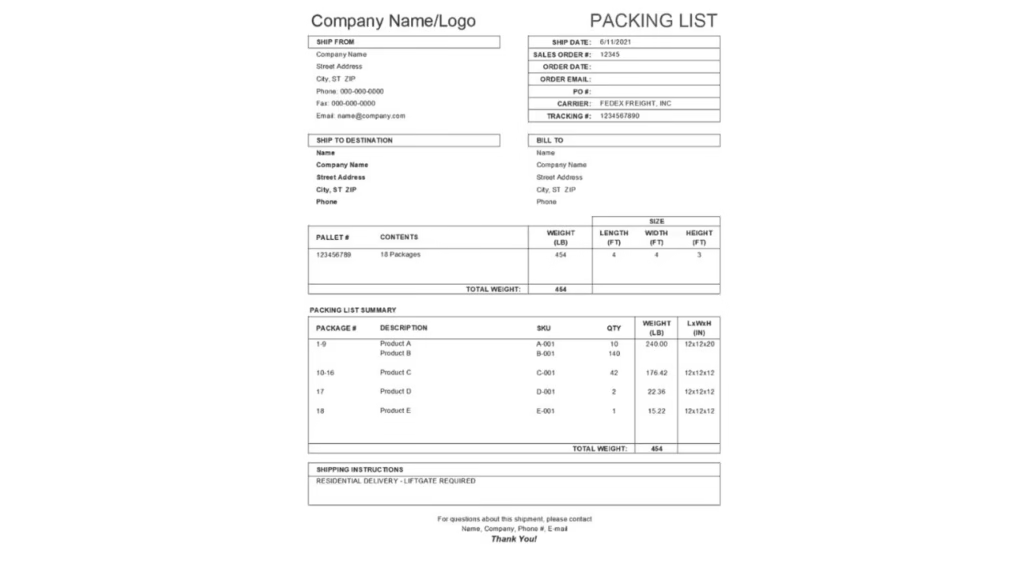
Many new exporters search for a standard export packing list template and expect an official government format. In reality, there is no single universal design. What matters is clarity. Customs officers, freight forwarders, and warehouse staff should be able to read the document and immediately understand how the cargo is packed.
Most exporters keep the structure simple using Excel, Word, or an ERP generated sheet. As long as the information is organized clearly, the document works.
Below is a basic packing list format for export that covers the essential fields used in most shipments.
| Field | Description |
| Exporter Details | Name, address, and contact information of the exporter |
| Consignee Details | Buyer name and address or “To Order Of” the bank in LC shipments |
| Invoice Reference | Commercial invoice number, PO number, and shipment date |
| Package Information | Number of cartons or packages, packaging type, carton markings, and product description |
| Total Weights | Net weight, gross weight, and total volume (CBM) |
| Declaration | Exporter declaration confirming accuracy of shipment details with signature and stamp |
This structure works as a practical export packing list sample because it shows exactly what logistics teams and customs officials expect to see.
For example
A shipment might show:
- Exporter: ABC Spices Pvt Ltd, India
- Consignee: Global Foods LLC, Dubai
- Invoice Number: INV-2045
- Packages: 200 bags of turmeric powder
- Net Weight: 5,000 kg
- Gross Weight: 5,150 kg
Anyone handling the shipment can immediately understand the cargo structure without opening the container. That simplicity is exactly what makes the packing list useful across the entire supply chain.
Commercial Invoice vs Packing List (Major Differences)
One of the most common beginner mistakes in exporting is confusing the packing list with the commercial invoice. They often appear together in the same shipment documents, so people assume they serve the same purpose.
They do not.
Understanding the difference between packing list and invoice is important because both documents are used by different parties in the export process.
The commercial invoice focuses on the financial side of the transaction. It shows:

- product price
- currency
- payment terms
- total shipment value
Banks rely on this document during payment processing, especially when shipments involve letters of credit or other trade finance arrangements.
The packing list, on the other hand, focuses entirely on the physical structure of the shipment. It explains:
- how many cartons or packages exist
- how the goods are packed
- the weight and dimensions of the cargo
Customs officers, freight forwarders, and warehouse staff use this document to handle the cargo correctly.
To make the difference clearer, look at two simple examples.
Example 1: Commercial Invoice
An exporter ships 500 cartons of cotton T-shirts to Germany.
The commercial invoice shows:
- product description
- unit price per T-shirt
- total shipment value
- payment terms under the sales agreement
This information is important for customs valuation and bank processing.
Example 2: Packing List
The packing list for the same shipment shows:
- carton numbers from 1 to 500
- number of pieces in each carton
- pallet arrangement
- net weight and gross weight of cartons
Here the focus is not on money but on how the cargo is physically packed and counted.
That is the real difference in the packing list vs commercial invoice comparison. One document explains the financial transaction, while the other explains the physical shipment structure. Both must match each other, but each serves a completely different purpose in international trade.
How to Prepare an Export Packing List (Step by Step)
Many beginners understand what a packing list is but struggle when it comes to actually preparing one. In practice, the process is straightforward once you know the order in which the information should appear.
The goal of the document is simple. Anyone reading it should instantly understand how the shipment is packed, counted, and transported. This section explains how to prepare packing list for export in a clear, practical way.
Step 1: Exporter and Buyer Information
Start with the basic identification details of the shipment.
Include:
- exporter name and address
- buyer or consignee name and address
- contact details if required
These details connect the packing list to the correct commercial transaction and ensure the shipment is linked to the right importer.
For example, a packing list may begin with:
Exporter: ABC Spices Pvt Ltd, Andhra Pradesh, India
Consignee: Global Foods Trading LLC, Dubai, UAE
Step 2: Packing List Number and Date
Every packing list should have a unique reference number and preparation date. This helps with document tracking and record keeping.
Examples of numbering formats include:
PL-001-2026
EXP-PL-MAR-12
Banks, customs authorities, and freight forwarders often use this reference when matching documents within the shipment file.
Step 3: Description of Goods
Next, describe the products being exported. The description should be clear and consistent with the commercial invoice.
Typical details include:
- product name
- product grade or type
- packaging type (cartons, bags, pallets)
Avoid marketing language here. The goal is accuracy, not promotion.
For example:
Product: Turmeric Powder
Packing Type: 25 kg polypropylene bags
Step 4: Number of Packages
This section explains how many packages are included in the shipment.
You should clearly mention:
- total number of cartons or bags
- units per carton (if applicable)
- carton numbering or markings
For example:
400 cartons
Each carton contains 20 units
Carton numbers: 1 to 400
This information helps customs officers and warehouse staff count the cargo quickly and accurately.
Step 5: Net Weight and Gross Weight
Weight information is one of the most critical parts of an export packing list.
Two weights must always be shown:
Net Weight – weight of the goods only
Gross Weight – weight of goods plus packaging material
These numbers should match the details used in the shipping bill, bill of lading, and other export documents. Incorrect weight information is a common reason shipments get flagged for inspection.
Step 6: Dimensions and Volume
For sea and air shipments, space matters just as much as weight.
Include carton or pallet dimensions such as:
- length
- width
- height
From these measurements, the total CBM (cubic meter) of the shipment is calculated. Freight forwarders rely on this information to allocate cargo space inside containers or aircraft.
Step 7: Mode of Transport and Ports
The packing list should also show how the cargo will travel.
Important details include:
- mode of shipment (sea, air, or road)
- port of loading
- port of discharge
- country of origin
These details help logistics teams connect the packing list with the shipping route.
Step 8: Declaration and Signature
The final section confirms that the information provided is correct.
Most exporters include a short declaration such as ‘We declare that the information provided in this packing list is true and correct.’
Below this statement, add:
- authorized signatory name
- designation
- company stamp and signature
Following this export packing list step by step process ensures the document remains clear, accurate, and easy for logistics teams and customs officers to understand.
Simple Export Packing List Example
Understanding a packing list becomes easier when you look at a practical shipment scenario. Below are two simplified examples showing how exporters typically organize shipment information.
Example 1: Spice Export Shipment
Product: Turmeric Powder
Packing: 25 kg bags
Total Bags: 400
Shipment details may appear like this:
- Packaging: 25 kg polypropylene bags
- Total Bags: 400
- Net Weight: 10,000 kg
- Gross Weight: 10,200 kg
- Mode of Transport: Sea
- Port of Loading: Visakhapatnam Port, India
- Port of Discharge: Jebel Ali Port, UAE
This packing list example shows the buyer and customs exactly how the cargo is packed and counted.
Example 2: Garment Export Shipment
Product: Cotton T-Shirts
Packing: Cartons with 50 pieces each
Shipment information may appear as:
- Total Cartons: 300
- Pieces per Carton: 50
- Total Pieces: 15,000 T-shirts
- Net Weight: 4,500 kg
- Gross Weight: 4,800 kg
- Mode of Transport: Sea
- Port of Loading: Chennai Port, India
- Port of Discharge: Hamburg Port, Germany
This export packing list sample helps customs officers inspect specific cartons while allowing the importer’s warehouse team to verify quantities quickly.
These examples highlight the real purpose of the packing list. It acts as a clear physical blueprint of the shipment, helping every party involved handle the cargo accurately from the exporting country to the final destination.
Common Mistakes Exporters Make
Most problems in export shipments don’t come from complex regulations. They come from simple document errors. The packing list is one of the most common places where these mistakes happen.
For beginners especially, small packing list errors can lead to customs questions, container inspections, or delays at the port. Understanding these typical export documentation mistakes can help you avoid unnecessary problems.
Mistake 1: Not Matching the Invoice
One of the most frequent issues is inconsistency between the commercial invoice and the packing list. Both documents describe the same shipment, so certain details must match.
These include:
- product description
- quantity of goods
- shipment reference numbers
If the invoice shows 1,000 units of product but the packing list shows 950 units, customs officials may stop the shipment to investigate the discrepancy.
Even small wording differences can raise questions if the goods are shipped under letter of credit and other payment terms.
Mistake 2: Incorrect Weight or Dimensions
Weight mistakes are another common problem.
Exporters sometimes estimate weights before the goods are actually packed. Later, the real measurements turn out to be different. Incorrect weight information can cause problems because several other documents rely on it.
Including:
- shipping bill
- bill of lading
- freight booking details
If the packing list shows 5,000 kg gross weight but the container weight recorded at the port is significantly different, customs may order an inspection.
Dimensions matter too, especially for air shipments where cargo space is calculated using volumetric weight.
Mistake 3: Missing Carton Numbers
Carton numbering helps customs officers and warehouse teams identify specific packages quickly. When carton numbers are missing or unclear, it becomes difficult to inspect or verify shipments.
For example:
Instead of writing
Cartons 1 to 200
Some exporters simply write
200 cartons
While the quantity is technically correct, missing carton numbers makes it harder for customs to select packages for inspection. This often results in more cartons being opened than necessary.
Mistake 4: Changing Details After Filing the Shipping Bill
Once export documents are filed with customs, changes become complicated.
Some exporters prepare the packing list before packing is fully completed. Later, when the final packing details change, they update the packing list but forget to update other documents.
This creates mismatches between:
- packing list
- shipping bill
- commercial invoice
When customs notices these inconsistencies, the shipment may require amendments or additional verification. The safest approach is simple. Always prepare the packing list after packing is finalized, not before.
Avoiding these common mistakes helps ensure the document stays clear, accurate, and acceptable to customs and logistics teams.

Who Uses It ?
Many exporters assume the packing list is mainly for customs. In reality, several different parties rely on this document throughout the shipping process.
It is one of the core export logistics documents used from the moment goods leave the factory until they reach the buyer’s warehouse.
Here are the main users of the packing list.
Customs Officers
Customs authorities use the packing list during cargo verification.
It helps them:
- identify package numbers
- select cartons for inspection
- compare shipment weight with export documents
This allows customs to check shipments efficiently without opening every package.
Freight Forwarders
Freight forwarders rely heavily on the packing list to organize shipments.
They use the information to:
- calculate cargo volume and weight
- allocate space inside containers
- prepare other shipping documents
Example 1
A freight forwarder receives a shipment consisting of 300 cartons of garments. Using the packing list, they calculate the total volume and determine whether the cargo fits into a 20-foot container or needs a 40-foot container.
Without accurate package details, this planning becomes difficult.
CHA (Customs Brokers)
Customs House Agents or customs brokers use the packing list when preparing export filings.
They cross check the packing list with other documents.
such as:
- shipping bill
- commercial invoice
- bill of lading instructions
This helps ensure that all shipment details remain consistent.
Port Warehouse Staff
When cargo arrives at the port warehouse, staff members rely on the packing list to count and organize packages.
It allows them to verify
- number of cartons received
- package markings
- cargo weight details
This reduces confusion during container loading and unloading.
Buyer’s Side
The buyer on the receiving side also depends on the packing list.
Once the shipment arrives at the destination warehouse, the buyer’s team uses it to verify the goods received.
Example 2
A buyer receives 150 cartons of electronics. The packing list shows carton numbers 1 to 150. During unloading, the warehouse team checks the numbers and immediately notices that carton 148 is missing.
Because the packing list provides clear package details, the issue can be reported to the logistics provider quickly. Although exporters prepare the document, many different people use it during the shipment journey. That is why accuracy matters.
Anyone asking who prepares packing list should remember this simple rule the exporter creates it, but the entire logistics chain depends on it.
When Should You Prepare the Packing List?
Timing matters more than most beginners realize. Many exporters prepare documents early just to “get paperwork done,” but that approach creates mistakes.
The correct timing is simple. The document should be prepared only after the packing process is finalized. That way, the quantities, carton numbers, and weights reflect the actual shipment rather than estimates.
Understanding when to prepare export packing list helps avoid inconsistencies between documents and prevents customs queries later.
Three moments are particularly important.
After Packing Is Completed
The packing list should be created once the goods are physically packed and counted.
At this stage you already know:
- exact number of cartons or bags
- actual net weight and gross weight
- packaging type and carton markings
Preparing the document before packing often leads to guesswork, which increases the chances of mismatched data.
Before Shipping Bill Filing
In export processes, the shipping bill must match the packing list details. Customs authorities compare these documents during verification.
Preparing the packing list before filing the shipping bill ensures that details such as:
- number of packages
- weight information
- product descriptions
remain consistent across all export documents.
Before Container Stuffing
The packing list should also be finalized before container loading.
Logistics teams often rely on this document when planning how cargo will be arranged inside the container.
It helps them confirm:
- package count
- pallet arrangements
- cargo weight distribution
Now look at how this works in real shipments.
Example 1: Container Shipment
An exporter is shipping 500 cartons of garments by sea. Once the cartons are packed and counted, the packing list is prepared. The document is then used while loading the cartons into the container and for filing export documents with customs.
If the exporter had prepared the packing list before packing, the carton count might have changed during packing and created inconsistencies.
Example 2: Air Cargo Shipment
A spice exporter is sending 200 bags of turmeric powder by air freight. After weighing each bag and confirming the total weight, the packing list is created. The airline and freight forwarder then use this information to calculate cargo space and freight charges.
Preparing the document after packing ensures the shipment information is accurate and reliable.
Export Packing List and Customs Clearance
Customs clearance is one of the most critical stages in the export process, and the packing list plays an important role during this step.
Among the many export customs documents, the packing list provides a clear view of how the cargo is organized inside the shipment.
Customs officers use this document in several ways.
Cargo Verification
When shipments arrive at the port or airport, customs officers compare the packing list with other export documents.
They verify details such as:
- number of packages
- description of goods
- shipment references
This helps them confirm that the cargo being exported matches the declared information.
Carton Inspection
Customs does not usually open every package in a shipment. Instead, officers may select specific cartons for inspection based on the packing list.
For example, if a shipment contains 300 cartons, customs might choose cartons 25, 120, and 240 for inspection. The carton numbers listed in the packing list help them identify the exact packages quickly.
Without clear carton numbering, inspections can become slower and more disruptive.
Matching Weight With Shipping Bill
Another important step in packing list customs clearance is weight verification.
Customs authorities often compare the weight mentioned in the packing list with:
- shipping bill
- container weight records
- bill of lading details
If the weights do not match, the shipment may be flagged for further verification.
This is why exporters must ensure that the weight information reflects the actual packed cargo.
In simple terms, the packing list helps customs officers understand the physical structure of the shipment without unpacking it entirely. When the document is clear and accurate, customs clearance becomes faster and smoother for everyone involved.
Final Thoughts
At first glance, the packing list looks like one of the simplest documents in export documentation. It’s just cartons, weights, and package numbers. Nothing complicated.
But in real export operations, this document quietly controls how smoothly a shipment moves through the entire logistics chain.
Customs officers use it to verify cargo. Freight forwarders depend on it to plan space and weight. Port warehouses rely on it to count cartons correctly. Buyers at the destination use it to check if the shipment arrived exactly as expected.
When the it is clear and accurate, several things become easier:
- customs inspections move faster
- logistics teams handle cargo efficiently
- buyers can verify shipments quickly
On the other hand, even small mistakes in this document can create confusion across multiple stages of the export process.
That’s why experienced exporters treat the packing list as more than just paperwork. It acts as a physical blueprint of the shipment, helping every party involved understand exactly what is moving across borders.
Frequently Asked Questions
Who prepares the export packing list?
The exporter prepares the packing list because they are the only party who knows the exact packing details of the shipment.
They know how many cartons are used, how the goods are packed, and the actual weight and dimensions after packing. Freight forwarders or customs brokers may help review the document, but the responsibility for preparing it always remains with the exporter.
Does a packing list include prices?
No. A packing list does not include pricing information. This document focuses only on physical shipment details such as package count, carton numbers, weight, and dimensions. Pricing and financial details appear only in the commercial invoice.
Is there a standard export packing list format?
There is no single government prescribed format .
However, most exporters follow a commonly accepted structure that includes exporter details, consignee information, package descriptions, weights, and shipment references. As long as the document clearly explains how the cargo is packed, it will generally be accepted by customs and logistics providers.
Is a packing list required for air shipments?
Yes. Packing lists are required for air shipments as well.
Even though air cargo moves faster than sea shipments, airlines, freight forwarders, and customs authorities still rely on it to verify cargo information and manage the shipment properly.
Are packing list and commercial invoice the same?
No. They serve different purposes.
The packing list explains the physical structure of the shipment cartons, packaging, weights, and dimensions. The commercial invoice explains the financial side of the transaction, including product prices, currency, and payment terms.
Both documents must match each other, but they exist for completely different reasons in international trade.
About the Author
Hi, I’m SriHarsha, founder of shxhub.in.
I focus on explaining import export business topics in a practical, beginner friendly way, based on how exports actually work on the real ground especially documentation, quality control, and buyer expectations.






6 thoughts on “What is an Export Packing List ? Format, Example & Step by Step Guide for Exporters”