
Exporting food from India can be a profitable venture, but it’s not as simple as packing your products and shipping them off. There’s one critical question every food exporter must answer before they even think about customs clearance Is FSSAI mandatory for export? Spoiler alert yes, it absolutely is.
Whether you’re a experienced exporter or just dipping your toes into the global market, understanding the role of FSSAI (Food Safety and Standards Authority of India) is non negotiable.
It’s not just about ticking a regulatory box it’s about ensuring your shipments sail smoothly, your buyers trust you, and your business stays on the right side of the law.
In this blog, we’ll break down the critical rules you can’t afford to ignore when it comes to FSSAI compliance for exports. From licensing requirements to the consequences of non compliance, we’ve got you covered with real world examples, practical tips, and no nonsense advice.
Let’s dive in and make sure your export game is as strong as your product lineup!
Table of Contents
Straight Answer First: Is FSSAI Mandatory for Export?
Yes. it is mandatory for exporting food products from India.
No loopholes. No “depends.” If you’re exporting food, you need it.
Under the Food Safety and Standards Act, 2006, any business involved in manufacturing, processing, storing, distributing, or exporting food must hold a valid license issued by the Food Safety and Standards Authority of India.
Exporting food without this license is legally treated as non compliance, not a technical miss.
Who needs to apply
- Manufacturer exporters producing food in their own facilities.
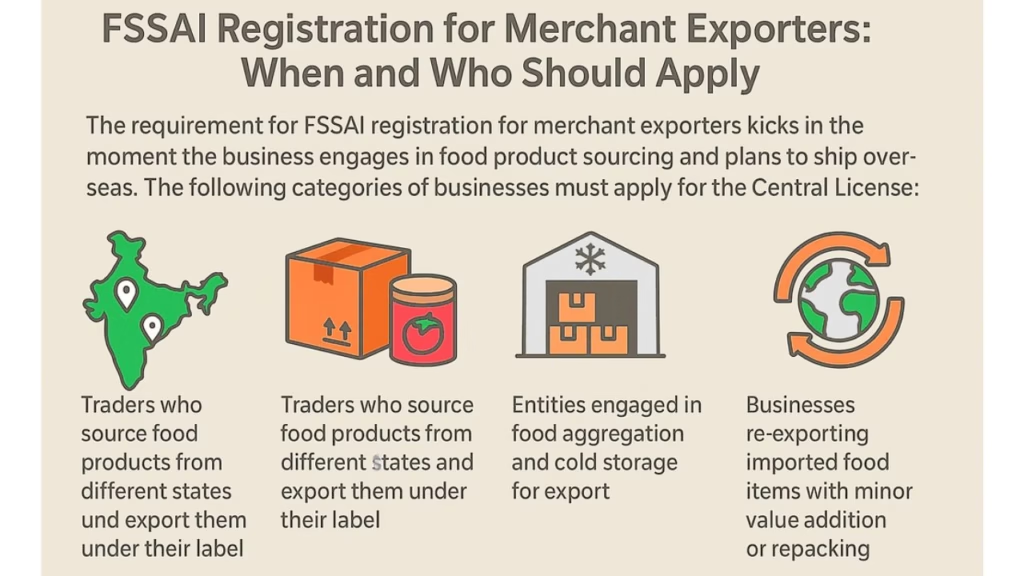
- Trader or merchant exporters sourcing food from third parties and exporting it.
Who does not need
- Non food exporters. If it’s not edible, FSSAI is irrelevant.
- Service providers like freight forwarders or customs agents who don’t own or export the food.
Two real world examples:
- A spice manufacturer exporting chilli powder to the US needs a Central FSSAI license before the shipment even hits the port.
- A merchant exporter buying packaged snacks from a local unit and exporting them to Dubai still needs their own FSSAI license, even if the manufacturer already has one.
If you’re asking “is FSSAI required for export?” the correct framing is this if food is involved, FSSAI is non-negotiable. That’s why searches like fssai license for export and fssai mandatory for exporters exist in the first place.
Why FSSAI Is Required for Exporting Food from India
Here’s the thing, FSSAI isn’t about paperwork. It’s about accountability.
1. Food safety, quality, and hygiene assurance
FSSAI creates a baseline. It ensures the food being exported meets defined standards for contamination, shelf life, ingredients, and handling.
Two examples:
- Exporting ready to eat food without FSSAI means no verified hygiene controls, which raises contamination risks.
- Without FSSAI oversight, there’s no traceability if a foreign buyer reports quality issues.
2. International buyer trust and shipment acceptance
Most overseas buyers assume Indian food exports are FSSAI compliant by default. When they ask for documents, Food Safety and Standards Authority of India is the first filter.
Two examples:
- An EU buyer may not directly ask for FSSAI, but customs authorities flag shipments lacking Indian regulatory backing.
- Large importers reject suppliers outright if they can’t prove home country food compliance.
This is why fssai for food export and food export compliance india are not optional concepts. They’re entry tickets.
3. Legal consequences of exporting without FSSAI
Exporting food without FSSAI isn’t a regulatory uncertainty. It’s a violation.
Two examples:
- Shipments can be stopped, returned, or destroyed, costing you freight, goods, and credibility.
- Authorities can impose penalties or suspend future export permissions under Indian law.
What this really means is simple:
Food Safety and Standards Authority of India exists to protect consumers, yes. But for exporters, it mainly protects your shipment, your buyer relationship, and your business continuity. Ignore it, and you’re not taking a risk, you’re making a mistake.
What Happens If You Export Food Without FSSAI?
Let’s drop the fantasy that you can “manage somehow.” Exporting food without FSSAI doesn’t lead to minor issues. It leads to hard stops.
Shipment rejection at port
Customs and inspection authorities don’t negotiate once food compliance fails.
Two real scenarios:
- A packaged food consignment reaches the destination port, documents are checked, and the absence of FSSAI triggers immediate rejection. The shipment is either returned or destroyed. You pay for both.
- Even before leaving India, customs can block clearance once mismatched or missing FSSAI details surface.
This is where searches like food export rejection India come from. People learn the rule the expensive way.
Financial penalties and legal action
This isn’t just about losing one shipment. It’s about regulatory consequences.
Two outcomes exporters face:
- Monetary penalties under the Food Safety and Standards Act, 2006 for operating without a valid license.
- Legal notices and inspections that freeze operations until compliance is restored.
That’s the reality behind export without fssai and fssai penalty for exporters. It’s not theory. It’s enforcement.
Blacklisting risks and future export delays
This is the damage most exporters underestimate.
Two long term impacts:
- Once flagged, future shipments are examined more aggressively, causing delays even after you fix compliance.
- Buyers hesitate or walk away entirely once they see a compliance failure on record.
What this really means is simple skipping it doesn’t save time or money. It destroys both, just on a slightly delayed timeline.
Which FSSAI License Is Required for Export?
This is where most exporters mess up.
Why Only the Central FSSAI License is valid for exports.
State and Basic licenses are legally insufficient for export activity, no matter how small your shipment or how friendly your buyer is.
Why Central FSSAI is mandatory:
- Export is categorized as a pan India and international activity, which falls exclusively under Central licensing.
- Customs and inspection systems are aligned to recognize only Central licenses for export clearance.
Why State and Basic licenses don’t work:
- State licenses are limited to intra state operations.
- Basic licenses are designed for very small, local food businesses.
Neither has legal standing in export documentation.
If you’re searching for central fssai license for export, you’re already on the right track.
Manufacturer Exporter FSSAI License
Who needs it
- Businesses that manufacture or process food in their own facilities and export directly.
Typical use cases
- A rice mill exporting packaged rice to Africa.
- A spice processing unit exporting blended masalas to Europe.
This category is what people mean when they search manufacturer exporter fssai. You control production, so compliance responsibility sits entirely with you.
Trader / Merchant Exporter FSSAI License
Who needs it
- Exporters who don’t manufacture food but procure it from third party suppliers and export under their own name.
Typical use cases
- A merchant exporter sourcing ready made snacks from multiple manufacturers and exporting to the Middle East.
- A trading firm exporting branded food products without owning a factory.
Even if every supplier has FSSAI, you still need your own license. That’s why merchant exporter fssai license is a separate requirement, not a shortcut.
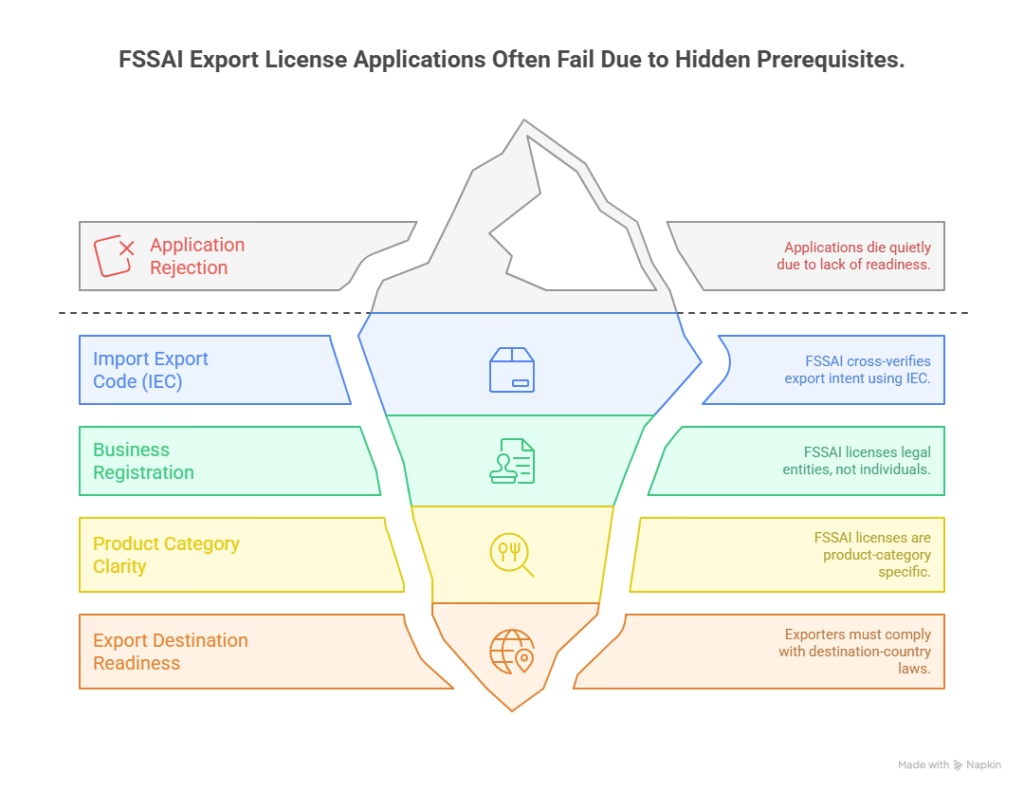
Prerequisites Before Applying for FSSAI Export License
This is where most applications die quietly. Not because Food Safety and Standards Authority of India is strict, but because exporters apply before they’re ready.
Let’s strip it down to what actually matters.
Import Export Code (IEC)
No IEC, no export. Full stop.
Two hard facts:
- FSSAI cross verifies export purpose using your IEC. If you don’t have one, your application stalls.
- IEC must match the business details you use on FoSCoS(Food Safety Compliance System). Even minor mismatches trigger objections.
This is why fssai and iec for export is important. People usually realize this after rejection.
Business registration
It issues licenses only to legal entities, not to individuals exporting on a casual basis.
Two examples:
- A proprietorship exporting food still needs valid business proof like GST or shop establishment.
- A private limited company must apply using its CIN, not the director’s name.
If your business identity isn’t clean, your documents for fssai export license won’t survive inspection.
Product category clarity
This is a silent killer.
Two common mistakes:
- Exporters list “food products” instead of specific categories like spices, processed foods, or cereals.
- Products listed on Food Safety and Standards Authority of India don’t match invoice or export documents later.
FSSAI licenses are product category specific. Unclear listings means delays or outright rejection. This sits at the core of fssai export requirements.
Export destination readiness
Two realities exporters ignore:
- Some destinations require stricter residue, labeling, or shelf life standards than India.
- FSSAI compliance doesn’t override destination country food laws. It complements them.
If you don’t know where you’re exporting yet, you’re applying too early.
Step by Step Process to Apply for FSSAI License for Export
This is the execution layer. No theory. No shortcuts.
FoSCoS portal overview
All export related FSSAI applications are processed through the FoSCoS portal managed by the Food Safety and Standards Authority of India.
Two things to understand upfront:
- FoSCoS is document driven. Missing any documents can’t get fixed later.
- The portal routes export applications directly under Central licensing authorities.
That’s why foscos fssai exporter is the correct workflow.
Form-B explanation
Exporters must apply using Form-B.
What Form-B captures:
- Business constitution and address
- Product categories and export intent
- Manufacturing or trading nature of operations
Two mistakes that cause objections:
- Selecting the wrong business type (manufacturer vs trader).
- Declaring products you are not actually exporting yet.
If you’re searching how to apply fssai for export, this is the form that decides your outcome.
Fee structure and validity options
FSSAI licenses can be issued for 1 to 5 years.
What matters here:
- Fees increase with license duration.
- Longer validity reduces renewal friction but locks you into declared categories.
Two practical examples:
- New exporters often choose 1–2 years to stay flexible and safe.
- Established exporters opt for 5 years to avoid repeated inspections.
This is where fssai license online application becomes a strategic choice, not just a formality.
Inspection and approval timeline
Approval is not instant, and anyone promising otherwise is lying.
What to expect:
- Application review followed by possible inspection.
- Typical timeline ranges from 30 to 60 days, depending on complexity.
Two real outcomes:
- Clean documentation leads to approval without physical inspection.
- Inconsistent records trigger inspections and delays.
FSSAI export licensing rewards preparation, not urgency. Rushing the application only delays approval. Taking time to do it right is faster.
Documents Required for FSSAI Export License
This is where applications actually fail. Not on purpose. On paperwork. Think of this as a non negotiable checklist, not suggestion. Miss one item and your application under Form-B stalls.
Business documents
These establish who you are legally.
Core requirements:
- Business registration proof (GST, Incorporation Certificate, Partnership Deed, or Shop Establishment)
- Import Export Code (IEC)
- Identity and address proof of proprietor, partner, or director
- List of directors or partners
Two common failure points:
- IEC name not matching the business name on FoSCoS.
- Uploading expired or unsigned registration documents.
This is the backbone of all fssai export documents.
Product related documents
These define what you’re exporting, not what you plan to someday.
Required items:
- Detailed product list with categories
- Ingredient composition where applicable
- Label samples matching FSSAI requirements
Two mistakes exporters make:
- Declaring broad categories like “food products” instead of specific items.
- Labels that don’t match the product category selected in the application.
If your product list is wrong, fssai form b documents won’t save you later.
Facility and layout documents
This applies to manufacturers. Traders still get checked indirectly.
Typical documents:
- Layout plan of manufacturing or storage facility
- Equipment list
- Photographs of premises
Two realities:
- Inspectors use these to decide whether a physical inspection is needed.
- Poor quality layouts or unclear photos invite delays.
This section alone determines whether your fssai license checklist exporters works in your favor or against you.
Is NOC Required from FSSAI for Export Shipments?
Short answer: sometimes. And misunderstanding this costs exporters shipments.
What NOC means in the export context
NOC stands for No Objection Certificate. In exports, it confirms that the specific shipment complies with safety, quality, and labeling norms.
Two clarifications:
- NOC is shipment specific, not a one time license.
- Having an FSSAI license does not automatically mean you have NOC clearance.
That’s the core confusion behind fssai noc for export.
When NOC is mandatory
NOC is usually required when:
- The importing country demands official confirmation from Indian authorities.
- Products which are high risk, sensitive, or closely regulated.
Two examples:
- Processed foods with longer shelf life may require lab testing before NOC.
- Re-export of imported food items often mandates NOC clearance.
This is why food export noc india spikes among exporters dealing with strict destinations.
How NOC affects shipment clearance
NOC directly impacts whether your shipment moves or stops.
Two outcomes:
- With NOC, customs clearance proceeds smoothly.
- Without NOC when required, shipments are held, tested again, or rejected.
In practical terms, fssai clearance for export is incomplete if NOC obligations are ignored. An FSSAI license allows you to export. An NOC allows that shipment to leave without friction. Treating them as the same thing is a rookie mistake.
Packaging and Labelling Rules
Most exporters think packaging ends at “looks good.” That assumption gets shipments stopped. FSSAI treats packaging and labelling as compliance tools, not branding elements.
Mandatory labeling elements
These are non negotiable under FSSAI regulations, even for exports.
Core requirements include:
- Product name and category
- Complete ingredient list in descending order
- Nutritional information
- Veg or non-veg symbol
- Batch or lot number
- Manufacturing and expiry or best before dates
- Name and address of manufacturer or exporter
- FSSAI license number
Two common realities:
- Missing batch codes break traceability and trigger objections.
- Nutrition panels copied from domestic labels often fail export scrutiny.
This is the foundation of fssai labeling rules for export.
Export specific considerations
Export labels are not domestic labels with English text slapped on.
Two things exporters must factor in:
- Destination country rules may require different language, units, or declarations.
- Shelf life and storage instructions are examined more closely for export goods.
Examples:
- Middle Eastern markets may require Arabic labeling alongside English.
- EU destinations scrutinize allergen declarations more strictly than India.
This overlap is why food packaging rules india export must be read alongside foreign regulations.
Common labeling mistakes exporters make
These mistakes don’t look serious until customs flags them.
Two frequent failures:
- Using outdated FSSAI license numbers on export packaging.
- Printing labels before finalizing product category approval under FSSAI.
In both cases, exporters meet export food labeling requirements on paper but fail in execution. A compliant product can still be rejected if the label is wrong. Packaging is not cosmetic. It’s legal evidence
Additional Licenses and Certificates Required for Certain Food Products
FSSAI alone is rarely the full compliance stack. Many exporters stop halfway and pay for it later.
Agricultural produce
Fresh and primary agricultural products often require additional clearances.
Examples:
- Phytosanitary certificates for fruits, vegetables, and grains.
- Agricultural authority approvals for certain seeds or raw produce.
Ignoring these leads to clearance failures even with valid FSSAI licensing.
Spices, herbs, and narcotics regulated items
This category catches exporters off guard.
Two realities:
- Certain herbs and seeds fall under narcotics or controlled substances.
- Spices may require quality and contamination certificates beyond FSSAI.
Examples:
- Exporting poppy seeds or similar products demands narcotics clearance.
- Spices often require residue and aflatoxin testing.
This is where product specific export compliance actually matters.
Destination country driven certifications
Foreign regulations override comfort.
Two examples:
- US buyers may demand FDA registration or prior notice.
- EU markets may require HACCP, ISO, or specific lab test reports.
These fall under additional licenses for food export and export certificates for food products, and they vary by country, not exporter preference.
FSSAI is the gatekeeper, not the finish line. Every food product sits inside a larger compliance ecosystem. Miss one layer, and the whole export collapses.
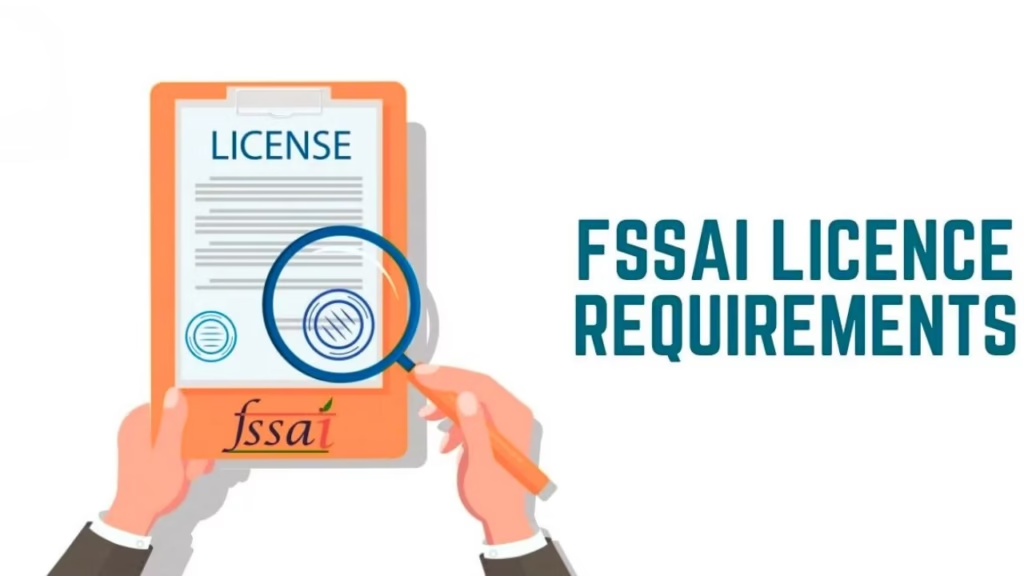
Renewal, Record Keeping, and Ongoing Compliance
Getting the license is entry level. Keeping it clean is what separates exporters who scale from exporters who get stuck fixing notices.
Renewal timelines
FSSAI licenses don’t auto renew. Miss the window and you’re non compliant overnight.
What actually matters:
- Renewal must be filed before expiry, ideally 30 days in advance.
- Late renewal attracts penalties and can temporarily invalidate your export eligibility.
Two real scenarios:
- An exporter forgets renewal during peak season and shipments stall because the license status flips to expired.
- A buyer reviews the documents, spots renewal gaps, and decides not to proceed.
This is the quiet risk behind fssai license renewal for exporters.
Inspection readiness
Inspections aren’t random. They’re triggered by red flags.
What inspectors look for:
- Consistency between declared products and actual exports
- Hygiene, storage, and handling practices
- Documentation accuracy
Two inspection triggers:
- Sudden changes in product categories or volumes.
- Past non compliance or delayed renewals.
Exporters who treat FSSAI as a one time checkbox struggle with food export audit requirements. Those who stay inspection ready don’t.
Traceability records
Traceability is the backbone of food exports.
What you must maintain:
- Batch wise production or procurement records
- Supplier details and invoices
- Export shipment documentation mapped to product batches
Two consequences of poor traceability:
- You can’t respond to buyer complaints or recalls.
- Inspectors escalate reviews because accountability breaks down.
This is the operational core of fssai compliance for export business. No records, no defense. Licenses open doors. Records keep them open.
Official Resources and Government References
If you’re exporting food, advice from unofficial WhatsApp groups or any other sources isn’t reliable. Only official sources matter.
FoSCoS Portal
The official application and compliance platform managed by the Food Safety and Standards Authority of India.
Use it for:
- Applying and renewing licenses
- Tracking application status
- Managing compliance updates
This is the primary fssai exporter reference.
Food Safety and Standards Authority of India official site
The legal and regulatory authority behind all FSSAI rules.
Use it for:
- Notifications and regulatory updates
- Food safety regulations and amendments
- Official circulars affecting exporters
This anchors fssai official guidelines export.
Compliance Calendar
A compliance focused platform that simplifies regulatory understanding.
Use it for:
- Plain language breakdowns of Food Safety and Standards Authority of India obligations
- Exporter focused compliance guides
- Timelines and renewal clarity
Helpful for exporters who want structure without legal jargon.
Expert guides
A practical resource for procedural clarity.
Use it for:
- Step by step explanations
- Document checklists
- Export specific FSSAI interpretations
This fits squarely under fssai government resources when paired with official references. Regulations change. Interpretations evolve. Exporters who rely on official sources stay compliant. Those who rely on assumptions end up firefighting.
Final Verdict: Do You Need FSSAI to Export Food from India?
Yes. If you’re exporting food from India, you need an FSSAI license. No exceptions, no shortcuts. The law is clear, enforcement is real, and international buyers assume compliance before they even talk price. This applies to manufacturers and merchant exporters alike, regardless of shipment size or destination.
Food Safety and Standards Authority of India is not optional paperwork. It’s the legal foundation that allows your food to cross borders without friction.
Who should act immediately
- First time food exporters planning their initial shipment.
- Merchant exporters assuming their supplier’s license covers them.
- Businesses exporting regularly but running on expired or mismatched licenses.
What delaying compliance costs you
- Rejected or detained shipments that wipe out margins in one move.
- Lost buyer trust, that’s almost impossible to recover.
- Penalties, inspections, and long term scrutiny that slow every future export.
Here’s the blunt reality Food Safety and Standards Authority of India compliance is cheaper than non compliance, every single time. The exporters who move fast and do it right scale. The ones who delay learn through losses.
Frequently Asked Questions (FAQs)
Q1. Is FSSAI required for every food export, even for small quantities or trial shipments?
Yes. There’s no minimum shipment value or quantity exemption. Whether it’s a full container or a sample consignment, exporting food without FSSAI is still non-compliance. Trial shipments get stopped the same way commercial ones do.
Q2. If my supplier already has an FSSAI license, do I still need one as an exporter?
Yes. Your supplier’s license covers their manufacturing activity, not your export activity. As the exporter of record, you are legally responsible. This is where most merchant exporters get it wrong.
Q3. Can I apply for FSSAI first and get IEC later?
Bad idea. IEC is a prerequisite for export licensing. Applying without IEC either delays approval or results in objections. Get IEC first, then apply for FSSAI. Reverse order wastes time.
Q4. Is FSSAI enough to export food to countries like the USA or EU?
No. FSSAI is mandatory but not sufficient. Destination countries may require FDA registration, EU-specific certifications, lab tests, or additional declarations. FSSAI clears you from the Indian side, not the foreign one.
Q5. How long does it realistically take to get an FSSAI export license approved?
Expect 30–60 days if documents are clean and product categories are clear. Faster approvals happen when there are no inconsistencies. Delays usually come from vague product lists, wrong license type, or poor documentation.
About the Author
Hi, I’m SriHarsha, founder of shxhub.in.
I focus on explaining import export business topics in a practical, beginner friendly way, based on how exports actually work on the real ground especially documentation, quality control, and buyer expectations.


3 thoughts on “Is FSSAI Required for Export? 13 Critical Rules You Can’t Ignore”