


A container leaves the factory with every product intact. Three weeks later, it arrives at the buyer’s warehouse in Rotterdam or Dubai with crushed cartons, shifted pallets, and a damage claim on the way and nothing wrong was ever made on the production line. The cargo wasn’t defective. It was loaded badly.
This is the quiet failure point in export logistics that nobody talks about until it costs them a shipment. Container stuffing the process of loading, arranging, securing, sealing, and documenting cargo inside a shipping container before it moves.
Most guides online stop at that one line definition and a bullet list. This one doesn’t. Here, you’ll get the complete operational picture how stuffing actually happens on the ground, the global safety rules (IMO, SOLAS, the CTU Code) that govern it, and the India specific customs procedure that determines whether your shipping bill sails through or gets flagged.
By the end, you’ll know how to choose the right container, build a stuffing plan, secure cargo correctly, submit VGM on time, and avoid the mistakes that cause the most damage claims, customs holds, and shipment delays.
Table of Contents
What Is Container Stuffing?
In the simplest terms, container stuffing is the process of taking export cargo and loading it into a shipping container in a way that is safe, space efficient, and properly documented from the first carton placed on the floor to the final seal locked on the doors.
But that sequence is the important part. Stuffing isn’t one action, it’s five linked ones: cargo is loaded in a planned sequence, arranged for balanced weight distribution, secured so nothing can shift in transit, sealed to prevent tampering, and every detail is recorded package count, weight, container number, seal number before the container ever leaves the yard.
Skip or rush any one of these, and you don’t just risk a messy container, you risk cargo damage, a rejected loading at the terminal, a customs query, or in the worst cases a vessel stability incident. That’s why international frameworks like the IMO/ILO/UNECE CTU Code treat stuffing as a safety discipline that runs across the entire intermodal journey, not a warehouse chore that ends once the doors close.
A quick industry note: you’ll often hear this same process called container vanning. The two terms are used interchangeably “stuffing” is more common in South Asian and general export terminology, while “vanning” shows up frequently in American and West Coast shipping/logistics circles. If you’re researching this topic and keep seeing both words, they’re describing the same operation.
Here’s how stuffing compares to its opposite at the destination end:
| Term | What It Means |
| Container Stuffing (also vanning) | Loading, arranging, securing, and sealing cargo into a container at origin, before export |
| Container De-stuffing (also devanning, stripping) | Unloading cargo out of the container at destination, after import |
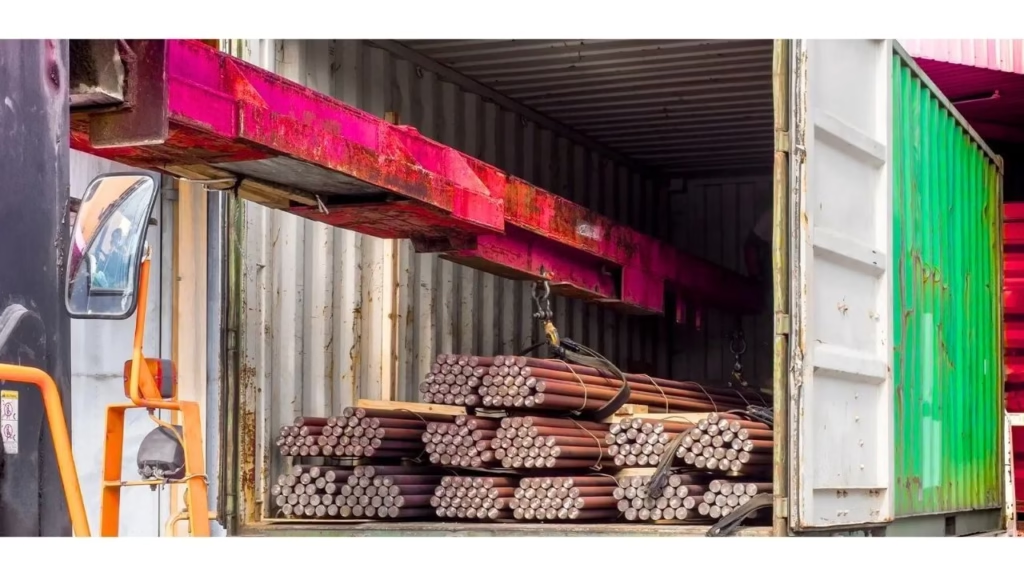
Container Stuffing vs Related Terms
Exporters often use “stuffing,” “loading,” “lashing,” and “securing” as if they mean the same thing. They don’t and mixing them up is exactly how a step gets skipped.
Loading is the broadest term physically moving cargo into the container. It’s one part of stuffing, not the whole process.
Lashing is a specific securing technique using straps, chains, or ropes to tie cargo down, typically for heavy or machinery type loads. It’s a tool used during stuffing, not a synonym for it.
Securing is broader than lashing. It covers every method used to stop cargo from shifting dunnage, bracing, airbags, anti-slip mats, and lashing all fall under this umbrella.
Stuffing then, is the umbrella term that contains all of the above inspection, loading, arranging, securing, sealing, and documentation, done as one coordinated process.
At the other end of the journey sits destuffing (also called devanning or stripping) unloading the container at destination. Stuffing and destuffing are mirror image operations one prepares cargo for transit stress, the other safely reverses it. A container that was poorly stuffed usually reveals itself at destuffing, when a warehouse team opens the doors to find cargo that has shifted, toppled, or crushed itself against the walls.
Zooming out further, stuffing is one stage inside a much bigger system the Cargo Transport Unit (CTU) lifecycle the full journey a container takes across road, rail, and sea, from the moment it’s packed to the moment it’s unpacked.
International frameworks like the International Maritime Organization (IMO), the International Labor Organization (ILO), and the United Nations Economic Commission for Europe (UNECE), Cargo Transport Unit (CTU) Code don’t treat stuffing as an isolated warehouse task they treat it as the foundation of everything that happens to that container afterward how it stacks on a vessel, how it survives a truck’s hard braking, how safely a port worker can open its doors. Understanding stuffing as part of this lifecycle, rather than a standalone chore, is what separates exporters who treat it seriously from those who treat it as an afterthought.
Why Container Stuffing Matters
A packed container doesn’t sit still for three weeks it lives through one of the roughest physical journeys in global trade. It gets slammed by hard braking on a highway, jolted by rail yard shunting, vibrated continuously on long hauls, stacked six to nine containers high on a vessel, and rocked by ocean swell that can tilt a ship several degrees in either direction, repeatedly, for days.
Here’s the physics that makes bad stuffing so dangerous, every container has a center of gravity, and the higher and less evenly distributed the weight inside it, the easier that center of gravity is to tip. A container with heavy cargo stacked at one end, or piled high with lightweight bracing underneath, behaves like a top heavy object on a moving platform vessel roll or a hard stop is enough to send it swinging.
Multiply that instability across a stack of containers on a vessel, and a single badly stuffed box can contribute to a stack collapse, a documented, recurring problem in the shipping industry that has caused containers to topple overboard mid voyage.
The business and compliance fallout is just as real, even when nothing collapses. A container with an inaccurate or missing Verified Gross Mass (VGM) can be refused loading outright under SOLAS (Safety of Life at Sea) rules.
Mismatched paperwork a packing list that doesn’t match what’s actually inside can trigger a customs query or shipping bill amendment. And cargo that arrives shifted or crushed becomes a damage claim, which insurers frequently contest or deny if the stuffing method itself was demonstrably inadequate.
The safety stakes extend to people, not just cargo. Dockworkers and warehouse staff opening a container with unsecured, leaning, or collapsed cargo face real injury risk falling boxes, unstable pallets, or cargo bursting out of the doors on opening are common causes of port and warehouse accidents.
The Cost of Getting It Wrong
Poor stuffing rarely shows up as one clean expense it shows up as a stack of smaller ones:
- Demurrage and detention — delays from rejected loading or customs holds mean the container sits longer, and per day charges accumulate fast.
- Re-stuffing charges — if a container fails inspection or VGM verification, it may need to be unpacked and repacked, billed as a separate labor and yard space charge.
- Rejected or reduced insurance claims — insurers routinely investigate whether cargo was secured per industry standards before paying out inadequate stuffing is one of the most common grounds for a denied or reduced claim.
- Buyer disputes and reputational cost — a damaged shipment doesn’t just cost money once it costs trust with a buyer who now questions every future order.
None of these costs show up on a spreadsheet at the planning stage. They show up three weeks later, when it’s too late to fix.
Types of Container Stuffing (Where Stuffing Happens)
Where a container gets stuffed matters almost as much as how it’s stuffed. Exporters typically choose between three locations, and each comes with a different trade-off between control, cost, and customs oversight.
Factory Stuffing
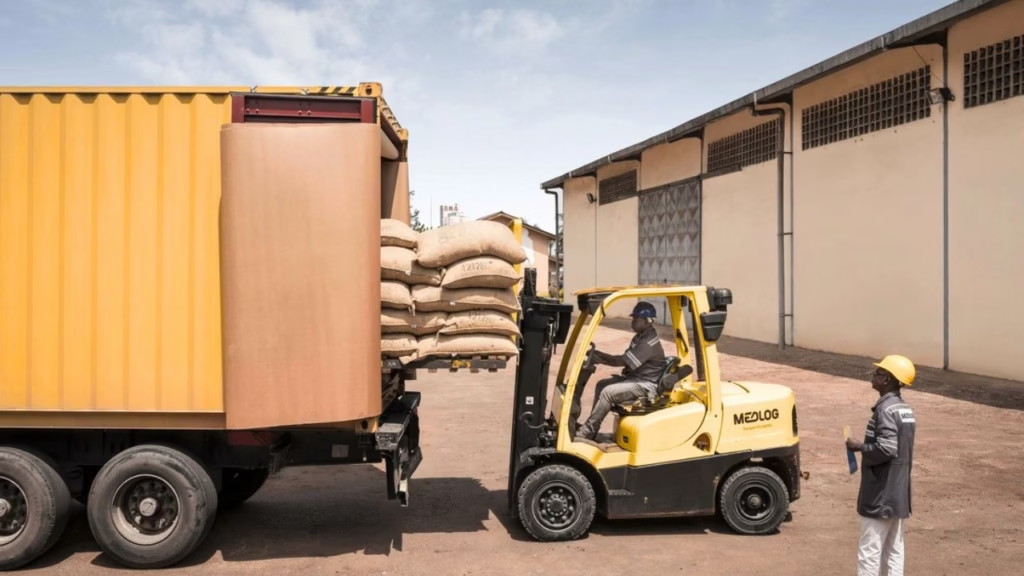
This happens at the exporter’s own premises the factory floor or warehouse where the goods were manufactured or packed. An empty container is trucked in, loaded directly at the source, sealed, and sent onward.
The biggest advantage is control, the exporter’s own team handles the cargo from production line to container, which means less handling, less transit exposure before the container is even sealed, and lower risk of contamination, pilferage, or mix up with other shipments. It’s the preferred method for high value, sensitive, or high volume goods like processed foods, electronics, or raw minerals, where every extra touchpoint adds risk.
The trade off is that the exporter carries full responsibility for getting the load plan, weight distribution, and securing right there’s no port side check until the container is already sealed and moving.
Dock/Port Stuffing
Here, stuffing happens at the port itself or a Container Freight Station (CFS) attached to it, under the direct supervision of customs officers. This is common for smaller exporters without in-house stuffing capability, for mixed or consolidated shipments, or when regulations require inspection before export.
Because a customs officer is present recording packages stuffed, seal details, and loading information as part of “preventive supervision” dock stuffing carries built in regulatory oversight. The trad off is less control for the exporter and more dependency on port schedules, which can introduce delay if the terminal is congested.
Off-Dock Stuffing
This takes place away from the port entirely, typically at a bonded warehouse or a CFS located inland. It’s the middle ground between factory and dock stuffing cargo can be palletized, re-weighed, re-packaged, or given moisture protection before the container is sealed, all under a degree of customs recognized supervision.
Off dock stuffing is especially useful for industries like mining, agriculture, and manufacturing, where shipments often need batching, quality inspection, or consolidation from multiple sources before they’re ready to travel.
| Method | Where | Best For | Customs Supervision | Typical Use Case |
| Factory Stuffing | Exporter’s own premises | High value, sensitive, or high-volume single shipper cargo | Minimal at loading verified later | Processed goods, electronics, raw minerals |
| Dock/Port Stuffing | Port terminal or CFS at port | Smaller exporters, mixed/consolidated cargo | Direct, real time (preventive supervision) | LCL shipments, cargo requiring pre-export inspection |
| Off-Dock Stuffing | Inland bonded warehouse/CFS | Cargo needing batching, inspection, or repackaging | Customs recognized, facility based | Agricultural exports, mining, multi source consolidation |
FCL vs LCL Stuffing
Not every shipment fills a container on its own and that difference changes how stuffing needs to be planned.
Full Container Load (FCL) means one shipper’s cargo occupies the entire container, exclusively. Because nobody else’s goods share the space, the exporter (or their freight forwarder) has full control over the stuffing plan how cargo is sequenced, where weight sits, and how it’s secured is decided purely around that one shipment’s needs. FCL stuffing is generally more straightforward there’s no risk of cross contamination between shipments, and the loading sequence can be optimized entirely for the buyer’s unloading convenience at the other end.
Less than Container Load (LCL) is the opposite cargo volume doesn’t justify a full container, so it shares space with goods from other shippers, consolidated at a CFS. This changes the stuffing calculus significantly. Because multiple shipments often headed to different consignees sit inside the same box, sequencing becomes far more critical. Cargo destined for the first stop on the unloading route needs to be positioned for easy, safe access without disturbing everyone else’s goods. Segregation matters more too, goods need clear labeling, physical separation, and sometimes barrier materials to prevent one shipper’s cargo from damaging, contaminating, or being mistaken for another’s.
In short, FCL stuffing optimizes for one shipment’s integrity, LCL stuffing has to optimize for several shipments’ integrity at once which is why LCL consolidation at a CFS typically involves stricter documentation, tighter labeling standards, and more careful load planning than a single shipper FCL load.
Choosing the Right Container Before Stuffing
Before any planning begins, the container itself has to match the cargo get this wrong, and no amount of careful stuffing will fix it.
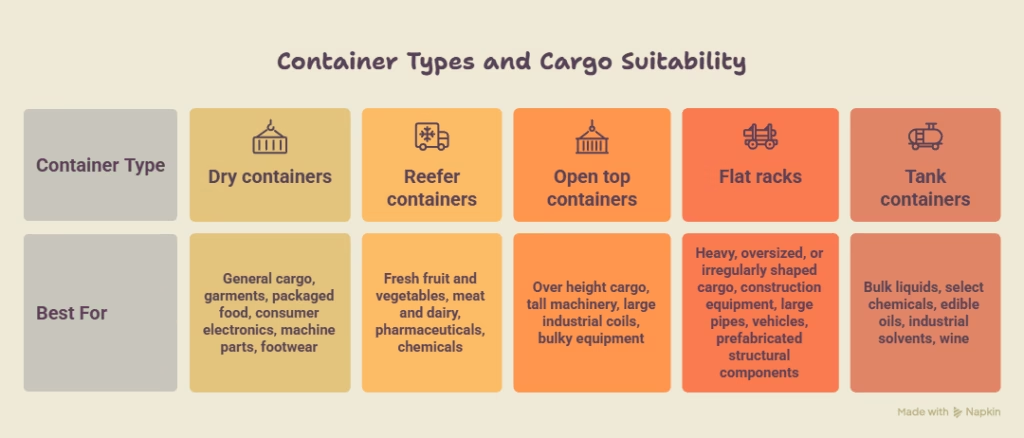
Dry containers are the default choice for general cargo garments, packaged food, consumer electronics, machine parts, footwear. If the goods don’t need temperature control and aren’t oversized, this is almost always the right pick it’s the cheapest, most widely available option.
Reefer containers are refrigerated units used for anything temperature sensitive fresh fruit and vegetables, meat and dairy, pharmaceuticals, or chemicals that degrade outside a set temperature range. A shipment of mangoes bound for Europe or a batch of vaccines headed overseas simply isn’t viable in a dry box, no matter how well it’s stuffed.
Open top containers remove the roof, allowing cargo to be loaded from above by crane. This is the go to choice for over height cargo that won’t fit through a standard door think tall machinery, large industrial coils, or bulky equipment that needs top loading access.
Flat racks strip away the sides and roof entirely, leaving just a base platform with end walls. They’re built for heavy, oversized, or irregularly shaped cargo construction equipment, large pipes, vehicles, or prefabricated structural components that a standard box container simply can’t hold.
Tank containers are cylindrical vessels mounted in a frame, used for bulk liquids and select chemicals edible oils, industrial solvents, or wine shipped in bulk, for example.
Payload limits matter just as much as container type. Every container has three key weight figures tare weight (the empty container’s own weight), payload (the maximum cargo weight it can legally carry), and maximum gross weight (tare + payload combined the absolute ceiling).
As a simplified example a standard 40ft dry container might have a tare weight of roughly 3,800 kg and a maximum gross weight of around 30,480 kg meaning the payload (cargo capacity) is approximately 26,680 kg. Exceeding that payload isn’t just a paperwork issue it’s a safety violation that can get a container rejected at the terminal.
A quick decision checklist:
- Does the cargo need temperature control? → Reefer
- Is it taller than the container’s internal door height? → Open top
- Is it oversized, irregular, or extremely heavy with no need for enclosed sides? → Flat rack
- Is it a bulk liquid or chemical? → Tank
- None of the above? → Standard dry container
- Always cross check total cargo weight (including packaging, pallets, and dunnage) against the container’s payload limit before finalizing the choice.
Pre-Stuffing Container Inspection
Never stuff a container without inspecting it first a container that looks fine from the outside can still damage or contaminate an entire shipment. Six checks matter most:

Holes, cracks, dents, or light entering through the roof or walls. This isn’t a cosmetic issue any gap that lets light in also lets in rain, humidity, and dust, all of which can ruin moisture sensitive cargo like textiles, food, or paper packaging over a multi week voyage.
Wet, broken, uneven, or contaminated flooring. A compromised floor can soak into cargo resting directly on it, weaken under load bearing weight, or introduce contamination from a previous shipment’s residue a serious problem for food grade or agricultural exports.
Water leakage, bad odour, pests, or residue from prior cargo. Odour and pest traces are strong indicators that a container wasn’t properly cleaned after its last shipment a major risk for food, textiles, and any goods sensitive to cross contamination.
Properly working doors, locking bars, hinges, and rubber seals. If doors don’t close and lock securely, the container can’t hold a proper seal undermining both cargo security and customs integrity checks.
A valid CSC safety approval plate and visible container number. The CSC (Container Safety Convention) plate certifies that the container has passed a structural safety inspection and is approved for international transport many exporters glance past it, but a missing or expired plate can mean the container isn’t legally fit to load or stack on a vessel at all.
Cleanliness and suitability for the commodity being exported. A container that’s structurally sound but dirty or previously used for an incompatible cargo type (chemicals, strong smelling goods) can still taint a new shipment.
Special note for agricultural cargo: these products demand a stricter standard clean, dry, completely odour free containers, often with added moisture control measures like liners or desiccant bags to absorb condensation that naturally builds up during sea transit. Skipping this step is one of the most common causes of spoiled agricultural shipments arriving at destination.
Cargo & Document Preparation
Before a single carton goes into the container, the paperwork needs to be in order because everything that happens later, from customs clearance to buyer payment, depends on it matching what’s physically inside the box.
Here’s what needs to be ready, and why customs and other authorities actually ask for each one:
- Commercial invoice — establishes the transaction value customs uses this to assess duty and verify the shipment isn’t under or over declared.
- Packing list — the itemized breakdown of what’s inside package count, description, net and gross weight, dimensions. This is the document customs cross checks most closely against the physical cargo.
- Shipping bill or export declaration — the formal legal declaration of the export this is what customs examines before issuing clearance.
- Purchase order or letter of credit requirements — ensures the shipment complies with the buyer’s payment terms, so the exporter actually gets paid.
- Cargo labels, handling marks, and country of origin markings — required for customs classification and, in many destination countries, for legal import eligibility.
- Fumigation, phytosanitary, quality, or health certificates — mandatory for agricultural and food products, confirming the cargo meets the importing country’s biosecurity standards.
- Dangerous goods declaration and labels — legally required for hazardous cargo so it’s handled, stowed, and segregated correctly at every stage of transport.
- VGM information — required under SOLAS before the container can be included in the vessel’s stowage plan.
The single most important discipline here the packing list must exactly mirror what’s physically stuffed into the container same count, same weights, same descriptions. This isn’t a formality. When goods are examined at the port, customs issues a Let Export order only once they’re satisfied the declaration matches the physical cargo (covered in more detail in the India specific section below).
Any mismatch between what’s on paper and what’s inside the container can mean a shipping bill amendment, a delayed clearance, or a full re-inspection all avoidable by getting this step right the first time.
Creating a Container Stuffing Plan (Load Plan)
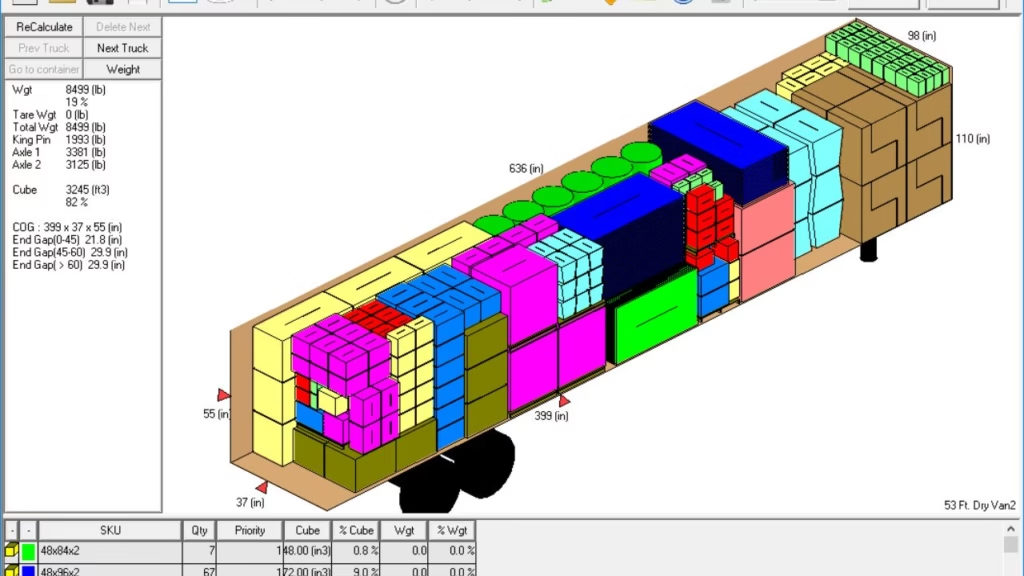
A stuffing plan also called a load plan is a working diagram and instruction set that shows exactly where each package, pallet, carton, bag, drum, or crate will sit inside the container before anyone starts loading. It’s typically prepared by the exporter’s logistics team, a freight forwarder, or a dedicated stuffing supervisor at the CFS, working from the packing list and cargo specifications.
A good plan isn’t just about fitting everything in it weighs several variables at once:
- Total weight and distribution — ensuring cargo doesn’t exceed the container’s payload and is spread evenly, front to back and side to side.
- Unloading sequence — positioning cargo so the receiver can unload it safely and in the order they actually need it, especially critical for LCL shipments with multiple consignees.
- Fragility — keeping delicate goods away from crushing weight or high impact zones near the doors.
- Hazard classification — for dangerous goods, following IMDG (International Maritime Dangerous Goods) segregation rules so incompatible substances never sit close enough to react if a container is compromised.
A worked example: picture an exporter shipping a mixed load heavy rice bags and lighter cartons of spices in a single container. The plan calls for the rice bags to form a stable, evenly distributed base across the container floor, stacked low and centered rather than piled at one end. The spice cartons go on top, never underneath the rice bags, since their lighter packaging would crush under that weight.
Any leftover gaps between stacks get blocked with dunnage so nothing can slide during transit, and because both products are food items sensitive to sea container condensation, the plan also builds in moisture protection liners or desiccant bags to stop humidity from soaking into the cartons over a multi week voyage.
On paper, this might look like a simple diagram a low, wide base layer labeled “rice bags,” a lighter upper layer labeled “spice cartons,” and shaded corner zones marking where dunnage and desiccants go.
In practice, exporters handle this planning two ways smaller shipments are often planned manually, on paper or a spreadsheet, based on experience and simple weight math. Larger operations increasingly use load planning software that models the container in 3D, checks weight distribution automatically, and flags overloading before a single carton is physically moved reducing the trial and error that used to define manual planning.
Bulk vs Non-Bulk Cargo Stuffing
Cargo stuffing isn’t a one size fits all process how a container gets loaded changes significantly depending on whether the cargo is bulk or non bulk.
Bulk cargo — loose, unpackaged commodities like grains, minerals, ores, or raw agricultural produce requires an entirely different loading approach than boxed goods. Because it’s poured or mechanically fed rather than stacked, bulk stuffing typically relies on specialized equipment conveyor systems, pneumatic loaders, or chutes designed to fill the container evenly without creating uneven pressure points against the walls.
Dust and contamination control are the biggest concerns here loose minerals or grains can generate airborne dust during loading, which creates both a worker safety hazard and a contamination risk if the cargo is food grade. Liner bags are often used inside the container to prevent product from contacting the container walls directly and to make unloading at destination cleaner and faster.
Non-bulk cargo — machinery, packaged goods, crated equipment follows a more familiar loading pattern. This is typically forklift assisted, using pallets to speed up loading and protect goods from direct floor contact. Heavier or irregularly shaped items, like machinery parts, often need wooden crating for structural protection during transit, combined with steel bracing or lashing to lock them in place against the container walls and floor anchors.
Because non-bulk cargo comes in discrete units, the loading sequence and weight distribution principles covered earlier apply directly each piece is placed deliberately, not poured.
The practical takeaway is, bulk cargo stuffing is an equipment and contamination control problem, while non bulk stuffing is a sequencing and securing problem. Treating one like the other say, trying to hand stack loose grain, or pouring packaged goods loosely is a fast route to damaged cargo or a rejected load.
The Step by Step Loading Process
Once the plan is set and the container has passed inspection, the actual loading follows a sequence of proven stowage principles. Skipping any one of them is usually invisible at the loading dock and painfully obvious three weeks later at the destination.
1. Put heavy cargo at the bottom, lighter cargo above it. This keeps the container’s center of gravity low and stable. Reverse this order, and a top heavy container becomes far more likely to tip or shift when the vessel rolls in open water.
2. Distribute weight evenly across the container floor. Concentrated weight in one spot stresses both the container’s structural floor and its balance in transit. Uneven distribution is a common cause of containers arriving with warped or cracked flooring.
3. Avoid heavy concentration at one end, one side, or near the doors. A container loaded heavy at one end behaves like an unbalanced seesaw during hard braking or vessel motion it’s far more prone to shifting toward that heavy side.
4. Keep the center of gravity as low as possible. In simple terms the lower and more centered the “weight point” of the whole load, the harder it is for outside forces braking, rolling, stacking pressure to tip it. High, unevenly stacked cargo raises that center of gravity and makes the load inherently less stable.
5. Build stable, level layers rather than uneven stacks. Uneven stacking creates weak points where upper layers can slide off lower ones under vibration. A level, interlocked layer structure spreads pressure evenly and resists shifting.
6. Prevent cargo from protruding into the doorway or pressing against the doors. Cargo pressing on the doors isn’t just an opening hazard for workers at destination — it can also cause the doors to bulge or fail to seal properly during transit.
7. Never exceed floor-loading limits, container payload, or road-transport axle limits. Overloading isn’t just a container safety issue it can violate road transport axle regulations during the inland leg, risking fines or transport refusal before the container even reaches the port.
8. Use pallets, flooring protection, and moisture barriers where needed. Cargo resting directly on a container floor for weeks is exposed to condensation and abrasion. Pallets and liners create a protective buffer that meaningfully reduces damage claims.
The thread running through all eight principles is the same keep weight low, centered, and evenly spread. A container is essentially a moving platform subject to constant tilting forces braking, cornering, vessel roll and the lower and more balanced its internal center of gravity, the more resistant it is to those forces tipping the load. Every stowage rule above is really just a different application of that one physical principle.
Securing the Cargo
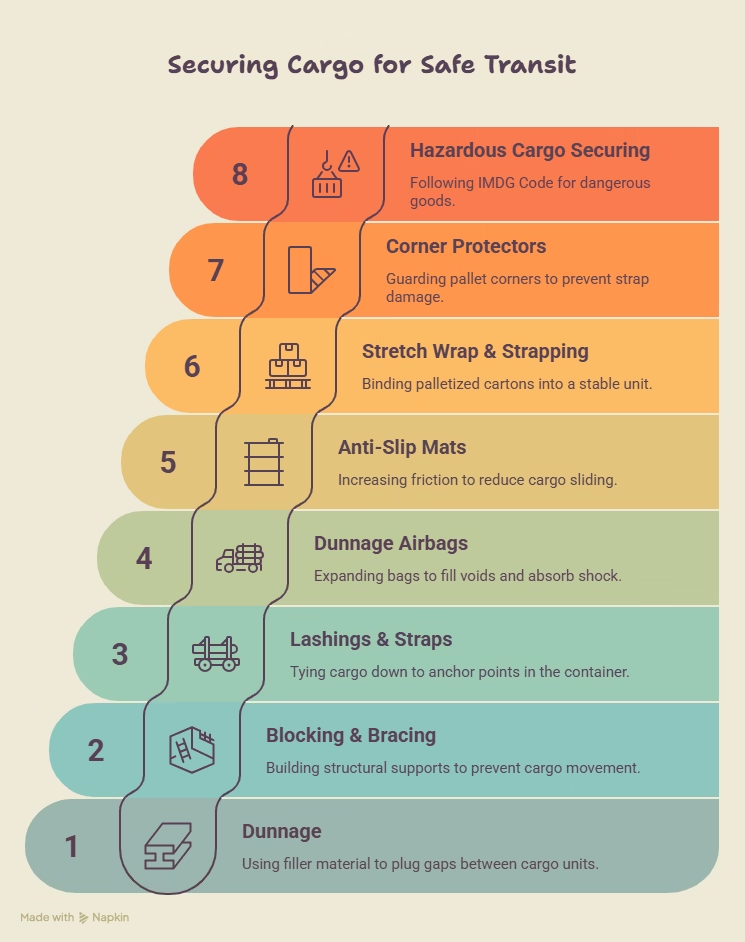
Once cargo is loaded in the right sequence, it still isn’t safe to ship until it’s physically secured against movement. Empty space inside a container is the enemy here any gap is room for cargo to slide, tip, or collapse once the container starts moving. Different securing methods address different risks:
Dunnage. Timber, boards, or similar filler material used to plug gaps between cargo units and against the container walls. It’s the most basic securing tool a few strategically placed dunnage boards can stop an entire stack from shifting sideways during a hard turn or sudden stop.
Blocking and bracing. Structural supports built to stop cargo moving forward, backward, or sideways often timber frames or braces wedged against the container walls. This is especially important for heavy machinery or crated equipment, where a few centimeters of movement can mean serious impact damage.
Lashings and straps. Ropes, chains, or straps that physically tie cargo down to anchor points in the container floor or walls. This is the standard method for securing machinery, vehicles, or heavy pallets that can’t simply be wedged into place.
Dunnage airbags. Inflatable bags placed in voids between cargo units, expanding to fill gaps and absorb shock. They’re widely used for palletized or boxed cargo where rigid dunnage isn’t practical, cushioning against vibration over long transit.
Anti-slip mats. Placed under cargo or pallets to increase friction with the container floor, reducing the chance of sliding even without additional strapping. Useful for cargo that’s hard to lash directly, like stacked drums.
Stretch wrap and strapping. Used to bind palletized cartons into a single compact, stable unit before loading this keeps individual boxes from shifting relative to each other even if the pallet itself moves slightly.
Corner protectors. Rigid guards placed at pallet or carton corners to prevent straps from crushing edges or cutting into packaging during transit a small addition that meaningfully reduces surface damage claims.
Securing Hazardous/IMDG Cargo Dangerous goods can’t be secured with just any available material securing methods and packaging must be compatible with the cargo’s hazard class. The IMDG Code, mandatory for packaged dangerous goods transported by sea, sets specific rules not only for how hazardous cargo is packed and secured, but for segregation keeping incompatible substances physically separated so they can’t react with each other if packaging is compromised in transit.
Getting this wrong isn’t just a compliance issue it’s a direct safety risk to the vessel, the crew, and everyone handling the container downstream.
Verified Gross Mass (VGM) & SOLAS Compliance
Verified Gross Mass (VGM) is the confirmed total weight of a fully packed container cargo, packaging, pallets, dunnage, and the container’s own tare weight, all combined. It exists because inaccurate weight declarations have historically been a real cause of vessel stability problems, collapsed container stacks, and road accidents during the inland leg so under the SOLAS (Safety of Life at Sea) convention, no container can be loaded onto a covered vessel without a verified weight on file.
There are two approved ways to obtain it:
Method 1: Weighing the packed container.
The entire loaded and sealed container is weighed as a single unit, typically using a calibrated weighbridge at the port, CFS, or another certified facility. This gives a direct, verified total gross weight with no calculation involved.
Method 2: Weighing and calculating.
Each item of cargo, along with all packaging, pallets, and securing material, is weighed individually, then added to the container’s certified tare weight to arrive at the total. This method is common when a full weighbridge isn’t practical for instance, at a factory stuffing location but it demands accurate individual weighing and careful record keeping, since any error compounds across every item added.

Missing the VGM deadline has real consequences. VGM has to reach the carrier early enough to be included in the vessel’s stowage plan this cutoff is typically well before the vessel’s actual arrival, not at the last minute. A container without a verified weight submitted in time can simply be denied loading, regardless of how well it was stuffed or how solid the rest of its documentation is. That means the shipment misses its scheduled sailing, triggering delay costs, missed delivery windows, and potential contract penalties with the buyer.
One common point of confusion: who is legally the “shipper” responsible for VGM? It’s not automatically the manufacturer, the freight forwarder, or the trucking company — under SOLAS, the responsibility sits with the party named as “shipper” on the ocean bill of lading.
In practice, this is usually the exporter or the entity that has contracted with the carrier for the shipment, and that responsibility can’t simply be assumed to transfer to a logistics partner unless it’s explicitly arranged. Exporters who assume “someone else is handling VGM” are one of the most frequent causes of last minute loading rejections.
Closing, Sealing & Final Documentation
Once cargo is loaded and secured, the container isn’t ready to leave until a final closing sequence is completed and rushing this last stretch is where a lot of otherwise careful stuffing jobs unravel.
1. Conduct a final count of packages. This is the last chance to catch a discrepancy between what’s physically inside and what the packing list says, before the container is sealed and that check becomes far harder to redo.
2. Check that cargo is secured and not touching or obstructing the doors. Cargo pressing against the doors risks bulging, a failed seal, or goods spilling out the moment the doors are opened at destination.
3. Close both container doors properly. Sounds obvious, but doors that aren’t fully latched can work loose under transit vibration.
4. Apply a high security seal, typically a bolt seal.
5. Record the container number and seal number against the shipment file.
6. Take photographs or video of the loaded cargo, container number, and seal. This step is easy to skip and one of the most valuable to keep. If a damage claim, insurance dispute, or buyer disagreement arises later, dated photos of the cargo as it was stuffed and proof the correct seal was applied are often the deciding evidence in the exporter’s favor. Without them, it becomes one party’s word against another’s.
7. Share final shipment details with the freight forwarder, customs broker, shipping line, and buyer as required, so every party is working from the same record.
A note on seal types: a bolt seal is the industry standard high security option a metal pin that must be cut to open, offering strong tamper resistance and typically required by carriers for international moves. A cable seal works similarly but uses a steel cable, often chosen for irregular door configurations.
An indicative seal (a simple plastic pull tight strip) shows whether a container was opened but offers minimal physical resistance to tampering it’s generally reserved for lower risk domestic or short haul moves, not international export.
Seal number consistency matters more than it seems. The seal number recorded at stuffing must match exactly across the shipping bill, packing list, and bill of lading instructions. A mismatch even a simple transcription error is enough to trigger a customs hold, since it raises the question of whether the container was tampered with or swapped somewhere between stuffing and departure.
Container Stuffing Rules & Procedure in India
For Indian exporters, where a container gets stuffed shapes the entire customs procedure that follows. Building on the three stuffing methods covered earlier, in India these typically map to factory based stuffing at the exporter’s own premises, stuffing at a Container Freight Station (CFS) or Inland Container Depot (ICD), or stuffing at the port itself the choice depends on the exporter’s infrastructure, the shipping line’s requirements, and the nature of the cargo.
The “Let Export” order is the key customs checkpoint in this process. In plain terms, it’s customs’ formal sign off that the shipment is cleared to leave the country issued once the examining officer is satisfied that the physical cargo matches the declared shipping bill in quantity, description, and value. No container moves onward for export without this order.
When stuffing happens at the dock, it takes place under what customs calls “preventive supervision.” This means a customs officer is physically present during loading and actively records key details as the container is stuffed the number of packages loaded, bottle seal or bolt seal details, and loading specifics. This isn’t a formality it creates an official government record of exactly what went into the container, at the moment it went in, which becomes the reference point for any later dispute.
This is also where declared versus actual quantity discrepancies surface. If the number of packages physically stuffed doesn’t match what’s declared on the shipping bill say, the exporter listed 500 cartons but only 480 were actually loaded the shipping bill typically needs to be amended before the shipment can proceed, particularly if the exporter intends to claim export benefits tied to that declaration.
This is precisely why the consistency discipline from the documentation section earlier isn’t optional it’s a direct precondition for smooth clearance.
Shipment date rules add one more layer that trips up exporters relying on Foreign Trade Policy (FTP) benefits. According to the DGFT’s Handbook of Procedures, the relevant shipment date for containerized sea exports is generally the date on the “Onboard Bill of Lading“ confirming cargo has actually been loaded onto the vessel or, where a letter of credit accepts it, the date on a “Received for Shipment Bill of Lading,” issued earlier once cargo is received by the carrier but before it’s physically on board.
For exports routed through an ICD, the relevant date is instead the bill of lading date issued by the shipping agent after customs clearance and loading at the ICD itself.
Why does this distinction matter in practice? Because for FTP benefit purposes, DGFT treats the Let Export Order date as the actual date of reckoning. Consider an exporter shipping machinery through an ICD customs issues the Let Export Order on the 28th of the month, but the vessel doesn’t actually sail until the 3rd of the following month.
If the exporter mistakenly used the sailing date to calculate an export benefit deadline or scheme eligibility window, they could miscalculate by several days potentially missing a filing deadline entirely. Knowing which date governs which purpose isn’t a technicality it’s the difference between claiming a benefit correctly and losing it to a paperwork timing error.
Common Container Stuffing Mistakes (and How to Avoid Them)
Most container stuffing failures trace back to one of a small set of repeated errors. Here’s what tends to go wrong, what it actually costs, and how to prevent it.
| Mistake | Consequence | Fix |
| Loading cargo without inspecting the container | Moisture, contamination, or pest damage to cargo | Run the full pre stuffing inspection checklist every time, no exceptions |
| Exceeding payload or misdeclaring gross weight | Rejected loading, VGM non-compliance, safety violation | Verify total weight against container payload before loading begins |
| Placing heavy cargo near the doors or on one side | Unstable center of gravity, cargo shift, possible stack collapse | Follow the weight distribution stowage principles: low, centered, even |
| Leaving gaps without blocking, bracing, or airbags | Cargo sliding or toppling in transit | Fill every void with dunnage, airbags, or bracing before sealing |
| Stacking fragile goods below heavy cargo | Crushed or destroyed cargo on arrival | Build the load plan with fragility explicitly mapped by layer |
| Using weak export packaging | Packaging failure under transit stress | Match packaging strength to the transit mode and duration, not just local handling |
| Mixing odour sensitive goods with chemicals or strong smelling cargo | Tainted, unsellable product | Segregate by product sensitivity at the planning stage, not during loading |
| Forgetting moisture protection for agricultural cargo | Spoilage from sea container condensation | Include liners or desiccants by default for food/agri shipments |
| Using an incorrect seal number in shipping documents | Customs hold, tamper suspicion | Cross check seal number against every document before submission |
| Submitting VGM late | Container denied loading, missed sailing | Treat the VGM deadline as fixed, not flexible submit early |
| Declaring inaccurate package quantities, weights, or values | Shipping bill amendment, delayed Let Export Order | Make the final package count match the packing list exactly before sealing |
The pattern across almost every row is the same these are planning and verification failures, not loading labor failures. A five minute cross check at the right stage inspection, weighing, documentation, sealing prevents nearly all of them.
Container Stuffing Checklist
A condensed, save and reuse version of everything covered above:
Before Loading
- Confirm container type matches cargo needs (dry, reefer, open top, flat rack, tank)
- Verify container payload against total cargo weight
- Inspect for holes, cracks, leaks, odour, pests, or prior cargo residue
- Check doors, locking bars, hinges, and rubber seals
- Confirm valid CSC plate and container number
- Prepare invoice, packing list, shipping bill, and any required certificates
Planning
- Build a stuffing/load plan covering weight, sequence, fragility, and hazard class
- Confirm segregation for LCL or mixed shipper cargo
During Loading
- Heavy cargo at the bottom, light cargo above
- Weight evenly distributed, no concentration at one end or side
- Cargo clear of the doorway
- Within floor loading, payload, and road transport limits
Securing
- Gaps filled with dunnage, bracing, or airbags
- Heavy items lashed or blocked
- Anti slip mats, wrap, or corner protectors used where relevant
- IMDG segregation rules followed for hazardous cargo
Weight & Compliance
- VGM obtained (Method 1 or Method 2) and submitted before the carrier’s cutoff
Closing
- Final package count matches packing list exactly
- Doors closed and locked properly
- High security seal applied and number recorded
- Photos/video of cargo, container number, and seal taken
- Seal number matches shipping bill, packing list, and bill of lading
- Final details shared with forwarder, broker, carrier, and buyer
Conclusion
Container stuffing isn’t a labor task tucked away at the end of the export process it’s a compliance and safety discipline that determines whether a shipment arrives intact, clears customs smoothly, and protects everyone who handles it along the way.
Get the container selection, inspection, load plan, securing, and VGM right, and the rest of the export process tends to follow cleanly. Get any one of them wrong, and the consequences show up later as damage claims, customs holds, or missed sailings when they’re far harder and more expensive to fix.
If you’re preparing your next export shipment, don’t treat this as a one time read. Bookmark the checklist above, walk through it before every stuffing job, and if the cargo is high value, hazardous, or your first time exporting a particular product, it’s worth looping in an experienced freight forwarder or CFS operator before the container doors close for good.
FAQs
What is the difference between container stuffing and de-stuffing?
Container stuffing is the process of loading, arranging, securing, and sealing cargo into a container at the origin, before export. De-stuffing also called devanning or stripping is the reverse process at destination: unloading cargo out of the container after import. Stuffing prepares cargo to survive transit stress; de-stuffing safely reverses that process once the journey is over.
Who is responsible for container stuffing exporter or shipping line?
The exporter (or “shipper,” as named on the bill of lading) generally carries the responsibility, even when the physical stuffing happens at a CFS, ICD, or port under customs supervision. The shipping line’s role is transport and vessel stowage, not the loading and securing of the cargo itself. This includes responsibility for accurate documentation and VGM submission, which legally sits with the shipper, not the carrier.
What happens if VGM is not submitted on time?
Under SOLAS rules, a container without a verified gross mass submitted before the carrier’s cutoff for the vessel’s stowage plan can simply be denied loading. That means a missed sailing, delivery delays, and potential contract or penalty costs — regardless of how correctly the rest of the shipment was stuffed and documented.
Can container stuffing be done at the exporter’s factory?
Yes — this is called factory stuffing, and it’s common for high-value, sensitive, or high-volume single-shipper cargo. It gives the exporter direct control over loading and reduces handling before the container is sealed, though it also places full responsibility for correct weight distribution and securing on the exporter’s own team.
What is the difference between FCL and LCL stuffing?
In Full Container Load (FCL) stuffing, one shipper’s cargo fills the entire container, giving full control over the load plan. In Less than Container Load (LCL) stuffing, cargo from multiple shippers shares the same container, which requires stricter segregation, labeling, and sequencing so each consignment can be safely and separately unloaded at its destination.
What documents are required for container stuffing?
At minimum: a commercial invoice, packing list, shipping bill or export declaration, and VGM information. Depending on the cargo, additional documents may be needed — fumigation or phytosanitary certificates for agricultural goods, or a dangerous-goods declaration for hazardous cargo. The packing list must match the physically stuffed cargo exactly.
What is a stuffing plan?
A stuffing plan (or load plan) is a diagram and instruction set showing exactly where each item of cargo will be positioned inside the container, based on weight, unloading sequence, fragility, and hazard classification. It’s prepared before loading begins and guides the actual stowage process.
Is container stuffing mandatory for all export shipments?
Any cargo moving in a shipping container requires some form of stuffing — it’s not optional, since an unsecured or unplanned load risks damage, rejected loading, or customs issues. What varies is where it happens (factory, dock, or off-dock) and how formal the process needs to be, depending on cargo type, shipment size, and regulatory requirements.
About the Author
Hi, I’m SriHarsha, founder of shxhub.in.
I focus on explaining import export business topics in a practical, beginner friendly way, based on how exports actually work on the real ground especially documentation, quality control, and buyer expectations.





1 thought on “The Exporter’s Guide to Container Stuffing: From Load Plan to Let Export Order”