
India’s processed food export industry is booming, and it’s not just about rice anymore. From ready to eat meals to frozen shrimp, Indian food products are making their way to global shelves faster than ever.
In FY25 alone, the export value hit a staggering $25.14 billion, with rice leading the charge at $12.47 billion. But what’s driving this growth? And more importantly, which products are actually worth your time and investment?
This guide dives deep into the world of processed food exports from India, uncovering the top performing categories, the role of government policies, and the evolving global demand for shelf stable, branded, and ethnic foods.
Whether you’re a experienced exporter or just exploring the market, this blog will help you navigate the opportunities, challenges, and strategies to succeed in this high growth sector. Let’s get started!
Table of Contents
Straight Answer First
What processed food does India export?
India exports rice based products, fruit and vegetable preparations, meat and marine foods, dairy, cereals, pulses, ready to eat meals, and industrial food ingredients like guar gum and oil meals.
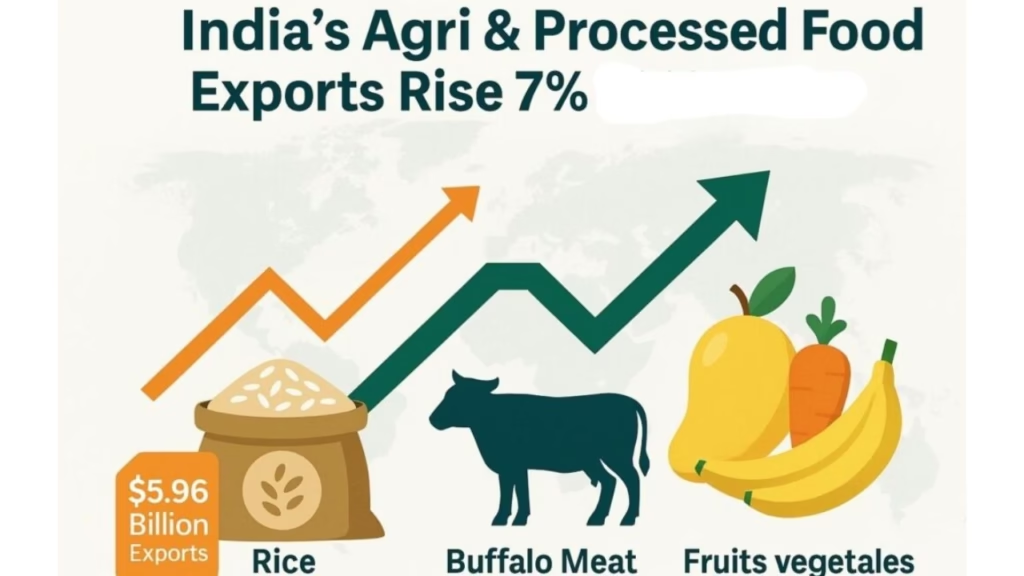
In FY25, APEDA’s processed food export basket touched $25.14 billion, growing 12% year on year, with rice alone at $12.47 billion.
This entire ecosystem is regulated and promoted by APEDA (Agricultural and Processed Food Products Export Development Authority)exports and MoFPI ( Ministry of Food Processing Industries) industry development, with compliance oversight from FSSAI.
Why Processed Food Exports from India Are Exploding
This growth is not hype. It’s structural.
FY25 Export Value and YoY Growth
India’s processed food exports crossed $12.5 billion in FY25, up from $6.3 billion in FY20.
That’s 15% CAGR in five years.
APEDA’s broader food basket hit $25.14 billion in FY25, with 15% YoY growth in April 2025 alone.
This is not seasonal noise. It’s a trend line going up.
Two hard signals:
- Rice exports crossed $12.47 billion in a single year.
- Fruits and vegetables grew 30% YoY in April 2025 alone.
That’s not organic growth. That’s demand pulling supply.
What Changed After 2020
Pre 2020, India exported food.
Post 2020, India started exporting shelf stable, high margin, branded food.
Two shifts changed everything:
Shift 1: Global Demand for Ready & Ethnic Food
Frozen shrimp, mango pulp, sauces, ready meals, and snacks now move faster than raw agri produce.
Buyers want consistency, packaging, and compliance, not sacks of grain.
Shift 2: Supply Chain Professionalization
Cold storage, reefer containers, and food parks scaled up.
What this really means is: fewer rejections, longer shelf life, higher trust.
Government & APEDA’s Role
This isn’t a free market miracle. It’s policy driven.
APEDA
- Product registration
- Export promotion
- Market access
- Country wise compliance guidance
MoFPI (Ministry of Food Processing Industries)
- Mega Food Parks
- Cold chain subsidies
- PLI schemes for food processors
Two concrete outcomes:
- Processed food companies now export faster with fewer regulatory blocks.
- MSME food brands can access global markets without building their own infrastructure.
Top Categories of Processed Food Exported from India (With Data)
India doesn’t export “food.”
It exports categories with predictable demand, repeat buyers, and scalable margins.
Here are the ones that actually matter.
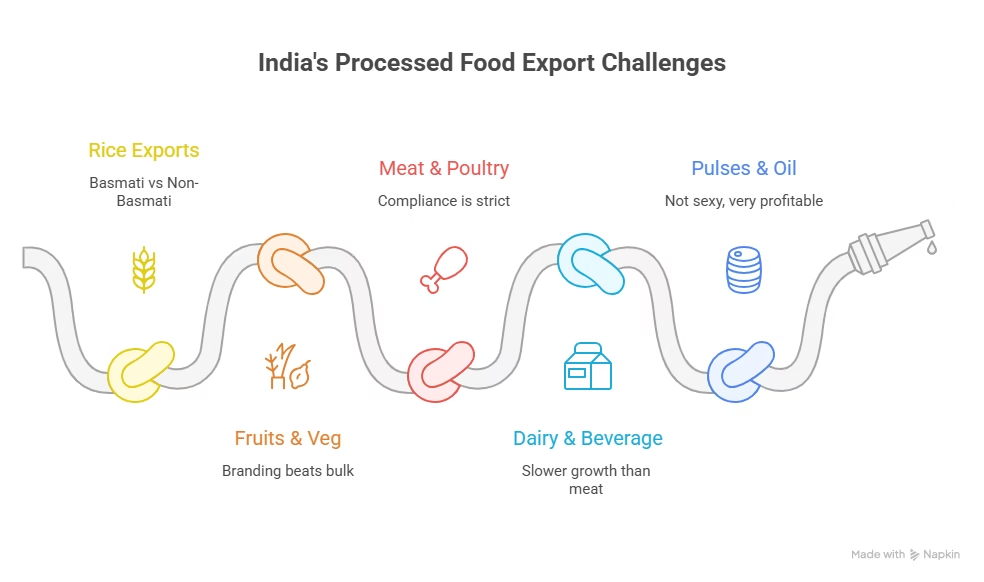
Rice & Cereal Based Products (The Backbone)
This category alone controls more than 50% of India’s processed food export value.
Basmati vs Non-Basmati
- Basmati rice is premium, price sensitive, and Middle East/US driven.
- Non-Basmati rice is volume driven, cost efficient, and Africa/Asia focused.
FY25 combined rice exports: $12.47 billion
Beyond raw rice
- Parboiled rice
- Instant rice mixes
- Cereal flakes
- Ready to cook grain meals
Two realities:
- Rice is India’s cash engine in food exports.
- Value added rice products now grow faster than raw grain.
Fruits & Vegetable Preparations (High Margin Segment)
This is where branding beats bulk.
Fast moving items
- Mango pulp & concentrates
- Pickled gherkins
- Frozen vegetables
- Mixed vegetable pickles
April 2025 exports: $0.38 billion
YoY growth: 30%
Two reasons this category explodes:
- Shelf life + global Indian food demand.
- Low production cost, high foreign currency realization.
Meat, Poultry & Marine Products
This segment brings cash fast and in bulk.
Buffalo meat
- 82% of India’s animal product exports
- Middle East, Vietnam, Malaysia
Frozen shrimp
- 66% of India’s marine export share
- US, Japan, EU
Poultry preparations
- Export growth: 16% YoY
Two truths:
- Protein moves faster than vegetables globally.
- Compliance is strict, but margins are unmatched.
Dairy & Beverage Based Products
This is where India exports trust, not just taste.
Top exports
- Milk powder
- Ghee
- Cheese
- Tea
- Malt based beverages
Two growth drivers:
- Overseas Indian community demand.
- Health and nutrition positioning.
This category is slower than meat but far more stable.
Pulses, Oil Meals & Industrial Food Inputs (The Silent Giants)
Not exciting. Very profitable.
Core products
- Guar gum
- Oil meals
- Milled grains
- Groundnut products
Growth rates in some years crossed 40%.
Two realities:
- These are raw materials for global food companies.
- Demand stays even when consumer markets crash.
Top 10 Processed Food Products Exported from India (FY25 Snapshot)
Here’s the real list. Not guesses. Not hype.
| Product | Export Value (FY25) | Key Importing Countries | Growth % |
| Basmati Rice | $8.5B+ | UAE, Saudi Arabia, USA, Iran | 8–10% |
| Non-Basmati Rice | $3.9B+ | Africa, Bangladesh, Nepal | 12% |
| Frozen Shrimp | $6B+ | USA, Japan, EU | 10% |
| Buffalo Meat | $4B+ | Vietnam, Malaysia, Egypt | 7% |
| Mango Pulp | $1.2B+ | USA, Middle East, EU | 15% |
| Pickled Gherkins | $800M+ | USA, Germany, France | 18% |
| Guar Gum | $700M+ | USA, China, EU | 20% |
| Oil Meals | $650M+ | Korea, Vietnam, Japan | 12% |
| Milk Powder & Dairy | $600M+ | Bangladesh, UAE, Nepal | 9% |
| Ready-to-Eat Foods | $500M+ | UK, Canada, Australia | 22% |
High Growth Processed Food Segments (2025–2030)
This is where the money is moving, not where it already sits. The future of processed food exports is about convenience, shelf life, health positioning, and repeat orders.
Ready to Eat Foods (Fastest Adoption Curve)
Think curries, biryanis, dal, pasta meals, instant gravies.
Why this explodes:
- Urban consumers want zero cook meals.
- Indian food is now mainstream, not “ethnic.”
Export demand is rising fastest in UK, Canada, Australia, and the Middle East.
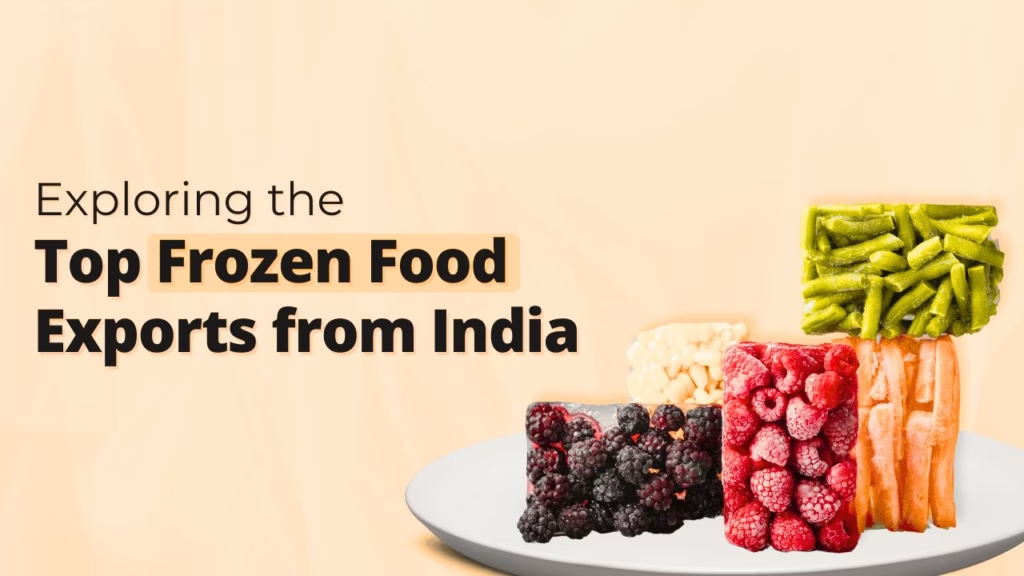
Frozen Foods (Cold Chain = Control)
Includes frozen vegetables, parathas, snacks, seafood, and meat.
Why it scales:
- Long shelf life = less risk.
- Higher price per kg than fresh exports.
Frozen shrimp already proves the model. Vegetarian frozen foods are next.
Health Snacks (Margin > Volume)
Includes millet snacks, roasted pulses, protein bars, baked chips.
Why buyers love it:
- Clean label positioning.
- Premium pricing.
India’s millet ecosystem gives a raw material advantage no other country has.
Sauces & Condiments
Includes chutneys, curry pastes, spice sauces, marinades.
Why this wins:
- Low shipping cost.
- High brand recall.
One good product can scale globally without touching farms again.
Main Export Markets for Indian Processed Foods
You don’t choose products first. You choose markets first. Then match the product.
Here’s where Indian processed food sells consistently.
USA
- Biggest buyer of frozen shrimp, sauces, ready meals.
- Strict FDA & FSSAI alignment required.
High volume. High compliance. High margins.
Middle East (UAE, Saudi, Qatar)
- Largest buyers of rice, buffalo meat, dairy, snacks.
- Cultural alignment drives repeat demand.
Fastest moving region for Indian food exports.
European Union
- Strong for organic, health foods, gherkins, spices.
- Highest documentation standards.
Low tolerance for quality errors. High long term stability.
Southeast Asia
- Rice, oil meals, dairy, processed fruits.
- Price sensitive but high volume.
This is where you learn cost efficiency.
United Kingdom
- Ready meals, snacks, frozen Indian foods.
- Indian diaspora drives stable demand.
Perfect testing ground for branded exports.
Who Regulates Processed Food Exports from India?
If you think exporting food is just finding a buyer and shipping cartons, you’re wrong. It’s a regulation first business. Miss one license, and your shipment doesn’t move.
Here’s who controls the ecosystem.
APEDA (Agricultural and Processed Food Products Export Development Authority)
This is your export gatekeeper.
What APEDA controls:
- Exporter registration
- Product category approval
- Market access programs
- Buyer connect initiatives
No APEDA registration = no serious food exports.
MoFPI (Ministry of Food Processing Industries)
This is the industry enabler.
What MoFPI does:
- Funds Mega Food Parks
- Supports cold chains
- Runs PLI schemes for food processors
They don’t regulate shipments. They build the ecosystem that makes exports possible.
FSSAI (Food Safety and Standards Authority of India)
This is your compliance shield.
What FSSAI enforces:
- Product safety
- Labeling standards
- Manufacturing hygiene
- Export certification
If your product fails FSSAI norms, foreign customs won’t even look at it.
DGFT (Directorate General of Foreign Trade)
This is your trade controller.
What DGFT issues:
- IEC code
- Export import policy updates
- Restricted product notifications
No IEC, no export. Simple.
Why Indian Processed Food Is in Global Demand
This isn’t patriotism. It’s economics.
Cost Advantage
India produces food cheaper than most exporting nations.
Why:

- Low raw material cost
- Competitive labor
- Local processing clusters
This lets Indian exporters price aggressively without killing margins.
Raw Material Supply
India is among the world’s top producers of:
- Rice
- Pulses
- Fruits
- Spices
- Milk
What this really means is supply stability, even during global shortages.
Ethnic Food Demand
Indian food is no longer niche.
Two demand drivers:
- Overseas Indian community
- Global consumers seeking new flavors
Ready meals, curries, snacks, and sauces now sell like staples, not specialties.
Shelf Stable Technology
Modern processing changed the game.
With freezing, retort packaging, dehydration, and vacuum sealing:
- Products travel farther
- Last longer
- Face fewer rejections
This is why processed food exports grow faster than fresh produce.
Challenges & Real Risks
This business looks glamorous in PDFs. In reality, most first time exporters lose money before their second shipment.
Here’s why.
Compliance Failures
This is the #1 silent killer.
Two common disasters:
- Labeling not matching importing country rules.
- Missing health or phytosanitary certificates.
One small error, and the container sits at port. Storage fees eat your profit. Then the buyer walks.
Shelf Life Issues
Processed doesn’t mean immortal.
Two failures:
- Poor packaging causes moisture or oxidation.
- Temperature fluctuation during transit ruins texture and taste.
You don’t get a second chance once a buyer loses confidence.
Rejection Rates
Ports reject more food shipments than any other product category.
Two triggers:
- Microbial contamination.
- Mismatch between declared and tested ingredients.
Rejected cargo is usually destroyed. Insurance rarely covers compliance errors.
Price Volatility
Raw material prices change faster than contracts.
Two realities:
- Rice, milk, and oil prices swing quarterly.
- Freight costs can double overnight.
If your pricing has no buffer, one spike wipes your margin.
Final Take: Which Processed Food Export Should You Focus On?
Stop chasing “top products.” Choose based on your constraints, not market hype.
Use this decision filter.
Capital vs Margin
- Low capital, fast cash: rice, pulses, oil meals.
- High capital, high margin: ready meals, frozen foods, dairy.
You can’t scale what you can’t finance.
Regulation vs Scalability
- Heavy compliance, massive volume: meat, seafood.
- Moderate compliance, brand potential: snacks, sauces, RTE meals.
Choose how much regulation pain you can tolerate.
Shelf Life vs Logistics
- Long shelf life, easy shipping: sauces, guar gum, milled grains.
- Short shelf life, cold chain: frozen foods, dairy.
Your logistics capacity decides your product more than demand does.
Final truth:
The best processed food export is not the one growing fastest. It’s the one you can control, scale, and survive with.
FAQs
Q1. Is processed food export really profitable in India?
Yes, but only if you pick the right category.
Low-margin bulk products like rice make money through volume. High-margin products like ready-to-eat meals and sauces make money through branding and repeat orders. If you treat all products the same, you’ll lose.
Q2. Which processed food has the highest export demand right now?
Rice (Basmati + non-Basmati) still dominates by value, but frozen shrimp, mango pulp, and ready-to-eat meals are growing faster. One is stable, the other is scalable. Your choice depends on whether you want safety or growth.
Q3. Do I need FSSAI and APEDA to export processed food from India?
Yes. No shortcuts.
APEDA is mandatory for agricultural and processed food exports.
FSSAI is mandatory for product safety and labeling compliance.
Without both, your shipment can’t legally clear customs.
Q4. How much investment is needed to start exporting processed food?
It ranges widely:
₹2–5 lakh for trading rice or oil meals.
₹10–25 lakh for branded or frozen food exports.
The mistake is starting with a product your cash flow can’t support.
Q5. Which country is best for first time Indian food exporters?
The Middle East and UK are the easiest starting markets. They already trust Indian food, import in bulk, and have faster approval cycles than the US or EU.
About the Author
Hi, I’m SriHarsha, founder of shxhub.in.
I focus on explaining import export business topics in a practical, beginner friendly way, based on how exports actually work on the real ground especially documentation, quality control, and buyer expectations.