
Why Tea Export Is No Longer a Country Specific Business
Tea export is no longer just about producing country selling to another consuming country. Today, tea export is a interconnected global trade, formed by international regulations, changing consumer preferences, food safety laws, sustainability concerns, and strict buyer checks.
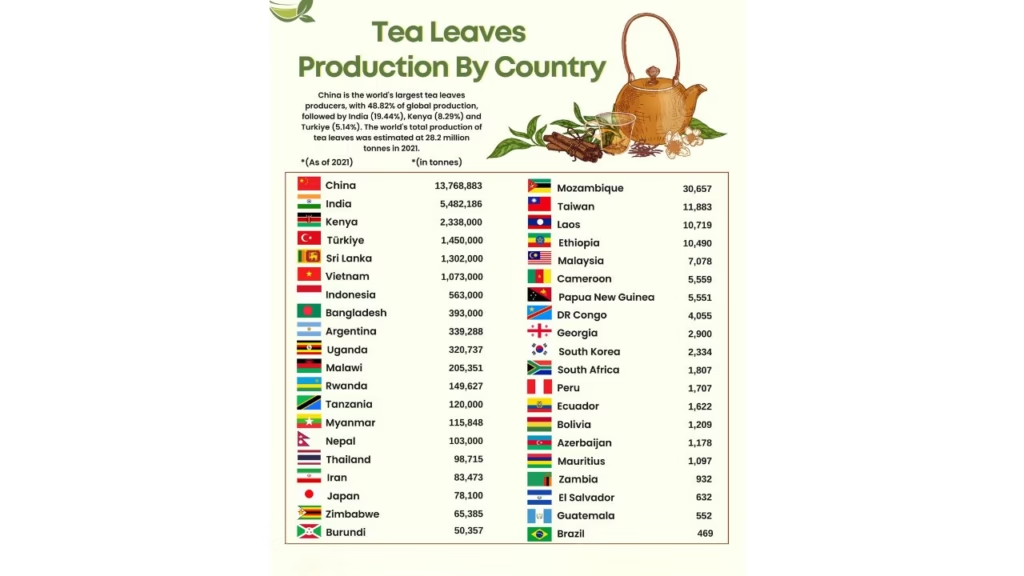
Countries like India, China, Kenya, Sri Lanka, Vietnam, and Indonesia dominate production, while the USA, UK, Germany, UAE, Russia, Japan, and Australia remain some of the largest importing markets. Every one of these markets follows different compliance rules, which is where most new exporters struggle.
Many beginners assume export works like this:
Source tea → Pack → Ship → Get paid
In real trade, that assumption causes delays, payment disputes, and shipment rejections.
In practical export operations, quality standards, certifications, origin proof, lab approvals , buyer documentation, and traceability decide whether your shipment clears smoothly or becomes a liability.
This guide explains tea export worldwide the way it actually works on the ground in global markets.
Table of Contents
Global Tea Export Landscape (2023–2024 Snapshot)
According to OEC tea exports 2023 India ranking maintains a strong global standing in tea exports in both quantity and value. The FAO tea exports top exporters 2023 India ranking also places India continuously among the leading exporting nations, alongside with China and Kenya.
These global data clearly show that the export of tea is no longer driven by production alone, but by compliance performance and buyer trust.
Key global observations:
- Tea is exported by more than 60 countries
- Global demand continues to grow due to:
- Health focused consumers
- Ready to drink (RTD) tea products
- Premium and specialty teas
- Import regulations are becoming stricter every year
Tea Exports by Country (Global Context)
Some widely searched and referenced global queries include:
- largest exporter of tea in the world
- tea exporting countries
- tea exports by country 2023
- tea exports by country 2024
Global major tea exporting countries include:
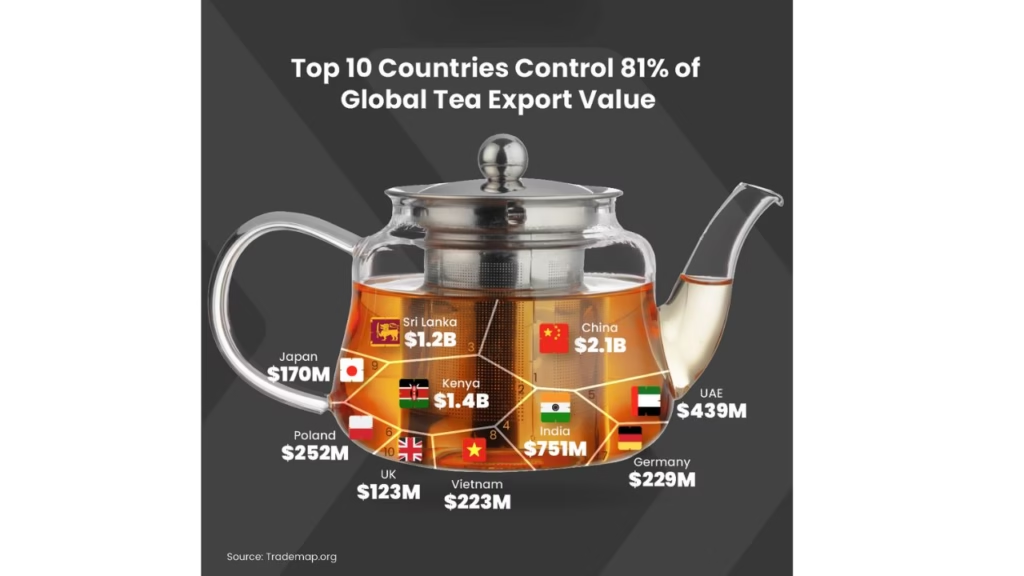
- China
- India
- Kenya
- Sri Lanka
- Vietnam
- Indonesia
India is always the top tea exporter, contributing a major share of global exports by value and quantity.
However, global buyers do not select suppliers based on country ranking alone. They focus on compliance reliability and quality consistency.
India’s Position in Global Tea Exports
India is:
- One of the largest tea producers globally
- Among the top exporters worldwide
- A supplier to 25+ importing countries
Key production regions include:
- Assam
- Darjeeling
- Nilgiris
- Dooars & Terai
Indian tea is internationally known for:
- Strong flavor profiles
- Geographical Indication (GI) value
- Large scale production capacity
As per recent export figures, India’s tea exports crossed US$ 900 million annually, with major importing countries including the UAE, USA, Russia, Iraq, Iran, Germany, and the UK.
But here’s the reality many beginners miss:
Export success depends less on origin and more on how well you meet buyer country standards.
Types of Tea Exported Worldwide
Understanding tea export worldwide starts with knowing that not all tea is treated equally by import authorities.
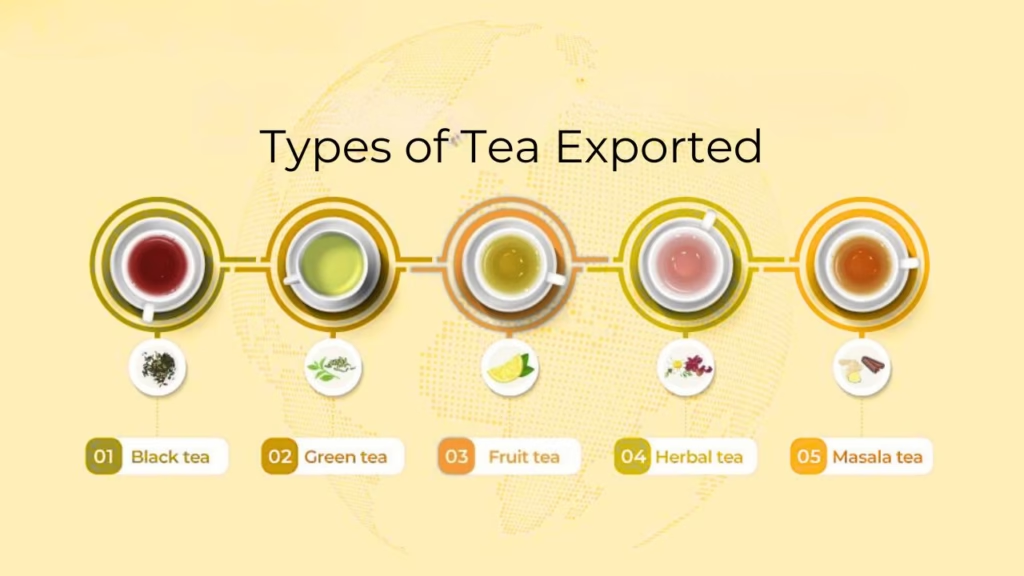
1. Black Tea (Largest Share)
Black tea accounts for the majority of global tea exports, especially from:
- India
- Kenya
- Sri Lanka
Black tea is preferred due to:
- Longer shelf life
- Easier storage
- Lower microbial risk compared to green tea
2. Green Tea
Green tea exports are increasing rapidly because of global health consciousness, especially in:
- USA
- Germany
- Japan
- Australia
Green tea faces tighter regulations on pesticide and residue levels than black tea.
3. Herbal & Specialty Teas
Includes:
- Masala tea
- Fruit infused teas
- Herbal blends
These tea types undergo ingredient compliance evaluations, especially in EUROPE and United States markets.
Instant & Ready to Drink Tea
Highly regulated category requiring:
- Food safety approvals
- Additive compliance
- Label accuracy
9 Critical Quality Standards for Tea Export Worldwide
This is where tea export becomes serious business.
1. Pesticide Residue Compliance (MRLs)
Maximum Residue Limits (MRLs) it differ from one country to another.
- EU → extremely strict
- USA → FDA regulated
- Japan → among the toughest globally
A tea batch acceptable in one market may be rejected outright in another.
2. Microbial & Contaminant Control
Import authorities test for:
- Salmonella
- E. coli
- Heavy metals
- Mold growth
Poor storage or humid packing causes failures even before shipping.
3. Moisture Content Control
Excess moisture leads to:
- Mold formation
- Taste deterioration
- Shipment rejection
This is one of the most common exporter mistakes.
4. Quality Grading & Consistency
Buyers expect:
- Uniform leaf size
- Stable flavor profile
- Batch consistency
Inconsistent grading breaks long term contracts.
5. Packaging Integrity
Export packaging must:
- Prevent moisture entry
- Be food grade
- Meet destination labelling laws
Cheap packaging causes silent losses during transit.
6. Traceability & Source Disclosure
Large buyers demand:
- Estate or supplier details
- Batch numbers
- Processing dates
This is becoming mandatory in EU markets.
7. Adulteration Checks
Artificial color or flavor detection leads to permanent buyer rejection.
8. Shelf Life Validation
Especially critical for:
- Green tea
- Herbal blends
Incorrect shelf life claims trigger compliance notices.
9. Lab Testing Before Shipment
Professional exporters test before dispatch, not after rejection.
Mandatory Certifications for Tea Export (Country Wise)
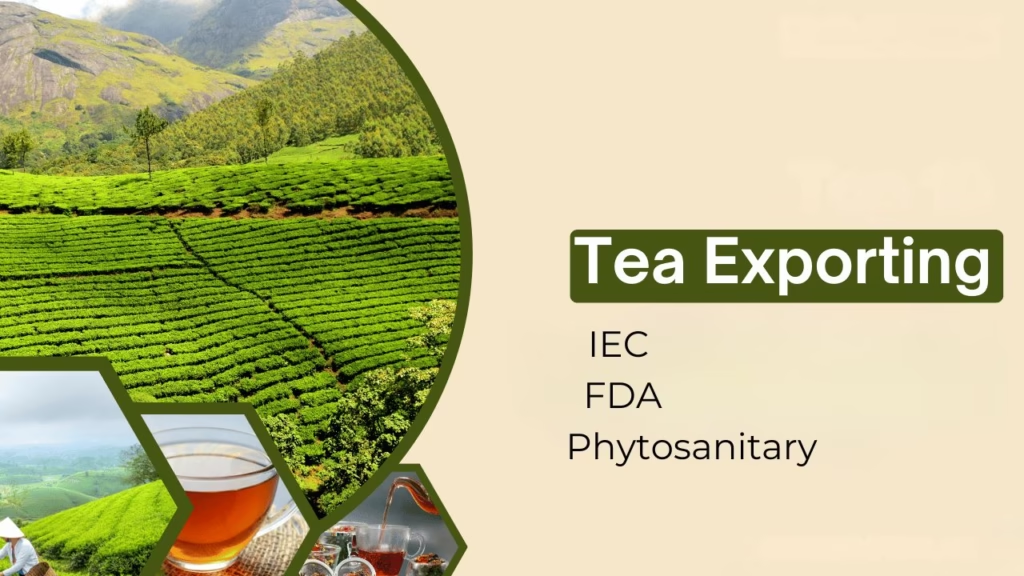
India (Origin Compliance)
- Tea Board of India registration
- IEC (Import Export Code)
- FSSAI license
United States of America
- FDA facility registration
- Prior Notice filing
- FDA compliant labelling
EU (Germany, France, Netherlands)
- Phytosanitary compliance
- Strict pesticide and contaminant testing
- Traceability documentation
United Kingdom
- Food safety compliance
- Clear origin declaration
Australia & Japan
- High pesticide scrutiny
- Ingredient transparency
Missing even one document can delay the customs clearance of the shipment.
Buyer Requirements: What Importers Actually Check
Buyers don’t just look at price.
They evaluate:
- Supplier reliability
- Compliance history
- Response speed
- Documentation accuracy
- Sample consistency
Many first time exporters lose buyers because:
- Lab reports were incomplete
- Labels didn’t match regulations
- Shipment quality varied from samples
Common Real World Tea Export Rejection Scenarios
Scenario 1: EU Pesticide Alert
A shipment clears Indian customs but fails EU residue testing → shipment destroyed.
Scenario 2: FDA Label Violation (USA)
Ingredients not properly declared → import alert issued.
Scenario 3: Moisture Damage in Transit
Packaging failure → buyer demands discount or rejects shipment.
Why Tea Export Is Becoming More Regulated Every Year
Global food safety laws are tightening due to:
- Consumer health awareness
- Cross border contamination incidents
- Regulatory harmonization
This means tea export is moving from commodity trade to compliance driven trade.
What Serious Exporters Do Differently
They:
- Test before shipping
- Maintain documentation archives
- Follow country specific rules
- Build buyer trust slowly
- Avoid shortcut shipments
Tea export worldwide is no longer about producing tea it’s about managing risk, compliance, and consistency.
Tea Export Documentation (Step-by-Step Flow)
Documentation is where many exporters lose control of the shipment not because documents are missing, but because they are incorrect, inconsistent, or misunderstood.
In real export operations, documents are checked by:
- Customs
- Shipping lines
- Banks
- Buyers
- Destination food authorities
A small mismatch between documents can delay clearance for days or weeks.
1. Commercial Invoice
This is the primary financial document.
It must clearly mention:
- Exporter & importer details
- Tea description (black tea / green tea / speciality tea)
- HS Code
- Quantity & unit price
- Incoterms (FOB, CIF, etc.)
- Country of origin
Many beginners fail here by using generic product descriptions, which raises red flags during customs checks.
2. Packing List
The packing list explains how the tea is packed, not what it costs.
It includes:
- Number of bags/cartons
- Net weight & gross weight
- Type of packaging
- Batch or lot numbers
In real inspections, customs officers physically match this document with the cargo.
3. Shipping Bill / Export Declaration
This is filed with customs in the exporting country.
Errors in:
- HS code
- Product description
- FOB value
can trigger reassessment or export delays.
4. Bill of Lading (or Airway Bill)
This document controls cargo ownership.
Key points exporters learn the hard way:
- Never release original BL without payment security
- Ensure consignee name matches the LC or contract
- Check notify party details carefully
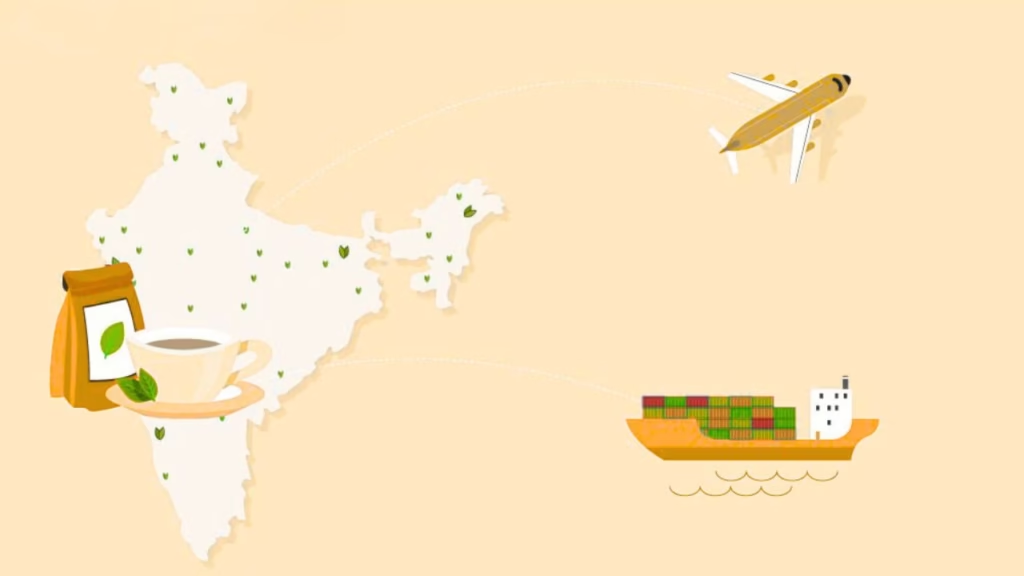
For tea export worldwide, sea freight is most common, so BL accuracy matters.
5. Certificate of Origin
This document proves where the tea originates.
Many importing countries offer duty benefits only if:
- The Certificate of Origin is correct
- Issued by authorized bodies
For tea exporters in India, the Certificate of Origin is issued by:
- Authorized Chambers of Commerce
- Online government portals such as DGFT (for specific trade arrangements)
Exporters usually apply digitally, submit invoice and packing details, and receive either a physical or e-certificate depending on destination country rules.
In Sri Lanka, tea exporters get the Certificate of Origin from:
- National Chamber of Commerce of Sri Lanka
- Ceylon Tea Board (for product-specific verification)
Shipments of Sri Lankan tea are carefully monitored since “Ceylon Tea” is a safeguarded geographical indication in many markets.
For Chinese tea exporters Certificates of Origin is issued by:
- China Council for the Promotion of International Trade (CCPIT)
- Local customs-authorized trade bodies
For exports to the EU and certain Asian countries, electronic certificates are commonly used.
In Vietnam, Certificate of Origin are issued by:
- Vietnam Chamber of Commerce and Industry (VCCI)
- Regional trade offices authorized by the Ministry of Industry and Trade.
Vietnamese exporters frequently use COO forms associated with ASEAN trade agreements.
For Kenyan tea exporters Certificates of Origin is Issued by:
- Kenya National Chamber of Commerce & Industry (KNCCI)
- Tea Board of Kenya
Kenya is one of the largest tea exporter, and COO accuracy is essential for EU and UK shipments.
In Uganda, Certificates of Origin are issued by:
- Uganda National Chamber of Commerce and Industry
- Authorized government trade offices
Most Ugandan tea exports require COO validation for African and Middle Eastern markets.
Brazilian tea and agricultural exporters get their Certificates of Origin from:
- Federation of Industries (FIESP and regional bodies)
- Authorized export chambers linked to the Ministry of Development
Digital COOs are increasingly common for shipments to the Americas and Europe.
Japanese tea exporters obtain Certificates of Origin from:
- Japan Chamber of Commerce and Industry
- Government authorized trade documentation centers
Accuracy is critical, as Japanese buyers and customs authorities maintain strict documentation standards.
6. Phytosanitary Certificate (Where Required)
- Certain EU shipments
- Australia
- Japan
It confirms the tea is free from pests and diseases.
7. Laboratory Test Reports
For regulated markets, buyers expect:
- Pesticide residue reports
- Microbial analysis
- Heavy metal testing (where applicable)
Professional exporters test before shipment, not after rejection.
Country Wise Buyer Expectations (Worldwide Focus)
This is where global tea export truly differs.
United States (USA)
US buyers focus on:
- FDA registration
- Prior Notice filing
- Ingredient transparency
- Zero tolerance for mis labelling
Even experienced exporters can run into trouble if their labels are not up to buyer requirement.
European Union (Germany, France, Netherlands)
EU buyers are strict about:
- Pesticide residue limits
- Traceability
- Sustainability claims
One failed shipment can affect future imports across the EU.
United Kingdom (UK)
UK buyers emphasize:
- Food safety compliance
- Clear country of origin labelling
- Stable quality
They value long term supplier reliability over price.
Middle East (UAE, Saudi Arabia)
Key buyer expectations:
- Clean packaging
- Halal compliance (for flavored teas)
- Competitive pricing
The UAE often acts as center of re-export hub.
Australia & Japan
These markets are extremely sensitive to:
- Chemical residues
- Quality consistency
- Documentation precision
They pay premium prices but reject fast.
Tea Export Profit Margin: Reality vs Expectation
Many beginners ask:
“Is tea export profitable?”
The honest answer:
Yes but only after you control risks.
What Actually Determines Profit
- Quality consistency
- Rejection avoidance
- Buyer trust
- Logistics optimization
- Long term contracts
Initial shipments often have lower margins due to:
- Lab testing costs
- Packaging upgrades
- Compliance learning curve
Experienced exporters raise their profit margins by:
- Reducing rejections and errors
- Negotiating freights better
- Supplying repeat buyers
Common Mistakes New Tea Exporters Make
1. Assuming All Markets Follow the Same Rules
A shipment acceptable in one country can fail in another.
2. Ignoring Lab Testing to Save Cost
Skipping tests saves money initially but costs more later.
3. Weak Packaging Decisions
Moisture damage is silent and expensive.
4. Overpromising to Buyers
Missing quality expectations destroys credibility fast.
5. Treating Tea Export as a One Time Transaction
Tea export is a relationship business, not a one off deal.
How Serious Tea Exporters Build Long Term Success
They:
- Specialize in limited product lines
- Understand buyer markets deeply
- Maintain records
- Communicate transparently
- Learning from mistakes
Over time, this creates:
- Stable demand
- Better pricing
- Lower rejection rates
Tea Export Worldwide: Future Trends (2024–2026)
Key trends influencing global tea export:
- Rising demand for organic tea
- Growth of specialty & premium blends
- Stronger sustainability requirements
- Increased digital traceability
- Higher scrutiny on food safety
Exporters who adapt quickly gains advantage.
Final Thoughts
Tea export worldwide is no longer a simple agricultural trade.
It is a compliance based, quality sensitive, and relationship based business.
Exporters who understand:
- Global quality standards
- Country specific regulations
- Buyer expectations
build sustainable businesses.
Those who chase shortcuts usually quit early.
When managed professionally, tea export have a long term stability, global reach, and scalable growth.
Frequently Asked Questions
Is India the largest tea exporter in the world?
India ranks as one of the leading tea exporters worldwide, competing with countries like China, Kenya, and Sri Lanka.
Which are the largest tea importing countries globally?
Countries including USA, UK, Germany, Russia, UAE, and Japan.
Is lab testing mandatory for tea export?
In markets such as the EU, USA, Japan, and Australia, laboratory testing is mandatory.
Can beginners start tea export?
Yes, but success depends on product quality, compliance knowledge, and genuine buyer.
Why do tea shipments get rejected?
Reasons like pesticide residues, moisture damage, labeling mistakes, and documentation errors.
About the Author
Hi, I’m SriHarsha, founder of shxhub.in.
I focus on explaining export business topics in a practical, beginner friendly way, based on how exports actually work on the real ground especially documentation, quality control, and buyer expectations.