
Shipments don’t fail at customs because of bad luck. They fail because of missing compliance.
Every week, exporters lose money because consignments are stopped, delayed, or rejected for one simple reason they didn’t submit the right certification. If you’re dealing with perishable goods like seafood, meat, dairy, or peanuts, inspections are even tighter. Authorities don’t take chances with food safety, and neither do international buyers.
Here’s the bigger problem most new exporters don’t even realize that a health certificate for export is mandatory for many food and agricultural shipments. They assume invoices, packing lists, and FSSAI licenses are enough. They’re not.
So what happens?
Example 1: A seafood exporter ships frozen shrimp to the EU without an export health certificate. The shipment gets held at port, samples are taken, and clearance takes weeks. By the time it’s released, the buyer refuses the consignment due to delay and quality concerns.
Example 2: A peanut exporter sends goods to Malaysia assuming basic documentation is enough. Customs flags the cargo for missing a food export certificate India compliance document. The shipment is rejected and returned, costing freight, storage, and reputation.
If you’re exporting food or agri products, this document is not optional. It’s what stands between smooth clearance and shipment rejection.
Table of Contents
What Is a Health Certificate for Export?
A health certificate for export is an official document issued by a government authority in the exporting country that certifies your product is safe for human consumption and meets the importing country’s regulations.
That’s it. But each part of that definition matters.
First, it’s issued by an authorized body like the Export Inspection Council or related agencies. This is not a self declaration. It carries legal authority.
Second, it confirms your goods are safe, hygienic, and free from harmful contaminants. That includes checks for bacteria, chemicals, and quality standards.
Third, it proves your shipment complies with the specific rules of the destination country. Every country has different limits, testing requirements, and labeling rules. This certificate confirms you meet those exact conditions.
Fourth, it is based on inspection and lab testing. Authorities may inspect your facility, check your process, and test samples from your consignment before issuing the certificate.
Example 1: A dairy exporter shipping milk powder to the USA must prove through lab testing that the product is free from contaminants and produced in a hygienic facility. Only then is the export health certificate issued.
Example 2: A fish exporter shipping to China must pass inspection and microbial testing for the batch. The certificate confirms the product meets China’s import food safety limits before clearance.
So when someone asks what is export health certificate, the real answer is simple:
It’s the official proof that your food product is safe, tested, and legally compliant to enter another country.
In other words, it’s your food safety export certificate that unlocks international markets and protects your shipment from rejection.
Why This Certificate Exists (Purpose + Trade Importance)
This certificate exists for one reason risk control.
Countries don’t trust foreign food products blindly. They rely on documented proof that what’s entering their market is safe to eat and produced under controlled conditions. That’s where the export inspection certificate India framework comes in.
First, it protects consumers in the importing country. Governments need assurance that imported food won’t cause health risks. This certificate confirms your product has been inspected, tested, and cleared under regulated standards.
Second, it blocks unsafe or contaminated food from entering global markets. Without this system, low quality or unhygienic products could easily cross borders. That’s exactly what food safety regulations are designed to stop.
Third, it builds trade trust between countries. When India issues a health certificate, importing countries accept it as official validation. That trust is what allows exporters to operate at scale without re-testing every shipment from scratch.
Fourth, it is critical for perishable goods. Products like seafood, meat, dairy, and fresh agricultural items degrade quickly. Any delay or compliance issue directly affects quality, safety, and buyer confidence.
Now let’s talk about the commercial reality.
Without proper food export compliance India documentation, your shipment doesn’t just get delayed it can be rejected or destroyed.
Example : A dairy shipment to the USA is missing a valid export inspection certificate India clearance. Customs flags it, places it under quarantine, and the importer cancels the order due to delay and uncertainty. The exporter eats the loss.
So this certificate is not paperwork. It’s risk protection, market access, and commercial survival.
Who Needs a Health Certificate for Export?
If you’re exporting food or agricultural products, you need to assume this certificate applies to you unless proven otherwise.
Let’s make it specific.
Seafood exporters
Shrimp, fish, crab, and other marine products almost always require a health certificate, especially for regulated markets like the EU and China.
Meat and poultry exporters
Buffalo meat, processed meat, poultry products all require strict inspection and certification before export.
Dairy exporters
Milk powder, cheese, butter, and related products must meet microbial and hygiene standards verified through certification.
Peanut and agricultural exporters
Peanuts, spices, grains, and similar products often require compliance checks depending on pesticide limits and contamination standards in the destination country.
Non-GMO food exporters
Certain markets demand proof that food is non-GMO(Non-Genetically Modified Organism) or meets specific purity and safety thresholds.
Now look at the destination side.
If you are exporting to regulated markets like the EU, USA, China, Russia, or Malaysia, a health certificate required for export is standard practice, not an exception. These countries enforce strict entry checks and won’t clear shipments without proper food export documentation compliance.

Example: A peanut exporter sending goods to Malaysia must meet aflatoxin limits and provide lab backed certification. Without that, the cargo is rejected or returned.
If your product is consumed by humans and you’re exporting to a regulated market, you should assume this certificate is required and plan your documentation accordingly.
Issuing Authorities in India (Who Gives the Certificate)
You don’t issue this certificate yourself. It comes from government backed bodies that are recognized internationally. If you get this wrong, your shipment gets blocked. Simple as that.
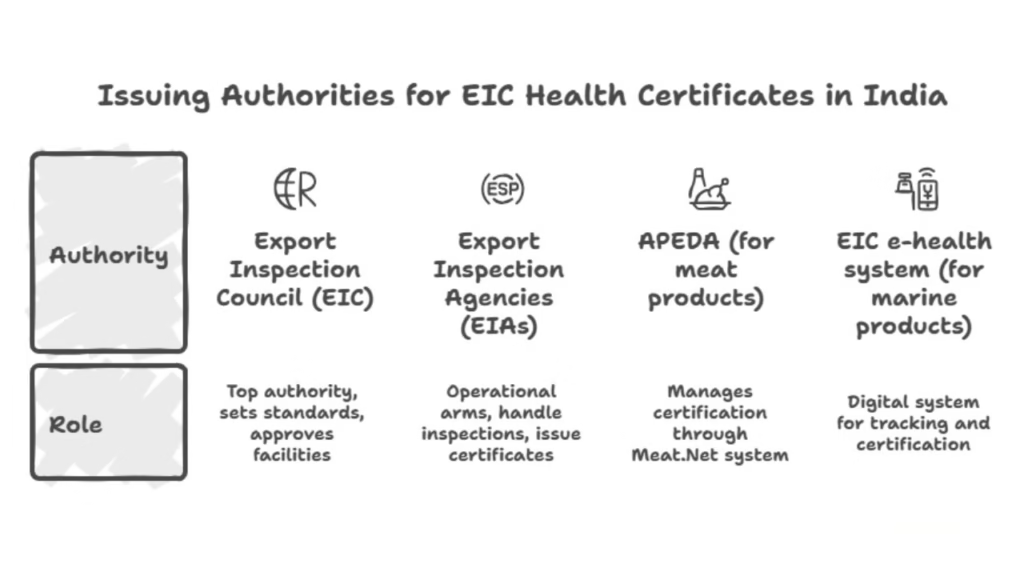
Here’s who actually issues the EIC health certificate India exporters rely on:
Export Inspection Council (EIC)
This is the top authority under the Ministry of Commerce. It sets the standards, approves facilities, and controls the certification system for export food safety.
Export Inspection Agencies (EIAs)
These are the operational arms of EIC. They handle inspections, sampling, lab testing coordination, and issue the final export inspection agency certificate for your consignment.
APEDA for meat products
If you export meat or poultry, APEDA manages certification. This includes plant approvals, hygiene checks, and batch level clearance.
EIC e-health system for marine products
Marine exporters use EIC’s digital e-health certification system. It tracks consignments, inspection reports, and certificate issuance in a standardized format accepted by importing countries.
Two quick scenarios so you see how this works in practice:
Example 1: A shrimp exporter registers their processing unit with EIC, uses the e-health system, gets batch testing done, and EIA issues the certificate required for EU shipment clearance.
Example 2: A meat exporter uses APEDA’s Meat.Net system to register, undergo facility inspection, and receives the health certificate needed for shipment to markets like Malaysia or Egypt.
The certificate is only valid if it comes from these recognized authorities. Anything else is useless at customs.
Step by Step Application Process (How to Get the Certificate)
Most exporters don’t fail because the process is complicated. They fail because they don’t follow the sequence properly.
Here’s the exact export health certificate process you need to follow:
Step 1: Register on the EIC portal
Create your exporter profile in the EIC system or the relevant certification platform (EIC, APEDA, or marine e-health depending on your product).
Step 2: Get login credentials
After verification, you receive a username and password to access the certification system.
Step 3: Submit the application online
Select the consignment details, destination country, product category, and certification type.
Step 4: Upload required documents
This includes invoice, purchase order, lab reports, and importer specifications.
Step 5: Pay the applicable fees
Fees depend on FOB value and certification type. Payment is usually done through the portal or bank instrument.
Step 6: Product inspection and lab testing
Authorities may inspect your facility and draw samples from your shipment. Not every consignment is tested, but random checks are standard.
Step 7: Approval and certificate issuance
If your batch passes inspection and testing, the health certificate is issued and linked to your shipment for export clearance.
Now here’s the part most people don’t understand
Only a portion of consignments are randomly tested. But if your shipment fails once, your future shipments will face stricter and more frequent inspections. That means delays, extra costs, and increased scrutiny from buyers.
Two scenarios:
Example 1: A peanut exporter submits correct documents and passes random lab testing. Their certificate is issued within a few days, and shipment clears on schedule.
Example 2: A dairy exporter fails microbial testing in one batch. The consignment is rejected, and the exporter is moved into a higher risk inspection category for future shipments, increasing compliance cost and time.
That’s why understanding how to apply health certificate for export India properly is not optional. It directly affects your shipping timelines and your reputation with buyers.
Documents Required for Export Health Certificate
This is where most exporters get sloppy and pay for it later. Missing one document can delay your certificate and hold your shipment at the port.
Here are the exact documents required for export health certificate issuance in India:
- Filled application form
Submitted through the EIC/APEDA portal with complete shipment and product details. - Commercial invoice + purchase order
Confirms the transaction, buyer details, product description, and value. - Letter of Credit (LC) or payment agreement
Shows the financial arrangement between exporter and importer. - Lab test reports from EIC/EIA approved laboratories
This is non-negotiable. Reports must match importing country standards for contaminants, hygiene, and safety. - Importer contract specifications
Includes quality standards, packaging requirements, and any country specific compliance clauses. - Fee payment proof
Bank draft or digital payment receipt for certification charges.
Two common failure scenarios you should avoid:
Example 1: An exporter submits lab reports from a non-approved private lab. EIA rejects the application and demands retesting from an approved lab, delaying shipment by weeks.
Example 2: Invoice details didn’t match the product description in the application form. The file gets flagged for correction, and the certificate is not issued until discrepancies are fixed.
This is basic export documentation India discipline. If your paperwork is clean, your approval is faster. If it’s messy, your shipment sits.
Fees and Validity
Let’s keep this simple and real.
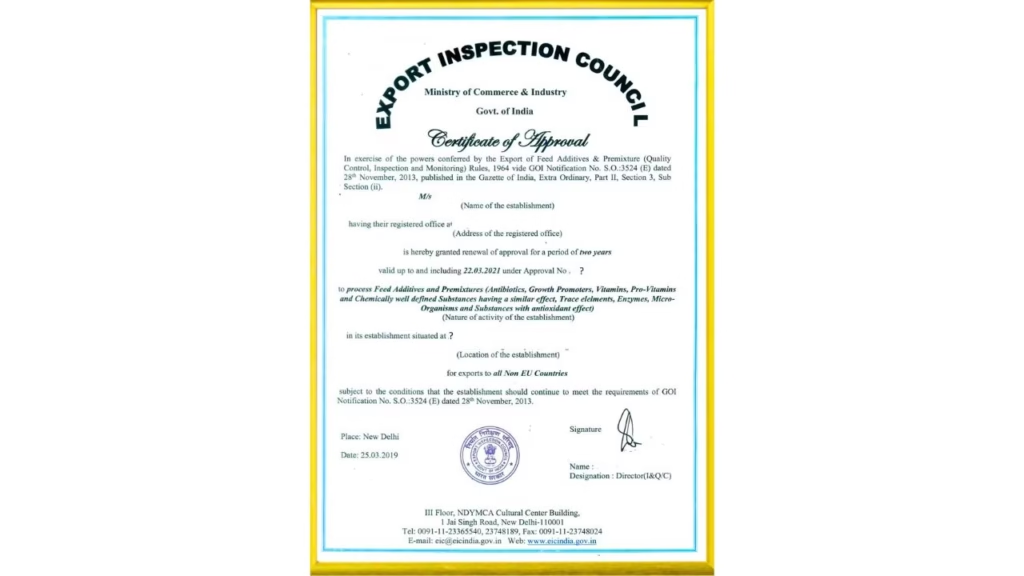
The export health certificate cost India exporters pay depends on your shipment’s FOB value.
Typical range:
- Around ₹1,500 for shipments up to ₹5 lakh
- Up to ₹8,000 for shipments above ₹40 lakh
The validity of health certificate export in India is 90 days from the date of issue.
Now here’s the commercial reality most people ignore:
If your shipment gets delayed beyond that 90-day window, your certificate expires. That means you need to reapply, repay fees, and possibly redo inspections or lab testing.
Two situations where exporters lose money:
Example 1: A shipment gets delayed due to vessel rescheduling. By the time cargo is ready to sail, the certificate has expired. The exporter has to pay again and wait for reissuance.
Example 2: A consignment is held at port due to minor documentation issues. Clearance delay pushes it past the validity window. The buyer refuses to wait, and the exporter absorbs both storage charges and re-certification cost.
So don’t treat this as a small admin cost. Timing your certification with your shipment schedule is critical if you want to avoid unnecessary losses.
What Happens If You Don’t Have It?
Let’s stop pretending this is a minor paperwork issue. Not having a valid health certificate is one of the most common export shipment rejection reasons in food trade.
Here’s what actually happens on the ground:
Shipment rejection at destination
If customs doesn’t see a valid certificate, they don’t clear your goods. Best case, your cargo sits at the port. Worst case, it’s rejected and sent back or destroyed.
Heavy penalties and extra costs
You pay for storage, demurrage, re-export freight, and sometimes destruction charges. These aren’t small numbers. They wipe out your margin on that shipment.
Loss of buyer trust
Buyers don’t care about your internal mistakes. If you fail compliance once, they question your reliability. One failed shipment can kill repeat business.
Blacklisting risk for repeated violations
If you repeatedly send non-compliant goods, your shipments start getting flagged for stricter inspections every time. In extreme cases, importers stop working with you entirely.
Two scenarios so you understand the impact:
Example 1: A seafood exporter ships to the EU without a valid certificate. The container is held, samples are taken, and due to documentation gaps, the entire consignment is destroyed to avoid food safety risk. The exporter loses product value, freight, and the EU buyer.
Example 2: A peanut exporter sends goods to Malaysia without meeting aflatoxin limits and proper certification. The shipment is rejected, returned to India, and the buyer cancels future contracts due to food export compliance issues.
This isn’t theory. This is what happens when you ignore compliance. One missing certificate can turn a profitable deal into a loss making disaster.
Practical Tips to Get Your Certificate Approved Faster
If you want smooth approvals, you need to treat compliance like a system, not an optional step. Here are practical export compliance tips exporters actually use to speed up the food export approval process.
Use EIC approved labs only
Don’t try to cut corners with cheaper private labs. If the lab isn’t approved, your report won’t be accepted and you’ll have to redo testing and pay the fees again.
Match product labeling with importing country rules
Every country has specific labeling standards ingredients, origin, batch number, storage instructions. If your label doesn’t match, your application gets flagged.
Maintain hygiene logs and batch production records
Inspection agencies look for traceability. If you can’t show production logs, cleaning records, and batch tracking, you’ll face delays or rejection.
Pre-check country specific requirements before production
Don’t produce first and check later. Each market has its own limits for contaminants, additives, and packaging rules. Align your production with those standards from the start.
Two practical execution examples:
Example 1: A dairy exporter checks EU microbial limits before production, uses approved labs, and aligns packaging labels with EU rules. Their certification gets approved quickly with minimal inspection delays.
Example 2: A marine exporter maintains detailed hygiene and cold chain records. When inspection happens, all documents are ready, and the certificate is issued without additional queries.
The cleaner your process and documentation, the faster your approval. Disorganized exporters deal with delays. Organized exporters ship on time and keep buyers happy.
Conclusion
A health certificate for export is not optional for many food and agricultural shipments. It’s a mandatory compliance document that protects your cargo, your buyer relationship, and your credibility in international markets.
If your product is meant for human consumption and you’re exporting to regulated countries, this certificate is the difference between smooth clearance and shipment rejection.
Serious exporters treat compliance as part of their business system, not as last minute paperwork.
FAQs
1. Is a health certificate mandatory for all exports?
No. It’s not required for every product category. But if you’re exporting food, seafood, meat, dairy, peanuts, or any consumable agricultural product to regulated markets like the EU, USA, China, or Malaysia, then yes it’s mandatory.
Example: Exporting garments to the USA? Not required. Exporting frozen shrimp to the EU? Absolutely required.
2. How long does it take to get a health certificate in India?
If your documents are clean and your product passes inspection, you can get it within a few days. Delays happen when lab reports are missing or samples fail testing.
Example: A peanut exporter with pre-approved lab reports can get certification in 2–4 days. A dairy exporter with incomplete microbial testing may face a 1–2 week delay.
3. Can I export without lab testing?
In most food export cases, no. Even if your shipment is not randomly tested that time, your facility and product category must already meet lab-tested standards through approved labs.
Example: A marine exporter may skip testing for one consignment due to random selection, but their plant approval still depends on prior lab compliance. A spice exporter sending goods to strict markets like the EU cannot avoid aflatoxin testing.
4. What happens if my shipment fails inspection or testing?
The consignment is either rejected, held for reprocessing, or destroyed depending on the issue and destination rules. You also get flagged for stricter checks in future shipments.
Example: A seafood batch failing contamination limits gets rejected and destroyed at destination. A peanut shipment exceeding toxin limits is sent back to India and the exporter is put under tighter inspection for future exports.
5. Can I reuse the same health certificate for multiple shipments?
No. The certificate is issued per consignment and tied to specific batch details, product quantity, and shipment data. Each export shipment requires its own valid certificate.
Example: If you split one order into two shipments, you need two separate certificates. If your shipment date changes beyond the validity period, you must apply again.
About the Author
Hi, I’m SriHarsha, founder of shxhub.in.
I focus on explaining import export business topics in a practical, beginner friendly way, based on how exports actually work on the real ground especially documentation, quality control, and buyer expectations.



1 thought on “Health Certificate for Export: What It Is and Why Your Shipment Can Be Rejected Without It”