

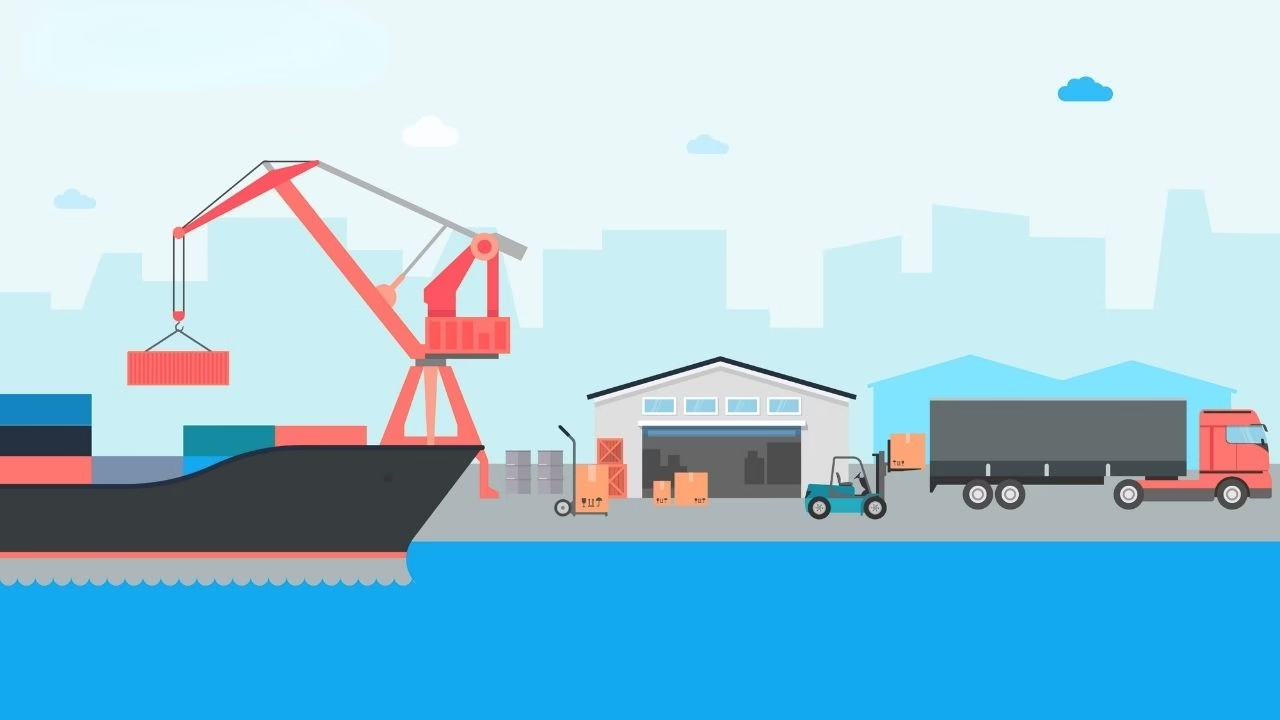
Factory Stuffing vs CFS Stuffing presents one of the most consequential cost decisions in international shipping. When planning your supply chain strategy, choosing the wrong option can totally impact your bottom line, especially with LCL shipments costing more per unit of freight than FCL.
Despite it seems like a minor logistical detail, CFS( Container Freight Station) stuffing meaning in shipping extends beyond simple container loading. Container Freight Station is a specialized warehouse facility where shippers store less than container load cargo before export and import.
However, while CFS stuffing offers flexibility for accommodating shipments of varying sizes, it also introduces additional handling points that increase the risk of damage or loss.
In this detailed guide, we’ll analyze both factory stuffing and CFS stuffing from multiple angles. We’ll break down the actual costs involved, examine how volume affects pricing, and help you determine which method truly saves you money.
Additionally, we’ll explore the differences between factory stuffing vs dock stuffing so you can make the most economical choice for your specific shipping needs.
Table of Contents
Factory Stuffing vs CFS Stuffing: Key Differences Explained
Understanding the difference between container loading methods is fundamental for optimizing your shipping strategy. Let’s explore the key differences between these critical processes.
Definition and process of factory stuffing
Factory stuffing involves loading cargo directly at the manufacturer’s or exporter’s facility before transportation to the port. During this process, an empty container is moved from the Container Freight Station (CFS) to the exporter’s factory premises. The cargo is then carefully loaded into the container under the supervision of customs officials.
This method offers major advantages, primarily minimizing handling and potential contamination of goods. It’s particularly beneficial for high volume or sensitive exports where maintaining cargo integrity is essential.
Once stuffing is completed, the loaded container returns to the Container Freight Station for verification and sealing by customs authorities before proceeding to its final destination.
Furthermore, exporters with self sealing permission can skip the return to CFS mostly, allowing containers to move directly to the terminal after being sealed at the factory.
CFS stuffing meaning and how it works

A Container Freight Station functions as an extension of a port essentially a specialized warehouse facility where goods are stored before and after loading and unloading. For exporters, the CFS process follows a structured workflow:
- The exporter delivers goods along with shipping documentation to the designated Container Freight Station
- Goods undergo loading and carting processes within the facility
- Products are scanned and verified in the warehouse before container stuffing
- Customs officers seal the container and arrange transport to the port
- Upon arrival at the port, the shipping line dispatches the goods to their destination
This system plays a crucial role in optimizing smaller shipment handling and reducing port traffic.
Factory stuffing vs dock stuffing: what’s the difference?
Dock stuffing (also called port stuffing) represents another container loading approach that takes place at a Container Freight Station or port terminal rather than the exporter’s facility. The key distinction lies in the handling location and process flow.
In dock stuffing, trucks carrying export goods enter the Container Freight Station (a customs bonded area), where customs officials inspect the cargo. After completion of necessary customs and CFS procedures, the goods are loaded directly into containers.
Importantly, dock stuffing proves particularly advantageous for mixed or consolidated cargo requiring inspection before export. Many logistics providers oversee this process for clients specifically to reduce the risk of demurrage and loading delays.
Both methods serve distinct needs in the export process factory stuffing simplifies handling for high volume single source shipments, while dock stuffing facilitates better management of various cargo from multiple sources.
Comparing Costs: Which Method Is Cheaper ?
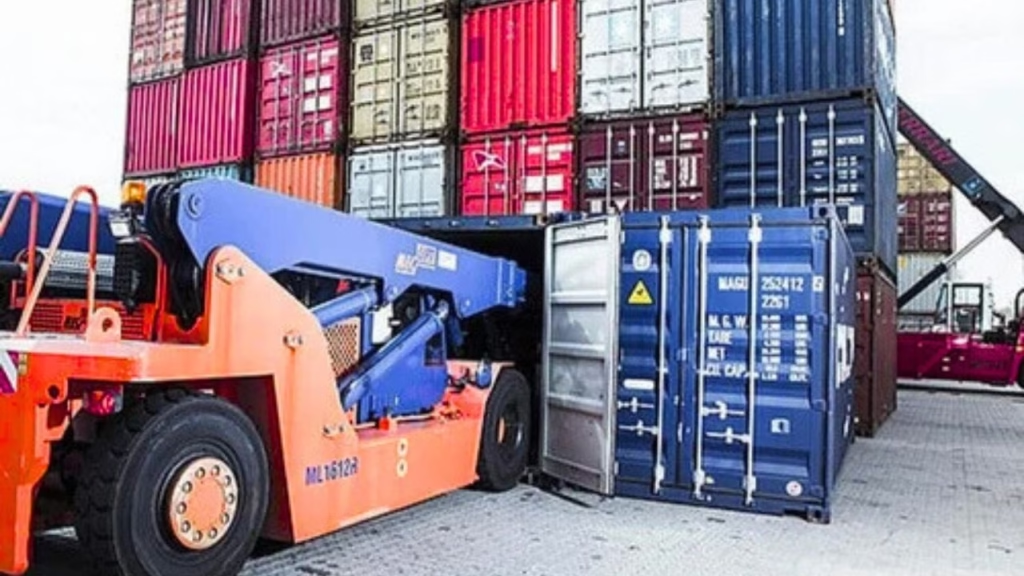
he cost difference between factory and CFS stuffing will impact your shipping budget mostly. Let’s analyze the financial implications of both methods to determine which offers better value.
Cost per container: factory vs CFS
The financial landscape for container shipping in 2026 shows average growth rather than contraction. Even with expected slowdowns, global container volumes are expected to grow by approximately 1.7%.
Therefore, freight rates remain flexible rather than decline to rock bottom prices seen in previous downturns. Factory stuffing generally offers cost advantages for full container loads by eliminating intermediary handling fees, whereas CFS typically adds 10-20% to total shipping costs for LCL shipments.
Impact of volume on pricing
Undoubtedly, shipment volume significantly affects your bottom line. For smaller consignments, volumetric weight becomes a critical factor in determining costs. Carriers calculate this by multiplying length, width, and height (in cm) and dividing by a conversion factor (typically 5,000).

The higher value between actual and volumetric weight determines your final price. Hence, light but bulky items often cost more to ship via either method.
Cost saving opportunities in factory stuffing
It has several economic advantages:
- Faster transit times with fewer delays
- Reduced handling risks and potential damage
- Greater control over loading procedures
- No consolidation dependencies
Extra charges in CFS stuffing
CFS stations impose various fees that increased 8-12% globally in 2025. These charges typically include:
- Stuffing/de-stuffing: Loading/unloading containers
- Documentation: Managing bills of lading and customs paperwork
- Handling: Per package fees for forklifts and tallying
- Storage: Demurrage charges after free days (typically 3-5)
- Transportation: Moving containers between port and CFS
Notable regional variations exist US ports saw approximately 15% increases due to HTS mandates, while Asia Pacific regions added 10% fuel surcharges. Additionally, incorrect HS codes can trigger re handling fees, increasing costs by 10-15% in 2026.
Risk, Time, and Control: Beyond Just the Price

Operational considerations often prove more impactful than just cost differences when deciding between factory stuffing and CFS stuffing.
Let’s examine these critical factors that directly affect your supply chain efficiency.
Transit time and scheduling flexibility
CFS stuffing typically results in extended transit times primarily due to consolidation delays that can stretch delivery schedules. Factory stuffing eliminates this waiting period, allowing shipments to proceed directly to vessels.
Moreover, CFS shipping makes you dependent on other shippers’ timetables, whereas factory stuffing provides greater scheduling choice.
Risk of damage and handling errors
The statistics are convincing studies show 70% of cargo damage occurs from poor packing and securing techniques. In fact, 65-70% of all cargo damage incidents result specifically from improper loading, inadequate securing, and poor weight distribution.
To know more about stuffing the container without any damages, improper loading issues read my blog container stuffing .
CFS operations essentially involve more handling points, increasing damage risks compared to factory stuffing.
Control over loading and packaging
Factory stuffing grants shippers direct oversight of container loading processes. This control is important since improperly loaded containers become safety hazards uneven weight distribution can cause containers to tip during transport.
Without proper supervision, loaders often place heaviest items first from the front wall, creating dangerous weight imbalances.
Customs and regulatory implications
Both methods must comply with strict regulations like the European Union’s EN 12195-1 standard and US FMCSA ( Federal Motor Carrier Safety Administration) cargo securement rules.
However, non compliance penalties are severe, with fines exceeding $10,000 for overloaded or improperly packed containers. Proper documentation remains essential regardless of stuffing method to prevent cargo detainment.
Real World Scenarios: Which Method Works Best When?
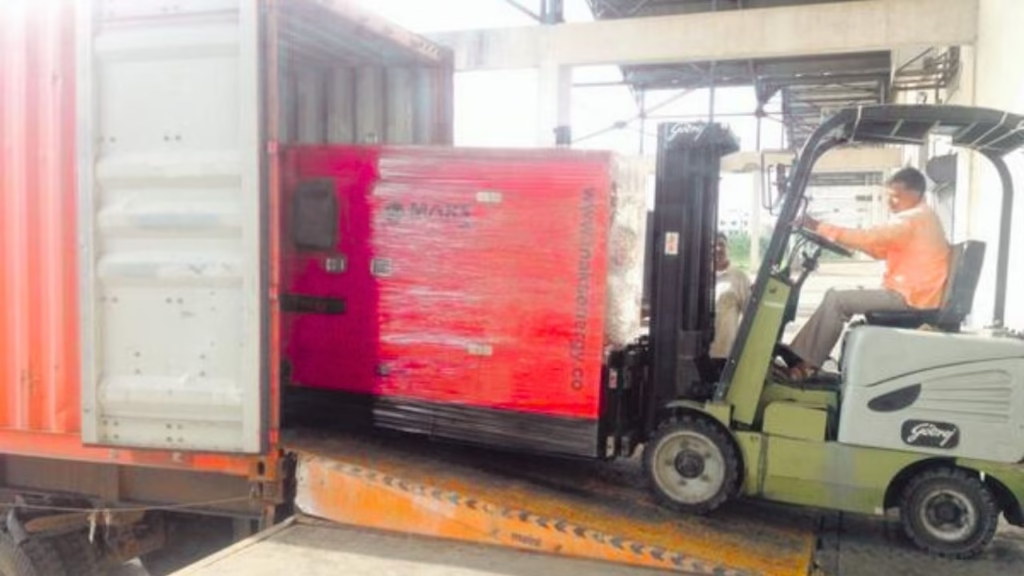
Choosing the ideal stuffing method ultimately depends on your specific shipping scenario. Let’s examine when each approach makes practical sense.
Best for high volume exporters
Factory stuffing clearly benefits businesses with major export volumes. This method works exceptionally well for FCL (Full Container Load) shipments, allowing exporters to maximize container capacity while minimizing handling risks.
For manufacturers shipping bulk goods such as electronics, textiles, and industrial machinery, factory stuffing provides better control and efficiency.
Best for small or mixed shipments
CFS stuffing excels for smaller consignments. When cargo volume falls below 13 cubic meters, LCL (Less than Container Load) shipping through a CFS often proves more economical.
E-commerce businesses frequently utilize this approach for global distribution without committing to full containers. Additionally, CFS facilities expertly handle consolidation of diverse product types requiring separation.

When factory stuffing is not allowed
Certain restrictions limit factory stuffing availability. According to regulatory guidelines, merchant exporters can only utilize stuffing in factory for specific products: goods produced in that factory, perishable items (frozen foods/meats), pharmaceuticals requiring specialized packaging, fragile products like glassware, and duty free shipping bills.
How to decide based on your supply chain
Consider these factors when choosing:
- Nature of products (bulky, fragile, perishable)
- Shipment volume and frequency
- Number of transfer points in your logistics chain
- Labor costs at origin versus destination
Conclusion

Choosing between factory stuffing and CFS stuffing ultimately comes down to your specific shipping requirements and business constraints. Factory stuffing generally proves more economical for full container loads, offering direct control over loading procedures while eliminating additional handling points that could damage goods.
Meanwhile, CFS stuffing remains the practical choice for smaller shipments below 13 cubic meters, though it typically adds 10-20% to your total shipping costs.
Volume clearly plays a decisive role in this decision. Large scale exporters benefit from factory stuffing’s streamlined process and reduced handling fees, whereas businesses shipping mixed products or smaller quantities find CFS facilities better equipped to handle their needs.
Additionally, transit time considerations cannot be overlooked factory stuffing typically moves goods faster by avoiding consolidation delays that often plague CFS operations.
Beyond just cost analysis, your decision should account for the nature of your products, shipment frequency, and overall supply chain structure. Rather than focusing solely on immediate savings, consider the long term benefits each method offers.
Factory stuffing might require higher initial investment but reduces damage risks significantly. CFS stuffing provides flexibility for variable shipping volumes without committing to full containers.
Therefore, as you plan your logistics strategy, weigh these factors carefully against your specific business needs. The right choice between factory and CFS stuffing can substantially impact not just your shipping budget but your entire supply chain efficiency and product integrity.
After all, the most cost effective option isn’t always the cheapest upfront it’s the one that delivers your goods safely, efficiently, and reliably to their final destination.
FAQs
Q1. What is the difference between factory stuffing and CFS stuffing?
Factory stuffing involves loading cargo directly at the manufacturer’s facility, while CFS (Container Freight Station) stuffing takes place at a specialized warehouse facility. Factory stuffing offers more control and efficiency for high-volume shipments, whereas CFS stuffing is better suited for smaller or mixed consignments.
Q2. Which stuffing method is more cost-effective?
Generally, factory stuffing is more cost-effective for full container loads (FCL), eliminating intermediary handling fees. CFS stuffing typically adds 10-20% to total shipping costs but can be more economical for smaller shipments (less than 13 cubic meters) or mixed cargo.
Q3. How does the choice of stuffing method impact transit times?
Factory stuffing usually results in faster transit times as it eliminates consolidation delays associated with CFS stuffing. CFS shipments may experience longer transit times due to additional handling and waiting periods for cargo consolidation.
Q4. What are the main risks associated with each stuffing method?
Factory stuffing reduces the risk of damage by minimizing handling points. CFS stuffing involves more handling, potentially increasing the risk of damage or loss. However, CFS facilities are equipped to handle diverse cargo types and offer flexibility for smaller shipments.
Q5. When should a business choose factory stuffing over CFS stuffing?
Businesses should opt for factory stuffing when dealing with high-volume exports, full container loads, or sensitive goods requiring minimal handling. It’s also preferable for manufacturers with direct control over their production facilities. CFS stuffing is better for smaller consignments, mixed shipments, or when consolidation services are needed.
About the Author
Hi, I’m SriHarsha, founder of shxhub.in.
I focus on explaining export business topics in a practical, beginner friendly way, based on how exports actually work on the real ground especially documentation, quality control, and buyer expectations.





2 thoughts on “Factory Stuffing vs CFS Stuffing: Which Option Actually Saves You Money? [2026 Cost Analysis]”