
For most exporters, the moment that decides whether a shipment turns into cash or into a stranded container racking up demurrage at a foreign port isn’t the sale itself. It’s the payment term quietly agreed to a few lines above the signature block.
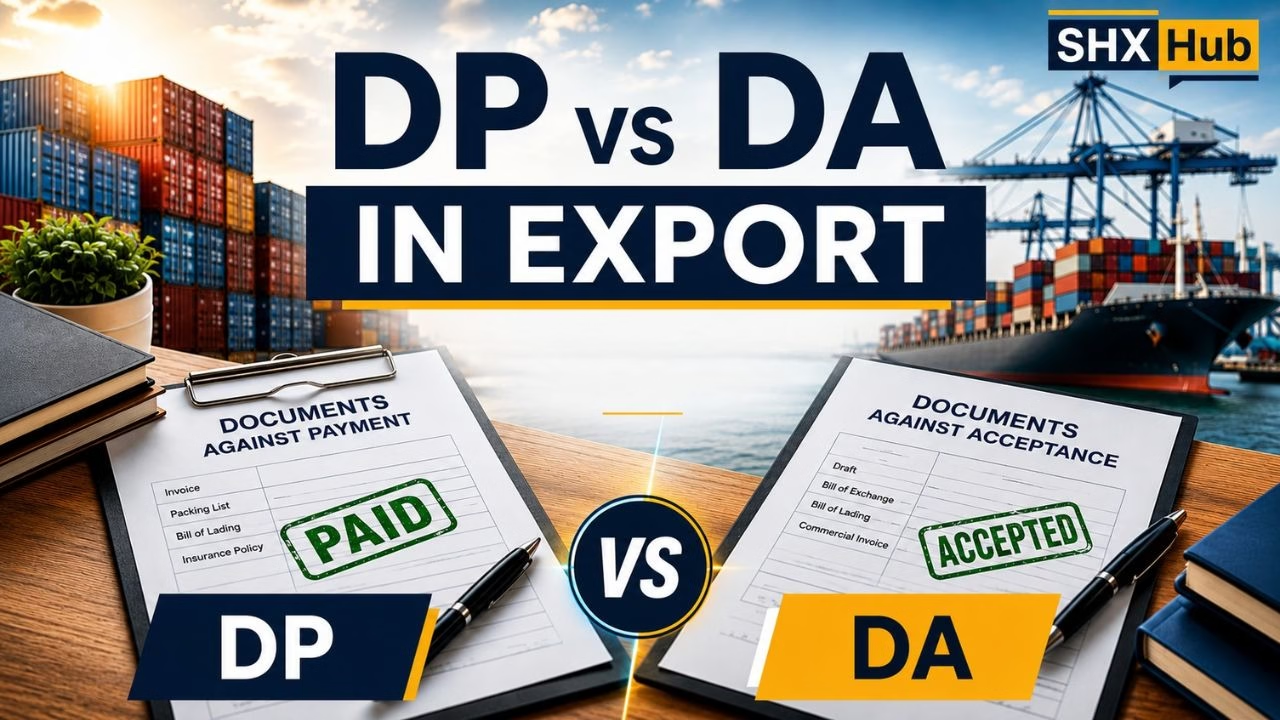
DP vs DA in export refers to two documentary collection methods that determine when a buyer gets hold of the shipping documents needed to claim their goods.
Under DP (Documents Against Payment), the buyer must pay in full before the bank hands over those documents. Under DA (Documents Against Acceptance), the buyer only has to promise to pay later and gets the documents, and the goods, right away.
That one difference, payment now versus payment on a promise is where entire shipments, buyer relationships, and sometimes years of unpaid invoices trace back to.
This guide breaks down DP and DA the way exporters actually run into them, not how they’re summarized in a bank brochure. Specifically, we’ll cover:
- What DP and DA mean, in plain terms, and exactly how each one moves through the banking system
- Where the two terms genuinely differ and where exporters wrongly assume they’re protected
- The real risks behind each term, including the ones banks rarely spell out
- How DP and DA stack up against TT and Letters of Credit
- A practical framework for deciding when each term is safe to use, and when to walk away
Table of Contents
Quick Answer: DP vs DA in One Look
DP (Documents Against Payment): The buyer pays first, then receives the shipping documents. No payment, no documents, no goods.
DA (Documents Against Acceptance): The buyer accepts a promise to pay on a future date, and receives the documents and the goods immediately. Payment follows later, on trust.
The detail most exporters miss is, under both terms, the bank’s job stops at handling paperwork. It routes documents, forwards instructions, and processes payment if the buyer pays but it never guarantees that payment will happen. DP is the steadier of the two, but “safer” doesn’t mean “risk free,” and DA should be treated less like a payment method and more like a short term loan to your buyer.
Why DP and DA Confuse First Time Exporters
Most exporters don’t go looking for DP or DA they end up there by elimination. A buyer refuses to pay in advance. A Letter of Credit gets floated and the buyer balks at the cost and paperwork. Somewhere in that conversation, the bank suggests “documentary collection,” and DP or DA gets presented as the middle ground solution.
That’s usually where the real understanding stops.
The explanation exporters typically get is short and reassuring DP is the safer option, DA is the riskier one, and the bank will handle the documents. Technically, none of that is wrong. But it’s incomplete in a way that costs exporters real money.
“The bank will handle it” quietly gets misread as “the bank will make sure I get paid.” Those are two very different things, and the gap between them is where most documentary collection export losses actually happen.
Here’s the thesis worth holding onto through the rest of this guide under both DP and DA, banks manage documents they do not guarantee payment. They forward paperwork, follow instructions, and release documents according to the terms agreed.
If a buyer refuses to pay, delays payment, or simply disappears, the bank’s involvement ends with a returned document set and a polite notice. It doesn’t chase the buyer, cover the loss, or take responsibility for the cargo.
This isn’t a flaw in the system documentary collection was never designed to be a payment guarantee. It’s a structured way for banks to control the release of documents, not the behavior of buyers. The confusion happens when exporters carry over the safety of a Letter of Credit where a bank’s commitment to pay is central into DP and DA, where it simply isn’t there.
Once that distinction is clear, DP and DA stop looking like banking formalities and start looking like what they really are risk decisions dressed up in banking language.
What Is DP in Export?
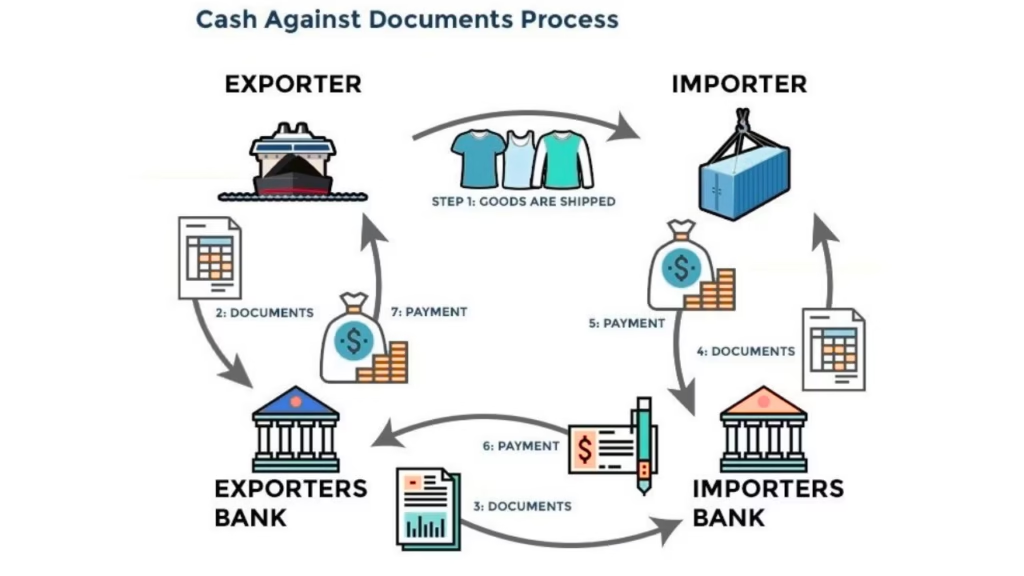
DP stands for Documents Against Payment. It’s a documentary collection arrangement where the exporter ships the goods, then routes the shipping documents through the banking system and the buyer can only get hold of those documents once they’ve paid in full.
No payment, no documents. No documents, no way to clear customs or take possession of the cargo.
On the surface, this looks like a strong safeguard for the exporter the buyer is locked out of the goods until money changes hands. That’s broadly true, but as later sections cover, “locked out until payment” doesn’t mean “guaranteed to pay eventually.”
Other Names for DP
DP shows up under a few different labels depending on the bank, country, or industry, including:
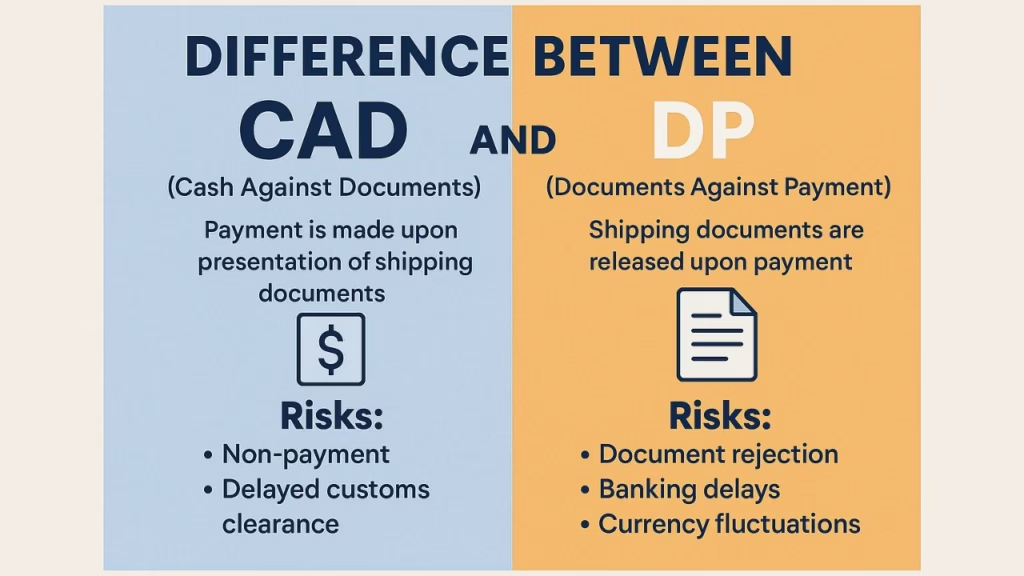
- Cash Against Documents (CAD)
- DP at sight — meaning the buyer is expected to pay immediately (at sight) once documents are presented, rather than after any delay
These are essentially the same mechanism described with different terminology, so it’s worth recognizing all three when reading contracts or buyer correspondence.
Step by Step DP Process Flow
- The exporter ships the goods to the buyer’s port or destination.
- The exporter prepares the shipping documents commercial invoice, bill of lading, packing list, and a sight draft and submits them to their own bank.
- The exporter’s bank forwards the full document set to the buyer’s (importer’s) bank, along with collection instructions.
- The buyer’s bank notifies the buyer that documents have arrived and are being held against payment.
- The buyer pays the invoice amount to their bank.
- Once payment is confirmed, the buyer’s bank releases the original shipping documents to the buyer.
- The buyer’s bank remits the payment back through the exporter’s bank.
- The buyer uses the released documents to clear customs and take physical delivery of the goods.
What DP Does NOT Guarantee
DP feels airtight because the sequence of events sounds like “pay first, get goods.” In practice, several things sit outside what DP actually protects:
- It doesn’t guarantee the buyer will pay at all. If the buyer refuses, the bank simply holds or returns the documents it has no authority to force payment.
- It doesn’t protect against cargo already in transit or at port. By the time documents reach the buyer’s bank, the goods have often already arrived, which hands the buyer leverage to stall, negotiate a lower price, or raise quality disputes before paying.
- It doesn’t cover demurrage, storage, or re-export costs if the buyer walks away those land squarely on the exporter.
- It doesn’t account for buyer or country risk. A financially unstable buyer, or one operating in a country with currency or import restrictions, can still delay or default under a DP arrangement.
DP shifts more control to the exporter than DA does, but it’s still a trust based mechanism sitting on top of a documents only banking process not a payment guarantee.
What Is DA in Export?
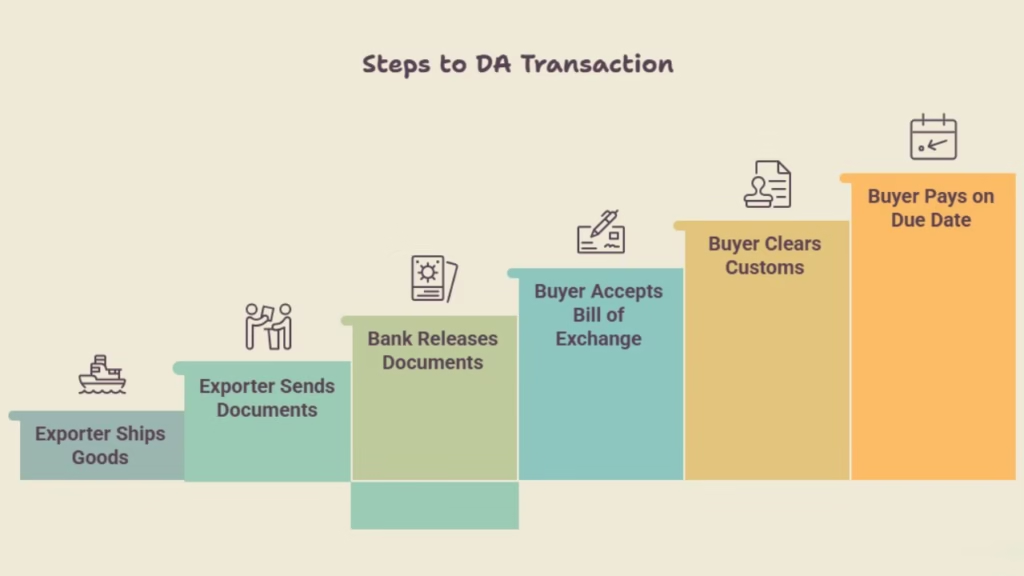
DA stands for Documents Against Acceptance. It’s a documentary collection arrangement where the buyer doesn’t need to pay anything upfront to get hold of the shipping documents. Instead, the buyer simply accepts a bill of exchange a formal, signed promise to pay on a specific future date.
Once that acceptance is signed, the bank releases the documents immediately, and the buyer is free to clear customs and take the goods, before a single rupee or dollar has actually changed hands.
In effect, DA converts a payment term into a short term credit arrangement, with the exporter as the one extending the credit.
Other Names for DA
DA is often referred to using slightly different phrasing depending on the contract or region, including:
- Time draft DA — reflecting that payment is tied to a draft with a future maturity date, not an immediate one
- DA 30 / DA 60 / DA 90 — shorthand for the credit period agreed, meaning payment falls due 30, 60, or 90 days after a set reference point (often the date of acceptance or the bill of lading date)
Longer credit periods like DA 90 sound more attractive to buyers, but from an exporter’s side, every extra day is extra exposure with the goods already gone.
Step by Step DA Process Flow
- The exporter ships the goods to the buyer’s destination.
- The exporter submits the shipping documents, along with a time draft (bill of exchange), to their own bank.
- The exporter’s bank sends the full document set and draft to the buyer’s bank, with instructions to release on acceptance.
- The buyer reviews and formally accepts the draft signing a legal promise to pay on the agreed future date.
- As soon as the draft is accepted, the buyer’s bank releases the original documents no payment has been made yet.
- The buyer uses those documents to clear customs and take physical possession of the goods.
- The buyer is now expected to pay the agreed amount when the draft matures (e.g., in 30, 60, or 90 days).
- On maturity, the buyer’s bank collects payment and remits it back through the exporter’s bank.
Why Buyers Prefer DA
DA is popular with importers for one simple reason it protects their cash flow. Instead of tying up capital before receiving goods, the buyer can take delivery, sell or use the inventory, and pay the exporter later sometimes even after the goods have already generated revenue.
For buyers managing tight working capital or seasonal demand, that credit period can be the deciding factor in choosing one supplier over another. It’s also why buyers who resist Letters of Credit or advance payment will frequently push for DA specifically, rather than DP.
DP vs DA — Core Differences at a Glance
| Factor | DP (Documents Against Payment) | DA (Documents Against Acceptance) |
| Full form | Documents Against Payment | Documents Against Acceptance |
| When documents are released | After the buyer pays in full | After the buyer accepts a promise to pay later |
| Exporter risk | Lower | Higher |
| Importer benefit | No credit period | Gets a credit period (e.g., 30/60/90 days) |
| Cash flow impact | Buyer pays before using/selling goods | Buyer can use or sell goods before paying |
| Control after shipment | Exporter retains control via the bank until payment | Exporter loses control as soon as documents are released |
| Best suited for | New, cautious, or unproven buyer relationships | Trusted, long-term, repeat buyer relationships |
| Bank payment guarantee | No | No |
The table makes the mechanics look clean, but the real takeaway sits in that last row. Whether it’s DP or DA, the bank’s role is identical in nature it moves documents according to instructions, nothing more. Neither term involves the bank underwriting the transaction the way a Letter of Credit does.
Both DP and DA also operate under the same international framework the International Chamber of Commerce ICC’s Uniform Rules for Collections (URC 522), which standardizes how banks handle collection instructions and document release across borders.
That shared foundation is exactly why DP and DA get lumped together as “documentary collection” they’re two settings on the same mechanism, not two fundamentally different systems. The real difference isn’t in what the bank does it’s in when the exporter gives up control of the goods relative to when the money actually arrives.
What Banks Actually Do (and Don’t Do) in DP and DA
What Banks Handle
In both DP and DA, the exporter’s and buyer’s banks act as intermediaries for export bank documentary collection nothing more, nothing less. Their responsibilities are procedural:

- Document forwarding — moving the bill of lading, invoice, packing list, and draft between the exporter’s bank and the buyer’s bank
- Collection instructions — following the exact release conditions the exporter specifies (release on payment for DP, release on acceptance for DA)
- Payment routing — if and when the buyer pays, moving that payment back through the banking chain to the exporter
This work is governed by the ICC’s Uniform Rules for Collections (URC 522), the international rulebook banks follow when handling documentary collections. It’s a well established framework but it’s worth being clear about what it actually standardizes procedure, not protection.
What Banks Never Do
This is the part that trips up first time exporters. Banks in a DP or DA transaction do not:
- Guarantee that the buyer will pay — under either term
- Verify the buyer’s intent or ability to pay before the transaction begins
- Enforce the buyer’s obligation if a draft goes unpaid at maturity
- Compensate the exporter for a non-payment or default
- Take any responsibility for the cargo sitting at a port or in transit
If a buyer refuses to pay under DP, or defaults on an accepted draft under DA, the bank’s involvement typically ends with a returned document set and a notification. There’s no built-in recovery mechanism.
Why Banks Rarely Warn Exporters Clearly
It isn’t that banks are hiding anything it’s a matter of role and incentive. Banks handling documentary collections are focused on compliance with instructions, not on advising exporters on commercial risk.
Their fee income for processing a DP or DA collection is largely unaffected by whether the buyer ultimately pays the handling charges, document fees, and remittance fees are earned either way.
In short, banks function as service providers in the transaction, not risk partners in it. That distinction is worth internalizing before agreeing to either payment term.
DP Risks Exporters Underestimate
DP has a reputation as “the safe option,” and relative to DA, it is. But treating DP as risk free is where a lot of exporters get caught off guard.
Myth: “DP Means Buyer Pays Before Shipment”
This is the most common misreading of DP payment terms in export. DP does not mean the buyer pays before the goods are shipped it means the buyer pays before the documents are released, which usually happens well after the cargo has already left port, or even after it’s arrived at the buyer’s destination.
By the time payment is due, the exporter has already committed the goods, the freight cost, and the production cost. That timing gap is where the buyer’s leverage begins.
Buyer Manipulation Tactics Under DP
Once cargo is sitting at a foreign port with the buyer aware the exporter is under pressure to close the deal, a few common tactics tend to surface:
- Claiming the market price has dropped and asking for a reduced invoice
- Raising last minute quality objections as a bargaining chip
- Simply delaying payment for as long as possible, betting the exporter will eventually concede rather than absorb further costs
Demurrage, Storage Costs, and Stranded Cargo Risk
Every day a buyer stalls, the exporter’s costs keep climbing port storage, demurrage charges, and in some cases the expense of re-exporting or reselling the cargo elsewhere. None of this is covered or offset by the bank it’s absorbed entirely by the exporter.
Country and Buyer Credibility Risk
DP treats every buyer and every country the same, procedurally but the real world risk isn’t uniform. A buyer’s financial stability, and the destination country’s political and currency environment, matter just as much as the payment term itself.
Is DP safe in export business? The honest answer, DP is safer than DA, but it’s only as safe as the buyer and the country behind it.
DA Risks Exporters Underestimate
If DP carries moderate risk, DA sits at the higher stakes end of documentary collection. The core issue isn’t complicated the buyer gets the goods before the exporter gets the money but the ways that plays out in practice go deeper than most exporters expect going in.
Risk #1 — Cash Flow / Liquidity Damage
By the time a DA shipment leaves port, the exporter has typically already paid the supplier or raw material cost, covered freight, settled GST, and absorbed bank charges. Under a DA 60 or DA 90 arrangement, none of that gets recovered for two to three months.
If the buyer pays on schedule, it’s simply a long wait. If the buyer delays even by a few weeks, the exporter’s working capital cycle breaks and that shortfall can stall the next shipment, the next production run, or payroll.
This is the DA export payment risk that rarely gets mentioned upfront it’s not just a default risk, it’s a liquidity risk, even when the buyer eventually pays in full.
Risk #2 — Loss of Control the Moment Documents Are Released
Under DA, the moment the buyer accepts the draft, the documents are released before any money has moved. From that point, the buyer can clear customs, take physical possession of the goods, and even resell them, all while the payment obligation exists only on paper. Whatever leverage the exporter had disappears the instant those documents change hands.
Risk #3 — Cross Border Recovery Is Slow, Costly, Often Not Worth Pursuing
If a buyer defaults on an accepted draft, the exporter’s options are limited and expensive. Legal recovery across borders means navigating a foreign jurisdiction, foreign legal costs, and timelines that can stretch well beyond the value of the shipment itself. In many real cases, the cost and effort of pursuing recovery outweighs what’s actually recoverable which means the loss is simply absorbed.
Risk #4 — Buyer Country Risk
Documentary collection processes treat every country the same procedurally, but risk on the ground isn’t equal. Weak legal enforcement, currency controls, import restrictions, or political instability in the buyer’s country can delay or block payment even when the buyer has every intention of paying. This is why documents against acceptance risk needs to be assessed country by country, not just buyer by buyer.
Real World Pattern: Most DA Defaults Aren’t Fraud — They’re Delay
It’s tempting to picture DA losses as buyers who never intended to pay. In practice, most DA default risk in export payment looks far less dramatic buyers who fully intend to pay, but push the date back repeatedly a week, then a month, then indefinitely while the exporter keeps following up with no real mechanism to force the issue.
How DP and DA Compare to LC and TT ?
DP and DA don’t exist in isolation they sit within a broader spectrum of payment terms TT LC DA DP, each offering a different balance of exporter protection and buyer flexibility.
TT Advance — Safest for Exporter, Riskiest for Buyer
With Telegraphic Transfer (TT) paid in advance, the exporter receives payment before goods ever ship. It’s the lowest risk option for the exporter, which is exactly why it’s hardest to get a buyer to agree to especially a new one, since it shifts nearly all the risk onto them.
Letter of Credit (LC) — Conditional, Bank Backed Protection
An LC introduces something DP and DA don’t have a bank’s own commitment to pay, provided the exporter meets the exact documentary conditions specified. It’s genuinely safer than DP or DA, but that protection comes at a cost LCs are more expensive to open and maintain, and the documentation has to match the LC terms precisely, or the bank can refuse to pay.
DP — Moderate Risk, No Guarantee
DP sits in the middle of the hierarchy. The exporter retains control of the documents until payment, which is real protection but as covered earlier, there’s still no bank guarantee behind it, and the buyer can still stall or negotiate once cargo has arrived.
DA — Highest Risk, Pure Credit Exposure
DA offers the least built-in protection of the four. It’s effectively the exporter extending unsecured credit to the buyer, wrapped in banking language that makes it feel more formal and safer than it actually is.
The “Risk Downgrade” Exporters Don’t Notice
A common pattern plays out over time with repeat buyers an exporter starts a relationship on TT advance, moves to DP once some trust builds, and eventually shifts to DA as the relationship matures. Each step feels like a natural progression. What often goes unnoticed is how much protection is quietly given up at each stage moving from guaranteed payment, to conditional control, to no control at all.
Exporter safety, from strongest to weakest protection:
TT Advance → Letter of Credit (LC) → DP → DA
Recognizing where a given transaction sits on this hierarchy rather than treating “TT, LC, DA, DP” as interchangeable checkbox options is often the difference between a payment term that’s a calculated risk and one that’s simply a hope.
When DP Makes Sense for Exporters
DP isn’t risk free, but it’s a workable, widely used option when the underlying conditions are right. Knowing when to use DP in export comes down to checking a handful of conditions before agreeing to it not just defaulting to it because it sounds safer than DA.
DP is a reasonable fit when:
- The buyer is known or verified ideally with a track record of previous, successful transactions
- The buyer’s country has a stable banking system, with no history of currency controls or payment restrictions that could delay the process
- The cargo can realistically be diverted or resold elsewhere if the buyer refuses to pay commodities and standard goods qualify far more easily than customized or perishable items
- The exporter has enough financial cushion to absorb a payment delay without it disrupting operations
Where all four hold true, DP is a manageable, moderate risk term. Where even one is missing an unknown buyer, an unstable destination market, non-resellable goods, or tight cash flow on the exporter’s side DP starts carrying more risk than its reputation suggests.
Strengthening DP With Risk Mitigation Add Ons
Experienced exporters rarely rely on DP terms alone. A few standard additions tighten the arrangement considerably:
- Partial advance payment — collecting 20–30% of the order value upfront reduces exposure even if the buyer later stalls on the balance
- Strict payment timelines — setting a clear, contractually defined window for the buyer to pay once documents arrive, rather than leaving it open ended
- Demurrage and storage clauses — making the buyer contractually responsible for port storage costs if they delay collection, rather than letting those costs fall on the exporter by default
These aren’t complicated additions, but they shift meaningful risk off the exporter’s side of the table which is really what good DP best practices come down to treating DP as a structure to be reinforced, not a guarantee to be trusted at face value.

When DA Is Safe to Offer (and When to Refuse It)
DA can work well in the right relationship but given that it’s the highest risk term in the documentary collection spectrum, it deserves a much stricter filter before it’s offered.
DA Suitability Checklist
DA is worth considering only when most or all of the following are true:
- The buyer is long term and proven, with a consistent history of paying on time across previous shipments
- The exporter has strong enough working capital to comfortably absorb a 30-, 60-, or 90-day wait without it straining operations
- The buyer’s country has reliable legal enforcement, in case recovery action is ever needed
- The credit period is kept short DA 30 is a meaningfully lower risk than DA 90, and shorter terms should be the starting point, not the exception
Red Flags — Say No to DA When
Certain conditions should push an exporter toward DP, an LC, or partial advance instead of DA:
- The buyer is new, with no proven payment history
- The order value is high relative to what the exporter can afford to lose
- The exporter’s own cash flow depends on that payment arriving on time
- The buyer’s market is volatile, or their industry is prone to sudden downturns
- The buyer’s country has currency controls or restrictions that could delay outbound payment even from a willing buyer
The Simplest Way to Decide
Assessing DA payment terms risk doesn’t require a complicated framework. It comes down to one honest question:
If you wouldn’t give this buyer an unsecured loan, don’t offer DA.
That’s genuinely what DA is credit extended without collateral, dressed in banking language. When exporters are asking themselves when should exporters avoid DA, the buyer-as-borrower framing usually makes the answer obvious far faster than running through a checklist.
Practical Ways to Reduce DP and DA Risk
Exporters who use DP and DA successfully over the long run don’t avoid these terms they build structure around them. Here’s a practical toolkit for documentary collection risk mitigation, covering the techniques that consistently reduce exposure on both sides.
| Technique | How It Helps |
| Partial advance + DP | Collecting 20–30% upfront reduces the exporter’s exposure even if the buyer stalls on the remaining balance |
| Smaller shipment values | Capping order size, especially with new buyers, limits how much is at risk in any single transaction |
| Shorter DA periods | DA 30 carries meaningfully less liquidity and default risk than DA 60 or DA 90 |
| Export credit insurance | Covers a portion of the loss if a buyer defaults or becomes insolvent after goods are shipped |
| Buyer financial/credit checks | Verifying a buyer’s payment history and financial standing before extending DP or DA terms catches red flags early |
| Country risk assessment | Evaluating the buyer’s country for currency controls, political stability, and legal enforcement separately from the buyer’s own credibility |
| Buyer diversification | Spreading shipments across multiple buyers avoids over exposure to any single buyer’s payment behavior |
| CIF pricing | Pricing on a CIF (Cost, Insurance, Freight) basis shifts more of the transit risk and cost burden appropriately, cushioning losses if goods are damaged or a buyer refuses delivery |
| “To Order” B/L instead of Straight B/L | Keeps the exporter’s bank in control of the bill of lading, so goods can be redirected or resold if the buyer defaults a Straight B/L removes that flexibility |
None of these techniques eliminates risk entirely DP and DA are trust based by design. But layering two or three of these together, based on the buyer and shipment in question, is how experienced exporters keep DP and DA risk proportionate to what they can actually afford to lose.
DP vs DA in Practice: A Simple Export Example
Consider an Indian exporter shipping a container of mango pulp to an overseas buyer, valued at $20,000.
Under DP terms: The exporter ships the goods and submits the shipping documents to their bank, which forwards them to the buyer’s bank. The buyer is notified that documents are being held against payment. To clear customs and take delivery, the buyer must pay the full $20,000 first.
Once payment clears, the documents are released, and the buyer collects the cargo. If the buyer refuses to pay, the exporter still holds the documents and the option to redirect or resell the shipment elsewhere, at the cost of extra freight and time.
Under DA terms, same shipment: The buyer instead signs a time draft agreeing to pay in 60 days. As soon as that draft is accepted, the documents are released before any money has moved. The buyer clears customs, takes the mango pulp, and is free to sell it.
The exporter now has no goods, no documents, and no payment only a signed promise due in two months. If the buyer pays on schedule, the outcome looks identical to DP, just delayed. If the buyer delays or defaults, the exporter has already lost every point of leverage that DP would have preserved.
Same product, same buyer, same shipment value two very different risk positions, decided entirely by which three letters sit in the payment terms field.
Common Mistakes Exporters Make With DP and DA
Most DP and DA losses aren’t the result of one dramatic failure they’re the result of a few small, avoidable assumptions stacking up. The recurring ones:
- Treating DP as guaranteed payment. DP controls when documents are released, not whether the buyer ultimately pays or how much leverage they have once cargo has arrived.
- Offering DA too early. Extending unsecured credit to a buyer with no proven payment history often because the order looked attractive or a competitor was offering the same terms.
- Trusting buyer assurances over actual payment history. A buyer’s word carries far less weight than a track record of on time payments across previous shipments.
- Ignoring country level risk. Evaluating only the buyer’s credibility while overlooking currency controls, political instability, or weak legal enforcement in their country.
- Confusing bank involvement with protection. Assuming that because a bank is handling the documents, the transaction is somehow backed or insured when the bank’s role stops at procedure.
Individually, any one of these mistakes is often survivable. It’s when two or three stack together a new buyer, offered DA 90, in a country with weak legal recourse that a single unpaid shipment turns into a real financial setback.
The Exporter Mindset Shift That Matters More Than the Term Itself
After all the mechanics, comparisons, and risk breakdowns, the most useful shift isn’t learning more definitions it’s changing the question being asked.
New exporters tend to ask: “Should I use DP or DA?” Experienced ones ask something more useful: “What happens if this buyer doesn’t pay?”
That single reframe forces the real variables into view the buyer’s history, the country’s stability, the shipment’s resale value, and how much the business can absorb if things go wrong. The payment term is just the container for that answer, not a substitute for it.
Which is really the thesis this entire guide has been building toward: banks manage documents. Exporters manage risk. Once that’s accepted, DP and DA stop being confusing banking terms, and start becoming what they always were tools that only work as well as the judgment behind them.
Closing Thoughts
DP and DA both fall under documentary collection, but they sit at very different points on the risk spectrum. DP holds the line on payment before release, DA trades that control for a credit period the buyer will appreciate. Neither one is guaranteed by the bank handling it that responsibility stays with the exporter, shipment by shipment, buyer by buyer.
Every contract carries its own mix of buyer history, country risk, and cash flow tolerance, so before finalizing payment terms on a new deal, it’s worth reviewing the specifics with your bank or a trade finance advisor who can weigh in on the buyer’s country, banking channel, and documentation requirements.
Frequently Asked Questions
What is the difference between DP and DA payment terms?
Under DP (Documents Against Payment), the buyer must pay in full before the bank releases the shipping documents. Under DA (Documents Against Acceptance), the buyer only needs to accept a promise to pay on a future date, and the documents are released immediately — well before any payment is made.
Is DP safe in export business?
DP is safer than DA because the exporter retains control of the documents until payment clears. But it isn’t risk-free the bank doesn’t guarantee payment, and a buyer can still delay, dispute quality, or refuse to pay once cargo has already arrived at port. DP’s safety ultimately depends on the buyer’s credibility and the destination country’s stability, not the term alone.
What is DA payment terms in export?
DA allows the buyer to accept a time draft a signed promise to pay on a set future date, such as 30, 60, or 90 days and receive the shipping documents right away. The buyer can clear customs and take the goods before making any payment, with the actual payment due only when the draft matures.
When should exporters avoid DA?
DA should generally be avoided with new or unproven buyers, on high-value orders, when the exporter’s own cash flow depends on timely payment, in volatile markets, or when the buyer’s country has weak legal enforcement or currency controls. A simple rule of thumb: if you wouldn’t extend this buyer an unsecured loan, don’t extend DA.
Does the bank guarantee payment under DP or DA?
No. Under both DP and DA, the bank’s role is limited to handling documents forwarding paperwork, following collection instructions, and routing payment if the buyer pays. It does not guarantee payment, verify the buyer’s intent, or compensate the exporter if the buyer defaults.
What is DP at sight?
DP at sight means the buyer is required to pay immediately “at sight” as soon as the shipping documents are presented by the bank, rather than after any delay. It’s another way of describing standard DP terms, sometimes also called Cash Against Documents (CAD).
What is DA 30/60/90 in export?
DA 30, DA 60, and DA 90 refer to the credit period agreed under DA terms — meaning payment is due 30, 60, or 90 days after a set reference date, typically the acceptance date or bill of lading date. Shorter periods, like DA 30, carry lower liquidity and default risk for the exporter than longer ones like DA 90.
Which is safer DP, DA, LC, or TT?
From safest to riskiest for the exporter, the general order is: TT advance, followed by Letter of Credit (LC), then DP, then DA. TT advance guarantees payment before shipment, LC adds a bank-backed conditional guarantee, DP retains document control without a guarantee, and DA offers the least protection since documents are released before payment is made.
About the Author
Hi, I’m SriHarsha, founder of shxhub.in.
I focus on explaining import export business topics in a practical, beginner friendly way, based on how exports actually work on the real ground especially documentation, quality control, and buyer expectations.




1 thought on “DP vs DA in Export: The Payment Term Decision That Determines If You Get Paid”