

Most beginners think exporting starts with finding buyers or applying for an Import Export Code (IEC). That’s backwards.
The real starting point is company registration for export business. Until your business exists as a legally recognized entity, everything else banking, compliance, taxation, and contracts becomes messy. Here’s the thing many new exporters overlook. International trade runs on trust and documentation.
Foreign buyers, banks, and customs authorities all want to see that your business is legitimate before they deal with you. Without proper export business registration in India, you’re basically operating without a foundation.
Another common mistake beginners make is rushing to apply for an IEC before setting up their business entity. The IEC application itself requires business details, PAN information, and bank credentials tied to your registered business. If the structure isn’t in place first, you’ll end up correcting things later and wasting time.
This guide breaks the process down clearly so you understand how to register export company in India step by step without confusion.
Here’s what we’ll cover:
- How to choose the right business structure for your export business
- The company registration process in India
- How to obtain IEC, GST registration, and other export compliance requirements
By the end, you’ll understand how to set up your export business legally so you can start dealing with international buyers with confidence.
Table of Contents
Why Company Registration for Export Business is Important
Before you think about shipping goods overseas, negotiating with buyers, or attending trade fairs, you need a legally recognized business structure.
This is not just a formality. Your business registration affects everything from taxes to credibility. It also determines whether banks, customs authorities, and international buyers are willing to work with you.
Let’s break down why export company registration in India matters so much.
Legal Identity for International Trade
Exporting involves contracts, invoices, customs declarations, and international payments. All of these require a legal business identity.
Two things happen when your company is properly registered.
First, foreign buyers feel more comfortable working with you. Importers usually check the credibility of suppliers before placing orders. A registered business signals stability and professionalism.
Second, government and financial systems require a registered entity. Customs documentation, shipping bills, and export declarations must be issued under a registered business name.
Examples:
- A European importer may ask for your company registration certificate before signing a supply contract.
- Banks processing export payments require a registered business account linked to your company PAN.
Without a registered entity, even basic export documentation becomes difficult.
Access to Export Benefits and Incentives
The Indian government offers several incentives to support exporters. But here’s the catch most of these benefits are only available to registered businesses.
Once your company is registered and compliant, you become eligible for schemes designed to promote exports and reduce operational costs.
Examples:
- Export promotion programs run by industry councils help exporters access new markets and buyer networks.
- Under GST rules, exports are zero rated, allowing businesses to claim GST refunds on input taxes.
These benefits improve profitability, especially for small exporters trying to compete in global markets.
Banking and International Payments
Export transactions involve foreign currencies, international wire transfers, and compliance checks. Regular personal bank accounts are not designed for this.
Registered businesses can open current accounts specifically meant for export transactions, which allows banks to process international payments properly.
Banks also play a regulatory role in export transactions. They verify export invoices, monitor foreign exchange inflows, and ensure compliance with Reserve Bank of India guidelines.
Examples:
- Exporters open current accounts with Authorized Dealer (AD) banks that handle foreign exchange transactions.
- Banks process international remittances from buyers in USD, EUR, or other currencies and credit them to your business account.
Without proper export company registration in India, accessing these banking services becomes almost impossible.
Step 1: Choose the Right Business Structure for Export
Before you register anything, you must decide what type of business entity you want to run. This decision affects taxes, liability, credibility, and even how international buyers perceive you.
Many beginners rush into company registration without thinking about structure. That’s a mistake. The structure you choose should match your investment level, risk tolerance, and long term export plans.
Let’s break down the most common export company structure options in India.
Sole Proprietorship (Best for Small Exporters)
A sole proprietorship is the simplest business structure in India. One person owns and controls the entire business.
This structure is popular among first time exporters who want to start quickly without heavy compliance or registration costs.
It works best when you are experimenting with export products or handling small orders.
Examples
- A freelancer exporting handmade handicrafts through online marketplaces.
- A small trader exporting spices in limited quantities to overseas buyers.
Advantages
- Very easy to start
- Minimal documentation
- Low setup and maintenance cost
- Full control over decisions
Limitations
- Unlimited personal liability
- Limited credibility with large international buyers
Many exporters start here and upgrade to LLP or Private Limited once their export volumes grow.
Partnership Firm (Best for Co-founders)
A partnership firm is suitable when two or more people want to start an export business together. Partners invest money, share responsibilities, and divide profits based on a partnership agreement.
This structure is common when friends, family members, or colleagues decide to start exporting together.
Examples
- Two entrepreneurs exporting textiles to Middle Eastern buyers.
- A group of traders exporting agricultural commodities together.
Advantages
- Easy and inexpensive to set up
- Shared investment and responsibilities
- More credibility than a sole proprietorship
Limitations
- Partners have unlimited liability
- Disagreements between partners can affect the business
While partnership firms are easy to start, they lack the legal protection offered by LLP or private limited companies.
LLP (Limited Liability Partnership)
A Limited Liability Partnership (LLP) combines the flexibility of a partnership with the legal protection of a company.
In an LLP, partners are not personally responsible for business debts. Their liability is limited to their investment in the business.
This makes LLP a popular option for exporters who want legal protection but don’t want the complexity of running a full private limited company.
Examples
- A small manufacturing unit exporting engineering components.
- Multiple partners running a sourcing company supplying international buyers.
Advantages
- Limited liability protection
- More credibility with foreign buyers
- Fewer compliance requirements than private limited companies
Limitations
- Requires annual filings
- Slightly more compliance than a basic partnership
For many exporters, LLP strikes the right balance between simplicity and legal protection.
Private Limited Company
A Private Limited Company is the most structured and credible business entity for exporters.
The company exists as a separate legal entity, which means the owners are not personally responsible for business liabilities.
This structure is often preferred by exporters targeting large international buyers or planning significant growth.
Examples
- A manufacturing company exporting consumer electronics to global distributors.
- A food processing brand supplying packaged goods to international supermarket chains.
Advantages
- Strong credibility with foreign buyers
- Limited liability protection
- Easier access to funding and investors
- Better scalability for long-term growth
Limitations
- Higher compliance requirements
- More documentation and professional accounting needed
Serious exporters often choose this structure because it builds trust and stability in international markets.
One Person Company (OPC)
An OPC (One Person Company) is designed for solo entrepreneurs who want the legal protection of a company without bringing in partners.
It offers limited liability while allowing a single individual to control the business.
Examples
- A solo exporter selling premium handicrafts to international boutique stores.
- A single entrepreneur exporting specialty food products to niche markets.
Advantages
- Separate legal identity
- Limited liability
- Better credibility than proprietorship
Limitations
- Only one owner allowed
- Compliance requirements similar to private limited companies
OPC is a practical middle ground for solo exporters who want a formal business structure without partners.
Quick Decision Guide for Beginners
If you’re still unsure, here’s a simple way to decide the best business structure for export business.
If you’re starting small and testing products
→ Sole Proprietorship
If you’re starting with a partner
→ Partnership Firm
If you want protection with flexibility
→ LLP
If you’re planning serious growth and international expansion
→ Private Limited Company
If you’re a solo entrepreneur but want company status
→ One Person Company (OPC)
Choosing the right export company structure in India ensures your business can grow without unnecessary legal or financial complications later.

Step 2: Register Your Company with MCA
Once you’ve chosen your business structure, the next step is official company registration.
In India, companies and LLPs are registered through the Ministry of Corporate Affairs (MCA). This process establishes your business as a legal entity and allows you to operate formally.
Understanding the company registration process in India helps avoid delays and mistakes during incorporation.
Choose a Unique Business Name
The first step in company registration is selecting a unique business name. Your company name must be distinct and cannot be identical to an existing registered entity.
The MCA system checks name availability before approving it.

Two things to keep in mind:
- The name should reflect your business activity.
- It must follow MCA naming guidelines.
Examples
- If you export spices, your name might include terms like Global Spices Exporters Pvt Ltd.
- A textile exporter might choose a name such as NewGen Textile Exports LLP.
Choosing a clear and professional name helps build brand credibility in international markets.
File Incorporation on MCA Portal
After selecting your name, you must file the incorporation application through the MCA portal. This step involves submitting company details, director information, and registered office details. The MCA reviews your application and verifies the documents before approving incorporation.
Once approved, the company is legally recognized as a registered entity. This is a key part of the MCA company registration steps every exporter must complete before starting operations.
Prepare Required Documents
Company incorporation requires several documents that confirm the identity and legitimacy of the founders.
Common documents include:
- Identity proof of directors or partners
- Address proof of directors
- Registered office address proof
- Passport size photographs
For companies specifically, two legal documents are required.
Examples:
Memorandum of Association (MoA)
Defines the company’s objectives and activities.
Articles of Association (AoA)
Specifies the internal rules for running the company.
These documents establish how the company will operate and who has authority within the organization.
Obtain Certificate of Incorporation
Once the MCA verifies your application and documents, it issues a Certificate of Incorporation. This certificate officially confirms that your company is legally registered.
It includes key information such as:
- Company name
- Corporate Identification Number (CIN)
- Date of incorporation
At this stage, your business becomes a legally recognized entity capable of entering contracts and conducting trade.
Apply for PAN and TAN
After incorporation, your company must obtain Permanent Account Number (PAN) and Tax Deduction and Collection Account Number (TAN).
PAN is required for:
- Filing income tax returns
- Opening business bank accounts
- Applying for export licenses
TAN is used when the company deducts tax at source for payments like salaries or contractor fees.
These registrations complete the basic company registration process in India, preparing your business for the next steps such as IEC registration and export compliance.
Step 3: Open a Business Bank Account for Export Transactions
Once your company is registered, the next practical step is opening a business bank account for export transactions.
Exporting is not just selling products overseas. It involves foreign currency payments, international remittances, and regulatory reporting. All of this must pass through the banking system.
Banks act as intermediaries between exporters, buyers, and regulatory authorities like the Reserve Bank of India. Without a proper export business bank account, you cannot legally receive international payments.
Let’s break down how this works.
Why Exporters Must Use Current Accounts
Export businesses cannot operate through personal savings accounts. Banks require exporters to use current accounts registered under the company name.
Current accounts are designed for businesses that handle frequent transactions and larger payment volumes. They also allow banks to monitor foreign exchange inflows and ensure compliance with export regulations.
For exporters, this matters because every international payment must be linked to a verified business entity.
Examples
- When a buyer in Germany sends payment in euros, the bank converts the foreign currency and credits it to your export current account.
- When you ship goods overseas, banks verify export invoices and process foreign remittances from buyers.
A dedicated business account makes financial tracking easier and ensures your export transactions remain compliant.
Documents Required by Banks
Banks require specific documents before opening an export current account. These documents verify the legitimacy of your business and the identity of its owners.
Commonly required documents include:
- Certificate of Incorporation or business registration proof
- Company PAN card
- Address proof of the registered office
- Identity proof of directors or partners
- Company incorporation documents such as MoA and AoA
Banks also perform Know Your Customer (KYC) checks before activating the account.
Examples
- A newly registered private limited company must submit its Certificate of Incorporation and PAN.
- A partnership firm may need to submit its partnership deed and partner identity proofs.
Providing the correct documents helps banks process the account opening quickly.
Choosing an AD Category-I Bank
Exporters should ideally open accounts with Authorized Dealer (AD) Category-I banks. These banks are licensed by the Reserve Bank of India to handle foreign exchange transactions.
AD banks are responsible for monitoring export payments and ensuring compliance with foreign exchange regulations.
They also issue AD Codes, which are required for customs clearance during exports.
Examples
- An exporter receiving payment in US dollars relies on the bank to handle foreign exchange conversion and credit the amount in INR.
- Banks process export remittance documentation, verifying invoices and shipping details before clearing payments.
Choosing the right AD bank for export transactions simplifies international payments and ensures smooth communication with customs and regulatory authorities.
Keywords naturally covered
- export business bank account India
- AD bank export
- export remittance processing
- foreign exchange payments
Step 4: Apply for Import Export Code (IEC)
After registering your company and opening a business bank account, the next essential step is obtaining the Import Export Code (IEC).
This is the core license required to legally start exporting goods from India.
Without IEC, businesses cannot clear goods through customs or receive export payments from international buyers. That’s why IEC registration in India is considered one of the most important compliance steps for exporters.
What Is IEC and Why It Is Mandatory
The Import Export Code (IEC) is a 10-digit identification number issued by the Directorate General of Foreign Trade (DGFT). It acts as a unique identifier for businesses engaged in international trade.
Customs authorities use the IEC number to track export shipments, while banks require it when processing foreign payments.
Examples
- When goods are shipped overseas, the IEC must be mentioned in customs shipping documents.
- Banks processing export payments often verify the IEC linked to the exporter’s PAN.
Without this number, your business cannot legally conduct export transactions.
How to Apply on DGFT Portal
Applying for IEC has become a fully online process.
Exporters must submit their application through the DGFT portal, where the system verifies business and PAN details before issuing the code.
The general process involves:
- Creating an account on the DGFT portal
- Filling the IEC application form
- Uploading required documents
- Paying the application fee
- Verifying the application using Aadhaar or digital signature
Once approved, the IEC number becomes valid for lifetime use. This online system has made import export code registration much faster compared to earlier manual processes.
Documents Required for IEC
The IEC application requires a few basic documents to verify your business and bank details.
Typical documents include:
- PAN card of the business or proprietor
- Address proof of the company
- Bank account details or cancelled cheque
- Identity verification for the applicant
These documents help DGFT confirm the authenticity of the exporter before issuing the code.
Examples
- A private limited company applies using its company PAN and bank certificate.
- A sole proprietor may submit personal PAN and address proof linked to the business.
Providing accurate documentation ensures smooth processing of the application.
IEC Processing Time and Cost
IEC registration is relatively simple and affordable. The application fee is typically ₹500, and the processing time is usually quick if all documents are correct. In many cases, the IEC is issued within a few working days after submission.
Once issued, the code remains valid for the lifetime of the business and does not require renewal. This makes IEC registration in India one of the easiest compliance steps for exporters starting international trade.
Step 5: Get GST Registration for Export Business
Once your company is registered and you have obtained your IEC, the next important step is GST registration for export business.
Export taxation works slightly differently compared to domestic trade. Under the Goods and Services Tax system, exports are treated as zero rated supplies, which means exporters can claim tax benefits that normal businesses cannot.
Understanding GST for exporters in India helps you avoid compliance problems and improves your cash flow.
When GST Registration Is Required
Under Indian tax rules, businesses must register for GST once their annual turnover crosses the prescribed threshold.
For most states, the threshold is ₹20 lakh, while for certain special category states it is ₹10 lakh.
However, export businesses often register earlier because international trade involves documentation and tax credits that require GST identification.
GST registration ensures that your export invoices, shipping documents, and tax filings are recognized under the national tax system.
Examples
- A textile exporter shipping garments to the UK may need GST registration to issue proper export invoices.
- A handicraft seller exporting through international marketplaces may require GST to comply with shipping and tax documentation.
Even if your export volumes are small initially, GST registration simplifies compliance as your business grows.
Why Exporters Register Even Before Turnover Limit
Many exporters voluntarily obtain GST registration even when their turnover has not crossed the legal threshold.
There are practical reasons for this.
First, several international buyers and logistics providers expect exporters to operate as registered businesses with proper tax documentation.
Second, GST registration allows exporters to claim tax refunds on inputs used in production.
Examples
- A manufacturer exporting processed foods may claim GST credits on raw materials and packaging costs.
- A textile exporter purchasing fabrics and accessories can recover input taxes paid during production.
Registering early ensures smoother transactions with suppliers, logistics partners, and international buyers.
GST Benefits for Exporters
The GST framework offers certain advantages that make exporting financially more efficient.

The biggest advantage is that exports are treated as zero rated supplies. This means exporters are not required to pay GST on goods or services sold to foreign buyers.
At the same time, they can still claim credits for taxes paid during production or procurement.
Examples
- Exporters can claim input tax credit (ITC) on raw materials, packaging, or manufacturing expenses used in export products.
- Businesses can apply for GST refunds on taxes paid for goods or services used in export production.
These benefits reduce the tax burden and improve profitability for exporters operating in global markets.
Step 6: Complete Additional Export Compliance
Many beginners believe that once they have registered their company, obtained IEC, and completed GST registration, they are ready to export.
There are additional compliance steps that ensure your shipments can move smoothly through customs and international trade systems. Ignoring these steps can delay shipments or create regulatory issues later.
Let’s look at the most common export compliance requirements in India.
Obtain AD Code from Your Bank
An Authorized Dealer (AD) Code is issued by your bank and is required for customs clearance.
This code links your export shipments to your bank account so that authorities can track export payments and foreign exchange inflows. Without an AD Code registered with customs, exporters cannot file shipping bills or process export shipments.
Examples
- When an exporter ships goods through a port, the AD Code must be registered with the port customs system.
- Customs authorities use the AD Code to verify that export payments will be routed through the exporter’s authorized bank.
This step connects your bank account to the export system and enables payment tracking.
Register on ICEGATE for Customs Filing
ICEGATE is the electronic platform used by Indian customs authorities to manage import and export documentation.
Exporters must register on the ICEGATE portal to submit shipping documents and track customs filings. Once registered, exporters can interact digitally with customs offices and logistics partners.
Examples
- Exporters use ICEGATE to submit shipping bills for export consignments.
- The system allows businesses to track customs clearance and export shipment status.
Registering on ICEGATE makes export documentation faster and reduces dependency on manual paperwork.
Join Export Promotion Councils
Export Promotion Councils (EPCs) are industry bodies created to support exporters in specific sectors. Joining the appropriate council provides access to market insights, trade events, and export assistance programs.
Many exporters obtain a Registration Cum Membership Certificate (RCMC) from these councils to participate in government export schemes.
Examples
- APEDA supports exporters dealing with agricultural and processed food products.
- EEPC India assists exporters in engineering and industrial goods.
Membership can also help exporters connect with international buyers and trade delegations.
Sector Specific Licenses
Some export industries require additional licenses depending on the product category. These licenses ensure that exported goods comply with quality, safety, and regulatory standards.
The requirements vary depending on what you plan to export.
Examples
- Food exporters may need FSSAI certification before exporting processed food products.
- Businesses exporting spices often require registration with the Spices Board of India.
Checking these requirements early prevents delays when preparing shipments for export.
Common Mistakes When Registering an Export Company
Most export guides talk about documentation, but very few talk about the mistakes beginners make during export company registration.
These mistakes usually don’t stop you from starting an export business. But they create delays, compliance problems, or credibility issues later when you begin dealing with international buyers.
Here are three common mistakes that new exporters make when registering their businesses.
Applying IEC Before Business Registration
Many beginners think the first step to start exporting is applying for an Import Export Code (IEC).
That’s incorrect.
IEC must be linked to a valid business entity and bank account. If you apply for IEC before setting up your company structure, you may end up correcting details later or reapplying.
Your business registration forms the foundation for everything that follows.
Examples
- A new exporter applies for IEC using personal details and later realizes the IEC should be linked to a registered company instead.
- A business owner changes their structure from proprietorship to LLP and must update export registrations and banking records.
The correct order should always be:
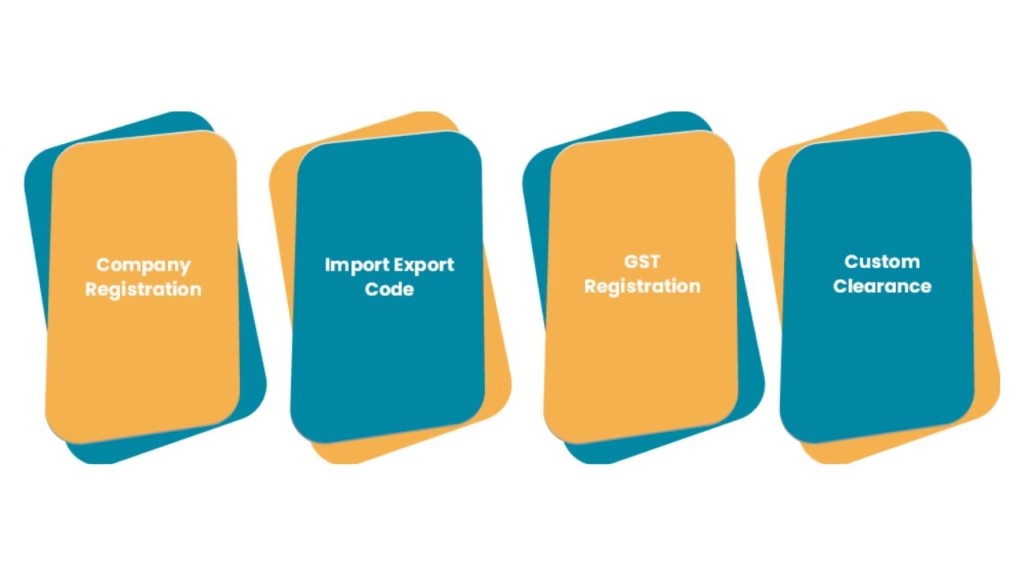
Business structure → company registration → bank account → IEC application
Starting with the right sequence saves time and avoids unnecessary corrections.
Choosing the Wrong Business Structure
Another common mistake is selecting a business structure without thinking about long term growth. Many entrepreneurs choose the simplest option just to start quickly, but later face limitations when dealing with international buyers or scaling their operations.
Your structure affects taxation, liability, and credibility in global markets.
Examples
- A large European importer may prefer dealing with a Private Limited company instead of a sole proprietorship because it signals financial stability.
- A partnership firm with unclear partner roles may face internal disputes when export orders grow.
Choosing the right structure early prevents operational issues later as your export business expands.
Ignoring Bank and Customs Requirements
Some exporters focus only on company registration and IEC but ignore the banking and customs compliance side of exports.
Export transactions involve foreign currency payments, customs documentation, and regulatory monitoring. Without proper bank and customs registration, shipments can be delayed or payments may be held for verification.
Examples
- An exporter forgets to register their AD Code with customs, which delays shipping clearance at the port.
- A business receives payment from an overseas buyer but faces issues because the bank account was not properly configured for export remittances.
Export compliance is not just paperwork. It ensures your shipments and payments move smoothly through the international trade system.
Quick Checklist to Register an Export Company in India
If you want to keep things simple, here’s a straightforward checklist that summarizes the entire export business registration process.
Follow these steps in order to set up your export business legally and efficiently.
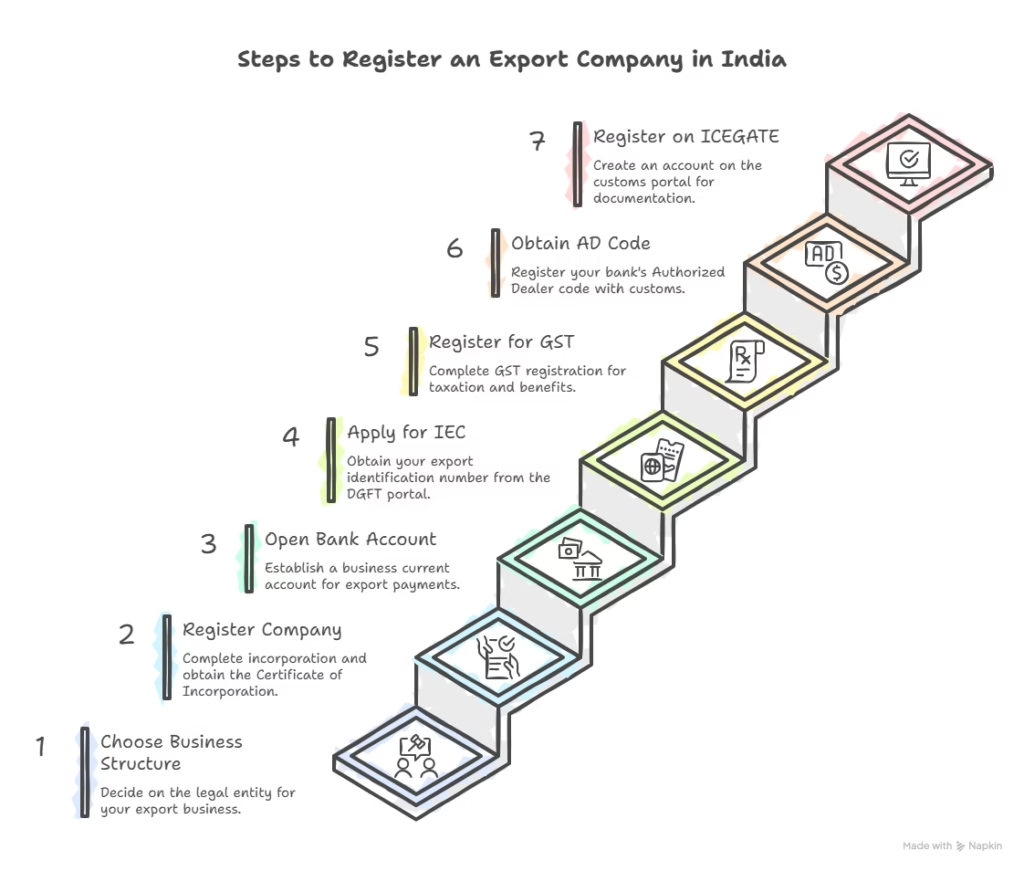
1. Choose your business structure
Decide whether you want to operate as a sole proprietorship, partnership, LLP, private limited company, or OPC.
2. Register your company on the MCA portal
Complete incorporation and obtain your Certificate of Incorporation.
3. Open a current bank account
Use a business current account with an authorized bank to handle export payments.
4. Apply for Import Export Code (IEC)
Submit your application on the DGFT portal to obtain your export identification number.
5. Register for GST
Complete GST registration to handle taxation and claim export related tax benefits.
6. Obtain AD Code from your bank
Register your bank’s Authorized Dealer code with customs to enable export shipments.
7. Register on ICEGATE
Create an account on the customs portal to file shipping bills and manage export documentation.
Once these steps are completed, your business is legally ready to begin exporting goods to international markets.
Final Thoughts
If you strip away all the complexity, registering a company for export business comes down to building the right foundation first. Your business structure is that foundation. It determines how your company operates, how taxes are handled, how liability is managed, and how credible you appear to international buyers.
Whether you start with a proprietorship, LLP, or private limited company, the goal is the same create a legally recognized business that can operate in global trade.
Once the structure is in place, the next layer is export licensing and taxation compliance. Registrations like Import Export Code (IEC) and GST are what actually enable your business to conduct export transactions. Without them, customs clearance, invoicing, and international payments simply cannot happen.
Finally, there’s the compliance side that many beginners underestimate. Things like AD Code registration, ICEGATE access, and sector specific licenses connect your business to the banking system and customs network that power international trade.
When these pieces are set up correctly, something important happens international buyers trust you more. A properly registered and compliant export company signals stability, professionalism, and reliability. And in global trade, trust is often the difference between getting the order or losing it.
FAQs
1. Do I need to register a company before applying for IEC?
Yes. The Import Export Code (IEC) must be linked to a valid business entity and bank account. While sole proprietors can apply using their PAN, having a registered business structure first ensures smoother documentation and banking compliance.
2. Which business structure is best for an export business in India?
The best structure depends on your scale and goals.
For example:
A sole proprietorship works well for small exporters testing products.
A private limited company is better suited for exporters targeting large international buyers or long-term expansion.
3. Is GST mandatory for export businesses?
GST registration becomes mandatory once your business crosses the prescribed turnover threshold. However, many exporters register earlier to claim input tax credits and GST refunds on export-related expenses.
4. How long does it take to get an Import Export Code (IEC)?
IEC registration is relatively fast because the process is completely online through the DGFT portal. In most cases, the code is issued within 2–3 working days after submitting the application and paying the registration fee.
5. Can I start exporting immediately after getting IEC?
Not always. IEC is a critical requirement, but exporters also need other operational setups.
For example:
Your bank’s AD Code must be registered with customs.
You must be able to file shipping documents through the ICEGATE system.
Once these compliance steps are completed, your business is ready to begin export transactions.
About the Author
Hi, I’m SriHarsha, founder of shxhub.in.
I focus on explaining import export business topics in a practical, beginner friendly way, based on how exports actually work on the real ground especially documentation, quality control, and buyer expectations.


1 thought on “Company Registration for Export Business in India: Step by Step Guide”