
Foundation, Meaning & Why It Actually Matters in Real Exports
The Certificate of Origin plays a far bigger role in export shipments than most first time exporters actually realize. Many first time exporters treat the CoO Certificate of Origin as “just another document.”
In real export transactions, that assumption causes serious problems.
From what I’ve seen across actual shipments, exporters usually understand invoices and packing lists quickly. But CoO is where confusion starts especially when different countries demand different formats, issuing authorities, and declarations.
This guide explains Certificate of Origin for export the way it works , not the way it’s explained in short definitions or online templates.
We’ll cover:
- what a CoO really proves
- why customs and buyers rely on it
- how it affects duty, clearance, and buyer trust
- and how exporters make costly mistakes without realizing it
No shortcuts. No copied definitions. No unnecessary repetition.
What Is Certificate of Origin ?
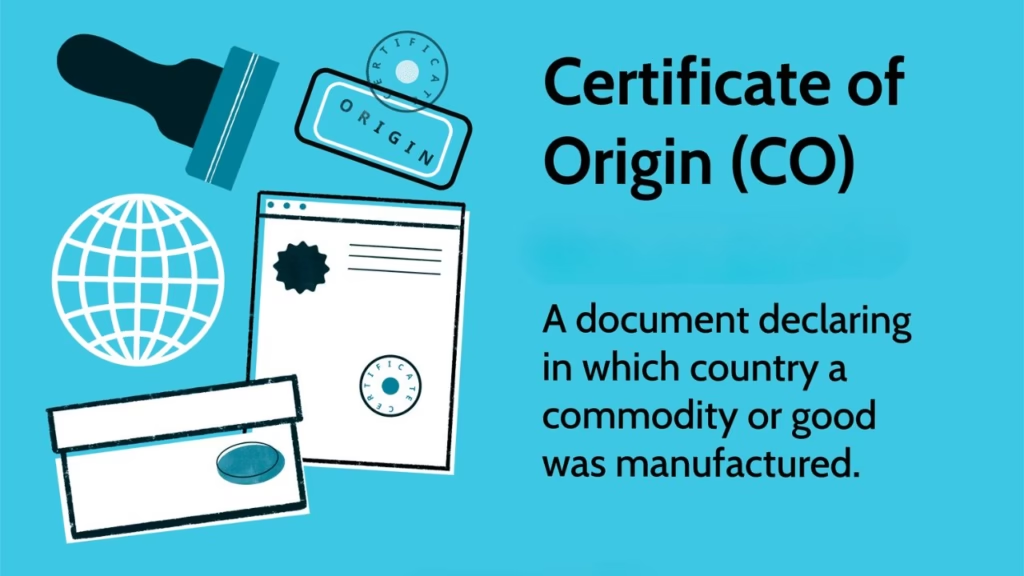
A Certificate of Origin is a document that verifies the goods were made or produced in a specific country.
In simple terms:
It informs the importing nation of the actual origin of the goods, rather than their shipping location.
This difference is more significant than many new exporters understand
For example:
- Goods shipped from India may still be considered US origin if manufacturing happened there.
- Goods assembled in India using imported inputs may or may not qualify as Indian origin, depending on rules.
If you add 40% value addition and additional changes , features to the imported item then you can sell it as it is manufactured in your country.
That’s why customs authorities treat the country of origin certificate as a legal declaration not a casual form.
Certificate of Origin for Export vs Shipping Documents
Many exporters confuse the certificate of origin in shipping with transport documents.
Let’s clarify:
- Invoice / Packing List → commercial details
- Bill of Lading / Airway Bill → transport contract
- Certificate of Origin → origin declaration under trade law
Customs does not use the CoO to check price or quantity.
They use it to decide:
- import duty rates
- eligibility for trade agreements
- application of anti dumping rules
- compliance with country specific import regulations
This is why even a small mistake in the CoO can override the perfect documentation.
Why CoO Is Mandatory in Export
Exporters often ask:
“Is certificate of origin compulsory?”
The practical answer is: yes, in most international trade scenarios.
Here’s why importing authorities demand it:
1. Import Duty Calculation
Many countries apply different duty rates based on origin.
For example:
- Preferential origin → reduced or zero duty
- Non-preferential origin → full duty
Without a valid certificate of origin, customs will:
- apply maximum duty
- or hold the shipment
2. Trade Agreement Eligibility
Free Trade Agreements (FTAs) depend entirely on origin rules.
No origin proof = no benefit.
This is where documents like:
- EUR 1 certificate
- USMCA certificate of origin
become critical.
3. Anti-Dumping & Trade Control
Some countries impose:
- anti-dumping duties
- safeguard measures
- country specific restrictions
The CoO determines whether those apply.
4. Buyer & Bank Requirement
Many buyers include certificate of origin for export as a mandatory document in contracts.
Banks may also insist on it under:
- documentary collection
- letter of credit
Certificate of Origin vs Country of Shipment
This is where many exporters go wrong.
Country of shipment = where goods are dispatched from
Country of origin = where goods are produced or transformed
Example:
- Goods manufactured in India
- Shipped via Dubai
→ Origin remains India, not UAE
That’s why calling it certificate of country of origin is important not “shipping country certificate.”
Customs officials are very strict about this.
Who Issues the CoO ?
The answer depends on the type of certificate and the destination country.
Common issuing authorities include:
- Chambers of Commerce
- Export Promotion Councils
- Government authorized platforms
- Manufacturers (in specific cases)
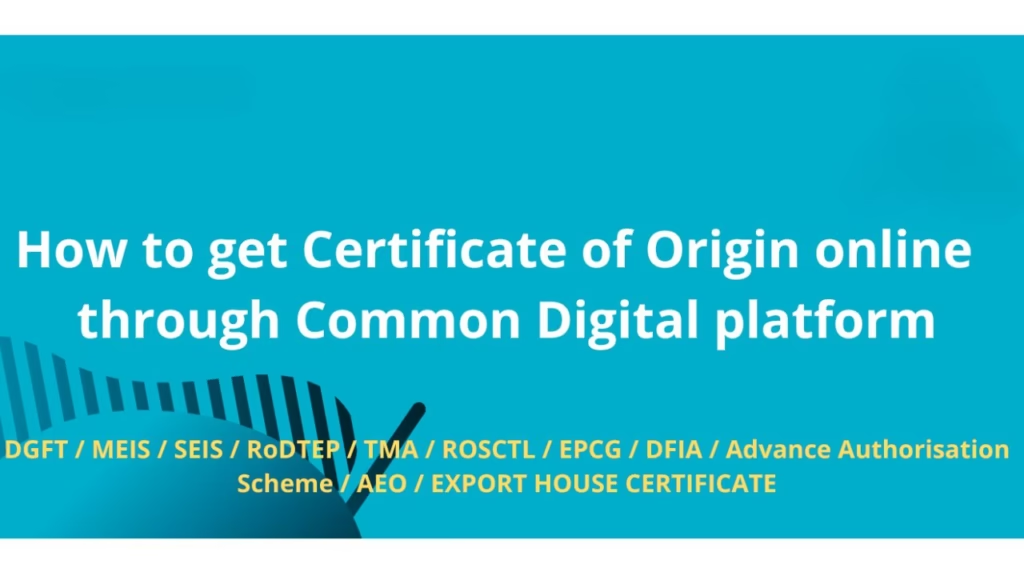
In India, many exporters now use the Common Digital Platform for Issuance of Certificate of Origin, integrated with DGFT.
This shift has reduced manual errors but increased responsibility because digital records are traceable.
Certificate of Origin India: How the System Actually Works
In India, the process has evolved significantly.
Earlier:
- manual forms
- physical stamps
- chamber visits
Now:
- CoO online through authorized portals
- digital signatures
- electronic verification by customs
This change has improved transparency, but also means:
Incorrect declarations are easier to detect.
Exporters can no longer “fix it later” casually.
Electronic Certificate of Origin (e-COO)
Modern trade increasingly relies on electronic certificate of origin.
Benefits include:
- faster issuance
- reduced fraud
- easier customs verification
However, exporters must ensure:
- destination country accepts e-COO
- platform is recognized
- digital signature is valid
Some African and Asian countries still require physical copies alongside digital records.
Why This Document Gets Scrutinized
- Customs officers rarely doubt invoices first.
- But they doubt origin claims first.
Why?
Because origin determines:
- duty
- trade policy
- legal compliance
That’s why CoO errors attract deeper inspection than many other documents.
Types of Certificate of Origin, Trade Agreements & Where Exporters Go Wrong
“Which type of CoO do I actually need for this shipment?”
From what I’ve know across export shipments, many shipments don’t get delayed because exporters forgot the CoO they get delayed because the wrong type was issued.
Customs does not correct this for you.
Banks do not fix this for you.
Buyers lose patience quickly when this happens.
Let’s break this down properly.
Broad Classification of Certificate of Origin
At a high level, CoO are divided into two main categories:
- Non Preferential Certificate of Origin
- Preferential Certificate of Origin
This distinction decides:
- duty benefits
- acceptance at destination
- scrutiny level
- and sometimes even whether goods can enter the country
Treating these two as interchangeable is one of the biggest exporter mistakes.
1. Non Preferential Certificate of Origin (NPCO)
A Non-Preferential CoO simply certifies where the goods originated from, without claiming any tariff concession and it does not grant reduced tariffs or benefits under Free Trade Agreements (FTAs)
When Non-Preferential CoO Is Used
This type is used when:
- no Free Trade Agreement (FTA) applies
- buyer does not request tariff benefits
- importing country only needs origin proof
- shipment is commercial but not duty exempt
In practice, this is the most commonly used CoO globally.
Who Issues Non-Preferential CoO
Usually issued by:
- Chamber of Commerce
- Export Promotion Council
- Authorized trade bodies
Real Export Example (Non-Preferential CoO)
An Indian exporter ships engineering goods to Africa.
- There is No FTA between India and destination country.
- Import duty applies regardless of origin.
- Customs only wants confirmation that goods are Indian made
A non-preferential CoO is sufficient.
Issuing a preferential certificate here would not help and may even confuse customs.
2. Preferential Certificate of Origin (PCO)
A Preferential CoO allows the importer to claim reduced or zero customs duty under a trade agreement.
This is where accuracy becomes critical.
Preferential CoO is only valid when:
- a trade agreement exists
- goods meet origin rules
- the correct format is used
If any of these fail, benefits are denied.
Common Preferential Certificates
EUR.1 Certificate
The EUR 1 certificate is used under trade agreements between:
- India and the European Union
- or EU partner countries
It allows buyers in the EU to claim preferential duty.
Common Mistakes Exporters Make
- Assuming all Indian goods qualify
- Not meeting value addition rules
- Incorrect HS code declaration
From real cases:
EU customs often accepts the shipment but denies duty benefits, making buyers unhappy.
USMCA Certificate
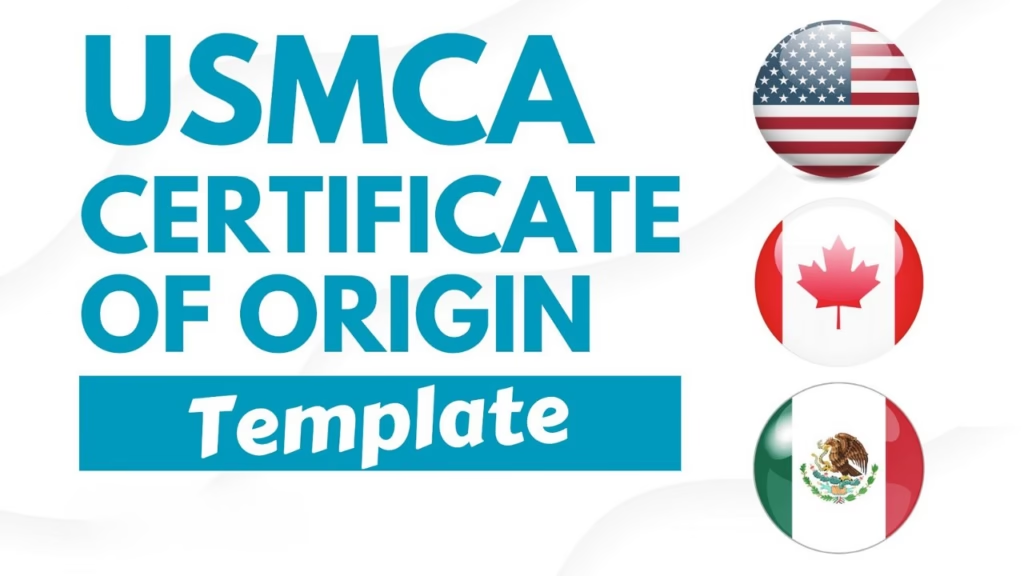
The USMCA certificate of origin applies to trade between:
- United States
- Mexico
- Canada
It replaced NAFTA.
Important reality:
- India is not a USMCA member.
So why does this matter?
Because Indian exporters often:
- supply components
- manufacture intermediate goods
- export via USMCA member supply chains
In such cases:
- manufacturer’s declarations
- supporting origin documents
matter greatly.
This is where manufacturer’s CoO becomes relevant.
Other Preferential Certificates
Depending on destination, exporters may encounter:
- ASEAN CoO formats
- SAFTA certificates
- Africa specific regional CoOs
Each has:
- unique format
- Origin criteria
- Issuing authority
Using the wrong format invalidates the benefit instantly.
Preferential vs Non-Preferential CoO
Here’s how exporters should think about it:
- Non-Preferential CoO → proves origin only
- Preferential CoO → proves origin and claims benefits
If you claim benefits without eligibility:
- customs rejects benefit
- buyer may demand compensation
- exporter credibility suffers
In real trade, buyers remember this mistake longer than price disputes.
Certificate of Origin Online & DGFT System
India now uses a Common Digital Platform for Issuance of Certificate of Origin, integrated with DGFT.
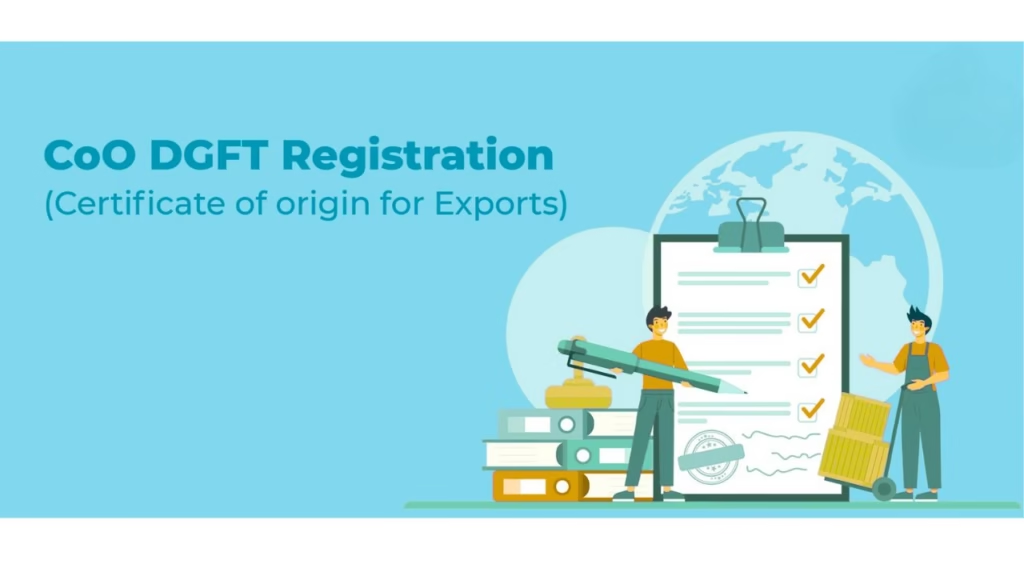
This system allows exporters to:
- apply online
- upload supporting documents
- issue digitally signed certificates
Searches like:
- certificate of origin online
- certificate of origin dgft
- certificate of origin login
exist because exporters actively use this system.
What Many Exporters Don’t Realize
Digital issuance does not mean:
- relaxed scrutiny
- faster correction after error
It actually means:
- permanent digital record
- traceable exporter history
- easier audit by customs
Once issued incorrectly, fixing it is harder than manual systems.
Manufacturer’s Certificate of Origin – When Is It Accepted?
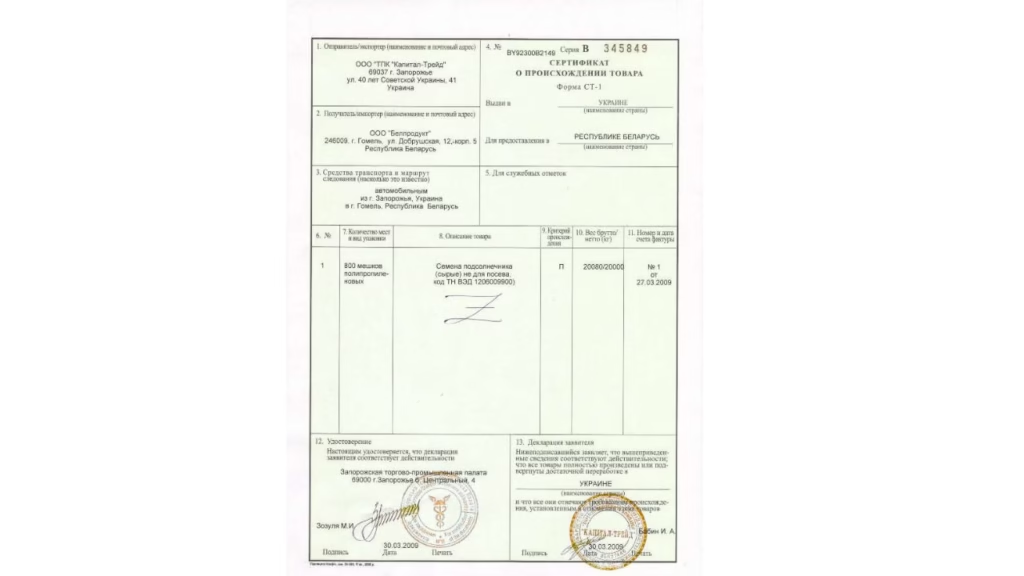
A manufacturer CoO is issued by the manufacturer declaring origin themselves.
It is different from a chamber issued CoO.
Accepted When:
- buyer explicitly allows it
- destination country regulations permit it
- transaction is between trusted parties
Not Accepted When:
- customs demands chamber issued CoO
- preferential benefits are claimed
- shipment is under LC requiring formal documents
Many exporters assume:
“If I manufacture it, I can certify it.”
That assumption has caused countless clearance delays.
This is why exporters confuse:
- manufacturer CoO
- chamber of commerce certificate of origin
They are not interchangeable
Important Note:
- A manufacturer certificate of origin is not universally accepted.
For regulated markets, customs usually demands:
- chamber of commerce certificate of origin
- or government authorized certificate
Using the wrong format can delay clearance even if information is correct.
Certificate of Origin Cost
The cost for a CoO varies but typically ranges from a few hundred Indian Rupees (₹200-₹600+) for basic issuance.
From Chambers of Commerce/Export Promotion Councils ₹1,500-₹3,500+ when using third-party documentation services, depending on the type (preferential vs. non-preferential).
Actual costs vary based on:
- issuing authority
- certificate type
- number of copies
Costs are usually low compared to:
- port demurrage
- duty penalties
- buyer claims
Trying to save money here is false economy.
Many exporters hesitate over:
- CoO cost
In reality:
- cost is minimal
- risk of wrong CoO is massive
Saving a few hundred rupees can lead to:
- duty loss for buyer
- payment disputes
- loss of repeat orders
Experienced exporters never compromise here.
Real Rejection Scenario: Wrong CoO Type
A real case seen multiple times:
- Exporter ships goods to EU
- Issues non-preferential CoO
- Buyer expected EUR.1
- Customs applies full duty
Buyer response:
- payment deduction
- future orders cancelled
The exporter technically “did nothing illegal,” but commercially, the damage was done.
Certificate of Origin vs Certificate of Originality (Clarification)
Some buyers casually say certificate of originality.
In formal trade:
- the correct term is certificate of origin
- “originality” has no legal standing
Using incorrect terminology in documents raises red flags during inspection.
Key Insight (Why Type Selection Matters)
From Knowledge:
Customs rarely rejects a shipment because the form looks bad.
They reject or penalize shipments because the wrong certificate type was used.
Understanding which CoO applies is more important than knowing how to fill it.
Step-by-Step Process, Common Errors, Bank & Buyer Scrutiny
By now, you understand what a CoO is and which type applies to which shipment.
This final part focuses on how exporters actually get it issued, where mistakes happen, and why banks and buyers scrutinize it more than exporters expect.
How to Get CoO for Export (Step-by-Step)
Let’s walk through the actual process
Step 1: Identify the Correct Certificate Type (Before Applying)
Before logging into any portal, ask:
- Is this preferential or non-preferential?
- Is the buyer claiming duty benefits?
- Is the shipment under LC, DP, or DA?
- Does the buyer’s country demand specific formats?
This decision comes before documentation, not after.
From what I’ve seen, exporters often apply first and think later which leads to cancellations and reissuance delays.
Step 2: Apply Through the Common Digital Platform (India)
India uses a Common Digital Platform for Issuance of Certificate of Origin, integrated with DGFT.
Basic Requirements:
- IEC
- GST details
- Invoice
- Packing list
- Product description
- HS code
- Manufacturing details (if applicable)
Once submitted, the application goes to:
- Chamber of Commerce
- Export Promotion Council
- Authorized issuing agency
Step 3: Upload Supporting Documents Carefully
This is where silent rejection risks begin.
Authorities check:
- product description vs invoice
- HS code consistency
- origin claim logic
- manufacturing vs trading mismatch
Even small inconsistencies trigger:
- clarification requests
- rejections
- delays
And delays here directly affect:
- shipment cut-off
- LC timelines
- buyer confidence
Step 4: Issuing of Electronic CoO
Most CoO today are:
- electronic certificate of origin
- digitally signed
- QR-code verifiable
This improves transparency.
Errors are permanently recorded.
There is no “informal correction” later.
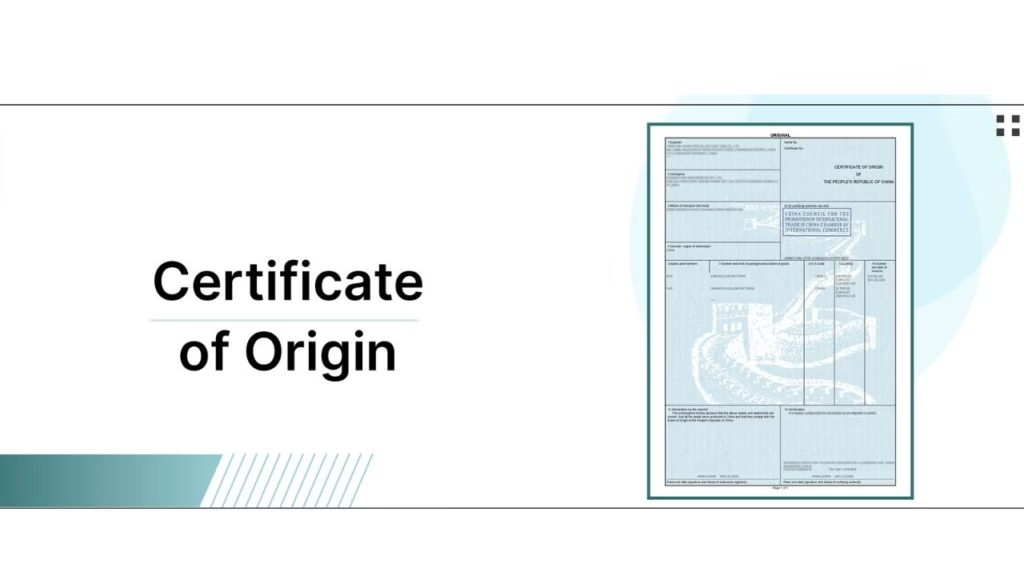
Certificate of Origin Format & Templates
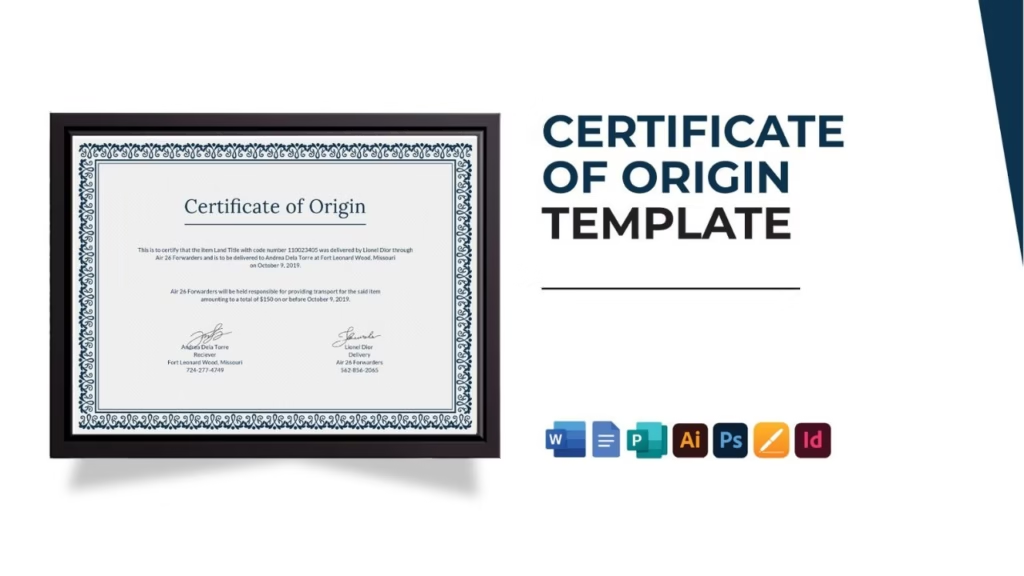
Many people search for:
- CoO template
- certification of origin template
- certificate of origin sample
They exist because exporters want clarity.
Templates vary by:
- Issuing authority
- country
- agreement
Using a generic template downloaded online is risky.
In real shipments:
- banks reject mismatched formats
- customs ignores non-recognized layouts
Always use:
- Issuing authority’s official format
- digitally generated certificates
Templates are useful for understanding structure, but they do not create legal validity.
What gives validity is:
- authorized issuance
- correct format
- proper declaration
- supporting documents
Using a template without authorization is one of the fastest ways to get a shipment questioned.
Certificate of Origin in Shipping & Banking
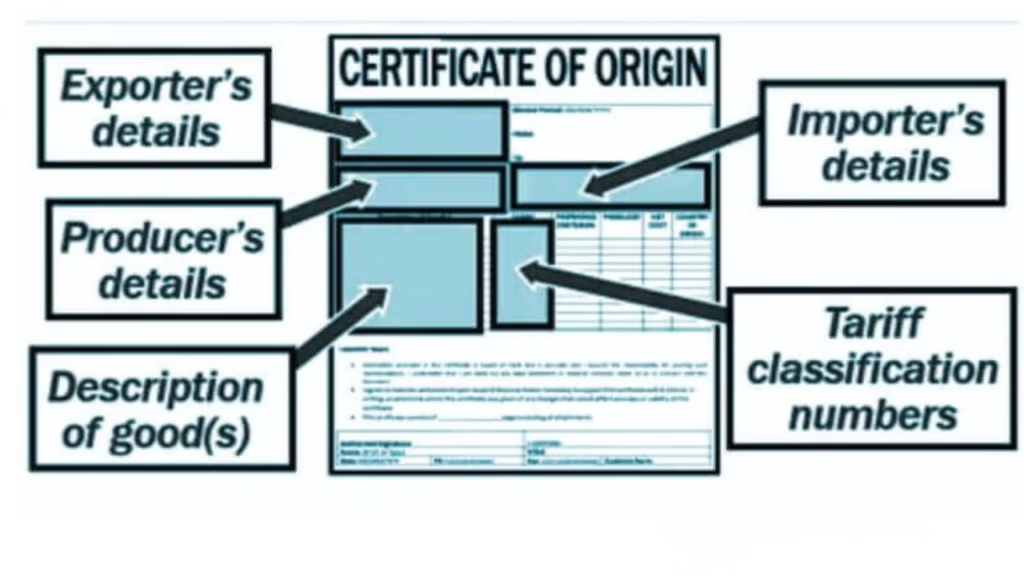
Many exporters think CoO is only for customs.
That’s incorrect.
Banks Check CoO When:
- shipment is under LC
- DP / DA documentary collection
- buyer raises discrepancy
Banks verify:
- country of origin statement
- consistency with invoice
- alignment with LC clauses
A mismatch leads to:
- document discrepancy
- delayed payment
- negotiation rejection
This is why certificate of origin in shipping is more than a customs form.
Real Bank Discrepancy Scenario (Seen Often)
An exporter ships under LC.
- Invoice says “Country of Origin: India”
- CoO says “Manufactured in India, packed in UAE”
- LC demands “Goods of Indian origin”
Result:
- bank marks discrepancy
- buyer delays acceptance
- exporter bears amendment cost
The shipment clears customs but payment gets stuck.
Certificate of Origin vs Title
Many people confuse:
“certificate of origin vs title”
Here’s the clear answer:
- CoO → declares origin of the goods
- Title document (like Bill of Lading) → declares ownership
The CoO does not give ownership rights.
It only confirms origin for trade and customs purposes.
Clarification:
- CoO → trade & customs document
- Certificate of Title → ownership document
They serve completely different purposes.
Using the wrong term in emails or documentation:
- signals inexperience
- creates buyer doubt
Professional exporters use precise terminology.
Country Specific CoO Sensitivities
European Union
- strict origin rules
- aggressive verification
- post clearance audits common
United States
- zero tolerance for misdeclaration
- FDA & customs cross-checks
- origin misstatement = penalties
Africa (Kenya, Uganda, Nigeria)
- CoO mandatory even without preference
- delays common if format mismatches
- customs rely heavily on CoO
Common CoO Mistakes
the most damaging mistakes are:
- selecting wrong CoO type
- incorrect HS code
- inconsistent origin wording
- claiming preference without eligibility
- mismatched invoice vs CoO
- assuming manufacturer certificate is enough
None of these are “big” individually but together they destroy credibility.
How Buyers Actually Use the CoO
Buyers don’t just file it.
They use it to:
- calculate landed cost
- claim duty benefits
- justify resale pricing
- satisfy local audits
If CoO causes them trouble, they quietly replace the exporter.
No arguments. No second chances.
Final Thoughts
Understanding CoO for export is not about memorizing definitions.
It’s about:
- choosing the correct type
- aligning it with buyer expectations
- ensuring consistency across documents
- protecting payment timelines
The CoO is not a form.
It is a trust document.
It tells customs:
- where goods come from
It tells banks:
- whether documents are reliable
It tells buyers:
- whether you understand global trade
Exporters who treat it casually never scale.
Whether you’re exporting spices, engineering goods, garments, or chemicals the CoO silently decides whether your shipment moves smoothly or becomes a problem.
What is a Certificate of Origin ?
A Certificate of Origin is an official document that confirms origin of goods from which country they are manufactured or produced.
Is Certificate of Origin mandatory for all export shipments?
Not always, but in most commercial exports it is required. Many countries demand a Certificate of Origin for customs clearance, duty calculation, or regulatory checks. Even when customs does not strictly require it, buyers or banks often do.
Who issues the Certificate of Origin in India?
In India, Certificate of Origin is issued by Chambers of Commerce, Export Promotion Councils , and agencies notified under the DGFT’s common digital platform for issuance of Certificate of Origin.
Differences between preferential and non preferential Certificate of Origin?
A non preferential Certificate of Origin only confirms the country of origin.
A preferential Certificate of Origin allows the importer to claim reduced or zero customs duty under a trade agreement, provided the goods meet origin criteria.
Is a manufacturer’s certificate of origin accepted in export?
A manufacturer’s certificate of origin is accepted only in limited cases where the buyer and destination country allow self-declaration. For most commercial exports, especially those involving banks or duty benefits, a chamber-issued Certificate of Origin is required.
About the Author
Hi, I’m Sriharsha Thota, founder of shxhub.in.
I focus on explaining export business topics in a practical, beginner friendly way, based on how Indian exports actually work on the real ground especially documentation, quality control, and buyer expectations.

telegram_line
ltrtmfzf http://www.ga7z6h44977w6etmpgv1a7g5y106l15zs.org/
[url=http://www.ga7z6h44977w6etmpgv1a7g5y106l15zs.org/]ultrtmfzf[/url]
altrtmfzf