
Exporting is often seen as a profitable venture, but beneath the surface lies a critical challenge that can make or even break the most promising deals cash flow. For exporters, the journey from receiving an order to getting paid is marked by financial gaps.
Money flows out for raw materials, production, and shipping long before it flows back in from buyers. This delay isn’t just an inconvenience it’s a survival issue.
Enter pre shipment and post shipment finance, the unsung heroes of export success. These financial tools are designed to plug the cash flow gaps at two crucial stages of the export cycle before goods leave your control and after they’ve been shipped but payment hasn’t arrived. Without them, even profitable exporters can find themselves struggling to stay financially stable.
In this blog, we’ll break down what pre shipment and post shipment finance are, why they’re essential, and how they work together to keep export businesses successful. Whether you’re a manufacturer or a trader, understanding these tools could be the key to turning export challenges into opportunities. Let’s dive in!
Table of Contents
Why Exporters Even Need Shipment Finance
Here’s the thing most beginners miss exports don’t fail because of lack of orders. They fail because of timing.
Money goes out first. Money comes in much later. That gap is where exporters bleed.
The cash flow gap in exports, explained simply
In exports, you spend cash weeks or months before you see a single dollar from the buyer. Raw materials, production, packaging, inland transport, port charges, freight. All paid upfront.
Two concrete examples:
- You receive a $50,000 export order today. You spend $35,000 over the next 30 days to produce and ship. Buyer pays you after 60 days from shipment. That’s a 90 day cash gap you must survive.
- You ship goods on 30 day credit terms. Documents reach the buyer in 10 days. Payment comes on day 45. Your suppliers wanted money on day 7.
This gap is not a small inconvenience. It’s the core reason export finance exists.
Why profit on paper still kills exporters in reality
A profitable export deal can still bankrupt you if you can’t fund it.
Two uncomfortable truths:
- Margin doesn’t pay salaries. Cash does. A 15 percent profit is useless if you can’t buy raw materials today.
- Growth makes it worse. More orders mean more upfront cash locked in transit, not more liquidity.
Examples:
- An exporter with ₹20 lakh in capital lands ₹1 crore worth of orders and collapses because production costs hit before any buyer payment arrives.
- A trader ships three consignments back to back. All are profitable. Cash is stuck overseas. He defaults on a domestic loan and loses credit access.
This is where export working capital becomes survival, not strategy.
Where pre shipment and post shipment finance fit in the export lifecycle
Shipment finance exists to plug two different holes, not one.
- Pre shipment finance covers everything before goods leave your control. Order received. Costs begin. Cash needed immediately.
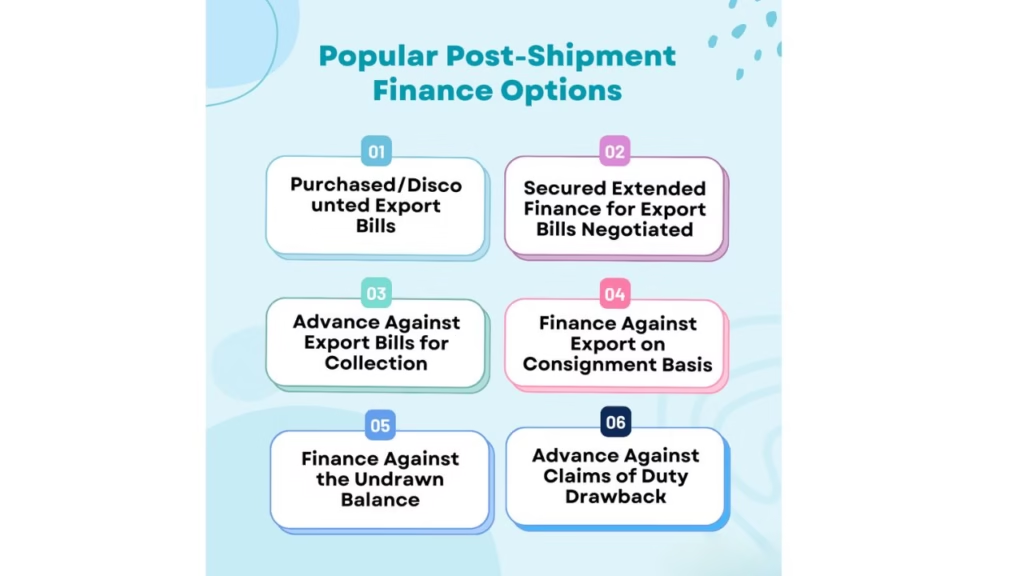
- Post shipment finance kicks in after shipment, when documents are created but payment hasn’t arrived yet.
Think of export finance like a relay:
- Pre shipment finance gets you to the port.
- Post shipment finance gets you to the payment.
Examples:
- A manufacturer uses pre shipment finance to buy raw materials, then post shipment finance to wait out a 60 day buyer credit period.
- A merchant exporter skips pre shipment finance because suppliers give credit, but relies heavily on post shipment finance to keep operations running while buyers delay payment.
What this really means is simple shipment finance is not optional padding. It’s the plumbing that keeps export businesses from choking on their own growth.
What Is Pre Shipment Finance?
(Before shipment. Before money comes in. Before most exporters panic.)
Pre Shipment Finance Meaning
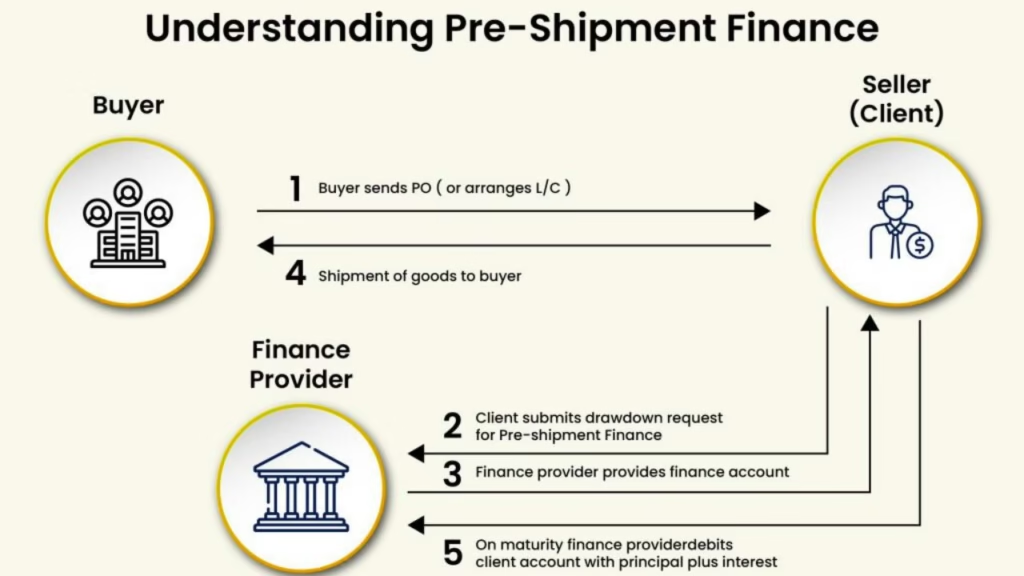
Pre shipment finance is money a bank gives you after you receive an export order but before you ship the goods. That’s it.
It starts the moment an export order or letter of credit is in hand and ends the moment the goods are shipped and export documents are created.
Banks in India usually call this packing credit because the loan exists to help you pack, prepare, and move goods toward shipment. Not to speculate. Not to sit idle. To execute a confirmed export order.
Two real world examples:
- You receive a confirmed export order today. You don’t have cash to buy raw material. The bank gives pre shipment finance so production can even begin.
- You have the order and the factory ready, but cash is tied up in another shipment. Packing credit bridges that gap.
What Expenses Does Pre Shipment Finance Cover?
Pre shipment finance is restricted money. Banks don’t hand this out for comfort. It’s for execution.
Typical uses include:
- Raw materials needed to manufacture export goods
- Manufacturing and processing costs, including labor and utilities
- Packing, labeling, and inland transportation up to the port or ICD(Inland Container Depot)
Two examples that clarify limits:
- Buying cotton for export garments? Valid use.
- Paying office rent or clearing old domestic debt? Not allowed.
This is why packing credit is monitored closely. Banks expect the money to physically turn into export goods.
Security and Basis of Pre Shipment Finance
Banks don’t lend on hope. They lend on proof.
Pre shipment finance is usually granted against:
- A confirmed export order
- A letter of credit (LC) issued by the buyer’s bank
- Stock or raw materials tied directly to the export order
Examples:
- An exporter with a strong LC may get higher packing credit limits at lower risk.
- An exporter without an LC may still get finance, but with stricter margins and scrutiny.
This is why you’ll hear terms like pre shipment finance against export order or packing credit against LC. The order itself is the backbone of the loan.
How Pre Shipment Finance Is Repaid
This part is often misunderstood by beginners.
Pre shipment finance is not repaid from your savings or profits. It’s repaid from export proceeds.
Here’s how it usually works:
- Goods are shipped.
- Export documents are generated.
- The pre shipment loan is either adjusted or converted into post shipment finance.
Two scenarios:
- The bank adjusts packing credit directly when buyer payment arrives.
- The bank rolls it over into post shipment finance until payment is realized.
If exports don’t happen, repayment becomes your personal problem. That’s the risk most people underestimate.
What Is Post Shipment Finance?
(After shipment. Before payment. Where exporters lose sleep.)
Post Shipment Finance Meaning
Post shipment finance is credit given after goods are shipped but before the buyer pays.
Once goods leave the port, you lose physical control but still haven’t received money. That delay is the danger zone.
Payment delays create risk because:
- Your capital is stuck overseas.
- You still have suppliers, salaries, and taxes to pay.
Examples:

- You ship on 60 day credit terms. The bank advances funds so operations don’t stop.
- Buyer delays payment. Without post shipment credit, your cash cycle collapses.
Documents Used for Post Shipment Finance
Post shipment finance is document driven.
Banks typically advance funds against:
- Commercial invoice
- Bill of Lading or Airway Bill
- Full set of shipping documents
Two important points:
- The stronger the documents, the easier the finance.
- Discrepancies delay funding and increase cost.
This is why exporters obsess over documentation accuracy after shipment.
How Much Finance Is Available Post Shipment?
Post shipment finance can go up to 100 percent of invoice value, but don’t assume you’ll always get that.
The actual amount depends on:
- Buyer credibility
- Country risk
- Payment terms
- Exporter track recor
Examples:
- A repeat buyer in a low risk country may get near full invoice funding.
- A new buyer in a high risk market may get only partial finance.
Repayment Timeline and Tenure
Post shipment finance tenure depends entirely on payment terms.
Typically:
- Short term finance for 30 to 60 day credit
- Medium term finance for longer buyer payment cycles
Repayment happens when:
- Buyer payment is realized
- Bank recovers funds directly from export proceeds
If payment delays stretch too far, interest keeps running. This is where profitable exporters quietly lose money.
Pre Shipment Finance vs Post Shipment Finance
(This comparison causes a lot of confusion. Let’s clear it up.)
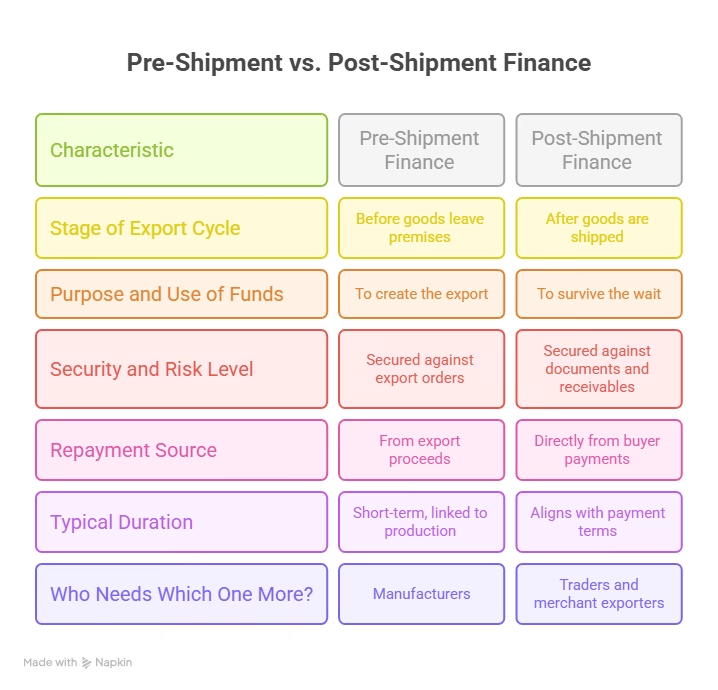
Stage of Export Cycle
- Pre shipment finance operates before goods leave your premises. Order received. Costs begin. Shipment hasn’t happened yet.
- Post shipment finance starts after goods are shipped but before payment is received.
Two simple contrasts:
- If goods are still in your factory or warehouse, you’re in pre shipment territory.
- If goods are already on the ship or plane and documents are issued, you’ve crossed into post-shipment finance.
This single distinction eliminates 80 percent of confusion around pre shipment vs post shipment finance.
Purpose and Use of Funds
The intent behind the money is completely different.
- Pre shipment finance exists to create the export. It funds production, procurement, packing, and movement to port.
- Post shipment finance exists to survive the wait. It funds operations while the buyer takes time to pay.
Examples:
- Buying steel to manufacture export components? Pre shipment finance.
- Paying salaries while a 60 day buyer credit runs? Post shipment finance.
Mix these up and banks will reject your application instantly.
Security and Risk Level
Risk shifts dramatically after shipment.
- Pre shipment finance is secured against export orders, letters of credit, and sometimes raw material stock. Banks still have indirect control.
- Post shipment finance is secured against documents and receivables. The goods are gone. Risk is higher.
Two consequences exporters feel:
- Pre shipment finance is usually easier to justify but tightly monitored.
- Post shipment finance depends heavily on buyer quality and country risk.
This is why banks examine documents far more than factories.
Repayment Source
This part is non negotiable.
- Pre shipment finance is repaid from export proceeds, usually after shipment or via conversion into post shipment finance.
- Post shipment finance is repaid directly from buyer payments when funds are realized.
Real world outcomes:
- If shipment fails, pre shipment finance turns into a liability on your balance sheet.
- If the buyer defaults, post shipment finance becomes your immediate problem.
Export finance always assumes exports actually happen.
Typical Duration
Time horizons tell you which tool you’re using.
- Pre shipment finance is short term and linked to production cycles. Think weeks, not months.
- Post shipment finance aligns with payment terms. 30, 60, sometimes 90 days depending on contract.
Examples:
- A fast moving trading order may need only 15 days of pre shipment credit.
- A government buyer overseas may require 90 days of post shipment finance.
Duration follows the deal, not the exporter’s preference.
Who Needs Which One More?
This depends on how your business is built.
- Manufacturers usually rely more on pre shipment finance because production costs hit early.
- Traders and merchant exporters lean heavily on post shipment finance because their risk sits in receivables.
Two patterns you’ll see repeatedly:
- A factory exporter struggles without packing credit.
- A high volume trader collapses without post shipment credit.
That’s the practical difference between pre shipment and post shipment finance.
Real Export Flow Example (Pre + Post Shipment Together)
Example 1: Manufacturer Exporter
An Indian textile manufacturer receives a confirmed export order from Europe.
Flow:
- Export order is received with 60 days payment terms.
- The exporter takes pre shipment finance (packing credit) to buy yarn, pay labor, and process fabric.
- Goods are packed, transported, and shipped.
- After shipment, the bank converts packing credit into post shipment finance against shipping documents.
- Buyer pays after 60 days. Bank adjusts the loan. Cycle closes.
Key takeaway:
- Without packing credit, production never starts.
- Without post shipment finance, working capital freezes after shipment.
Example 2: Trading Exporter
A merchant exporter sources electronics from multiple suppliers and sells to US buyers.
Flow:
- Suppliers offer short credit, so minimal pre shipment finance is used.
- Goods are consolidated and shipped to the US.
- Buyer payment terms are 45 days from shipment.
- Exporter takes post shipment finance against invoice and bill of lading.
- Payment arrives. Loan is settled.
Key takeaway:
- Production isn’t the limiting factor. Cash locked in unpaid invoices is.
- Post shipment finance is the backbone, not packing credit.
This is why trading exporters obsess over post-shipment credit limits.
Which Is Better: Pre Shipment or Post Shipment Finance?
Short answer neither is “better” on its own. That question itself is imperfect.
Pre shipment and post shipment finance solve different problems at different moments. Choosing one over the other based on preference instead of cash flow reality is how exporters get stuck.
Let’s break it down properly.
When Only Pre Shipment Finance Is Enough
Pre shipment finance alone works when payment arrives quickly after shipment or when the exporter has strong internal cash reserves.

Typical situations:
- You ship on advance payment or very short credit terms.
- Buyer pays immediately on document submission.
- You have surplus working capital and don’t need to wait on buyer funds.
Examples:
- An exporter ships against 100 percent advance. Packing credit funds production. Payment clears immediately after shipment. No post shipment finance needed.
- A small manufacturer with low volume uses pre shipment finance for raw materials, ships, gets paid within a week, and closes the cycle cleanly.
In these cases, post shipment finance would just add interest cost without real benefit.
When Post Shipment Finance Becomes Unavoidable
Post shipment finance becomes necessary the moment credit terms stretch beyond your cash comfort zone.
This usually happens when:
- Buyers demand 30, 60, or 90 day payment terms.
- You scale export volume faster than your capital base.
- You operate in competitive markets where credit is non negotiable.
Examples:
- A US buyer insists on 60 day credit. Without post shipment finance, the exporter funds two months of operations out of pocket.
- A trader ships multiple consignments back to back. Even if each deal is profitable, cash is locked until payments arrive.
At this point, skipping post shipment finance isn’t conservative. It’s Irresponsible.
Why Serious Exporters Usually Use Both
Experienced exporters don’t debate which is better. They design a flow.
Pre shipment finance gets goods ready.
Post shipment finance keeps the business alive until money comes in.
Two patterns you’ll notice in stable export businesses:
- Packing credit is used to manufacture or procure without cash stress.
- Post shipment finance smooths receivables so growth doesn’t strangle liquidity.
Examples:
- A manufacturer uses packing credit, then automatically converts it into post shipment finance after shipment.
- A merchant exporter limits pre shipment exposure but relies heavily on post shipment credit to fund scale.
What this really means is simple exporters who last don’t choose. They plan the order.
Common Mistakes Exporters Make With Shipment Finance
This is where deals quietly go wrong.
Treating Finance as Profit
Shipment finance is not income. It’s borrowed oxygen. Yet exporters routinely make decisions as if loan money belongs to them.
Examples:
- Using packing credit to fund unrelated expenses, then scrambling at shipment time.
- Expanding orders aggressively because bank finance feels like extra cash.
Interest doesn’t care about your expectations. It compounds regardless.
Ignoring Repayment Linkage
Both pre shipment and post shipment finance are self liquidating loans. They assume exports will generate repayment.
Common errors:
- Taking pre shipment finance before export readiness is confirmed.
- Assuming buyer payment will “work itself out” later.
Examples:
- Shipment gets delayed. Interest runs. Cash pressure builds.
- Buyer disputes documents. Payment stalls. Loan maturity hits anyway.
Banks don’t take that risk. You do.
Choosing the Wrong Stage
Many exporters apply for the wrong finance at the wrong time.
Typical mistakes:
- Asking for post shipment finance before shipment happens.
- Using pre shipment finance when suppliers already offer credit, increasing cost unnecessarily.
Examples:
- A trader with supplier credit still takes packing credit and pays avoidable interest.
- A manufacturer skips packing credit, drains cash, and then struggles to ship on time.
Shipment finance works only when aligned with the export cycle. Anything else is self caused damage.
Final Take: How Smart Exporters Use Shipment Finance
Smart exporters don’t ask which finance is better. They ask where cash will break next.
Here’s the clean decision framework that actually works in the real world.
The decision framework
- If you spend money before shipment, you need pre shipment finance. No debate.
- If you wait for buyer payment after shipment, you need post shipment finance.
- If you manufacture and sell on credit, you almost certainly need both, in sequence.
Pressure test your deal with two questions:
- When does cash leave my account?
- When does cash actually return?
The gap between those two dates tells you exactly which shipment finance you need. Guessing here is amateur behavior.
The short version exporters should remember
Shipment finance is not a growth hack. It’s damage control for time delays you cannot avoid in exports.
- Pre shipment finance helps you execute the order.
- Post shipment finance helps you survive the wait.
Exporters who last don’t chase finance aggressively or avoid it out of fear. They use it Intentionally, align it with the export cycle, and exit it as fast as possible.
That’s how shipment finance stays a tool, not a trap.
FAQs
Q1. Is pre shipment finance mandatory for all exporters?
No. It’s only necessary if you need cash before shipment. If suppliers give you credit or buyers pay in advance, pre-shipment finance adds cost without benefit. Manufacturers usually need it. Traders often don’t.
Q2. Can I take post shipment finance without using pre shipment finance?
Yes. Many exporters do. If goods are procured on supplier credit and shipment is completed using internal funds, post shipment finance can still be taken against invoices and shipping documents while waiting for buyer payment.
Q3. What happens if the export order is cancelled after taking pre shipment finance?
Then the loan stops being “export finance” and becomes your liability. Interest continues, and the bank will demand repayment or restructuring. This is why banks insist on confirmed orders or LCs before approving packing credit.
Q4. How do banks decide the interest rate on pre and post shipment finance?
Rates depend on factors like exporter track record, buyer country risk, tenure, and whether the finance is backed by a letter of credit. In India, these loans are often offered at concessional export credit rates, but only if conditions are met.
Q5. Is shipment finance available for US and other international exporters, or only in India?
Shipment finance is a global trade finance tool. Indian banks, US banks, and international lenders all offer versions of pre and post shipment finance. The structure is similar, but documentation standards, pricing, and risk assessment vary by country.
About the Author
Hi, I’m Sriharsha, founder of shxhub.in.
I focus on explaining import export business topics in a practical, beginner friendly way, based on how exports actually work on the real ground especially documentation, quality control, and buyer expectations.



1 thought on “Pre Shipment vs Post Shipment Finance: 7 Critical Differences Every Exporter Must Understand”