
Tea exports used to be simple to picture a producing country grows tea, a buyer somewhere else wants it, and a ship carries it across the ocean. That picture is outdated. Tea export today is a $7.22 billion global industry, but the money isn’t flowing to whoever grows the best leaf it’s flowing to whoever can prove, on paper, that their tea is safe, traceable, and compliant with rules that change from country to country.
This is the part most beginners miss. Tea export isn’t a country vs country business anymore. It’s a compliance and trust business, shaped by pesticide residue limits, food safety audits, certification requirements, and buyers who reject shipments over a mismatched label as readily as over bad quality.
In this guide, you’ll get the full picture how the global tea export process actually works step by step, which countries dominate exports and imports, the exact documents and certifications you need, what shipments really cost to move, the mistakes that sink new exporters, and where the industry is headed next.
Table of Contents
What Is Tea Export?
Tea export refers to the international trade of processed tea leaves and tea products from producing countries to consuming markets around the world. It connects major producers China, Kenya, India, Sri Lanka, Vietnam, and Indonesia with importers across Europe, North America, the Middle East, and beyond.
But tea export is more than loading tea into a container and shipping it out. Every shipment has to clear a layer of documentation, quality certifications, food safety regulations, and destination country import requirements before it’s allowed to reach a buyer’s warehouse.
A batch of tea can be perfectly good and still get rejected not because of the leaf, but because a certificate was missing, a label didn’t match local rules, or a lab report wasn’t filed in time. That’s the real business of tea export managing compliance as carefully as you manage the product itself.
Global Tea Export Market Overview
Market Size & Growth
The global tea export market was valued at approximately US$7.22 billion in 2025. Zoom out to the broader tea market including domestic consumption alongside exports and the number climbs to a projected USD 32.02 billion by 2034, growing at a compound annual growth rate (CAGR) of around 6.11%. Even with a slight dip from 2021 peak levels, the industry has stayed resilient, propped up by rising health awareness and growing demand for specialty and organic teas.
Top 10 Tea Exporting Countries (2025)
| Rank | Country | Export Value (2025) | Share of Global Exports |
| 1 | Mainland China | US$1.5 billion | 21.4% |
| 2 | Kenya | US$1.1 billion | 15.9% |
| 3 | India | US$930.4 million | 12.9% |
| 4 | Sri Lanka | US$700.1 million | 9.7% |
| 5 | Japan | US$484.2 million | 6.7% |
| 6 | Germany | US$285.3 million | 4% |
| 7 | Poland | US$278.2 million | 3.9% |
| 8 | UAE | US$171.7 million | 2.4% |
| 9 | United Kingdom | US$144.5 million | 2% |
| 10 | Vietnam | US$124.7 million | 1.7% |
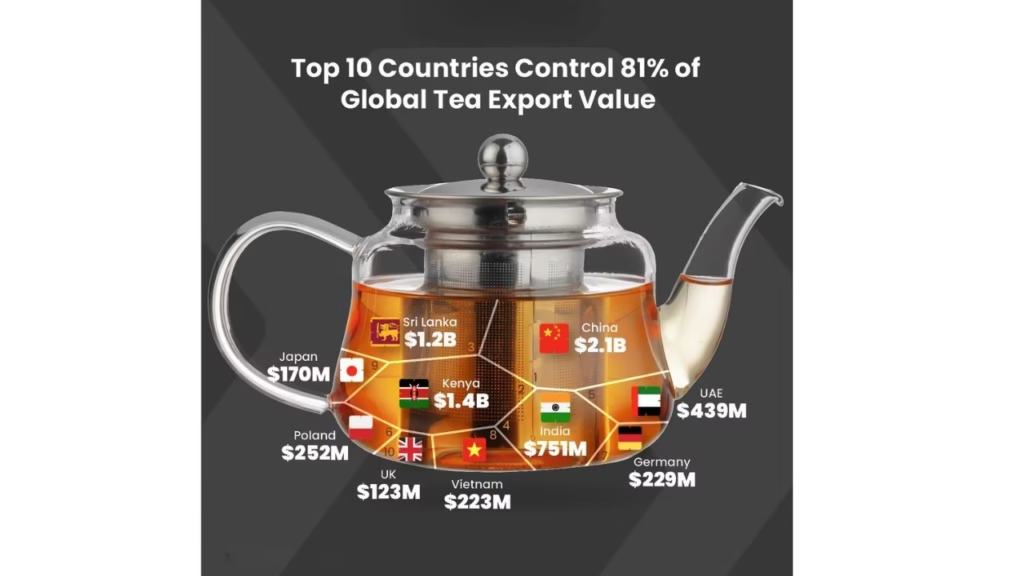
The top five exporters alone China, Kenya, India, Sri Lanka, and Japan account for nearly two thirds (66.6%) of all international tea sales. That concentration matters if you’re entering tea export today, you’re not just competing with your neighboring producer, you’re competing on a global stage dominated by five countries with decades of trade infrastructure behind them.
Average Export Price per Ton by Country (2025)
| Country | Avg. Export Price per Ton |
| Japan | $38,308 |
| France | $23,081 |
| Poland | $13,647 |
| Germany | $12,787 |
| Sri Lanka | $6,266 |
| China | $3,683 |
| India | $3,400 |
| Kenya | $2,643 |
| Vietnam | $1,715 |
Notice something important here the country with the highest export value isn’t the same as the country with the highest export price. Japan sits well down the value rankings but commands by far the highest price per ton nearly 11 times Kenya’s because it exports low volume, premium specialty teas rather than competing on bulk.
Vietnam is the mirror image high volume, rock bottom price per ton. The lesson for any exporter is simple volume leadership and value leadership are two different games, and you need to know which one you’re playing.
Why Tea Export Is No Longer Country Specific
Tea export used to be described as one country selling to another. That framing doesn’t hold up anymore. It’s now an interconnected global trade, shaped simultaneously by international regulations, shifting consumer preferences, sustainability expectations, and increasingly rigorous buyer audits.
On the producing side, countries like India, China, Kenya, Sri Lanka, Vietnam, and Indonesia dominate output. On the consuming side, the USA, UK, Germany, UAE, Russia, Japan, and Australia remain the largest importing markets. Every one of these importing markets enforces its own compliance rules and this mismatch is exactly where most new exporters run into trouble.
Beginners often assume tea export works like this:
Source tea → Pack → Ship → Get paid
In practice, that assumption is what causes shipment delays, payment disputes, and outright rejections at the port. Real export operations run on quality standards, certifications, origin proof, lab approvals, buyer specific documentation, and traceability records. Those factors not just the tea itself decide whether a shipment clears customs smoothly or turns into a liability sitting in a bonded warehouse.
In other words tea export today isn’t won or lost by which country grew the tea. It’s won or lost by how well an exporter manages compliance across borders.
India’s Position in Global Tea Exports
India remains one of the world’s top tier tea producers and exporters. Rankings from trade data sources like OEC (Observatory of Economic Complexity.) and FAO (Food and Agriculture Organization) consistently place India among the leading exporting nations globally, alongside China and Kenya a position it has held for decades through a combination of production scale and established trade relationships.
India’s tea industry draws its strength from a handful of key growing regions, each known for a distinct character:
- Assam — bold, malty black tea, the backbone of India’s export volume
- Darjeeling — delicate, muscatel flavored tea with GI-protected status
- Nilgiris — brisk, aromatic tea from South India
- Dooars & Terai — strong, full bodied teas from West Bengal’s foothill regions
India’s tea exports cross US$900 million annually, moving out to more than 25 importing countries. The largest buyers of Indian tea include the UAE, USA, Russia, Iraq, Iran, Germany, and the UK a mix that spans re-export hubs (UAE), premium retail markets (Germany, UK), and high volume traditional buyers (Russia, Iraq, Iran).
Indian tea carries real advantages internationally strong, recognizable flavor profiles, Geographical Indication (GI) value for regions like Darjeeling, and production capacity few countries can match.
But here’s the reality many beginners miss export success depends less on where the tea comes from and more on how well an exporter meets the buyer country’s standards. Origin builds interest compliance is what actually gets a shipment through customs and onto a buyer’s shelf.
Types of Tea Exported Worldwide
Not all tea is treated equally by import authorities. The type of tea you’re exporting determines which regulations, testing requirements, and shelf life rules apply.
Black Tea (Largest Share)
Black tea accounts for the majority of global tea exports, led by India, Kenya, and Sri Lanka. Its popularity with exporters isn’t just about taste black tea has a longer shelf life, is easier to store, and carries a lower microbial risk than more delicate teas, which makes it simpler to move through long shipping routes without spoilage issues.
Green Tea
Green tea exports are climbing fast, driven by health conscious buyers in the USA, Germany, Japan, and Australia. That growth comes with a catch, green tea faces tighter regulations on pesticide and residue levels than black tea, since it’s less processed and retains more of what was on the leaf at harvest.
White Tea
A premium, minimally processed category. Because it undergoes so little processing, white tea demands careful handling and quality control from the moment it’s picked.
Oolong Tea
Partially oxidized and especially popular across East Asian markets, oolong sits in a category of its own buyers here often expect artisanal level quality consistency.
Herbal & Specialty Infusions
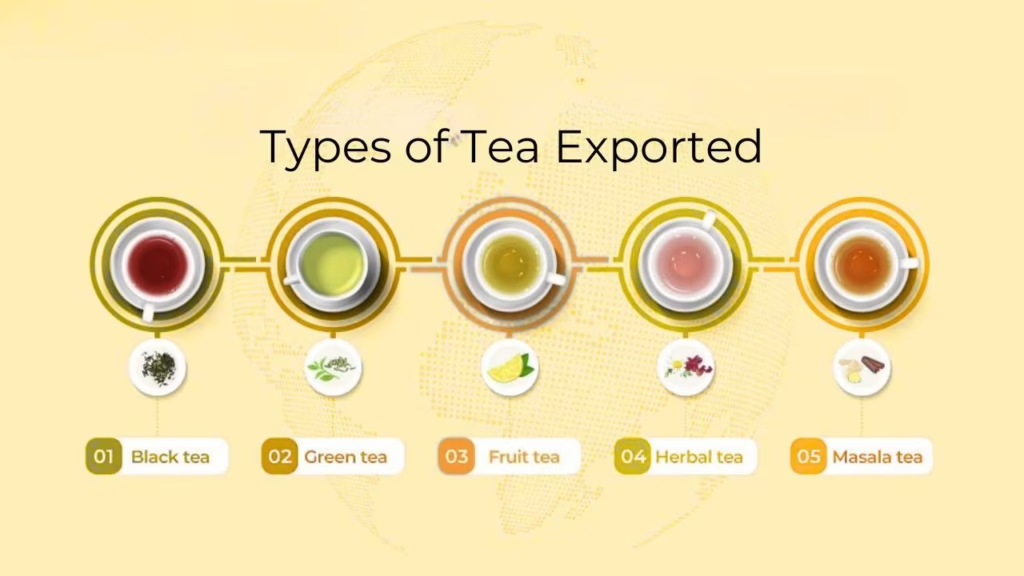
This includes masala tea, fruit infused blends, and herbal mixes that technically aren’t “tea” at all in the botanical sense. These products go through ingredient compliance evaluations that are especially strict in EU and US markets, since each added ingredient has to clear its own regulatory approval.
Instant & Ready to Drink (RTD) Tea
The fastest growing category, particularly in North America. RTD and instant tea products require full food safety approvals, additive compliance, and precise label accuracy this is a highly regulated segment, closer to packaged food and beverage rules than to traditional agricultural export.
The Tea Export Process: Step by Step
Exporting tea isn’t a single transaction it’s a sequence of steps, and skipping or rushing any one of them is usually where shipments go wrong.
Step 1 — Market Research & Planning
Before sourcing a single kilo of tea, identify your target markets, understand what those buyers actually prefer (bulk black tea vs. specialty organic, for instance), and study who you’re competing against in that market. Different countries have wildly different appetites the USA leans toward RTD and specialty teas, while Middle Eastern markets favor traditional bulk black tea. Planning around the wrong market wastes time and money before you’ve shipped anything.
Step 2 — Business & Legal Setup
This is the paperwork foundation every exporter needs before they’re legally allowed to trade:
- Company Registration (Proprietorship, Partnership, Pvt. Ltd., etc.)
- PAN Card (for Indian exporters)
- GST Certificate
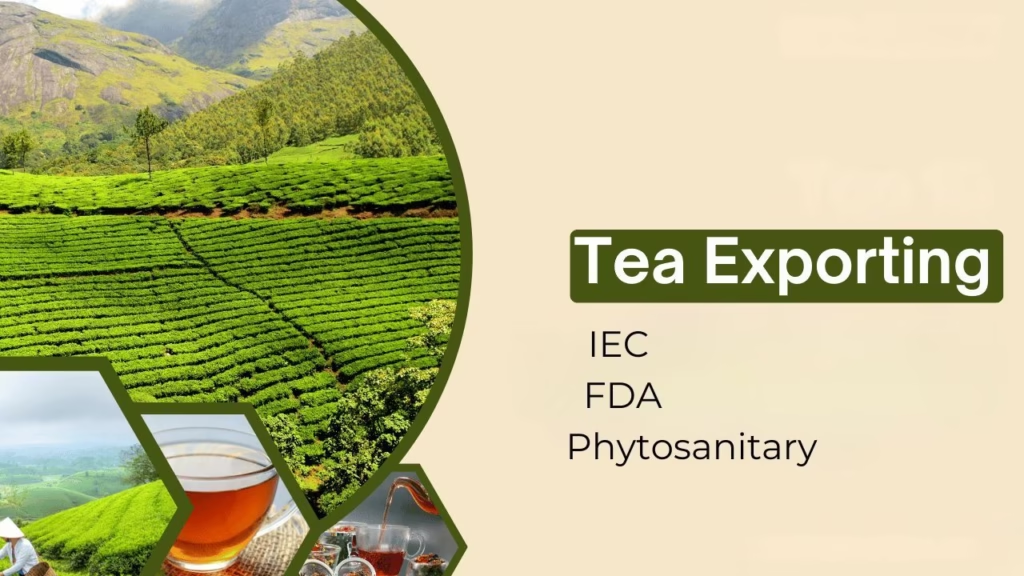
- Importer Exporter Code (IEC) from DGFT — mandatory for all exports out of India
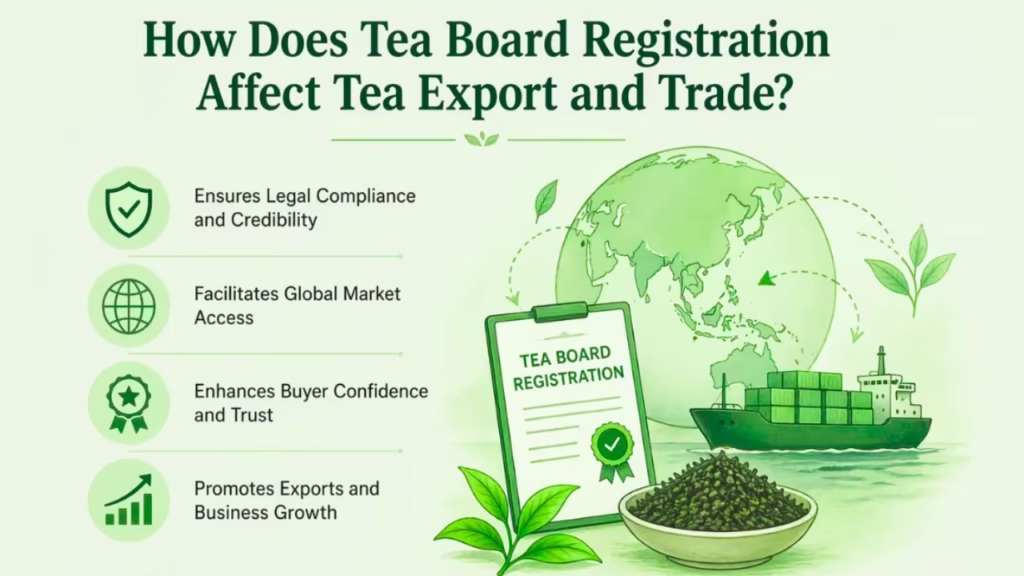
- Tea Board Registration (RCMC) — Registration Cum Membership Certificate
- FSSAI Registration — for food safety compliance
Without these in place, you can’t legally export tea from India, and equivalent registrations apply in other producing countries.
Step 3 — Quality Assurance & Certifications
Before a shipment can move, it typically needs:
- Certificate of Analysis from a certified lab
- SGS Quality Certificate (international inspection)
- Phytosanitary Certificate from the Plant Quarantine Department
- Organic / Fair Trade / Rainforest Alliance Certifications, where applicable
These aren’t optional extras for many buyers and countries, they’re the difference between a shipment being accepted or bounced back at the port.
Step 4 — Packaging & Labeling
Tea is sensitive to moisture, so packaging has to be durable and moisture proof. Beyond protecting the product, labeling has to comply with the destination country’s laws ingredients, weight, origin, and allergens all need to be declared correctly. Batch numbers and expiry dates should be included on every unit, since this information becomes critical if a shipment is ever recalled or investigated.
Step 5 — Documentation for Shipment
Every shipment needs a full set of trade documents commercial invoice, packing list, bill of lading, certificate of origin, phytosanitary certificate, export license, and letter of credit. This is such a detailed and error prone stage that it gets its own full breakdown in the next section.
Step 6 — Shipping & Logistics
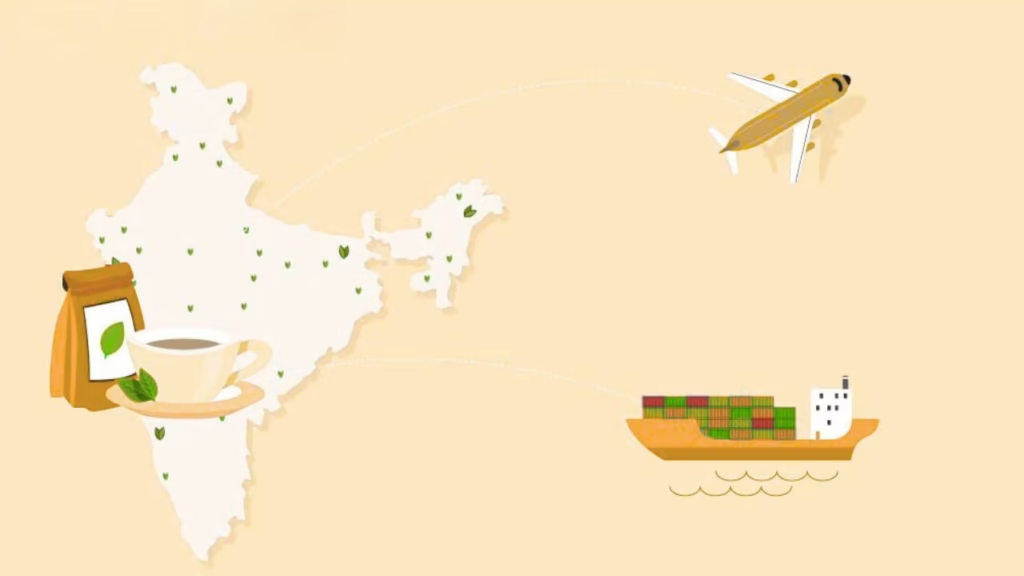
Choose sea or air freight based on shipment volume and urgency sea freight dominates bulk tea exports due to cost efficiency, while air freight is reserved for smaller, time sensitive, or high value specialty shipments. Partnering with a reliable freight forwarder matters here, and container conditions temperature and humidity control specifically need to be right, since tea can degrade quickly in a poorly ventilated or humid container over a multi week sea voyage.
Step 7 — Destination Country Compliance
Even after a shipment leaves port, it still has to clear the importing country’s own rules:
- USA — FDA registration, Prior Notice filing, ISF filing, and compliance with EPA pesticide limits
- EU — Maximum Residue Levels (MRLs) and, where relevant, EU NOP organic certification
- Middle East — Halal certification (for flavored or blended teas) and Arabic labeling requirements
Missing any one of these destination side requirements can hold a shipment at customs indefinitely, regardless of how clean the export side paperwork was.
Tea Export Documentation: The Complete List
Documentation is where most exporters lose control of a shipment not because paperwork is missing, but because it’s incorrect, inconsistent, or misunderstood. These documents get checked by customs, shipping lines, banks, buyers, and destination food authorities, and even a small mismatch between documents can delay clearance for days or weeks.
| Document | Issued By | Purpose |
| Commercial Invoice | Exporter | Transaction details (price, quantity, terms) |
| Packing List | Exporter | Itemized contents, weights, dimensions |
| Bill of Lading / Airway Bill | Shipping Line / Airline | Transport contract and cargo receipt |
| Certificate of Origin | Chamber of Commerce | Confirms country of manufacture |
| Phytosanitary Certificate | Plant Quarantine Dept. | Confirms pest-free, plant health compliance |
| Export License | Tea Board of India | Legal authorization to export tea |
| Letter of Credit | Importer’s Bank | Payment security |
Commercial Invoice
This is the primary financial document, and it needs to clearly state exporter and importer details, tea description (black tea, green tea, specialty tea, etc.), HS code, quantity and unit price, Incoterms (FOB, CIF, etc.), and country of origin. A common beginner mistake here is using vague, generic product descriptions that alone raises red flags during customs checks and can trigger a manual inspection.
Packing List
Where the commercial invoice explains cost, the packing list explains how the tea is physically packed number of bags or cartons, net and gross weight, packaging type, and batch or lot numbers. In real inspections, customs officers physically match this document against the cargo itself, so any discrepancy between what’s declared and what’s in the container causes immediate delays.
Shipping Bill / Export Declaration
Filed with customs in the exporting country, this document is where errors in HS code, product description, or FOB value tend to surface. Even small mistakes here can trigger reassessment or hold up the entire export clearance process.
Bill of Lading (or Airway Bill)
This document controls cargo ownership, and it’s worth learning its rules before you need them the hard way, never release the original Bill of Lading without payment security in place, make sure the consignee name matches the Letter of Credit or contract exactly, and double check the notify party details. Since sea freight is the dominant mode for tea export worldwide, Bill of Lading accuracy matters enormously.
Certificate of Origin — Country by Country
This document proves where the tea actually originates, and in many markets it unlocks duty benefits but only when it’s correctly issued by an authorized body. The issuing authority varies significantly by country:
- India — issued by authorized Chambers of Commerce or online government portals such as DGFT for specific trade arrangements. Exporters typically apply digitally, submit invoice and packing details, and receive a physical or e-certificate depending on the destination country’s requirements.
- Sri Lanka — issued by the National Chamber of Commerce of Sri Lanka and the Ceylon Tea Board for product specific verification. Shipments are closely monitored since “Ceylon Tea” is a protected geographical indication in many markets.
- China — issued by the China Council for the Promotion of International Trade (CCPIT) or local customs-authorized trade bodies. Electronic certificates are common for shipments to the EU and select Asian markets.
- Vietnam — issued by the Vietnam Chamber of Commerce and Industry (VCCI) or regional trade offices authorized by the Ministry of Industry and Trade. Vietnamese exporters frequently use COO forms tied to ASEAN trade agreements.
- Kenya — issued by the Kenya National Chamber of Commerce & Industry (KNCCI) and the Tea Board of Kenya. As one of the world’s largest tea exporters, COO accuracy is essential for Kenya’s EU and UK-bound shipments.
- Uganda — issued by the Uganda National Chamber of Commerce and Industry and authorized government trade offices. Most Ugandan tea exports require COO validation for African and Middle Eastern markets.
- Brazil — issued by the Federation of Industries (FIESP and regional bodies) or authorized export chambers linked to the Ministry of Development. Digital COOs are increasingly common for shipments to the Americas and Europe.
- Japan — issued by the Japan Chamber of Commerce and Industry or government authorized trade documentation centers. Accuracy here is critical, since Japanese buyers and customs authorities maintain particularly strict documentation standards.
Phytosanitary Certificate
Required for certain EU shipments, as well as Australia and Japan, this certificate confirms the tea is free from pests and diseases a plant health check rather than a food safety one.
Laboratory Test Reports
For regulated markets, buyers expect pesticide residue reports, microbial analysis, and heavy metal testing where applicable. Professional exporters test before shipment, not after a rejection testing early is cheaper than losing an entire container at the destination port.
9 Critical Quality Standards for Tea Export
This is where tea export becomes serious business. Meeting these nine standards consistently is what separates exporters who build long term buyer relationships from those who lose shipments to rejection.
1. Pesticide Residue Compliance (MRLs)
Maximum Residue Limits (MRLs) differ significantly from one country to another. The EU enforces extremely strict thresholds, the USA regulates residues through the FDA, and Japan runs some of the toughest pesticide screening in the world. A tea batch that clears customs comfortably in one market can be rejected outright in another which is why exporters need to know their buyer’s country limits before shipping, not after.
2. Microbial & Contaminant Control
Import authorities routinely test incoming tea for Salmonella, E. coli, heavy metals, and mold. Poor storage conditions or humid packing environments can cause a batch to fail these tests even before it leaves the warehouse contamination risk starts long before the shipment reaches a port.
3. Moisture Content Control
Excess moisture is one of the most common and most avoidable exporter mistakes. It leads to mold formation, taste deterioration, and, in the worst cases, outright shipment rejection. Moisture control has to be managed from processing through to final packaging, since even properly dried tea can reabsorb moisture if packaging fails during transit.
4. Quality Grading & Consistency
Buyers expect uniform leaf size, a stable flavor profile, and consistency from one batch to the next. Inconsistent grading is one of the fastest ways to break a long term supply contract buyers who build a product around your tea’s flavor profile won’t tolerate it shifting shipment to shipment.
5. Packaging Integrity
Export packaging needs to prevent moisture entry, meet food grade standards, and comply with the destination country’s labeling laws. Cheap or substandard packaging causes silent losses during transit damage that isn’t visible until the container is opened at the other end, by which point the cost has already been locked in.
6. Traceability & Source Disclosure
Large buyers increasingly demand estate or supplier details, batch numbers, and processing dates. This level of traceability is becoming mandatory in EU markets specifically, as regulators push for full supply chain visibility on food imports.
7. Adulteration Checks
Artificial color or flavor detection in a shipment leads to permanent buyer rejection this is one violation that tends to end a business relationship outright rather than just delaying a single shipment.
8. Shelf Life Validation
This is especially critical for green tea and herbal blends, which degrade faster than black tea. Incorrect shelf life claims on packaging can trigger compliance notices from destination food safety authorities.
9. Lab Testing Before Shipment
Professional exporters test before dispatch, not after rejection. Pre-shipment lab testing costs money, but it’s a fraction of the cost of a rejected container, a destroyed shipment, or a damaged buyer relationship.
Mandatory Certifications by Country
Certification requirements aren’t universal they’re set by each destination country, and missing even one document can delay customs clearance significantly.
India (Origin Compliance)
- Tea Board of India registration
- Importer Exporter Code (IEC)
- FSSAI license
United States
- FDA facility registration
- Prior Notice filing
- FDA compliant labeling
EU (Germany, France, Netherlands)
- Phytosanitary compliance
- Strict pesticide and contaminant testing
- Traceability documentation
United Kingdom
- Food safety compliance
- Clear origin declaration
Australia & Japan
- High pesticide scrutiny
- Full ingredient transparency
The pattern across all of these markets is consistent certifications aren’t just a formality to collect once they’re the mechanism destination countries use to enforce their own food safety and origin standards on every incoming shipment. An exporter selling into five different markets effectively needs to satisfy five different regulatory playbooks simultaneously, not one universal standard.
What Global Buyers Actually Look For
Buyers don’t just look at price. Once an exporter clears the basic quality bar, the decision to keep buying from them or move on comes down to a different set of factors supplier reliability, compliance history, response speed, documentation accuracy, and sample consistency.
Many first time exporters lose buyers not because their tea was bad, but because of avoidable process failures. Lab reports were incomplete. Labels didn’t match destination regulations. Or the bulk shipment simply didn’t match the quality of the sample that won the order in the first place. Each of these is a trust failure, and in tea export, trust is what keeps a buyer coming back season after season.
Country Wise Buyer Expectations
| Market | What Buyers Prioritize |
| USA | FDA compliance, precise labeling, zero tolerance for mislabeling |
| EU | Pesticide/MRL limits, full traceability, credible sustainability claims |
| UK | Food safety compliance, long-term reliability over lowest price |
| Middle East (UAE, Saudi Arabia) | Clean packaging, Halal compliance for flavored teas, competitive pricing |
| Australia & Japan | Extremely low tolerance for chemical residues, premium pricing but fast rejection |
United States buyers focus heavily on FDA registration, Prior Notice filing, and ingredient transparency. There’s essentially zero tolerance for mislabeling even experienced exporters run into trouble here if their labels don’t precisely match what US buyers and regulators require.
European Union buyers (Germany, France, Netherlands) are strict about pesticide residue limits, traceability, and sustainability claims. A single failed shipment can affect an exporter’s standing across the entire EU, since compliance failures tend to get flagged in shared regulatory databases.
United Kingdom buyers emphasize food safety compliance and clear country of origin labeling. They tend to value long term supplier reliability over squeezing out the lowest price.
Middle East buyers (UAE, Saudi Arabia) expect clean packaging, Halal compliance for flavored teas, and competitive pricing. The UAE in particular functions as a major re-export hub, so shipments passing through often need to satisfy re-export documentation on top of import requirements.
Australia and Japan are extremely sensitive to chemical residues and documentation precision. Both markets pay premium prices but they reject just as fast when standards aren’t met.
Common Real World Tea Export Rejection Scenarios
Scenario 1: EU Pesticide Alert A shipment clears Indian customs without issue, gets loaded, and makes the multi week sea voyage to Europe only to fail EU residue testing on arrival. The result is, the shipment is destroyed at the exporter’s cost, with nothing recoverable from the sale.
Scenario 2: FDA Label Violation (USA) A shipment reaches a US port with ingredients not properly declared on the label. US Customs and the FDA issue an import alert, holding the shipment and potentially flagging the exporter for increased scrutiny on future shipments a reputational cost that outlasts the single rejected container.
Scenario 3: Moisture Damage in Transit Packaging fails to hold up during a long sea voyage, and the tea absorbs moisture inside the container. By the time it reaches the buyer, quality has visibly degraded. The buyer either demands a discount to accept the damaged shipment or rejects it outright either way, the exporter absorbs the loss.
These aren’t rare edge cases. They’re the exact failure points that repeat across the industry, and every one of them traces back to a step in the process testing, labeling, or packaging that was rushed or skipped.
Is Tea Export Profitable? Margin Reality vs. Expectation
Beginners often ask a version of the same question: “Is tea export actually profitable?”
The honest answer is yes but only after you learn to control risk. Tea export isn’t a business where margins show up automatically because you’re selling a product people want. It’s a business where margins show up once you’ve stopped losing money to rejections, delays, and preventable mistakes.
What actually determines profit isn’t the price you negotiate on a single deal it’s a combination of factors that compound over time quality consistency, rejection avoidance, buyer trust, logistics optimization, and the shift from one off sales to long term contracts. A single profitable shipment means little if the next one gets rejected at customs. Sustainable profit comes from stacking successful shipments back to back.
This is why initial shipments almost always run on thin margins. New exporters absorb lab testing costs while they’re still figuring out which tests matter for which markets. They upgrade packaging after learning often the hard way what survives a six week sea voyage and what doesn’t.
And there’s a genuine learning curve around compliance paperwork that costs time and occasionally money before it becomes routine. None of this is a sign of doing something wrong it’s the standard cost of entry into a regulated global trade.
Experienced exporters improve their margins over time in a few consistent ways reducing rejections and errors so fewer shipments are written off, negotiating better freight rates once volume and relationships are established, and most importantly supplying repeat buyers who no longer need to be won over from scratch each season. Repeat business is where tea export actually becomes profitable, because the cost of acquiring and proving yourself to a buyer only has to be paid once.
Common Mistakes New Tea Exporters Make
1. Assuming All Markets Follow the Same Rules A shipment that’s perfectly acceptable in one country can fail outright in another. Treating pesticide limits, labeling laws, or certification requirements as universal is one of the fastest ways to lose a shipment.
2. Skipping Lab Testing to Save Cost Skipping pre-shipment testing saves money upfront, but it almost always costs more later either through a rejected container, a destroyed shipment, or a damaged buyer relationship that’s far more expensive to repair than the test would have been to run.
3. Weak Packaging Decisions Moisture damage is silent. It doesn’t show up until the container is opened at the destination, and by then, the financial loss is already locked in.
4. Overpromising to Buyers Committing to quality, timelines, or volumes you can’t consistently deliver destroys credibility fast and in tea export, reputation travels between buyers in the same market.
5. Treating Tea Export as a One Time Transaction Tea export is fundamentally a relationship business, not a series of isolated deals. Exporters who chase single transactions without building toward repeat buyers end up starting from zero credibility with every new shipment.
How Serious Exporters Build Long Term Success
The exporters who last in this business tend to operate very differently from those chasing quick wins. They specialize in a limited set of product lines rather than trying to offer everything to everyone this lets them master the specific compliance requirements, quality benchmarks, and buyer expectations for those products instead of spreading themselves thin.
They take the time to understand their buyer markets deeply, learning not just the regulations but the preferences and purchasing rhythms of the businesses they sell to. They also maintain thorough records lab reports, shipment histories, certifications so that compliance documentation is never a scramble.
They communicate transparently with buyers, flagging problems early rather than letting them surface as a rejected shipment. And critically, they treat failures as information rather than setbacks to bury; a rejected shipment becomes the reason a packaging process gets fixed for good.
Over time, this approach compounds into real outcomes stable, repeatable demand instead of one-off orders better pricing, since proven reliability lets exporters negotiate from a position of trust rather than discounting to win business and steadily lower rejection rates, because each mistake gets corrected instead of repeated.
Tea Export Worldwide: Future Trends
The tea export industry is shifting in several directions at once, and exporters who move with these trends early tend to gain a real advantage over those who wait.
1. Health & Wellness Focus Consumers increasingly view tea as a functional beverage rather than just a drink valued for antioxidants, polyphenols, and adaptogens. This is reshaping demand toward green tea, herbal blends, and functional tea products.
2. Premium & Specialty Teas Demand for organic, single origin, and artisanal teas white, oolong, herbal is rising steadily, especially across the US and European markets, where buyers are willing to pay a premium for provenance and craft.
3. Cold Brew & Ready to Drink (RTD) Iced teas, cold brew varieties, and flavored RTD products are gaining serious traction, particularly in North America, where convenience and flavor variety are driving category growth faster than traditional hot tea.
4. Sustainability & Ethical Sourcing Certifications like Fair Trade, Rainforest Alliance, and organic labeling are becoming key differentiators rather than nice to haves buyers increasingly use them as a shortlisting filter before they even evaluate price or flavor.
5. E-commerce & Direct to Consumer Online platforms are letting exporters reach global buyers directly, without relying entirely on traditional distributor networks opening up new, smaller volume but higher margin sales channels.
6. Rising Digital Traceability Requirements Batch level and estate level traceability is moving from a competitive advantage to a baseline expectation, particularly as EU regulations continue to tighten around supply chain transparency.
7. Increased Food-Safety Scrutiny Global food safety laws are tightening across the board, driven by consumer health awareness, past cross border contamination incidents, and ongoing regulatory harmonization efforts. Tea export is steadily moving from a commodity trade toward a compliance driven trade and that shift shows no signs of slowing down.
Final Thoughts
Tea export worldwide is no longer a simple agricultural trade. It’s a compliance based, quality sensitive, relationship based business, where the exporters who understand global quality standards, country specific regulations, and buyer expectations are the ones who build something that lasts.
Those who chase shortcuts skipping lab tests, ignoring destination country rules, treating each sale as a one off tend to quit early, worn down by rejected shipments and burned buyer relationships. But when managed professionally, tea export offers long-term stability, genuine global reach, and real room for scalable growth.
If you’re preparing your first shipment, the smartest starting point isn’t finding a buyer it’s getting your documentation, certifications, and quality testing in order first. Everything else follows from there.
Frequently Asked Questions
Is India the largest tea exporter in the world?
India is consistently ranked among the top tea exporters globally, but it isn’t the single largest by export value. Based on 2025 figures, Mainland China leads at roughly US$1.5 billion in export value, followed by Kenya at US$1.1 billion, with India in third place at around US$930.4 million. India does, however, remain one of the largest tea producers in the world, and its exports reach more than 25 countries.
Which are the largest tea importing countries globally?
The biggest tea importing markets include the USA, UK, Germany, UAE, Russia, Japan, and Australia. Each of these markets has its own regulatory framework, which is why exporters can’t treat them as interchangeable a shipment compliant for one may not clear customs in another.
Is lab testing mandatory for tea export?
For most regulated markets including the USA, EU, Japan, and Australia some form of lab testing is effectively mandatory, even if not always legally required upfront, because buyers and customs authorities routinely test for pesticide residues, microbial contamination, and heavy metals. Professional exporters test before shipment rather than risk a rejection after the tea has already traveled across the ocean.
Can beginners start a tea export business?
Yes. Tea export is genuinely open to new entrants, but success depends on getting the fundamentals right from day one proper business registration (IEC, Tea Board RCMC, FSSAI), understanding target market regulations, and building in quality testing from the very first shipment rather than treating it as an afterthought.
Why do tea shipments get rejected?
The most common causes are pesticide residue levels exceeding destination-country limits, labeling that doesn’t match local regulations, moisture damage from inadequate packaging, and documentation errors like mismatched Bill of Lading details or incomplete Certificates of Origin.
What is the minimum investment needed to start tea export?
There’s no fixed figure, since it depends heavily on order volume, target market, and whether you’re sourcing tea directly or through an established supplier. That said, beyond product cost, beginners should budget specifically for registration and licensing fees, lab testing, compliant packaging, and freight costs that are easy to underestimate when planning a first shipment.
Which certification is most important for tea export?
It depends entirely on the destination market rather than having one universal answer. FDA compliance is non-negotiable for the USA, phytosanitary and MRL compliance matter most for the EU, and Tea Board registration plus FSSAI licensing are foundational for exporting out of India in the first place regardless of destination.
About the Author
Hi, I’m SriHarsha, founder of shxhub.in.
I focus on explaining import export business topics in a practical, beginner friendly way, based on how exports actually work on the real ground especially documentation, quality control, and buyer expectations.