

Exporting goods from India? Then you’ve probably heard of the RCMC certificate. But let’s be honest how many of us truly understand what it is, why it exists, and how it fits into the bigger picture of India’s export system?
If you’ve ever found yourself scratching your head over terms like “Export Promotion Council” or “DGFT,” you’re not alone. The world of exports can feel like a maze of rules, regulations, and acronyms. That’s where this guide comes in.
In this blog, we’ll break down everything you need to know about the RCMC certificate what it is, why it’s essential, and how it impacts your export journey. Whether you’re a experienced exporter or just starting out, this is your go to resource for understanding the role of Registration Cum Membership Certificate in making your export operations smooth, compliant, and benefit ready. Let’s dive in!
It is not paperwork. It’s a control mechanism. It exists to tell the Indian government three things clearly: who you are, what you export, and which authority is responsible for watching you.
Without it, you’re invisible to the system for many product categories and invisible exporters don’t get benefits, permissions, or sympathy when things go wrong. This certificate sits between your IEC and actual export operations. It doesn’t replace anything. It validates everything.
Let’s break that down properly.
Table of Contents
What RCMC is
RCMC is an official certificate issued by a government authorized body like an Export Promotion Council or Commodity Board that confirms you are registered to export specific products.
Example 1: You export spices. APEDA issues your RCMC to confirm you’re authorized for that product category.
Example 2: You export engineering goods. EEPC (Engineering Export Promotion Council of India) issues your RCMC, not APEDA, not DGFT directly.
Why it exists
It exists to control exports, not to help you. Incentives are a side effect.
Example 1: Restricted goods need tracking. RCMC ties exporters to councils so misuse can be traced.
Example 2: Incentive schemes like MEIS ( Merchandise Exports from India Scheme),need a filter. RCMC decides who even qualifies to apply.
Who needs it
Not everyone. Only exporters dealing in notified or regulated product categories under India’s Foreign Trade Policy.
Example 1: An exporter shipping basmati rice needs RCMC.
Example 2: A freelancer exporting digital services does not.
Where it fits in India’s export system
RCMC sits between DGFT and your actual export activity. DGFT sets the rules. EPCs and boards enforce them.
Example 1: DGFT frames policy, APEDA enforces it through RCMC.
Example 2: Customs checks your shipment, RCMC proves you’re authorized for that product.
RCMC Full Form and Meaning
Full form is Registration Cum Membership Certificate Every word matters. Miss the meaning and you’ll misuse the certificate.
What “registration” actually means
Registration means the government has formally recorded you as an exporter for a defined product category. No assumptions. No flexibility.
Example 1: Registered under textiles doesn’t mean you’re registered for leather.
Example 2: Registered today doesn’t mean registered forever. Expiry still applies.
What “membership” actually means
Membership means you are tied to a specific Export Promotion Council or Commodity Board. That body becomes your supervising authority.
Example 1: If you violate norms, the council answers for you first.
Example 2: If you want benefits, the same council validates your claims.
Why both matter legally
Registration gives you permission. Membership assigns responsibility. Without both, enforcement breaks.
Example 1: Registration without membership means no authority can monitor you.
Example 2: Membership without registration means you’re affiliated but unauthorized.
That’s the logic. It isn’t optional. It’s how the system keeps exporters boxed, tracked, and accountable.
What Is a RCMC Certificate in Export Business?
A Registration Cum Membership Certificate is proof that the Indian government recognizes you as a legitimate exporter for a specific category of goods.
Not in general. Not broadly. For that product, under that authority. It’s the difference between saying “I export” and the system replying “yes, and we know exactly what you export.”
Why the government doesn’t allow exports without it (for certain goods)
Some goods are sensitive. Some are regulated. Some are incentive heavy. The government doesn’t leave those open.
Example 1: Agricultural exports affect food security. That’s why they’re monitored through bodies like APEDA.
Example 2: Incentivized exports attract misuse. RCMC acts as a gatekeeper before benefits even enter the picture.
If a product is notified under the Foreign Trade Policy, no RCMC means no legal standing. Customs can stop the shipment. DGFT won’t back you. The excuse “I didn’t know” doesn’t work here.
How it links exporters to authorities
Registration Cum Membership Certificate assigns you to a specific authority that becomes accountable for oversight.
Example 1: A spice exporter is linked to the Spice Board. Compliance issues go there first.
Example 2: An engineering exporter is linked to EEPC, which validates eligibility and incentives.
This linkage is intentional. It creates traceability. One exporter. One product category. One responsible body.
Who Issues RCMC Certificates in India?
Registration Cum Membership Certificates are not issued randomly. They are issued only by government authorized bodies, each with a defined scope.
Export Promotion Councils (EPCs)
What EPCs do
EPCs promote, regulate, and monitor exports of specific industry sectors. They are not marketing clubs. They are regulatory checkpoints with promotional functions attached.
Example 1: EEPC oversees engineering goods exports.
Example 2: TEXPROCIL oversees cotton textile exports.
When you apply through them
You apply through an EPC when your product falls under an industry specific export category listed by DGFT.
Example 1: Exporting auto components means EPC route.
Example 2: Exporting garments means a textile EPC, not a commodity board.
Commodity Boards
Difference from EPCs
Commodity boards deal with raw or primary goods. EPCs deal with industries. That’s the clean divide.
Example 1: Coffee Board regulates coffee exports. That’s a commodity.
Example 2: Engineering council regulates finished industrial goods. That’s an industry.
Product specific control

Commodity boards enforce strict quality, origin, and compliance norms.
Example 1: Traceability for agricultural exports.
Example 2: Quality grading before shipment approval.
APEDA
What APEDA covers
APEDA regulates exports of scheduled agricultural and processed food products. This isn’t optional territory.
Example 1: Basmati rice exports.
Example 2: Processed fruits, vegetables, and meat products.
When APEDA certificate is mandatory
If your product appears on APEDA’s notified list, apeda rcmc is compulsory. No alternatives.
Example 1: Exporting grapes without APEDA license is illegal.
Example 2: Exporting dairy products without APEDA registration gets shipments blocked.
Examples of goods under APEDA
- Basmati rice
- Fresh fruits and vegetables
- Processed food products
- Meat and poultry products
You don’t choose the issuing authority. Your product does. Pick wrong, and the certificate is useless.
DGFT RCMC Explained
DGFT sits at the center of India’s export control system. It doesn’t issue most RCMCs itself, but it decides who is allowed to issue them, for what products, and under which rules. That’s why people casually call it dgft rcmc, even though the certificate usually comes from an EPC or a commodity board.
Role of DGFT
DGFT frames the Foreign Trade Policy, not suggestions. Policy. Every restriction, incentive, and eligibility condition flows from here.
Example 1: DGFT decides which products need mandatory registration.
Example 2: DGFT decides which council or board gets authority over which product.
Why DGFT acts as the central authority
Because without a single controller, the system breaks.
Example 1: Multiple councils issuing overlapping permissions would create loopholes.
Example 2: Incentive abuse becomes impossible to audit without centralized rules.
DGFT doesn’t micromanage exporters. It controls the ecosystem.
Relationship between DGFT and EPCs
Think of DGFT as the rule maker and EPCs as the enforcers.
Example 1: DGFT notifies that engineering goods need registration. EEPC issues and manages the Registration Cum Membership Certificate.
Example 2: DGFT audits incentive claims. EPCs validate exporter eligibility on the ground.
This division keeps policy clean and enforcement practical.
Why RCMC Registration Is Required?
RCMC registration isn’t about convenience. It’s about control. Two reasons only. Legal compliance and money.
Legal Compliance Under Foreign Trade Policy
Restricted goods logic
Certain goods can’t be exported freely because they affect food security, foreign exchange, or strategic interests.
Example 1: Agricultural exports are monitored to prevent domestic shortages.
Example 2: Sensitive items are regulated to avoid misuse or misreporting.
Government tracking
RCMC creates a traceable trail. One exporter, one product category, one authority.
Example 1: If violations happen, responsibility is immediate.
Example 2: Policy changes can be enforced without guesswork.
Access to Export Incentives
No RCMC, no incentives.
Duty Drawback
It proves you’re an eligible exporter before refunds are processed.
Example 1: Customs won’t release drawback claims without valid registration.
Example 2: Wrong council registration leads to claim rejection.
MEIS
MEIS benefits were never automatic. RCMC filters eligible exporters first.
Example 1: Product category mismatch blocks benefits.
Example 2: Expired RCMC kills claims instantly.
MAI
Market Access Initiative support goes only to recognized exporters.
Example 1: Trade fair subsidies require valid RCMC.
Example 2: Promotional grants are routed through councils, not individuals.
Registration Cum Membership Certificate isn’t a benefit tool. It’s a permission slip. Benefits come later, if you qualify.
Benefits of Having a RCMC Certificate
This isn’t about “advantages.” It’s about removing friction. Without the certificate, the system treats you as unverified. With it, processes move.
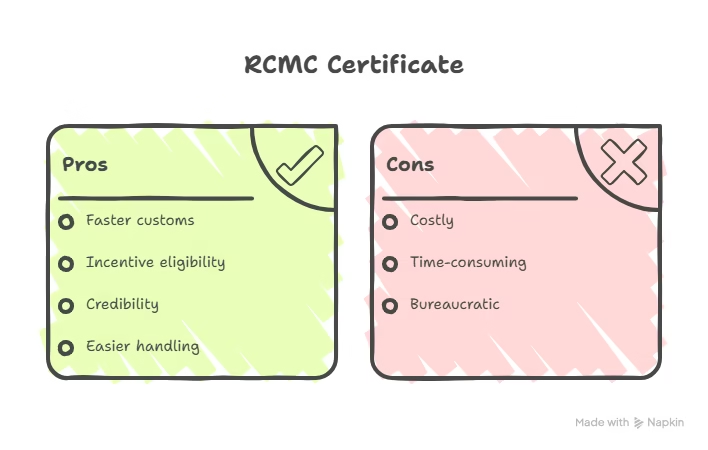
Faster customs clearance
Customs doesn’t evaluate intent. It checks authorization.
Example 1: A valid Registration Cum Membership Certificate confirms you’re approved for that product category, so clearance doesn’t stall.
Example 2: Without it, shipments get flagged for manual checks or outright stopped.
Eligibility for incentives
It is a prerequisite, not a bonus.
Example 1: Duty Drawback claims are rejected if your RCMC doesn’t match the product.
Example 2: Incentive schemes don’t even open their doors without a valid certificate.
Credibility with banks and buyers
It signals compliance, not competence. That still matters.
Example 1: Banks use it during export finance and LC processing.
Example 2: Overseas buyers treat it as proof you’re a legitimate exporter, not a middleman.
Easier handling of restricted items
Restricted goods move only through documented channels.
Example 1: Agricultural exports clear because APEDA already vetted the exporter.
Example 2: Product audits are smoother when authority mapping is clear.
Validity and Renewal of RCMC Certificate
Validity period
An Registration Cum Membership Certificate certificate is valid for five financial years, starting from the date of issue. Not calendar years. Financial years. Miss that detail and you’ll miscalculate expiry.
When renewal is required
Renewal is required before expiry, not after.
Example 1: Apply in the final year to avoid system downtime.
Example 2: Product additions or changes often trigger revalidation during renewal.
What happens if it expires
Expired RCMC means suspended legitimacy.
Example 1: Incentive claims during the expiry period get rejected.
Example 2: Customs may block exports of regulated goods until renewal is completed.
There’s no grace period magic here. If it’s expired, you’re out.
Documents Required
RCMC registration isn’t document heavy, but it is accuracy heavy. Wrong document, wrong category, or mismatch, and the application stalls.
Business identity
These establish who you are, not what you export.
- Import Export Code (IEC)
- PAN of the business or proprietor
- Certificate of incorporation, partnership deed, or proprietorship proof
Example 1: IEC name mismatch with PAN causes rejection.
Example 2: Using a personal PAN for a firm creates compliance issues later.
Tax and banking
These prove you’re financially traceable.
- GST registration certificate (if applicable)
- Bank certificate or cancelled cheque
- Authorized signatory details
Example 1: Bank account not linked to IEC causes verification delays.
Example 2: Inactive GST numbers raise red flags during inspection.
Export related credentials
These define what you’re allowed to export.
- Product details and HS codes
- Declaration of main export items
- Membership fee receipt of the issuing council
Example 1: Declaring broad categories leads to wrong council allocation.
Example 2: Incorrect HS codes limit future incentive eligibility.

How to Apply for RCMC
This is a process, not a form fill. Miss a step and you’ll circle back.
Online Application via DGFT Portal
This is the standard route for most exporters.
- Log in using your IEC credentials
- Select the relevant Export Promotion Council or Board
- Submit required documents and fees
- Track status digitally until issuance
Example 1: Selecting the wrong council locks your application.
Example 2: Incomplete uploads delay verification without alerts.
Application Through EPC or Commodity Board
This route applies when the product authority requires direct handling.
- Used for product specific boards like APEDA or Spice Board
- Council verifies product eligibility before issuing.
Example 1: APEDA applications follow APEDA’s workflow, not generic EPC flow.
Example 2: Commodity boards may demand additional declarations beyond DGFT basics.
The portal is just the interface. Approval depends on whether your product, documents, and authority actually match.
Login and Digital Certificate
RCMC login is simply your access point on the DGFT portal where your registration lives. It’s not a separate system and it’s not optional.
Example 1: You log in using your IEC credentials, not your council name.
Example 2: If you can’t access DGFT, you can’t access your RCMC either.
Where the certificate is stored
RCMC is issued and stored digitally. No courier. No physical dispatch.
Example 1: Once approved, the certificate appears in your DGFT dashboard.
Example 2: Customs and banks verify it online, not through printed copies.
Digital vs physical clarity
Physical copies are for reference only. Digital records are what matter legally.
Example 1: A printed RCMC without a valid digital record is useless.
Example 2: System verification overrides whatever PDF you carry.
Common Mistakes Exporters Make
This is where exporters trip themselves up. Not because the system is complex, but because assumptions replace reading.
Choosing the wrong council
This breaks everything downstream.
Example 1: Applying through a textile EPC for agricultural goods leads to rejection.
Example 2: Even if issued, wrong council RCMC blocks incentives.
Assuming one RCMC covers all products
It doesn’t. Ever.
Example 1: Adding a new product category without updating RCMC makes exports non compliant.
Example 2: Incentives tied to unregistered products gets denied.
Letting it expire
The system doesn’t remind you. It punishes you.
Example : Claims during expiry gaps are permanently lost.
Not updating product categories
This is silent damage.
Example 1: Expanding product lines without modification creates compliance risk.
Example 2: Audits catch this long after shipments are done.
RCMC mistakes don’t create drama. They quietly cost money and time.
Is RCMC Mandatory for All Exporters?
Short answer: no. Long answer: it depends on what you export.
Clear yes/no logic
Registration Cum Membership Certificate is mandatory only for exporters dealing in products notified under India’s Foreign Trade Policy.
Example 1: Exporting regulated agricultural goods? Yes, RCMC is mandatory.
Example 2: Exporting unrestricted items with no incentive claims? RCMC may not be required.
Product based requirement
The requirement follows the product, not the exporter.
Example 1: The same company exporting basmati rice needs RCMC, but exporting handmade crafts might not.
Example 2: Adding a new regulated product later can suddenly make RCMC compulsory.
Scenarios where it’s not needed
There are real cases where exporters don’t need it.
Example 1: Service exporters don’t require RCMC at all.
Example 2: Exporters dealing only in freely exportable, non notified goods and not claiming incentives may operate without it.
Assuming it’s optional across the board is the mistake. Assuming it’s mandatory for everyone is also wrong.
RCMC vs IEC: Don’t Confuse These
People mix these up constantly. They serve different jobs.
Purpose difference
IEC identifies you as an exporter. RCMC authorizes what you export.
Example 1: IEC says you exist in the export system.
Example 2: RCMC says you’re approved for a specific product category.
Issuing authority
They come from different places for a reason.
Example 1: IEC is issued by DGFT directly.
Example 2: RCMC is issued by EPCs or commodity boards authorized by DGFT.
Dependency relationship
IEC comes first. Always.
Example 1: You can’t apply for Registration Cum Membership Certificate without an IEC.
Example 2: IEC works without RCMC, but Registration Cum Membership Certificate can’t exist without IEC.
Think of IEC as identity. RCMC as permission. Confuse them, and you’ll build your export process on the wrong foundation.
Conclusion
RCMC is not an extra layer. It’s the control layer. It exists to tell the system who you are, what you export, and which authority is responsible for keeping you in line. Without it, regulated exports stop, incentives disappear, and accountability collapses.
It exists because the government doesn’t trust declarations alone. It trusts structure, traceability, and assigned responsibility.
One sentence takeaway: if your product is regulated, Registration Cum Membership Certificate isn’t a choice you debate, it’s a requirement you comply with before you ship.
FAQs
Q1. Do I need a separate RCMC for each product I export?
Not always, but don’t assume one is enough. Registration Cum Membership Certificate is issued based on product categories, not your business name.
Example 1: Exporting multiple products under the same council usually works under one RCMC.
Example 2: Exporting goods governed by different councils requires separate registrations.
Q2. Can I apply for RCMC without an IEC?
No. IEC is mandatory. Registration Cum Membership Certificate cannot exist on its own.
Example 1: DGFT won’t even show the RCMC option without an active IEC.
Example 2: Councils verify IEC details before issuing membership.
Q3. Is RCMC required for service exports or digital exports?
No. RCMC applies only to goods exports covered under the Foreign Trade Policy.
Example 1: Software development services don’t need RCMC.
Example 2: Consulting or design services exported overseas don’t fall under RCMC.
Q4. What happens if my product list changes after RCMC issuance?
You must update or amend your Registration Cum Membership Certificate. Operating on outdated registration is a compliance risk.
Example 1: Adding a regulated product without updating RCMC can block incentives.
Example 2: Audits can flag shipments made under mismatched categories.
Q5. Can customs or banks verify my RCMC online?
Yes. That’s the whole point of the system.
Example 1: Customs checks Registration Cum Membership Certificate validity directly through DGFT systems.
Example 2: Banks rely on digital verification during export finance processing.
About the Author
Hi, I’m Sriharsha, founder of shxhub.in.
I focus on explaining import export business topics in a practical, beginner friendly way, based on how exports actually work on the real ground especially documentation, quality control, and buyer expectations.






5 thoughts on “RCMC Certificate Explained: 7 Important Facts Every Exporter Must Know”