
Everyone thinks export success comes down to finding buyers, negotiating prices, and closing deals. That’s surface level. The real game starts after the deal is done. Because if your product doesn’t reach the buyer on time, in good condition, and at the expected cost, nothing else matters.
This is where modes of transport in export start becoming a business decision.
Let’s make it real:
- You choose sea instead of air to save money → shipment arrives late → buyer loses a retail season → no repeat order
- You choose air for speed without calculating margins → profit disappears → you win the deal but lose the business
That’s not logistics. That’s poor strategy.
Your choice of international shipping methods directly controls:
- Total cost – freight, handling, storage, delays
- Delivery timelines – weeks vs days can change the entire deal
- Damage risk – more handling = more chances of loss
- Repeat orders – reliability builds trust, delays destroy it
Two exporters can sell the same product to the same buyer. One builds a long term relationship. The other gets replaced after one shipment. The difference is usually not product quality. It’s export logistics decisions, especially transport.
What this really means is: Transport is not a backend operation. It’s a frontline business strategy.
Table of Contents
What Are Modes of Transport in Export?
At the most basic level, modes of transport in export refer to the different ways goods are moved from the exporter’s location in one country to the buyer’s destination in another.
Sounds simple. It’s not.
Because export transportation is not just “moving goods.” It’s moving goods through a chain of controlled, regulated, and often unpredictable steps.
Here’s what actually happens in real export movement:
- Your goods leave the factory
- They pass through multiple handling points (warehouse, port, terminal)
- They go through customs clearance in at least two countries
- They require precise documentation at every stage
- They travel across long distances with time, cost, and risk constantly changing
Now compare that to domestic delivery. Completely different game. In international trade logistics, every transport decision triggers a chain reaction.
Two simple examples:
- You choose air freight → faster delivery but stricter documentation and higher cost pressure
- You choose sea freight → cheaper transport but longer timelines and higher exposure to delays
That’s why shipping methods in export are not just options. They are control levers. Export transportation is not about movement. It’s about coordination, timing, cost control, and risk management across borders.
If you don’t see it that way, you’re not planning shipments. You’re gambling with them.
The 4 Primary Modes of Transport in Export
This is where most blogs go shallow. They list the modes and move on.
That’s useless.
You don’t need definitions. You need to understand when each mode actually makes sense in real export decisions.
Sea Transport (Ocean Freight)
If you strip global trade down to its backbone, this is it.
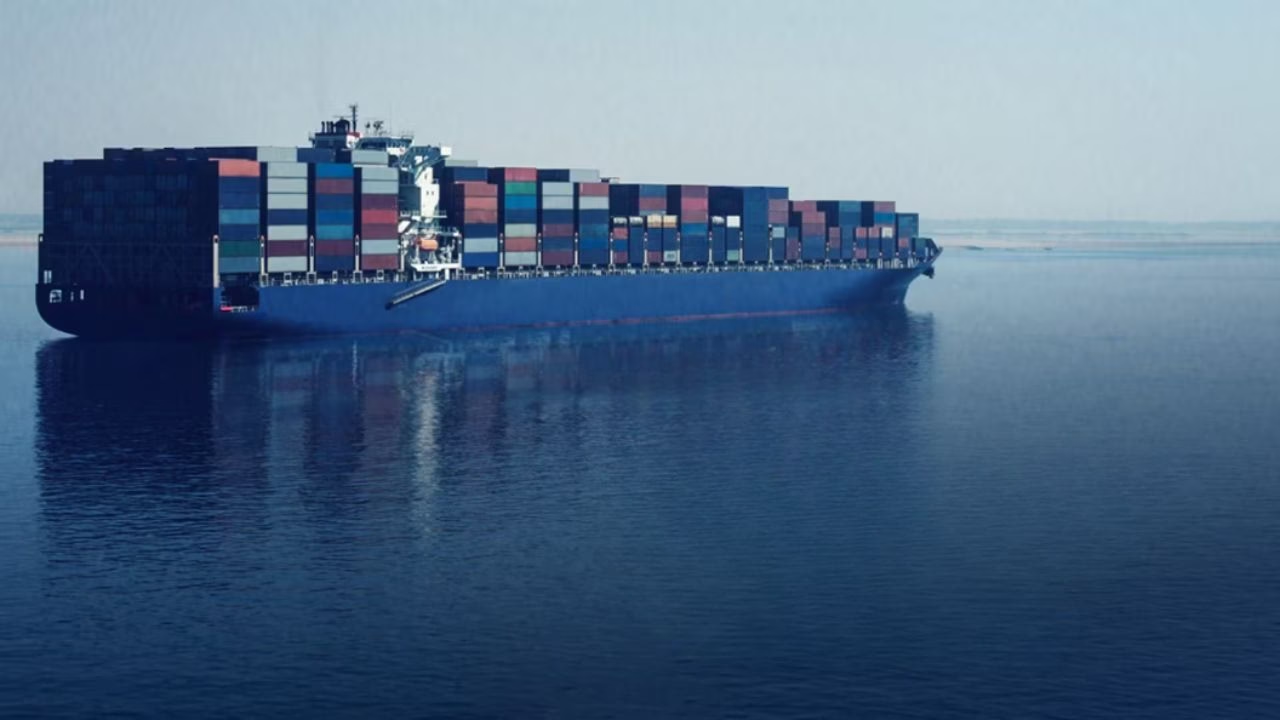
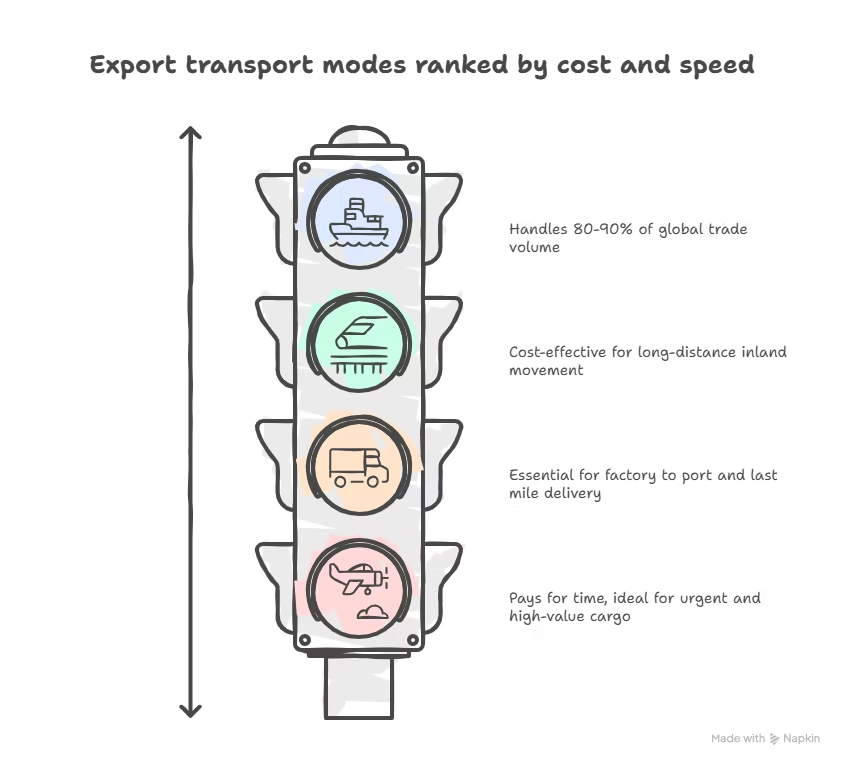
Sea freight export handles roughly 80–90% of global trade volume. Not because it’s fast. Because it’s cheap and scalable. If you’re moving serious volume, you will end up using ocean freight shipping whether you like it or not.
When Exporters Choose Sea Freight
- Large volume shipments where cost matters more than speed
- Heavy or bulky cargo that’s impossible or impractical for air
- Planned shipments with flexible delivery timelines
Two real scenarios:
- Exporting rice or spices in containers → margins depend on freight cost → sea is the only viable option
- Shipping industrial machinery → weight kills air viability → sea becomes default
Common Export Goods Shipped by Sea
- Agricultural products (rice, wheat, spices)
- Machinery and industrial equipment
- Chemicals and raw materials
- Furniture and construction materials
This is classic bulk cargo shipping territory.
Key Advantage: Lowest Cost Per Unit
Sea freight wins on economics. Period.
- Cost spreads across large volumes
- Containerization reduces handling cost
- Ideal for scaling export operations
Two practical outcomes:
- You can price competitively in global markets
- You can handle large orders without killing margins
Limitations You Can’t Ignore
- Slow transit (weeks, not days)
- Port congestion can wreck timelines
- Weather disruptions are real
Example:
- Shipment stuck at port for 10 days → buyer misses sales window → next order goes to someone else
- Monsoon delays affect vessel schedules → planning fails if you didn’t buffer time
Sea is powerful, but only if you plan ahead. If you’re reactive, it will punish you.
Air Transport (Air Freight)
This is the opposite end of the spectrum.
Air freight export is the fastest shipping method international trade has. You’re paying for time, not space.
When Air Freight Makes Sense
- Urgent delivery commitments
- High value cargo where time = money
- Small, lightweight shipments
- Perishable goods
Two situations where air is the right call:
- Sending pharmaceutical products with expiry sensitivity
- Shipping product samples to close a buyer quickly
Typical Products Shipped by Air
- Pharmaceuticals and medical devices
- Electronics and components
- Fresh fruits, seafood, meat
- Fashion garments and samples
This is where air cargo logistics dominates.
Advantage: Speed + Reliability
- Delivery in hours or a few days
- Better tracking and predictability
- Lower storage and inventory risk
Example:
- Fast delivery → buyer restocks faster → higher order frequency
- Reduced handling time → lower damage probability
Limitation: Expensive and Restricted
- Highest cost among all modes
- Weight and size limitations
Two harsh realities:
- If your margins are thin, air freight will wipe them out
- Not everything can physically fit into air cargo
Most smart exporters use air strategically:
- First shipment by air → test market
- Bulk shipments later by sea
Rail Transport
Rail doesn’t get attention from beginners. That’s a mistake. It plays a critical role in inland transport logistics, especially before goods reach ports.
Where Rail Fits
- Long distance inland container movement
- Cross border land routes (where available)
- Connecting inland depots to ports
Two practical uses:
- Moving containers from North India to ports like Mundra
- Transporting bulk commodities across regions
Ideal Cargo for Rail
- Grains and agricultural bulk
- Coal, ores, and minerals
- Steel and heavy industrial goods
This is pure bulk transport rail efficiency.
Advantage: Cost Effective + Eco-Friendly
- Cheaper than road for long distances
- Stable schedules (less affected by traffic)
- Lower emissions
Example:
- Rail reduces fuel dependency compared to trucks
- Predictable transit helps planning export schedules
Limitation: Fixed Routes
- No flexibility in routes
- Requires coordination with road transport
Two constraints:
- If your factory isn’t near a rail terminal, you still need trucks
- Delays in rail networks can disrupt entire chains
Rail works best when integrated, not isolated.
Road Transport
This is the silent backbone of export logistics. Even if your shipment goes by sea or air, road transport export is almost always involved at some stage.
Role in Export Movement
- Factory → warehouse
- Warehouse → port or airport
- Final delivery at destination (last mile)
This is where trucking in logistics becomes unavoidable.
Cross Border Trade Use Cases
- India to Nepal or Bhutan
- Regional land based exports
- Short distance international trade
Two common cases:
- Exporting goods to neighboring countries via trucks
- Moving containers from inland factories to ports
Advantage: Flexibility + Accessibility
- Door to door movement
- Access to remote areas
- Faster for short distances
Example:
- Factory in rural area → only trucks can reach
- Urgent inland transfer → road beats rail
Limitations You Must Factor
- Traffic delays
- Fuel and toll costs
- Driver availability
Two risks:
- Border delays in cross border trucking
- Cost fluctuations due to fuel price changes
Road transport is not optional. It’s the glue holding everything together.
Specialized Transport Modes You Shouldn’t Ignore
Most beginners stop at the four modes. That’s incomplete thinking. Real export systems often depend on these advanced methods.
Pipeline Transport
This is highly specific but extremely efficient where applicable. Used only for liquid exports like oil and gas, pipeline transport operates differently from all other modes.
Where It Works
- Crude oil transport across borders
- Natural gas distribution
Core Advantage
- Low operating cost after setup
- Continuous, reliable flow
Two realities:
- Massive initial infrastructure investment
- Not flexible or adaptable to other goods
This is core to oil and gas logistics, but irrelevant for most other exporters.
Multimodal / Intermodal Transport
This is where things get interesting. Multimodal transport export means combining multiple transport modes into one coordinated system.
And this is how serious exporters actually operate.
Real World Flow Example
- Factory → Truck
- Truck → Rail terminal
- Rail → Port
- Port → Ship
- Destination → Truck delivery
That’s combined transport shipping in action.
Why It’s Growing Fast
- Optimizes cost across stages
- Reduces dependency on one mode
- Improves delivery reliability
Two practical benefits:
- You balance cost (rail/sea) with flexibility (road)
- You reduce risk of single point failure
India Context (Important Reality)
India is shifting toward inland logistics efficiency.
- Increased use of inland container depots
- Reduced dependency on direct port movement
- Better integration of rail + road + sea
This shift is driven by intermodal logistics, not isolated transport choices.
What Most People Miss
They think choosing a mode is a one time decision.
It’s not.
The best exporters don’t choose a mode. They design a best transport system.
That’s the difference between:
- shipping goods and
- building a scalable export operation
Comparison Table: All Transport Modes at a Glance
Most people read about transport modes and still can’t decide anything.
So here’s the reality compressed into one clear transport comparison export view. No theory, just decision clarity.
| Mode | Speed | Cost (Per Unit) | Capacity | Best Use Case | Drawbacks |
| Sea (Ocean Freight) | Slow (weeks) | Lowest | Very High | Bulk, heavy, long-distance exports | Port delays, weather, long transit |
| Air (Air Freight) | Fastest (hours–days) | Highest | Low | Urgent, high-value, perishable goods | Expensive, size/weight limits |
| Rail | Moderate | Low–Medium | High | Inland bulk transport, long-distance land routes | Fixed routes, limited flexibility |
| Road (Trucking) | Moderate | Medium | Moderate | Short distance, last-mile, cross-border nearby | Traffic, fuel cost, delays |
| Pipeline | Continuous | Low (after setup) | High (liquids only) | Oil, gas, liquid transport | High infrastructure cost, limited use |
| Multimodal | Variable | Optimized | Flexible | Complex routes, cost-speed balance | Coordination complexity |
What This Table Actually Tells You
Most people look at this and still make bad decisions.
Here’s how to read it properly:
- If you’re optimizing cost, sea and rail dominate
- If you’re optimizing time, air is the only real option
- If your shipment involves multiple stages, multimodal is not optional
Two quick reality checks:
- Choosing the cheapest option without considering delays → you lose buyers
- Choosing the fastest option without margin calculation → you lose money
This is not just a shipping cost comparison. It’s a profit decision table.
How Exporters Actually Choose the Right Mode
They list factors but never show how decisions are actually made.
Let’s fix that.
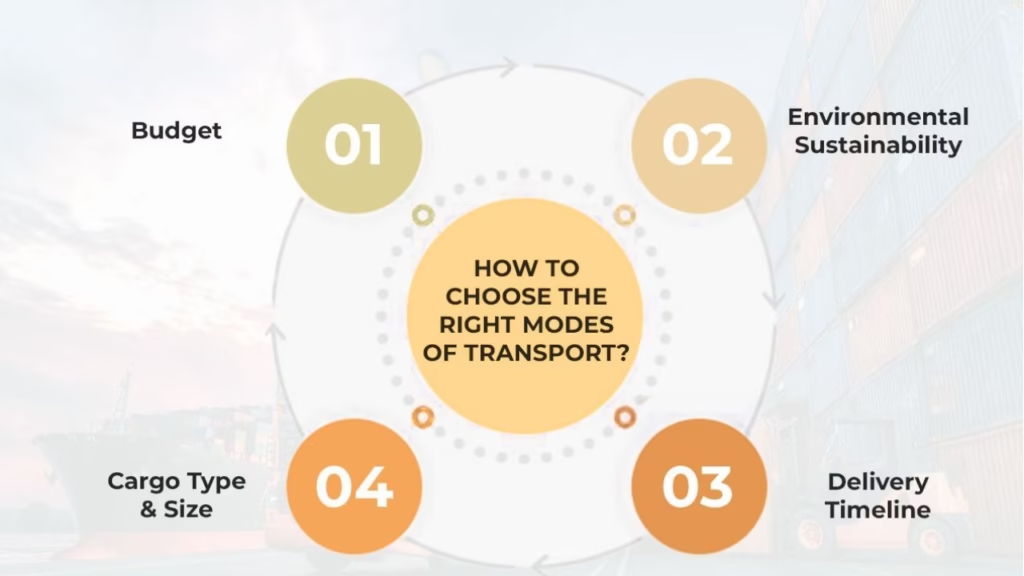
There is no universal “best mode.” There’s only the right mode for a specific shipment. And serious exporters don’t guess. They evaluate.
Nature of Goods
Start here. Always.
Because your product already eliminates half your options.
- Perishable goods → Air or refrigerated sea (reefer containers)
- Bulk/heavy goods → Sea or rail
Two real examples:
- Exporting fresh seafood → air makes sense despite cost because delay = spoilage
- Exporting 20 tons of rice → air is financially stupid, sea is the only viable option
Ignore this factor and everything else collapses.
Delivery Timeline
Now ask how fast does this actually need to reach?
- Urgent shipments → Air
- Flexible timelines → Sea or rail
Two practical cases:
- Buyer needs stock for a festival season → delay = lost sales → air justified
- Regular monthly supply contract → timeline predictable → sea reduces cost
Speed is not a preference. It’s a requirement tied to business outcomes.
Cost vs Profit Margin
This is where most beginners mess up badly. They chase the lowest freight cost instead of protecting profit.
Reality:
Cheap transport can destroy profit if it causes delays, damage, or penalties.
Two situations:
- You save on sea freight but shipment delays → buyer cancels future orders → long term loss
- You use air for a low margin product → freight eats profit → deal looks good but fails financially
This is where freight cost optimization actually matters:
- Not lowest cost
- Not fastest delivery
- But best balance between cost and outcome
Distance & Destination
This is basic, but people still overcomplicate it.
- Nearby countries → Road or rail
- Overseas markets → Sea or air
Two simple examples:
- Export from India to Nepal → road transport is faster and simpler
- Export from India to Europe → sea is default unless urgency demands air
Distance automatically filters your options. Don’t fight it.
Buyer Requirements
This is the one factor people ignore and then wonder why deals fall apart.
Many buyers specify:
- preferred shipping mode
- delivery deadlines
- port or airport
Two real consequences:
- You ignore buyer’s preferred mode → shipment mismatch → payment delays
- You align with buyer requirements → smoother transactions → repeat orders
In many cases, your job is not to “choose freely.” It’s to align your logistics with buyer expectations.
If you’re serious about how to choose shipping method export, understand this:
You’re not choosing transport. You’re balancing product + time + cost + distance + buyer expectations. Miss one variable, and your entire export plan becomes unstable. That’s why export logistics planning is not a checklist. It’s decision making under constraints.
Role of Freight Forwarders in Transport Decisions
Let’s clear this up because a lot of beginners get this backwards. Freight forwarders are important. But they are not your strategy team. They don’t run your export business. They execute what you decide.
What Freight Forwarders Actually Do
A good freight forwarder or export logistics company handles the operational side:
- Booking
They secure space on ships, flights, or trains
Example: reserving a container slot on a vessel or cargo space on a flight - Routing
They suggest possible transport routes based on availability
Example: choosing between direct shipment vs transshipment via another port - Documentation
They coordinate paperwork required for shipment
Example: preparing Bill of Lading or Airway Bill, aligning with customs requirements
Where People Get It Wrong
They assume the forwarder will “figure everything out.” That’s lazy thinking.
Two common mistakes:
- You ask, “What’s the cheapest option?” → they give you one → shipment gets delayed → you blame them
- You don’t define delivery timelines → they choose a slower route → buyer gets frustrated
The forwarder didn’t fail. You didn’t give a clear strategy.
Reality Check Execution vs Decision
Here’s the line you need to understand:
- Freight forwarder = execution
- You (exporter) = decision maker
Two clean examples:
- Smart exporter: decides speed vs cost first → forwarder arranges best route → smooth shipment
- Average exporter: outsources thinking → accepts whatever is suggested → inconsistent results
If you don’t control the decision, you don’t control the outcome. That’s the real freight forwarder role.
Common Mistakes Exporters Make
Most exporters don’t fail because of lack of opportunity. They fail because of predictable, avoidable mistakes in logistics. These are not small errors. These are profit killers.
1. Choosing the Cheapest Option Blindly
This is the most common and the most damaging mistake. People see lower freight cost and think they’re saving money.
They’re not.
Two real outcomes:
- You choose the cheapest sea route → shipment gets delayed → buyer cancels next order
- You save on freight but lose on penalties, storage, and lost trust
Cheap transport is not efficient if it breaks the deal.
2. Ignoring Inland Transport Costs
Export doesn’t start at the port. It starts at your factory. But beginners calculate only international freight.
That’s incomplete.
Two typical mistakes:
- You ignore trucking cost from factory to port → total cost shoots up unexpectedly
- You don’t factor loading, unloading, and handling → margins shrink without warning
If you’re not calculating full movement cost, your pricing is wrong.
3. Not Planning Multimodal Routes
Relying on a single mode is a weak strategy. Modern export runs on combinations.
Two bad decisions:
- Using only road for long distances → higher cost and delays
- Ignoring rail + sea combination → missing cost optimization opportunities
Smart exporters design routes. Others just follow default options.
4. Underestimating Delays
This is where reputation gets destroyed. Delays are not rare. They are normal. What matters is whether you planned for them.
Two situations:
- Port congestion adds 7 days → you didn’t count→ buyer gets frustrated
- Weather disruption delays vessel → no backup plan → delivery commitment breaks
If your plan works only when everything goes perfectly, it’s a bad plan.
What This Really Comes Down To
These export logistics mistakes are not random. They come from one issue Lack of planning.
And here’s the uncomfortable truth:
- Average exporters react
- Serious exporters anticipate
Fix these shipping mistakes exporters make, and you immediately move ahead of 80% of competitors.
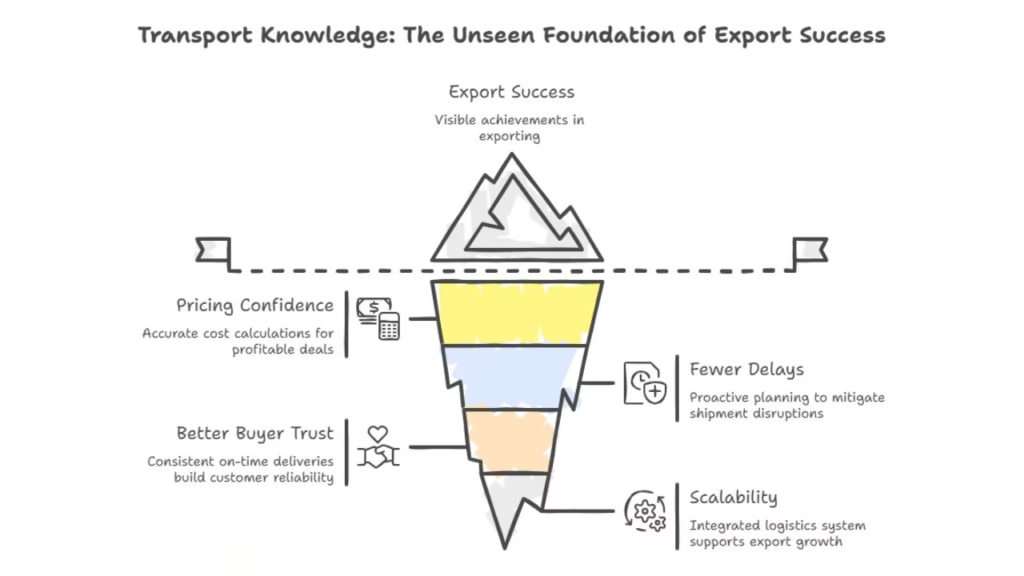
Why Transport Knowledge Separates Serious Exporters
This is the dividing line. Not product. Not pricing. Not even contacts. It’s how well you understand transport. Because once you do, everything else gets sharper.
Pricing Confidence
Most beginners guess their pricing. That’s why they either lose deals or lose money. Serious exporters don’t guess. They calculate.
- They know exact freight ranges before quoting
- They factor inland transport, handling, and delays upfront
Two real differences:
- Weak exporter: quotes low to win → realizes later freight is higher → profit disappears
- Strong exporter: builds logistics cost into pricing → wins deals that are actually profitable
Transport knowledge removes uncertainty from pricing.
Fewer Delays
Delays don’t happen because of bad luck. They happen because of poor planning.
Exporters who understand logistics:
- build buffer time
- choose reliable routes
- anticipate bottlenecks
Two outcomes:
- You plan for port congestion → shipment still arrives on time
- You ignore delays → one disruption breaks your entire schedule
You don’t eliminate delays. You control their impact.
Better Buyer Trust
Buyers don’t care how hard your process is. They care about one thing consistency. If you deliver on time, every time, you become reliable. And reliability beats cheap pricing.
Two scenarios:
- You meet delivery commitments → buyer increases order size
- You miss timelines → buyer silently shifts to another supplier
Transport decisions directly affect trust. And trust drives repeat business.
Scalability
This is where most exporters hit a wall. They can handle small shipments. But when volume grows, everything breaks.
Why?
Because they never built a transport system.
Serious exporters:
- use sea for bulk
- use air strategically
- integrate multimodal routes
Two outcomes:
- No system → operations collapse under volume
- Structured logistics → you scale without chaos
Growth in export isn’t about more orders. It’s about handling them without losing control.
Final Take: There Is No “Best” Mode of Transport
If you’re still looking for the “best” transport method, you’re asking the wrong question. There isn’t one. There’s only what fits your shipment.
Only Context Based Decisions Work
Every shipment is different:
- Product type changes
- Buyer expectations change
- timelines change
- cost pressure changes
Two simple contrasts:
- Perishable goods + urgent deadline → air makes sense despite cost
- Bulk goods + flexible delivery → sea becomes the obvious choice
Same exporter. Different decisions.
What Smart Exporters Actually Do
They don’t rely on one mode. They make calculated trade offs.
1. Balance Cost vs Speed
They don’t chase cheap or fast blindly.
They ask:
- What does this shipment actually require?
Two decisions:
- Use sea to protect margins when time allows
- Use air when delay would cost more than freight
2. Combine Transport Modes
They don’t think in single modes. They build systems.
Two examples:
- Truck → rail → sea for cost efficient bulk movement
- Air for samples → sea for bulk orders
That’s how modern export actually runs.
3. Plan Ahead (This Is Non-Negotiable)
Good transport decisions don’t happen at dispatch. They happen at planning.
Two realities:
- You plan routes and buffers → shipment flows smoothly
- You decide last minute → you overpay or delay
The Bottom Line
Transport is not a background activity. It’s a core business lever.
If you understand it:
- you price better
- you deliver better
- you scale faster
If you don’t:
- you react
- you lose margins
- you lose buyers
That’s the difference between someone who ships products… and someone who builds an export business.
FAQs
1. Which transport mode is cheapest for export?
Sea freight is generally the cheapest option, especially for large or heavy shipments. That’s why it dominates global trade. But here’s where people go wrong. They assume cheapest equals best.
If you choose sea just to save money and your shipment gets delayed, you can lose far more in missed deadlines and damaged relationships. For example, exporting bulk rice works perfectly with sea because margins depend on cost. But if you’re shipping something time-sensitive and still choose sea, that “cheap” decision can cost you repeat business.
2. When should I use air freight instead of sea?
Use air when time is critical. That’s the only reason to justify the cost.
If your shipment is urgent, perishable, or high-value, air freight makes sense. For example, sending fresh seafood or pharmaceuticals requires speed, otherwise the product loses value.
Another case is sending samples to a buyer. A fast delivery can help you close the deal quicker. But if your product is low-margin and there’s no urgency, air freight is a bad decision. You’ll end up winning the deal but losing money.
3. Can I combine multiple transport modes?
Yes, and in most cases, you should. This is how modern export actually works.
Instead of relying on one mode, exporters combine them to balance cost and efficiency. For example, goods might move from factory by truck, then by rail to a port, and finally by sea to the destination.
Another common approach is using air for samples and sea for bulk orders.
If you’re using only one mode for everything, you’re not optimizing. You’re limiting your operation.
4. What is the safest mode of transport in export?
There is no single safest mode. Safety depends more on handling and packaging than the transport itself.
Air freight tends to be safer for fragile or high-value goods because it involves less handling and shorter transit time. On the other hand, sea freight is very safe for bulk cargo when it is properly packed and containerized.
For example, electronics are safer by air due to reduced movement and time. Heavy machinery, however, is better suited for sea containers where it remains stable throughout the journey.
5. How do I choose the right transport mode for my shipment?
You choose based on context, not preference.
Every decision comes down to your product, timeline, cost structure, destination, and buyer expectations. If you’re shipping perishable goods with a tight deadline, air is the logical choice. If you’re moving bulk goods with flexible timing, sea or rail becomes the better option.
Most mistakes happen when exporters ignore one of these factors. When that happens, the decision isn’t strategic anymore. It’s just a guess.