
When exporters move beyond advance payments, the next term they hear almost everywhere is Letter of Credit (LC). For beginners, LC often sounds complicated, bank heavy, and risky. Some exporters avoid it out of fear, while others jump in without fully understanding how it works.
In reality, a LC is neither scary nor magical. It is simply a structured payment system designed to reduce risk for both exporters and importers when trust is still developing.
This guide explains the letter of credit meaning, its process, types, and how it works in real export situations without bank jargon and theory overload.
Table of Contents
What Is Letter of Credit?
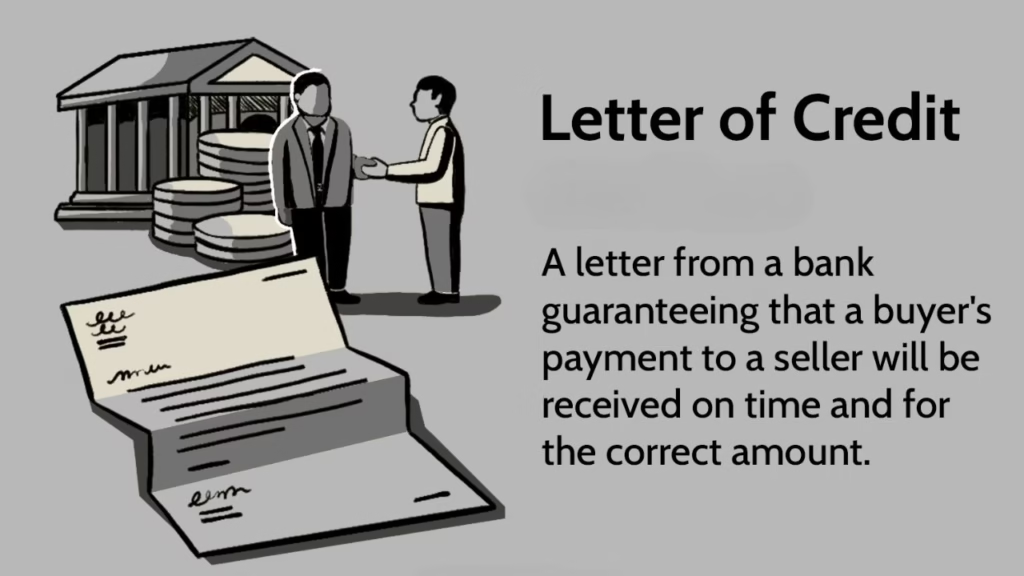
A LC is a bank’s written promise to pay the exporter on behalf of the importer, as long as the exporter submits the exact documents mentioned in the LC.
In short:
- Buyer’s bank guarantees payment
- Exporter ships goods
- Exporter submits documents
- Bank releases payment
That’s it.
So when people ask “what is letter of credit?”, the simplest answer is:
A LC is a bank backed payment guarantee used in international trade to protect both exporter and importer. This is why LC is widely used in export business, especially when buyer and seller are dealing for the first time.
Letter of Credit Meaning in Export Business
In export terms, LC works as a risk control tool.
- Exporter risk: “What if buyer doesn’t pay?”
- Importer risk: “What if exporter doesn’t ship as agreed?”
A bank letter of credit balances both sides.
The exporter gets confidence that payment will come from a bank, not just the buyer.
The importer gets assurance that payment will be released only if shipment documents are correct.
LC in Banking
From a bank’s point of view, a LC in banking is a documentary commitment, not a trade contract.
Important thing exporters must remember:
- Banks do not check goods
- Banks check documents only
- Even small document mistakes can delay payment
This is why understanding the letter of credit process is more important than memorizing definitions.
How LC Works: Step by Step Process
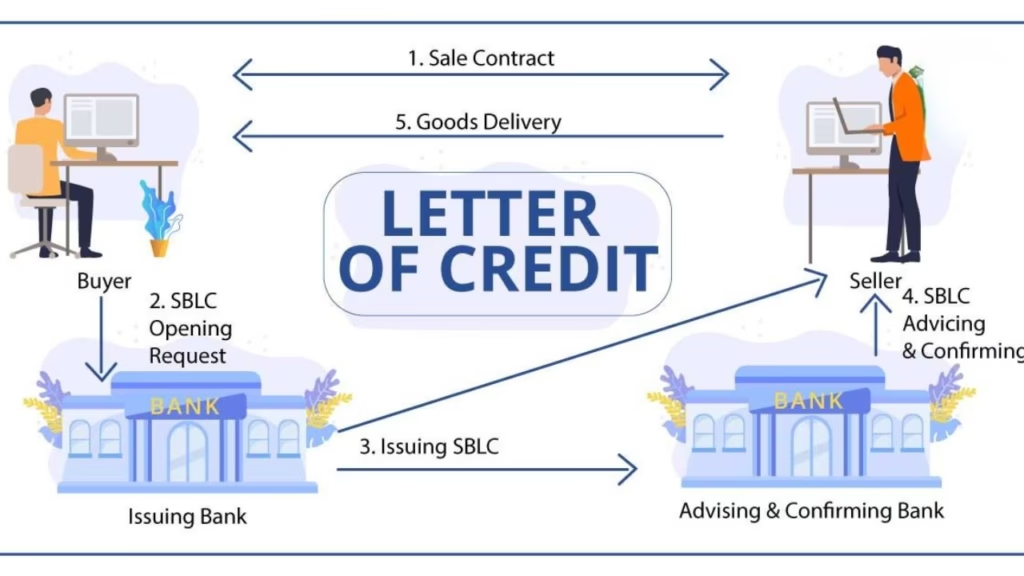
Let’s break down the letter of credit process in a way exporters actually experience it.
Step 1: Sales Contract Between Buyer and Seller
Exporter and importer agree on:
- Product
- Price
- Delivery terms
- Payment method: Export Letter of Credit
This decision must be clear in the contract.
Step 2: Importer Applies for LC From His Bank
The buyer approaches his bank and requests an import LC.
The bank evaluates:
- Buyer’s creditworthiness
- Trade terms
- Risk exposure
Once approved, the bank issues the LC.
Step 3: LC Is Sent to Exporter’s Bank
The LC travels from the importer’s bank to the exporter’s bank (advising bank).
Exporter should never ship goods before checking LC carefully.
This step is where many beginners make mistakes.
Step 4: Exporter Reviews LC Carefully
Exporter must check:
- LC amount
- Shipment date
- Documents required
- Port names
- Payment terms (Sight or Usance)
If anything is unclear, request an LC amendment immediately.

Step 5: Exporter Ships Goods
Once LC terms are acceptable, exporter ships goods as per LC conditions.
Documents generated include:
- Commercial Invoice
- Packing List
- Bill of Lading
- Certificate of Origin
- Insurance (if required)
Step 6: Documents Submitted to Bank
Exporter submits documents to his bank.
Bank checks documents line by line against LC terms.
This is the most sensitive stage in the LC process.
Step 7: Payment Is Released
If documents are compliant:
- Sight LC → Immediate payment
- Usance LC → Payment after agreed credit period
This completes the LC cycle.
Types of Letter of Credit Used in Export Business
There are many types of letter of credit, but exporters usually deal with a few common ones.
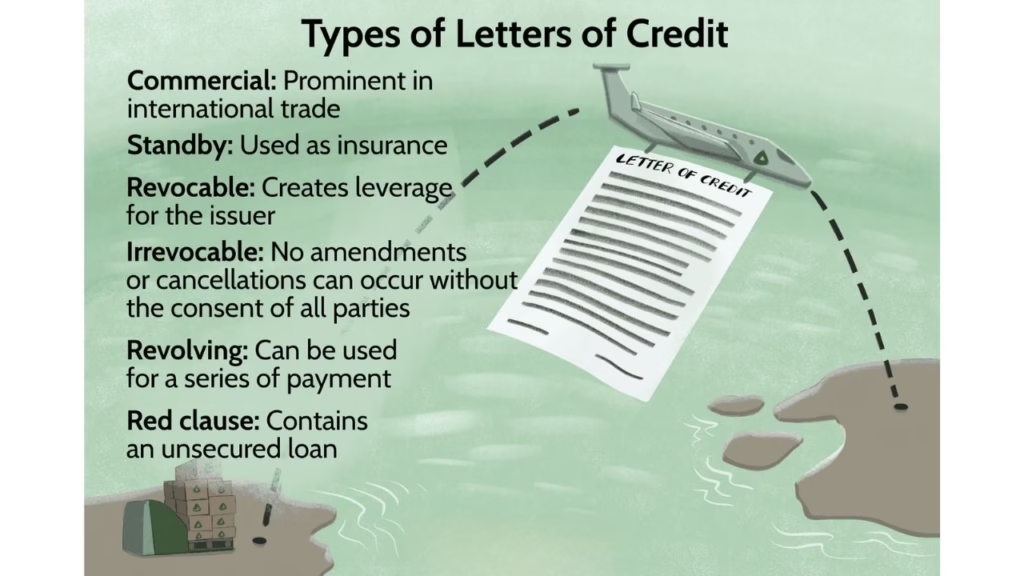
1. Irrevocable LC
Most commonly used.
- Cannot be cancelled without consent of all parties
- Offers strong protection to exporter
An irrevocable letter of credit is always preferred.
2. Sight Letter of Credit
- Payment made immediately after document submission
- Best for exporters needing quick cash flow
3. Usance Letter of Credit
Also called deferred payment LC.
- Payment after 30, 60, or 90 days
- Common in competitive markets
This is known as usance LC.
4. Standby LC
Acts like a safety backup.
- Used if buyer fails to pay
- Common in large corporate transactions
5. Back to Back LC
Used when exporter is also dependent on a supplier LC.
- One LC supports another
- Risky for beginners
6. Revolving LC
Used for repeated shipments.
- Saves time
- Suitable for long-term buyers
7. Red Clause & Green Clause LC
- Allows advance payment before shipment
- High risk
- Used only in trusted relationships
Documentary LC Explained
A documentary LC means payment is purely document based. Banks do not inspect goods physically.
They only verify whether documents match LC terms.
This is why exporters must ensure:
- Exact descriptions
- Correct spellings
- Proper dates
Letter of Credit Example
An Indian exporter ships spices to Europe.
- Buyer opens export LC
LC demands:
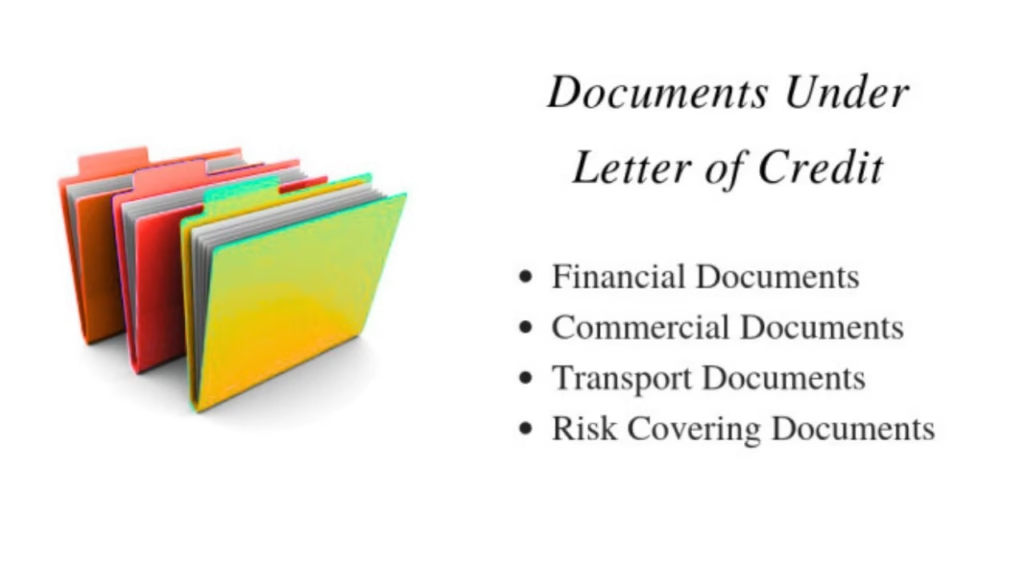
- Bill of Lading
- Phytosanitary certificate
- Commercial Invoice
- Exporter ships goods
- Documents submitted
- Bank releases payment
This is a real world LC example exporters face daily.
LC vs Bank Guarantee (Major Confusion)
Many exporters ask about bank guarantee vs letter of credit.
Key Difference:
| Letter of Credit | Bank Guarantee |
| Used for payment | Used for payment |
| Payment before default | Payment after default |
| Common in exports | Common in contracts |
So when discussing difference between letter of credit and bank guarantee, remember:
LC ensures payment. Bank guarantee compensates loss.
Letter of Credit vs Line of Credit
Another confusion is LC vs line of credit.
- LC = Trade payment instrument
- Line of credit = Loan facility
They serve completely different purposes.
Export Letter of Credit: Is It Safe?
For exporters, LC is safer than open credit but less safe than advance payment.
Advantages:
- Bank backed payment
- Reduced buyer risk
- Suitable for new buyers
Risks:
- Document discrepancies
- Delayed payment
- Bank charges
Still, LC remains one of the most balanced export payment terms.
Common Mistakes Exporters Make in LC
- Not reading LC fully
- Ignoring small clauses
- Late shipment
- Incorrect document formats
- Depending fully on freight forwarder
Remember: Exporter is always responsible, not the bank.
LC Format (What It Contains)
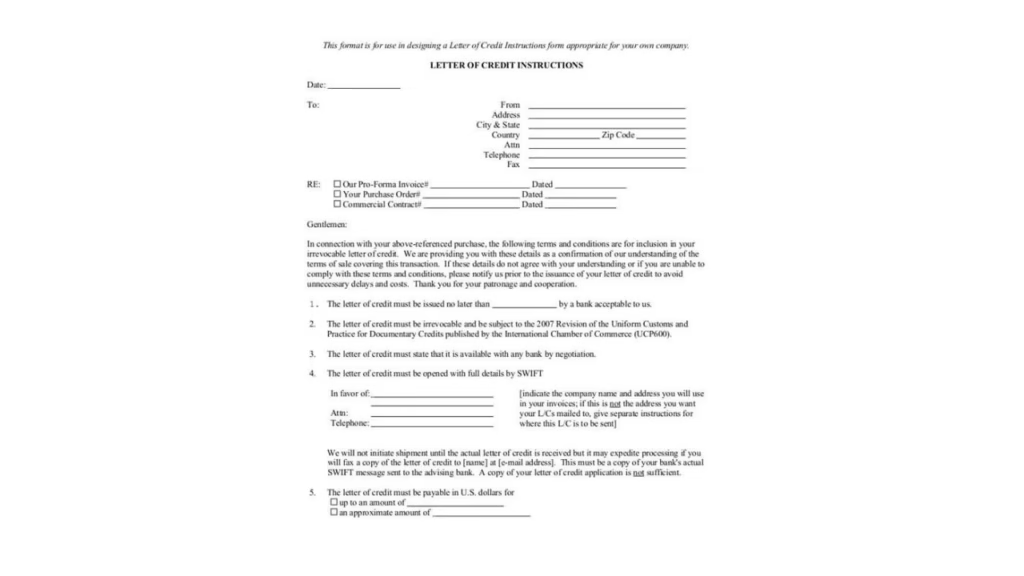
A typical LC includes:
- LC number
- Amount
- Beneficiary name
- Shipment terms
- Required documents
- Payment type
- Expiry date
Understanding the LC format helps avoid errors.
Letter of Credit in International Trade
In global trade, LC bridges trust gaps.
It is commonly used when:
- Countries are new trade partners
- Political or payment risk exists
- Large shipment values involved
That’s why letter of credit in international trade remains relevant even today.
Letter of Credit PDF & Learning Resources
Most banks provide LC PDF samples.
Exporters should:
- Study sample LCs
- Practice document matching
- Learn discrepancy management
When Should Exporters Use LC?
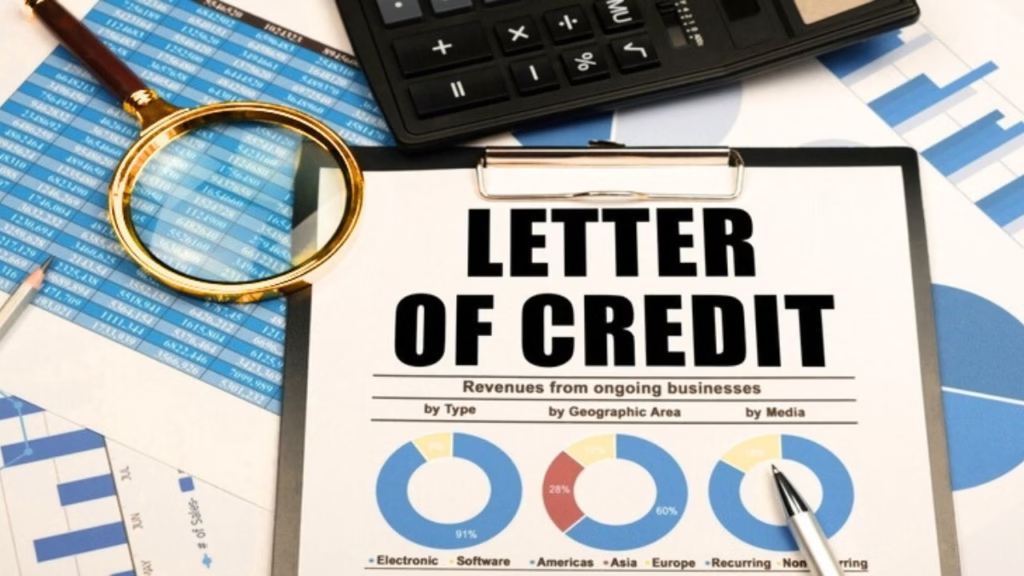
LC is ideal when:
- Buyer is new
- Order value is high
- Destination country risk exists
- Exporter wants bank security
For trusted buyers, open credit may be better.
Final Thoughts
The letter of credit in export business is not a trap or a shortcut it’s a structured payment system.
Used correctly, LC:
- Reduces risk
- Enables global trade
- Builds long term buyer trust
But used blindly, it can cause delays and losses.
As an exporter, understanding letter of credit meaning, process, types, and limitations gives you control not confusion.
Can I negotiate or amend a LC?
Yes, absolutely.
If you find any clause risky like strict shipment dates, unrealistic document requirements, or high penalties you should request an LC amendment before shipping. Never assume “it will be okay later.” LC works strictly on written terms.
What is the difference between LC and Bank Guarantee in simple words?
In simple terms:
Letter of Credit → Bank promises to pay you if documents are correct
Bank Guarantee → Bank promises to pay only if buyer defaults
For exporters, LC is usually safer because payment is linked to documents, not buyer behavior.
What is Usance Letter of Credit, and should exporters accept it?
A Usance LC indicates that payment occurs after a set duration (such as 30, 60, or 90 days) post-shipment. Exporters should accept it only if they are comfortable with delayed payment or if their bank offers discounting. For cash flow sensitive businesses, Sight LC is usually a better option.
About the Author
Hi, I’m SriHarsha, founder of shxhub.in.
I focus on explaining export business topics in a practical, beginner friendly way, based on how Indian exports actually work on the real ground especially documentation, quality control, and buyer expectations.

2 thoughts on “Letter of Credit in Export Business: Meaning, Types & How LC Works (Explained Clearly)”