
You can have the best product, the best pricing, and a willing buyer. None of that matters if your shipment is late, damaged, or stuck in customs. In export business, transportation is not a support function. It is the deal itself.
Example 1:
An Indian spice exporter ships a container to Dubai. The shipping process is poorly coordinated. Documentation is incomplete, and the container gets held at port for 9 days. The buyer misses a retail distribution window. Result the buyer cancels the next order and switches to a different supplier.
Example 2:
A textile exporter books the cheapest sea freight option without planning timelines. The shipment arrives 12 days late during a seasonal sale period in Europe. The buyer sells at discount to clear stock and blames the exporter for losses. Relationship damaged, payment delayed.
This is what most people get wrong. They think export logistics is about “sending goods”. It’s not. It’s about control.
Control over time
Control over cost
Control over risk
Good international logistics gives you predictable delivery, fewer disputes, lower costs, and repeat buyers. Bad logistics gives you penalties, chargebacks, and lost trust.
What this really means is your logistics system is your profit system. If your transportation in export business is tight, you earn more. If it is chaotic, you bleed money.
Table of Contents
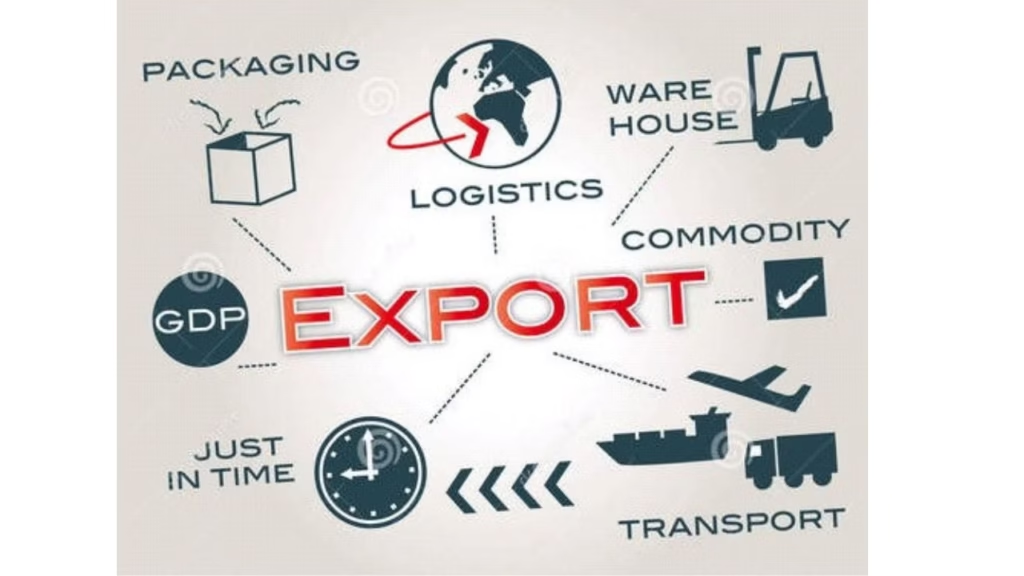
What is Export Logistics & Transportation (Simple, Clear Definition)
Export logistics is the complete planning, execution, and management of how your goods move from your location(your country) to your international buyer’s destination, including transportation, documentation, customs clearance, and compliance.
If you strip it down, it has two parts:
- Physical transportation
This is the visible side. Moving goods from supplier to warehouse, then to port, then via air or sea, and finally to the buyer’s location. - Backend coordination
This is where most beginners fail. Documentation, customs filing, compliance, packaging standards, labeling, insurance, and Incoterms alignment. This is what keeps your shipment legal and moving.
Export logistics = moving goods from your factory to your buyer’s warehouse without delays, losses, or legal issues.
In logistics export marketing, this system is what connects your product to your buyer. Your export transportation meaning is not just “shipping goods internationally”. It’s delivering on your promise to the buyer on time, in full, and without problems.
That’s the standard you’re being judged on, whether you realize it or not.
The Complete Export Logistics Process (Step by Step Flow)
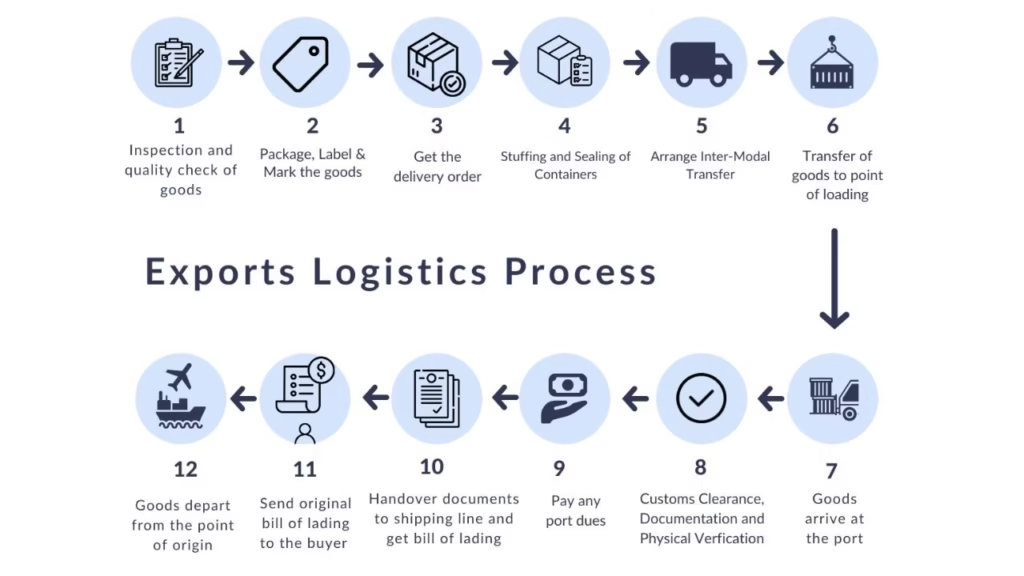
This is the backbone of your export operation. If you don’t understand this flow, you’ll keep making expensive mistakes in the export logistics process.
Step 1: Supplier Pickup & Pre-Shipment Inspection
What happens:
Goods are collected from your manufacturer and checked for quality, quantity, and specifications before leaving the facility.
Who handles it:
Exporter + inspection agency + logistics partner
Common mistakes:
- Skipping inspection to save time and discovering defects after shipment
- Sending incorrect quantity because no final count was done
Step 2: Packaging, Labelling & Marking Standards
What happens:
Products are packed for international transit, labeled with exporter/buyer details, and marked with handling instructions.
Who handles it:
Exporter + packaging team + CHA/freight forwarder guidance
Common mistakes:
- Weak packaging leading to moisture damage or breakage
- Incorrect or missing labels causing customs or port issues
Step 3: Freight Booking (Air or Sea)
What happens:
Cargo space is booked with a shipping line or airline. Container type, route, and schedule are finalized.
Who handles it:
Freight forwarder + exporter approval
Common mistakes:
- Booking the cheapest option without checking transit time
- Not aligning booking with buyer delivery deadlines
Step 4: Inland Transportation to Port
What happens:
Goods move from warehouse to port via truck, rail, or multimodal transport.
Who handles it:
Transporter + freight forwarder
Common mistakes:
- Poor scheduling leading to port cutoff miss
- No tracking, resulting in cargo delays or misplacement
Step 5: Customs Clearance & Shipping Bill Filing
What happens:
Documents are filed, duties processed, and customs grants Let Export Order Date (LEO Date).
Who handles it:
Customs House Agent (CHA)
Common mistakes:
- Incorrect documentation causing shipment holds
- Missing certificates or wrong HS codes
Step 6: Main International Transport (Air/Sea)
What happens:
Cargo is loaded onto vessel or aircraft and shipped internationally. Bill of Lading or Airway Bill is issued.
Who handles it:
Shipping line / airline + freight forwarder
Common mistakes:
- Not verifying container sealing or cargo loading
- Ignoring transit tracking updates
Step 7: Delivery at Destination Country
What happens:
Goods clear import customs and are delivered to the buyer’s warehouse.
Who handles it:
Import agent + buyer’s logistics partner
Common mistakes:
- Miscommunication with buyer about arrival dates
- Missing import side documentation delaying delivery
That’s your full export shipping process. Every delay, every penalty, every lost client usually traces back to one of these steps being handled carelessly.
Types of Transportation in Export Business
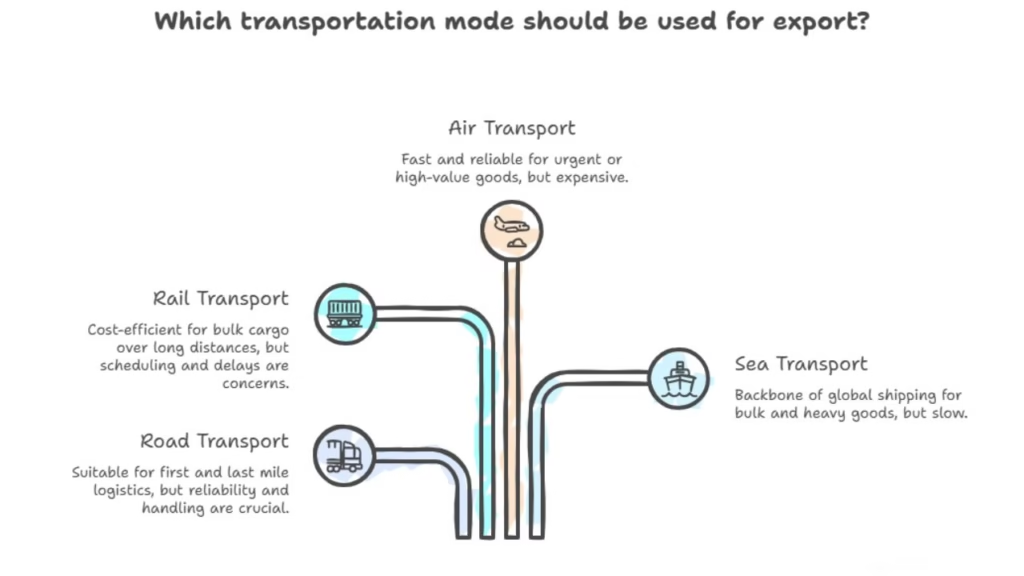
You don’t “choose randomly” here. The mode you pick directly affects cost, delivery time, and product safety.
A. Road Transport
Used for:
- Supplier → warehouse
- Warehouse → port
Road is the first and last mile of almost every shipment.
Where people mess up:
- Hiring cheap local transport with no reliability
- Poor handling leading to product damage before export even begins
B. Rail Transport
Used for:
- Bulk cargo
- Inland movement from interior states to ports
Rail is cost efficient for heavy loads over long distances.
Where people mess up:
- Not planning rail schedules properly
- Ignoring loading/unloading delays
C. Air Transport
Used for:
- Urgent deliveries
- High-value goods
- Perishable items like pharma or fresh produce
Air is fast and reliable, but expensive.
Where people mess up:
- Choosing air for low margin products and killing profit
- Not calculating volumetric weight correctly
D. Sea Transport
Used for:
- Bulk cargo
- Heavy goods
- Non urgent shipments
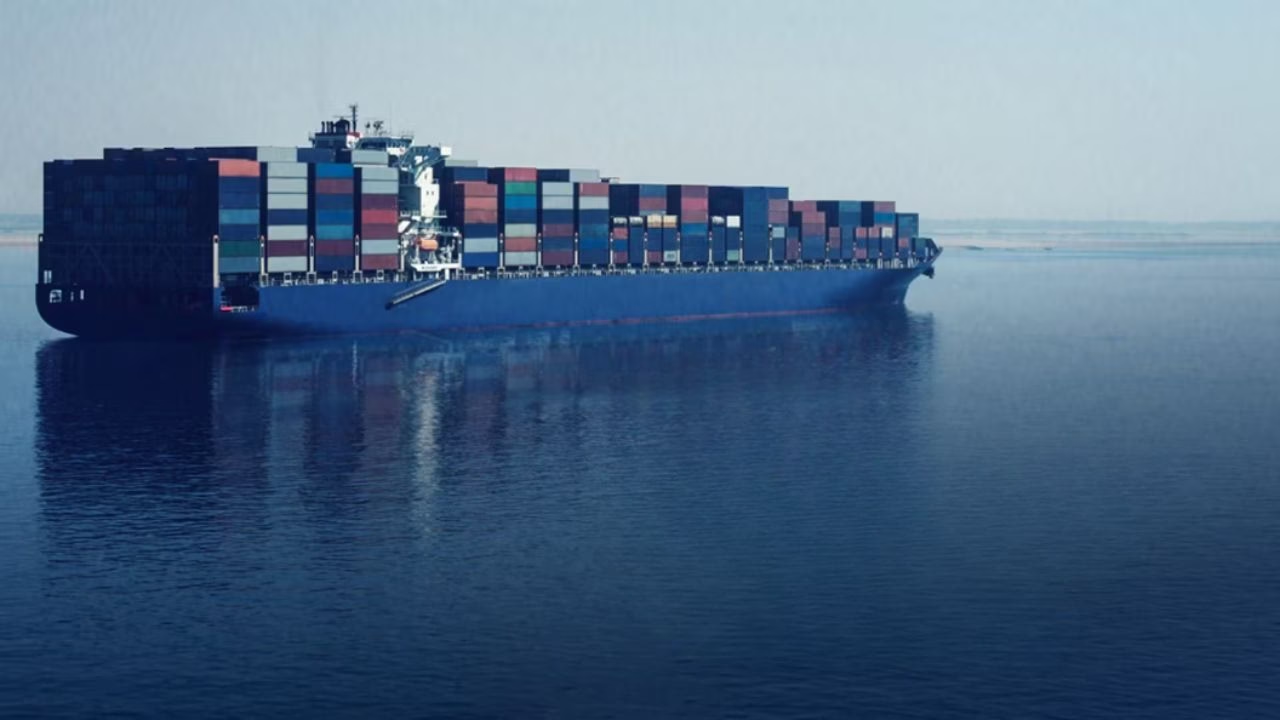
Sea freight is the backbone of export shipping methods worldwide.
Where people mess up:
- Ignoring long transit times
- Choosing wrong container type (dry vs reefer vs open top)
When to Use Which Transport Mode
Here’s the decision logic you should follow:
Use Air Freight when:
- You’re shipping small, high value goods like electronics
- You have strict delivery deadlines or perishable products
Use Sea Freight when:
- You’re exporting bulk goods like rice, textiles, or machinery
- Your buyer prioritizes cost over speed
Use Rail when:
- You’re moving heavy cargo from inland regions to ports
Use Road when:
- You’re handling first mile and last mile movement
Most real shipments use multimodal transport export, meaning a combination like road + sea or rail + sea. There is no “best” method. There is only the right method for your product, timeline, and margin. Choose wrong, and your profit disappears. Choose right, and your export business scales smoothly.
Key Documents Required in Export Logistics
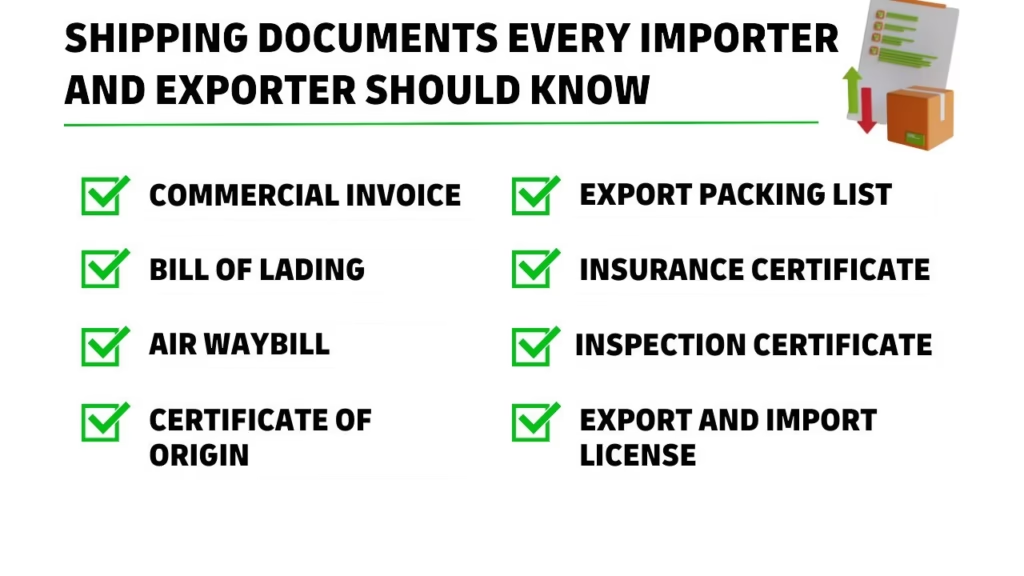
If your paperwork is wrong, your shipment doesn’t move. It’s that simple. This export documents list is non-negotiable in export documentation India.
Commercial Invoice
This is your official sales bill. It shows product value, buyer details, and terms of sale. Customs uses it to assess duties and verify the transaction.
Packing List
This details what’s inside each package weight, dimensions, quantity, and packaging type. It helps customs, freight handlers, and the buyer verify cargo contents.
Shipping Bill (India Specific)
This is the primary export document filed with Indian customs. Without it, your goods cannot legally leave the country.
Bill of Lading / Airway Bill
This is proof of shipment and ownership of goods. It also acts as a contract between exporter and carrier. If you don’t understand the bill of lading meaning, you’re risking payment disputes.
Certificate of Origin
This certifies the country where the goods were manufactured. It is required for customs clearance and for claiming trade agreement benefits.
Insurance Certificate
This proves your cargo is insured against damage, loss, or transit risk. Without it, you carry full financial risk.
Shipper’s Letter of Instruction (SLI)
This tells your freight forwarder exactly how to handle the shipment, documentation, and routing. It prevents costly miscommunication.
One mistake in any of these shipping documents export can hold your cargo for days or weeks. That’s lost time, storage fees, and damaged buyer trust.
How to Choose the Right Transportation Method for Your Export
There is no universal best method. There is only the right choice for your product, margin, and buyer expectations. Here’s the decision framework you should use when thinking about how to choose shipping method export.
Factor 1: Type of Product
Your product decides your logistics.
- Perishable food, pharma, flowers → air freight or reefer (temperature-controlled) sea container
- Heavy machinery, bulk grains, textiles → sea freight
If you mismatch product and transport, you either lose quality or lose money.
Factor 2: Delivery Urgency
Time kills deals when you ignore it.
- Urgent delivery → air transport
- Flexible delivery timeline → sea transport
Example:
- Festival season clothing shipment late by 10 days = dead inventory
- Non-seasonal bulk goods late by 10 days = acceptable
Factor 3: Cost Sensitivity
Transport cost directly affects your margin.
- Low margin product (rice, minerals, raw materials) → sea freight
- High margin product (electronics, medical supplies) → air freight
You don’t ship low margin cargo by air unless you want to wipe out profit.
Factor 4: Buyer Requirements & Incoterms
Sometimes you don’t decide. The buyer does.
Incoterms define who pays and who controls logistics:
- FOB → buyer controls main transport
- CIF → you handle freight and insurance
- DAP → you handle delivery up to buyer location
These export incoterms logistics decisions affect cost, risk, and responsibility.
Final Reality Check
When people compare air vs sea freight cost India, they focus only on price per kg. That’s amateur thinking.
You should be comparing:
- total landed cost
- delivery timeline
- risk of delay
- buyer expectations
Pick the method that protects your margin and your relationship with the buyer. Everything else is secondary.
Role of Freight Forwarders & Logistics Partners
If you try to manage export logistics alone, you will make mistakes. That’s not opinion. That’s pattern.
A good logistics partner is the operator behind your entire export shipping process. Here’s what they actually handle.
1. Booking Cargo Space
They secure space with shipping lines or airlines based on your cargo size, route, and deadlines.
Example:
- Booking a 20ft container on a vessel leaving Nhava Sheva to Dubai
- Reserving air cargo space for perishable goods to Europe
2. Negotiating Freight Rates
They negotiate pricing using their volume relationships with carriers.
Example:
- Getting you a lower ocean freight rate per container
- Reducing air freight cost by consolidating shipments
3. Customs Clearance Handling
They coordinate with a customs clearance agent India (CHA) to file documents and get approvals.
Example:
- Filing Shipping Bill correctly with HS code
- Getting Let Export Order date without delays
4. Documentation Management
They prepare and verify all export documentation so you don’t get stuck at port.
Example:
- Cross checking invoice, packing list, and bill of lading details
- Preparing Shipper’s Letter of Instruction
5. Shipment Tracking
They track your cargo from pickup to delivery and update you regularly.
Example:
- Sharing container tracking updates
- Alerting you if vessel is delayed
6. Insurance Coordination
They help arrange cargo insurance and guide you on coverage based on risk.
Example:
- Advising marine insurance for sea shipment
- Helping you claim if goods are damaged in transit
Beginners should not try to handle this alone. One wrong filing or missed booking window can cost you your buyer. A good freight forwarder role export is not optional. It’s your risk control system.
Common Export Logistics Problems (and How to Fix Them)
Every exporter faces problems. The difference is whether you fix them fast or keep repeating them. These are the most common export logistics problems India exporters deal with.
Problem 1: Documentation Errors
Wrong invoice value, missing certificate, incorrect HS code. One small mistake and your shipment gets stuck.
Fix:
Use a strict document checklist and work with a CHA.
Example:
- Double check all documents before submission
- If you are beginner let CHA verify HS code and export compliance
Problem 2: Port Delays & High Dwell Time
Cargo reaches port late or misses cutoff. Container sits for days.
Fix:
Plan dispatch timing and complete pre clearance.
Example:
- Send cargo to port at least 2–3 days before cutoff
- Finish documentation before cargo arrival
Problem 3: High Logistics Cost
Freight rates fluctuate. Beginners often overpay without realizing.
Fix:
Compare multiple quotes and consolidate shipments.
Example:
- Get quotes from 3 freight forwarders before booking
- Combine smaller shipments into one container to reduce cost per unit
This is how you actually reduce freight cost.
Problem 4: Poor Tracking Visibility
You don’t know where your cargo is. Buyer keeps asking for updates. You look unprofessional.
Fix:
Use GPS tracking and digital logistics tools.
Example:
- Use container tracking platforms
- Work with forwarders who provide live shipment updates
Problem 5: Damage to Goods (especially agriculture exports)
Moisture, heat, rough handling destroy cargo quality.
Fix:
Use proper packaging and cold chain logistics.
Example:
- Use moisture proof packaging and palletization
- Use reefer containers for perishable goods
These are not rare problems. They are daily issues in shipping delays export and global logistics. Handle them early, and you run a smooth export operation. Ignore them, and your export business stays stuck at small scale.
Special Note for Indian Exporters
If you’re exporting from India, your logistics reality is different from what most global blogs describe. You’re dealing with infrastructure gaps, paperwork layers, and port bottlenecks. Ignore that, and your export logistics India setup will break.
Infrastructure Limitations
Not every production location has smooth connectivity to ports. Rural clusters and manufacturing zones often rely on patchy road networks and inconsistent rail links.
Example:
- A textile unit in an interior district loses 2–3 days just moving cargo to the nearest ICD
- A small agri exporter faces delays because local cold storage and reefer trucks are limited
Port Congestion
Major ports like Nhava Sheva or Chennai regularly face congestion, especially during peak seasons.
Example:
- Containers waiting longer for gate-in due to heavy traffic
- Vessel rollovers because the port missed the loading window
This directly leads to shipping delays and unhappy buyers.
Documentation Complexity
Export documentation India is layered. DGFT, customs, banks, shipping lines. Miss one detail and your cargo stops.
Example:
- Incorrect HS code leading to customs query
- Missing certificate of origin delaying clearance
This is why documentation discipline is not optional.
Importance of DGFT Compliance
The DGFT export process controls your export license, IEC, incentives, and compliance framework.
Example:
- Incorrect IEC details blocking shipment
- Not aligning export product with DGFT norms leading to compliance issues
You need to treat DGFT as part of logistics, not a separate department.
Cold Chain for Agriculture Exports
If you’re exporting fruits, vegetables, seafood, or processed food, agriculture export logistics depends on temperature control.
Example:
- Mango shipment spoiling because reefer container temperature wasn’t maintained
- Seafood export rejected due to broken cold chain during inland transport
If you don’t invest in cold chain, you’re not running an export business. You’re gambling.
Why Good Export Logistics Gives You a Competitive Advantage
Most exporters compete on price. Smart exporters compete on delivery performance. Good export logistics is not an expense. It is your competitive weapon.
Faster Delivery
When your shipments arrive on time, buyers trust you.
Example:
- You consistently deliver within agreed transit time, so buyer gives you repeat orders
- You meet seasonal demand windows while competitors miss them
Lower Cost
Efficient logistics reduces hidden costs like storage, demurrage, and rework.
Example:
- Proper planning avoids port detention charges
- Smart freight selection reduces cost per shipment over time
Fewer Disputes
Clear documentation and controlled shipping reduce conflicts with buyers.
Example:
- No mismatch in invoice and packing list means smooth payment release
- Proper insurance coverage avoids disputes over damaged goods
Repeat Buyers
Buyers stick with exporters who deliver reliably.
Example:
- A European buyer continues yearly contract because your shipments never get delayed
- A distributor increases order volume because your logistics is predictable
Better Reputation
In export business, reputation spreads fast.
Example:
- Freight forwarders prefer working with you because your documentation is clean
- Buyers recommend you to other importers because you don’t create problems
Here’s what this really means:
Good logistics = predictable delivery
Predictable delivery = buyer trust
Buyer trust = repeat orders
Repeat orders = stable profit
You don’t scale exports by finding new buyers every month. You scale by delivering so well that your existing buyers keep coming back.
Conclusion: Master Logistics = Scalable Export Business
Most beginners treat logistics like back office work. That’s a mistake.
Logistics is not a support function. It is your delivery system, your cost control system, and your reputation system combined.
If your export logistics is weak:
- you miss delivery timelines
- you lose buyers
- your margins shrink because of penalties and delays
If your logistics is tight:
- shipments move on schedule
- buyers trust you
- your business grows without constant firefighting
Example 1:
An exporter who plans freight, documentation, and dispatch timing properly delivers every shipment on time. Within 6 months, the buyer doubles order volume.
Example 2:
Another exporter ignores documentation checks and shipping schedules. Two shipments get delayed. The buyer stops future orders and switches supplier.
Same product. Same market. Different logistics discipline. Different results.
What this really means is:
If you want a scalable export business, you need a repeatable logistics system.
Learn it. Build it. Standardize it.
Don’t treat it like a one time task. Treat it like a core business strategy.
FAQs
1. What is logistics in export in simple words?
It’s the complete process of moving goods from your location in India to your buyer in another country, including packing, documentation, customs clearance, and shipping.
Example:
Sending textiles from Tiruppur to Germany using sea freight
Shipping pharma samples from Hyderabad to the US via air cargo
2. Which transport method is cheapest for export from India?
Sea freight is usually the cheapest for large and heavy shipments. Air freight is more expensive but faster.
Example:
Exporting rice or granite → sea freight is most cost-effective
Exporting small electronics or urgent samples → air freight despite higher cost
3. How long does export shipping usually take?
It depends on the destination and mode of transport.
Example:
Sea freight from India to Europe → roughly 20 to 35 days
Air freight from India to Middle East → 2 to 5 days
4. What happens if export documents are wrong?
Your shipment can be held at customs, delayed at port, or even sent back. It also delays payment from the buyer.
Example:
Wrong HS code leads to customs query and delay
Invoice value mismatch causes bank/payment issues
5. Do I need a freight forwarder as a beginner exporter?
Yes. Trying to handle logistics alone as a beginner is a fast way to make costly mistakes.
Example:
A forwarder helps you book cargo and avoid port cut-off delays
A forwarder ensures your documents and customs filings are correct
About the Author
Hi, I’m SriHarsha, founder of shxhub.in.
I focus on explaining import export business topics in a practical, beginner friendly way, based on how exports actually work on the real ground especially documentation, quality control, and buyer expectations.


2 thoughts on “Export Logistics & Transportation Explained: Complete Guide (India to Global Markets)”