
That cup of coffee you’re holding? It has a story that travels across continents. Before it reached your kitchen, it was part of a massive, fast paced global industry the coffee export trade. This isn’t just about shipping beans it’s a complex network that connects tropical farms to busy city cafes, fuels economies, and shapes the daily routines of millions.
The journey from a single coffee cherry to a globally traded commodity is one of precision, risk, and incredible scale.
This guide will explain the world of coffee export. We’ll explore what it means to be a player in this multi billion dollar market, from the powerhouse nations that control supply to the complex steps required to move coffee across borders.
You will learn about the major exporting and importing countries, the different types of coffee products traded, and the challenges and opportunities that define this business.
Table of Contents
What Is Coffee Export?
What does coffee export mean in global trade?
Coffee export means selling coffee produced in one country to buyers in another country through formal international trade channels. That includes green beans, roasted coffee, instant coffee, and specialty variants.
Once coffee crosses a border for commercial sale, it becomes part of the global coffee trade and is tracked, regulated, taxed, and reported like any other commodity export.
This is not casual selling. A coffee export business operates inside a strict framework of contracts, quality standards, customs procedures, and foreign exchange rules.
Two concrete examples:
- A Brazilian exporter ships green Arabica beans to Germany for roasting and resale across Europe.
- A Vietnamese exporter sends bulk Robusta beans to the US for use in instant coffee blends.
In both cases, the product, paperwork, pricing, and compliance define the transaction. Not the glamour of coffee farming.
Why coffee is one of the most traded agricultural commodities
Coffee sits near the top of globally traded agricultural products because demand is constant, worldwide, and deeply embedded in daily consumption habits. Unlike seasonal crops, coffee is consumed year-round across cultures and income levels.
What really drives volume is geography mismatch. Coffee grows in limited tropical zones, but consumption is concentrated in North America, Europe, and East Asia. That gap forces continuous cross-border movement.
Two concrete reasons with examples:
- Production concentration: Brazil and Vietnam alone control a massive share of supply, while countries like the US and Germany produce almost none.
- Product versatility: The same coffee beans feed multiple markets. High grade Arabica goes to specialty cafés in Japan, while Robusta feeds mass market instant coffee in Europe.
That combination makes coffee export flexible even when other agricultural trades slow down.
Global Coffee Export Market Overview
Size of the global coffee export market (latest data)
The global coffee export market is massive and still expanding. In the 2025/26 season, global coffee exports crossed tens of millions of 60-kg bags within months, showing steady year on year growth. Arabica dominates volume, but Robusta is gaining value faster due to supply disruptions and rising demand.
What matters is not just volume, but value. Higher prices pushed export earnings sharply upward even when output growth was average.
Two concrete indicators:
- Monthly global exports crossed 10 million bags in peak months, signaling strong international demand.
- Export values surged as prices crossed 300 US cents per pound, inflating revenues for exporting nations.
This is a price driven market as much as a volume driven one.
Coffee export growth trends
Coffee export growth is being driven by price pressure, climate disruption, and changing consumer preferences. Supply shocks in major producing countries tightened availability, while demand for specialty and certified coffee kept expanding.
Growth is uneven. Some exporters gained from higher prices despite lower yields. Others benefited from strong Robusta demand as manufacturers looked for cheaper alternatives to Arabica.
Two clear trends:
- Vietnam’s export value jumped sharply as Robusta prices surged, even with logistics and weather challenges.
- India saw double digit export growth, driven by Robusta demand and niche products like Monsooned Malabar.
This is not a smooth growth curve. It’s volatile, opportunity rich, and unforgiving.
Arabica vs Robusta in global exports
Arabica and Robusta dominate global coffee exports, but they play very different roles in the market. Arabica commands higher prices due to flavor complexity, while Robusta wins on yield, caffeine content, and cost efficiency.
Arabica still leads in total export volume over a 12 month cycle, but Robusta is closing the value gap fast because of supply shortages and industrial demand.
Two practical comparisons:
- Colombia exports mostly Arabica to premium markets like the US and Japan, where quality drives pricing.
- Vietnam exports mainly Robusta to manufacturers in Europe and Asia for instant coffee and blends.
Understanding arabica vs robusta exports is critical if you’re evaluating profitability, target markets, or long term positioning in the coffee export business.
Top Coffee Exporting Countries in the World
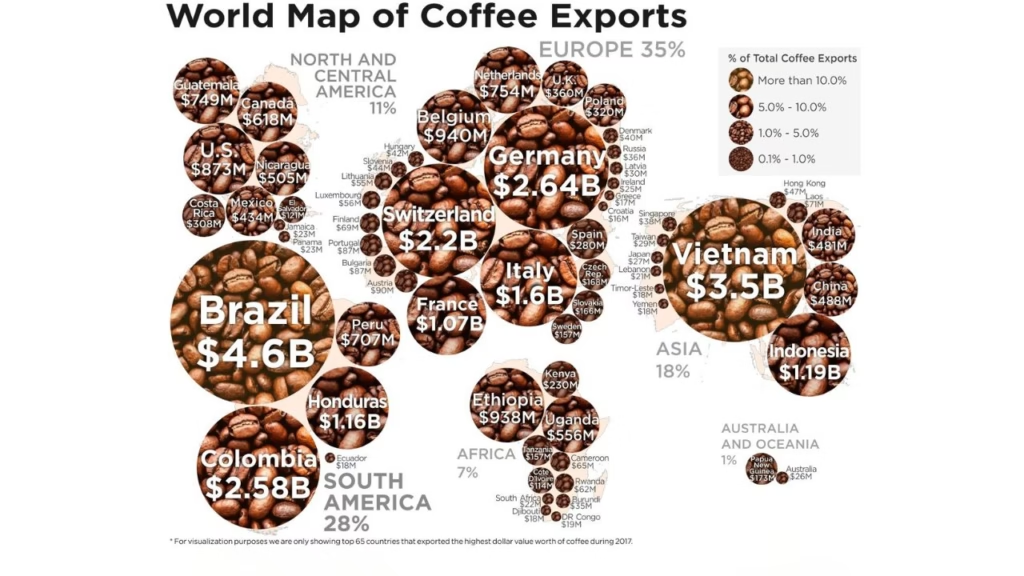
When people search for top coffee exporting countries, they’re really asking one thing who controls supply and pricing power. The answer isn’t evenly distributed. A handful of countries dominate the global coffee trade, each with a different role in the value chain.
Brazil – world’s largest coffee exporter
Brazil is the largest coffee exporter in the world, and it’s not even close. It controls roughly 30 percent of global supply and exports both Arabica and Robusta at scale.
What sets Brazil apart is consistency. Massive plantations, mechanized harvesting, and deep logistics infrastructure make Brazil the backbone of the global coffee trade.
Two realities that matter:
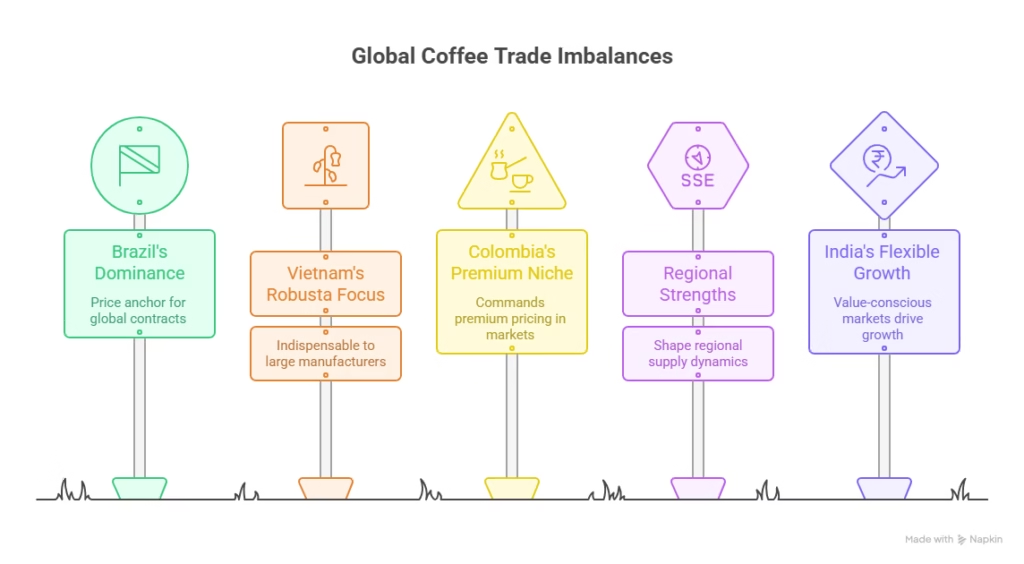
- Brazil ships record volumes year after year, making it the price anchor for global coffee contracts.
- Buyers rely on Brazil for stable supply, not just quality. When Brazil sneezes, coffee prices catch a cold.
If you’re tracking coffee export by country, Brazil is the benchmark everyone else reacts to.
Vietnam – Robusta powerhouse
Vietnam is the undisputed leader in Robusta exports. While it trails Brazil in total volume, Vietnam dominates the industrial side of the market. Instant coffee, blends, and mass market products depend heavily on Vietnamese beans.
What makes Vietnam critical:
- Robusta demand surged as Arabica prices climbed, pushing Vietnam’s export value sharply higher.
- Vietnam’s pricing efficiency makes it indispensable to large manufacturers in Europe and Asia.
Vietnam proves that being the cheapest supplier isn’t weakness. In coffee export, it’s often leverage.
Colombia – premium Arabica leader
Colombia plays a different game. It doesn’t compete on volume. It competes on reputation. Colombian coffee exports are Predominantly Arabica and heavily branded around quality, origin, and consistency.
Why Colombia matters:
- Its coffee commands premium pricing in specialty and retail markets.
- Export volumes are smaller, but margins are stronger than mass market suppliers.
Colombia shows how positioning beats scale when you own a quality narrative.
Indonesia, Honduras, Ethiopia – regional strengths

These countries don’t dominate individually, but together they shape regional supply dynamics.
Key roles with examples:
- Indonesia exports distinctive varieties like Sumatra, valued for unique flavor profiles in specialty markets.
- Ethiopia, the birthplace of coffee, sells high value beans with strong origin branding, especially in Europe.
- Honduras leads Central America in exports, supplying both specialty and commercial buyers.
Their strength lies in differentiation, not dominance.
India’s position in global coffee exports
India is not a volume leader, but it’s a fast moving player. Its coffee exports have grown sharply, driven by Robusta demand and niche offerings like Monsooned Malabar.
Two points that define India:
- India benefits from diversified production across Arabica and Robusta, reducing risk.
- Export growth is fueled by value conscious markets rather than premium only buyers.
India’s role in global coffee exports is practical, flexible, and improving, not flashy.
Major Coffee Importing Countries
Exporters often obsess over production and forget the other half of the equation. Coffee doesn’t move unless importers pull it in. The biggest coffee importers shape quality standards, pricing, and long term demand.
United States – biggest coffee importing market
The United States is the single largest coffee importing market in the world. It imports coffee at scale to feed retail chains, roasters, and food service giants.
What drives US demand:
- High per capita consumption across all income groups.
- Strong specialty coffee culture alongside massive instant and ready to drink markets.
If you’re choosing coffee export destinations, ignoring the US is strategic malpractice.

Europe’s role: Germany, Italy, Switzerland
Europe is both a consumer and a processing hub. Countries like Germany and Switzerland import green coffee, process it, and re export finished products.
Two structural advantages:
- Germany acts as a redistribution center for the European Union.
- Italy and Switzerland dominate roasting, branding, and value addition.
This is why Europe appears on both exporter and importer lists. The value chain runs through it.
Emerging markets: China and Asia
Asia is where future growth sits. Consumption is still low per capita, but rising incomes are changing habits fast.
Two signals exporters should not ignore:
- China’s coffee imports are growing as café culture spreads in urban centers.
- Southeast Asia is shifting from producer only to consumer producer hybrid markets.
These are not volume markets yet, but they’re momentum markets.
Types of Coffee Exported
Not all coffee exports are equal. The product form decides margins, compliance load, and buyer type. If you don’t choose the right category, the coffee export business becomes expensive very fast.
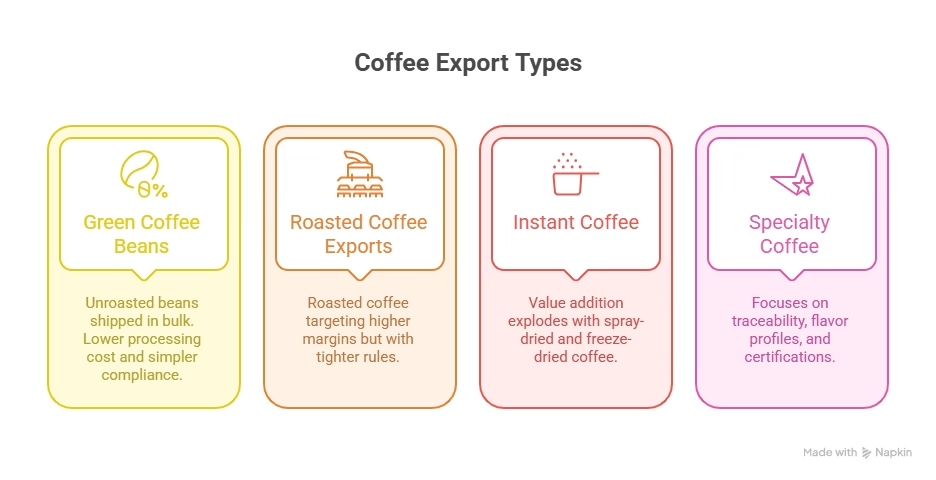
Green coffee beans
Green coffee bean export is the backbone of the global coffee trade. These are unroasted beans shipped in bulk to importing countries for roasting, blending, and resale.
Why exporters choose this:
- Lower processing cost and simpler compliance compared to finished products.
- Strong demand from roasters in the US and Europe who want control over roasting profiles.
The downside is thin margins. You compete on price, consistency, and volume. Not branding.
Roasted coffee exports
Roasted coffee exports target higher margins but come with tighter rules. Shelf life, packaging standards, and branding expectations increase complexity.
Two realities exporters face:
- You need strong packaging to protect aroma and freshness during transit.
- Buyers expect consistency. One bad batch kills repeat orders.
Roasted coffee export works best for exporters who already control quality and branding, not beginners chasing quick profits.
Instant coffee and value added products
Instant coffee export is where value addition explodes. Spray dried and freeze dried coffee move huge volumes, especially in price sensitive and mass consumption markets.
Why this segment matters:
- Higher per unit value compared to green beans.
- Massive demand from food manufacturers and private labels.
But here’s the catch capital intensity. Processing plants, compliance, and quality control are non-negotiable.
Specialty, organic, and certified coffee
Specialty coffee export focuses on traceability, flavor profiles, and certifications like organic, fair trade, or rainforest alliance.
Two things exporters underestimate:
- Certification costs money and time. It’s not a logo you clip to a bag.
- Buyers audit aggressively. Claims without proof, destroy credibility.
This segment pays well, but only if you can document every step of the supply chain.
Coffee Export Process Step by Step
This is the real coffee export process. Skip steps, and shipments get stuck or rejected. There’s no flexibility here.
Business registration and exporter requirements
You can’t export coffee as an individual hobby. You need a registered business entity that can legally enter international contracts and handle foreign exchange.
At a minimum:
- A legally registered business with tax compliance.
- Ability to open a current account and handle export payments.
Without this, everything else is pointless.
Licenses and registrations (Coffee Board, RCMC, etc.)
Coffee is regulated. Exporters must register with relevant authorities before shipping anything.
Two mandatory realities:
- Registration with the Coffee Board and obtaining RCMC is required for legitimacy.
- Export permits and registrations are verified during customs clearance.
No registration, no shipment. It’s that simple.
Quality checks and phytosanitary certification
Coffee is an agricultural product, which means inspection is unavoidable.
What happens here:
- Quality checks ensure the coffee meets buyer and destination country standards.
- Phytosanitary certificates confirm the shipment is pest free and safe.
This step protects the importer, not the exporter. Treat it seriously.
Packaging, labeling, and HS codes
Bad packaging destroys coffee before it reaches the buyer. Wrong HS codes delay or block shipments.
Two critical details:
- Packaging must prevent moisture, odor contamination, and damage.
- Correct HS code declaration ensures smooth customs processing.
Most beginners fail here because they copy paste instead of verifying.
Customs clearance and shipment
This is where paperwork meets reality. Customs authorities review documentation, valuation, and compliance before release.
What’s involved:
- Filing export declarations through customs systems.
- Coordinating with freight forwarders for shipment and delivery.
Once the cargo is loaded, mistakes become expensive. Fix everything before this stage.
Documents Required for Coffee Export
People asking about coffee export documents are not curious. They’re anxious. Missing one paper can freeze a shipment or block payment. So here’s the structure that actually reflects reality.
Mandatory export documents
These are non negotiable. Without them, coffee doesn’t move.
Core documents include:
- Commercial invoice and packing list showing product details, value, and buyer information.
- Shipping bill filed with customs for export clearance.
- Certificate of origin coffee to prove where the coffee was produced.
- Phytosanitary certificate for coffee confirming the shipment is pest free and safe.
Every document must match. Quantity mismatch or HS code errors are the fastest way to trigger delays.
Country specific certificates
This is where many exporters underestimate the risk. Importing countries often demand additional paperwork beyond the basics.
Two common scenarios:
- European buyers may require sustainability or traceability declarations linked to deforestation rules.
- Premium markets may demand organic, fair trade, or origin specific certificates issued by approved agencies.
Country rules change. Exporters who don’t verify requirements per shipment pay for it later.
Digital platforms used for clearance
Coffee export documentation is no longer paper heavy. Most countries use digital systems for filing and tracking.
Two key functions of these platforms:
- Electronic submission of shipping bills, certificates, and declarations.
- Real time coordination between exporters, customs, and port authorities.
If you don’t understand the platform used in your export country, you’re not export ready.
Coffee Export Prices and Profitability
This section matters because people assume coffee export profitability is guaranteed. It isn’t. Prices move fast, margins are thin, and mistakes compound.

Global coffee export prices and factors affecting them
Coffee export price depends on far more than bean quality. Global benchmarks, weather, logistics, and currency swings all play a role.
Major price drivers include:
- Climate disruptions like floods or droughts that reduce supply and spike prices.
- Futures market movements that influence contract pricing.
- Shipping costs and insurance, which directly hit landed price per ton.
That’s why coffee price per ton can change dramatically within a single season.
How exporters make money in coffee trade
Exporters don’t win by guessing prices. They win by controlling costs and positioning product correctly.
Two proven paths to profitability:
- Volume driven exports of green or Robusta beans with tight cost control and long term contracts.
- Value driven exports like specialty or certified coffee with higher margins but lower volumes.
The mistake is mixing both models without understanding cash flow.
Risks that impact margins
Coffee export profitability is fragile. Small risks have oversized effects.
The biggest margin killers:
- Price volatility that locks exporters into bad contracts.
- Quality rejections that force discounts or returns.
- Currency fluctuations that erase profits between shipment and payment.
If your margin doesn’t account for these risks, it’s not a margin. It’s a guess.
Challenges in Coffee Export Business
Anyone selling coffee exports as “easy money” is lying or inexperienced. The risks in coffee export are structural, not accidental.
Climate change and production risks
Coffee is highly climate sensitive. Small shifts in rainfall or temperature can wipe out yields or downgrade quality.
Two hard realities:
- Random rainfall and heatwaves reduce bean size and consistency, pushing prices up but cutting exportable volume.
- Floods and droughts disrupt harvest cycles, making long term contracts risky.
This is why coffee export challenges start at the farm, not the port.
Logistics, shipping, and cost pressures
Getting coffee out of the country is often harder than producing it.
Key pressure points:
- Container shortages and port congestion delay shipments and raise freight costs.
- Rising insurance and fuel charges eat directly into margins.
Exporters who don’t lock logistics early lose control over delivery timelines and buyer confidence.
Regulatory and compliance challenges (EU rules)
Coffee trade regulations are tightening, not loosening. Compliance is now a competitive filter.
Two examples exporters must prepare for:
- EU deforestation regulations requiring proof that coffee isn’t linked to illegal land use.
- Stricter documentation checks on origin, traceability, and sustainability claims.
Non compliance doesn’t just delay shipments. It can permanently block market access.
Future Trends in Coffee Exports
The future of coffee trade won’t reward volume alone. It will reward exporters who adapt faster than regulations and consumer expectations.
Sustainability and traceability
Sustainable coffee exports are shifting from optional to mandatory.
What this really means:
- Buyers want traceability down to farm or cooperative level.
- Documentation will decide who gets contracts.
Exporters who invest early in traceable supply chains will survive. Others will get priced out.
Growth of specialty and premium coffee
Specialty coffee is growing faster than commodity coffee, even in uncertain markets.
Two drivers:
- Consumers are paying more for flavor, origin, and ethical sourcing.
- Cafés and roasters want differentiated products, not interchangeable beans.
This trend favors exporters who understand quality segmentation, not just tonnage.
Value added exports shaping margins
Value addition is where margins are moving, but it’s not easy money.
Two clear shifts:
- Growth in roasted, instant, and branded coffee exports.
- Higher entry barriers due to processing costs and compliance requirements.
Value added exports won’t replace green bean trade, but they will define who earns real profit.
Conclusion: Is Coffee Export a Possible Business Today?
Yes, Coffee Export is a viable business today. But only under specific conditions, not by default.
The global coffee trade is large, liquid, and growing in value. Demand isn’t disappearing. Prices remain strong, and buyers exist across the US, Europe, and Asia. On paper, that makes coffee export attractive.
Here’s the reality check.
Coffee export works if you understand where you fit in the chain. Volume driven exporters survive on efficiency and contracts. Value driven exporters survive on quality, traceability, and compliance. Mixing those models without capital or control is how most exporters fail.
The risks are real. Climate volatility can shrink supply overnight. Logistics costs can erase margins. Regulations, especially in Europe, punish messy documentation and unverifiable sourcing. None of this is temporary.
At the same time, the upside hasn’t vanished. Specialty coffee, certified supply, and value added exports are expanding faster than raw commodity trade. Exporters who invest in traceability, pricing discipline, and operational clarity still have room to grow.
What this really means is simple:
Coffee export is not a shortcut business. It rewards planning, capital discipline, and long term thinking. If you approach it like trading numbers on a spreadsheet, you’ll struggle. If you treat it like a structured international business, it still makes sense.
FAQs
Q1. Is coffee export profitable for small exporters?
It can be, but only if the model is clear. Small exporters make money either by supplying consistent volumes of green coffee to repeat buyers or by focusing on specialty and certified coffee with higher margins. Trying to compete with Brazil or Vietnam on price as a small exporter is a losing game.
Q2. Which country is the largest coffee exporter in the world?
Brazil is the largest coffee exporter in the world by a wide margin. It controls roughly 30% of global supply and exports both Arabica and Robusta at scale. Most global coffee prices indirectly depend on Brazil’s production and export volumes.
Q3. What license is required to export coffee?
Coffee exporters must register their business and obtain exporter registrations such as RCMC from the relevant authority. In many countries, registration with the Coffee Board or equivalent body is mandatory, along with standard export documentation and customs registration.
Q4. What is the minimum quantity required to export coffee?
There is no fixed minimum quantity set globally, but in practice coffee exports are done in bulk to control logistics costs. Small trial shipments are possible, but profitability improves significantly at container-level volumes.
Q5. What are the biggest risks in coffee export?
The biggest risks include price volatility, quality rejections, logistics delays, and regulatory non-compliance. Climate-related supply disruptions and currency fluctuations also directly impact margins, especially for exporters working on thin spreads.
About the Author
Hi, I’m Sriharsha, founder of shxhub.in.
I focus on explaining import export business topics in a practical, beginner friendly way, based on how exports actually work on the real ground especially documentation, quality control, and buyer expectations.



1 thought on “Coffee Export: 9 Powerful Facts, Profits, and Risks You Must Know”