
Getting paid is the real backbone of any export business. You can have the best product, a genuine buyer, and smooth logistics but if payment goes wrong, everything else becomes meaningless. That’s why understanding export payment terms in India is one of the first responsibilities of every exporter.
Among all available export payment terms, advance payment is often considered the safest option, especially for beginners. Yet many new exporters hesitate to ask for it, worrying that buyers may refuse or think they lack trust.
In reality, advance payment in export business is not about mistrust it’s about risk management. When used correctly, it protects exporters from losses, improves cash flow, and builds discipline into the business from day one.
This guide explains advance payment in export in a practical, real-world way what it means, how it works, where it fits among other export business payment terms, and why it is often the best payment terms for export when you’re starting out.
Table of Contents
What Is Advance Payment in Export?
Advance payment means the buyer pays you before the goods are shipped. The payment can be:
- Full advance payment
- Partial advance payment (for example, 30% or 50% before shipment)
In simple words, money comes first, shipment comes later.
In export trade, advance payment can be received through:
- Bank transfer (TT / wire transfer)
- SWIFT remittance
- Sometimes online payment gateways (for small consignments)
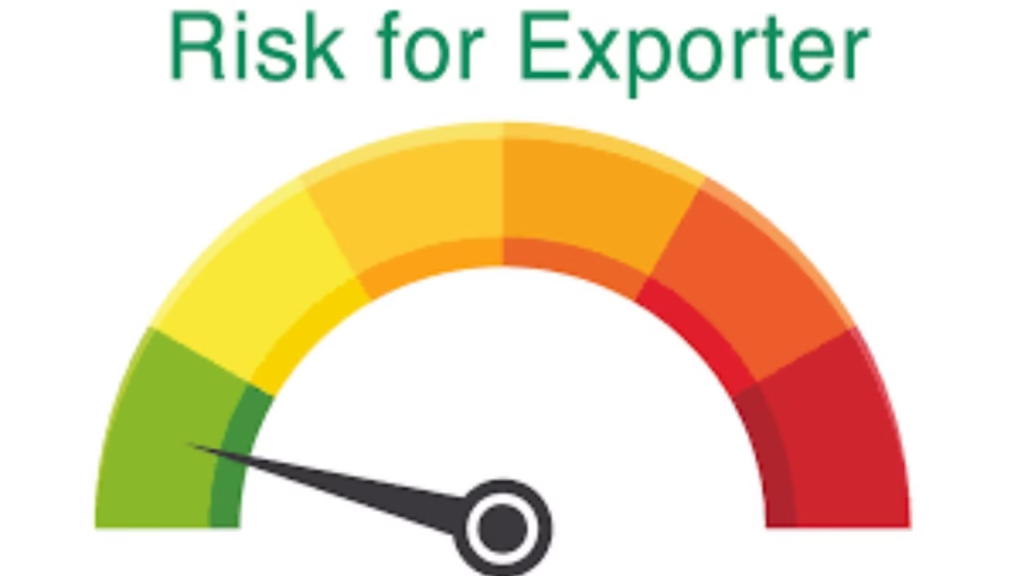
From an exporter’s perspective, this is the lowest risk payment method.
Advance Payment Terms Meaning (In Simple Language)
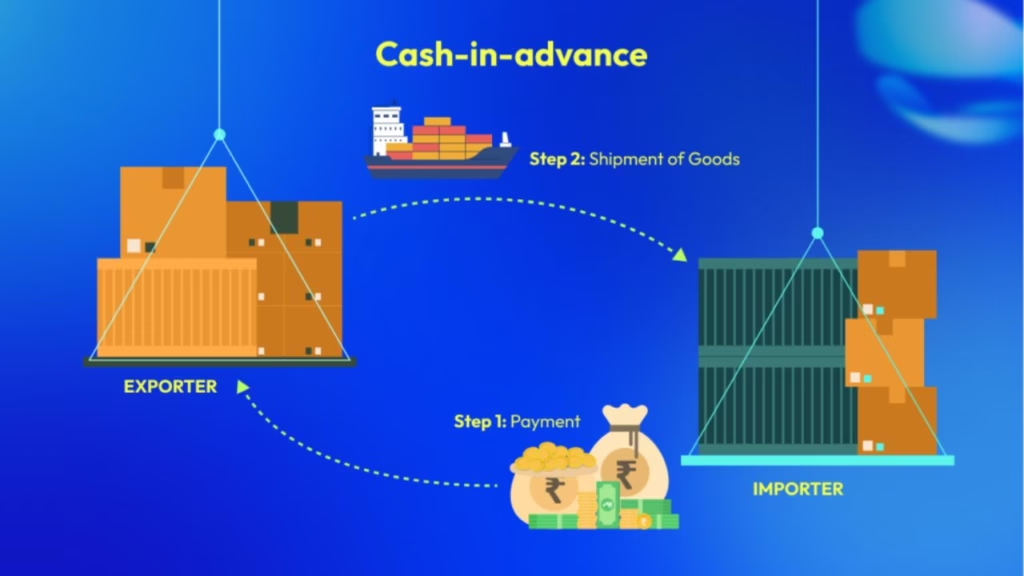
The advance payment terms meaning is straightforward:
The exporter receives payment from the foreign buyer before dispatching goods.
There is no credit period, no bank waiting, and no dependency on documents being accepted by the buyer or bank. Once the money reflects in your bank account, you proceed with production or shipment.
This makes advance payment fundamentally different from LC, DP, DA, or CAD payment terms.
Why Advance Payment Matters in Export Business
Most beginners underestimate how fragile export transactions can be. Common problems include:
- Buyer delays payment
- Buyer rejects documents
- Buyer disappears after shipment
- Currency fluctuation losses
- Bank document discrepancies
Advance payment eliminates most of these risks at the start itself.
That’s why many experienced exporters strongly recommend advance payment export business models for first time shipments.
9 Smart Benefits of Advance Payment in Export Business
Let’s break down why advance payment is often the smartest choice for new exporters.
1) Zero Payment Risk for Exporters
This is the biggest advantage.
When payment is received before shipment:
- There is no risk of non payment
- No dependency on buyer honesty after shipment
- No waiting for document acceptance
Compared to DA payment terms in export or DP payment terms, advance payment completely removes buyer credit risk.
For beginners, this safety is priceless.
2) Strong Cash Flow from Day One
Exporting requires upfront spending:
- Raw materials
- Packaging
- Transport
- Documentation
- Port charges
With advance payment:
- You don’t use personal savings
- You don’t depend on loans
- Your working capital cycle stays healthy
In contrast, LC payment terms in export or CAD payment terms in export often lock money for weeks.

3) Simplest Export Payment Process
Advance payment has the least paperwork among all export payment terms in India.
There’s no:
- LC drafting
- Bank negotiation
- Document scrutiny delays
The export advance payment process is simple:
- Buyer sends payment
- Bank credits your account
- You ship goods
- You submit export documents to your bank
This simplicity is extremely helpful for first time exporters.
4) No Bank Charges or LC Costs
LCs come with:
- Opening charges
- Amendment fees
- Discrepancy charges
- Negotiation charges
Advance payment avoids all this.
That’s why many exporters consider it the best payment terms for export when shipment value is small or buyer is new.
5) Strong Negotiation Position
When buyers pay in advance:
- They are serious
- They respect timelines
- They communicate better
Advance payment filters casual or risky buyers. Serious buyers understand that advance payment protects both sides.
This discipline improves long term buyer quality.
6) Faster Order Execution
With funds already received:
- Production starts immediately
- No approval delays
- No bank coordination issues
Compared to TT payment terms in export with post shipment payment, advance payment saves time and stress.
7) Ideal for First Time Buyers and Small Orders
When you are exporting to:
- New buyers
- Small businesses
- First-time importers
Advance payment is the safest starting point.
Many exporters later move to LC or DP only after trust is built.
8) Better Compliance with FEMA & RBI Rules
Under Indian regulations:
- Advance payment is fully allowed
- RBI permits advance export payment under FEMA
- Banks regularly handle advance payment cases
As long as shipment is made within prescribed timelines, advance payment under FEMA is straightforward and compliant.
9) Mental Peace for New Exporters
This benefit is often overlooked.
Advance payment removes:
- Anxiety about payment
- Stress after shipment
- Follow up pressure
For new exporters, peace of mind helps focus on growth, not damage control.
Advance Payment vs Other Export Payment Terms
Understanding where advance payment stands among export business payment terms is important.
Advance Payment vs LC in Export
- Advance payment = no bank risk, faster
- LC = safer than open account, but complex and costly
Advance Payment vs TT Payment Terms in Export
- Advance TT = safe
- Post shipment TT = buyer risk remains
Advance Payment vs DP / DA Payment Terms
- DP = payment after documents
- DA = payment after credit period
- Advance payment = payment before shipment (lowest risk)
When to Use Advance Payment in Export?
Advance payment is best when:
- You are a new exporter
- Buyer is unknown
- Shipment value is low to medium
- Product is customized
- Country risk is high
As trust grows, exporters gradually diversify payment methods.

Is Advance Payment Always Risk Free?
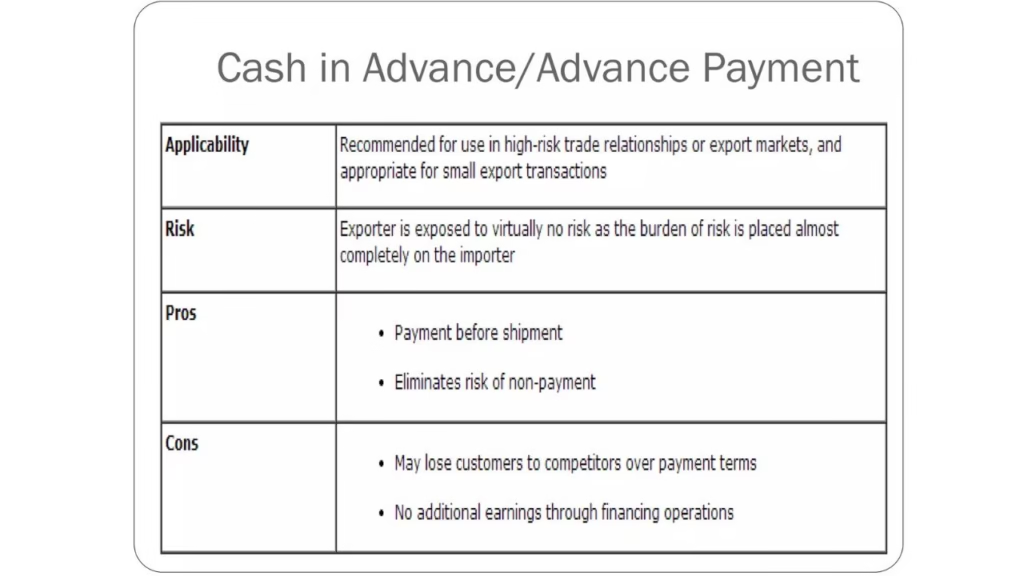
For exporters mostly yes.
But for buyers, advance payment carries risk, which is why some buyers hesitate.
That’s why communication matters.
To build buyer confidence:
- Share company details
- Share IEC and GST
- Offer partial advance payment
- Provide advance payment letter
What Is an Advance Payment Letter?
An advance payment letter is a written confirmation stating:
- Amount received
- Purpose of payment
- Commitment to ship goods
- Expected shipment timeline
This builds buyer trust and protects both sides legally.
Partial Advance Payment: A Balanced Approach
Many exporters use:
- 30% advance payment
- 70% against documents or before shipment
This hybrid model works well when:
- Buyer resists full advance
- Relationship is new but promising
Documents Required for Advance Payment in Export
Banks usually ask for:
- Proforma invoice
- Purchase order
- FIRC (after receipt)
- Export documents after shipment
Compared to import export payment terms pdf procedures for LC, this is much simpler.
Common Mistakes Exporters Make with Advance Payment
- Not issuing advance payment acknowledgment
- Delaying shipment after receiving money
- Poor communication with buyer
- Ignoring FEMA timelines
Advance payment works best when professionalism is maintained.
How Advance Payment Fits into Export Payment Terms in India
India’s export ecosystem supports advance payment strongly because:
- It reduces export fraud
- Improves exporter liquidity
- Simplifies compliance
That’s why many banks encourage advance payment for MSME exporters.
Should You Start Your Export Business with Advance Payment?
If you are asking:
“Which payment method is safest in export?”
The honest answer is advance payment. It may not suit every buyer, but it protects you when you need protection the most at the beginning.
Final Thoughts
Advance payment in export business is not old fashioned or unprofessional. It is a smart risk control tool, especially for new exporters.
As your business grows, you’ll naturally explore LC, DP, DA, and CAD payment terms. But starting with advance payment builds a strong foundation.
In export trade, survival comes before flexibility and advance payment helps you survive, stabilize, and scale.
Will foreign buyers agree to advance payment?
Some buyers may hesitate, especially if it’s their first deal with you. This is normal. Advance payment works best when:
The order value is small
The product is in high demand
You offer samples or references
You are transparent with communication
As trust builds, many exporters later move to partial advance or other payment terms.
Do I need to issue any document after receiving advance payment?
Yes. After receiving advance payment, exporters usually issue:
A proforma invoice (before payment)
A receipt or acknowledgement (optional but professional)
Later, the commercial invoice and shipping documents complete the process.
What if I receive advance payment but shipment gets delayed?
Holds may occur as a result of production, logistical, or customs problems. In these situations, clear communication with the purchaser is the most effective strategy. If delays extend significantly, banks might request clarifications, making it essential to have documentation and emails prepared.


2 thoughts on “Advance Payment in Export Business: 9 Smart Benefits Every New Exporter Should Know”