
If you’ve ever been involved in an import or export deal, you’ve probably heard terms like FOB, CIF, or DDP thrown around casually. Most people nod, pretend they understand, and move on. That’s a mistake.
Those three letter terms decide who pays, who carries the risk, and who gets blamed when something goes wrong. Get them right and trade feels predictable. Get them wrong and you end up paying for delays, damage, or costs you never agreed to.
That’s where Incoterms come in.
Incoterms, short for International Commercial Terms, are a set of standardized rules created by the International Chamber of Commerce to remove confusion from international trade. They define responsibilities between buyers and sellers with clarity transport, costs, and the exact point where risk shifts.
The problem isn’t that Incoterms are complicated. The problem is that they’re misunderstood, misused, and often copied without thinking. Traders use FOB for air shipments, assume insurance is included when it isn’t, or forget to specify the Incoterms version altogether. Those small errors turn into real money losses.
If you’re involved in cross border trade and you don’t fully understand Incoterms, you’re making assumptions . And it is expensive in international trade.
In this guide, you’ll understand what Incoterms actually mean, the 11 Incoterms used under Incoterms 2020, how they’re classified, and how to choose the right one for your shipment without guessing. If you’re serious about import export, this isn’t optional reading.
Table of Contents
Why Incoterms Exist (And Why Most Traders Misuse Them)
Here’s the reality of international trade goods move across borders, but confusion moves faster.
- Who pays for freight?
- Who handles insurance?
- At what point does the risk shift from seller to buyer?
Without clear rules, every shipment becomes an argument waiting to happen. That’s exactly why Incoterms exist.
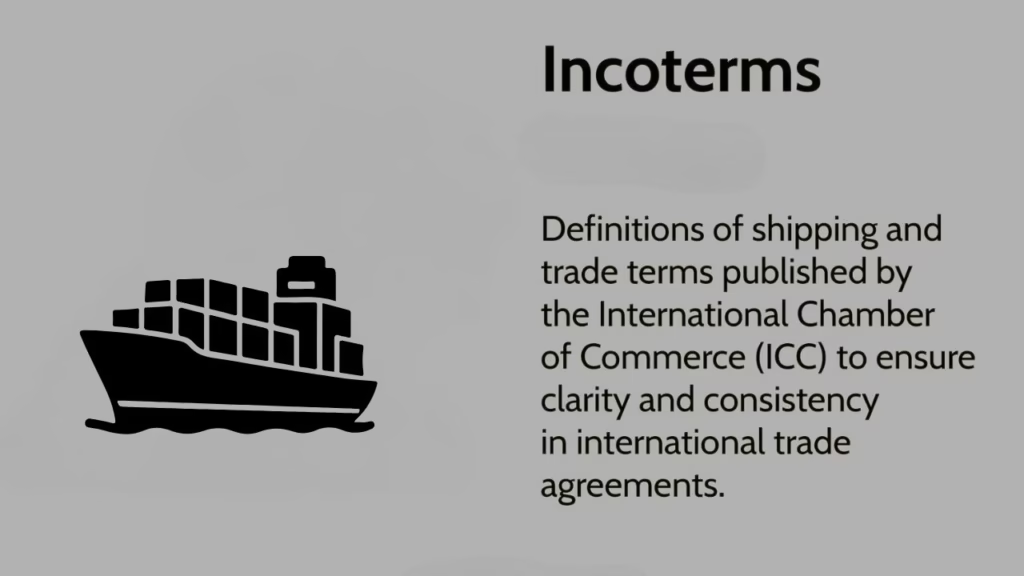
Incoterms are standardized rules published by the International Chamber of Commerce (ICC). Their job is simple remove ambiguity from international trade transactions. They spell out, in black and white, who is responsible for what, who pays which costs, and when risk transfers from seller to buyer.
What Incoterms solve:
- Responsibility: who handles shipping, customs, and delivery
- Cost: who pays freight, insurance, duties, and charges
- Risk: the exact point where damage or loss becomes the buyer’s problem
This is why Incoterms are used globally and referenced in nearly every serious international trade contract.
Now the mistake most traders make. They assume Incoterms cover everything. They don’t.
Incoterms do NOT decide ownership transfer or payment terms.
- They won’t tell you when money is paid.
- They won’t tell you who legally owns the goods at each stage.
What this really means is simple Incoterms are logistics rules, not financial or legal ownership rules. Mixing those up is how traders get burned.
Get the Incoterms meaning right, and you reduce disputes, delays, and unnecessary costs. Get it wrong, and even a profitable deal can turn ugly fast.
What Are Incoterms?
Incoterms is short for International Commercial Terms. That’s the Incoterms full form, and it already tells you what they’re about commercial rules for international trade.
They are issued by the International Chamber of Commerce (ICC) and used in sales contracts involving cross border movement of goods. If you’re exporting or importing anything beyond your own country, Incoterms are not optional. They are the language both buyers and sellers rely on to avoid chaos.
So, what are Incoterms in practical terms?
Incoterms define three things only. And they define them very clearly.
What Incoterms DO
- Define transport responsibility
Who arranges carriage, up to which point, and using which mode of transport. - Define cost allocation
Who pays for freight, insurance, loading, unloading, duties, and other logistics related costs. - Define the risk transfer point
The exact moment when the risk of loss or damage shifts from seller to buyer.
That’s the entire scope. Nothing more.
What Incoterms DO NOT Do
- They do not transfer ownership
Title or ownership of goods is decided by the sales contract, not Incoterms. - They do not decide payment terms
Advance payment, LC, DA, DP, or credit terms are outside Incoterms. - They do not enforce contracts
Incoterms are rules, not laws. Enforcement comes from the contract and applicable legal system.
This difference matters. Most Incoterms disputes happen because traders expect Incoterms to cover things they were never designed to cover. Understand the Incoterms definition correctly, and half your problems disappear.
Why Incoterms Are Critical in International Trade
International trade involves distance, multiple parties, and multiple jurisdictions. That’s a perfect setup for misunderstandings. Incoterms exist to remove ambiguity.
Risk Transfer Clarity
Incoterms clearly state when risk moves from seller to buyer.
No assumptions. No “we thought you were responsible.” Just a fixed point in the logistics chain.
Cost Responsibility Clarity
Freight, insurance, terminal charges, customs duties. Someone pays for all of it.
Incoterms make sure both parties know who pays what, before the shipment moves.
Dispute Reduction
Most trade disputes are not about product quality. They’re about logistics responsibility.
Using the correct Incoterm reduces arguments over delays, damages, and unexpected costs.
Universal Acceptance
Incoterms are recognized worldwide and used consistently in export import transactions across countries, including India and the USA. That standardization is why global trade functions at scale.
One important legal reality Incoterms are not legally binding by themselves. They become enforceable only when included in a sales contract. Once referenced correctly, they carry serious contractual weight.
That’s the real importance of Incoterms. They bring structure, predictability, and accountability to international trade. Ignore them, misuse them, or misunderstand them, and you’re inviting unnecessary risk into your export import business.
Incoterms 2020 Explained (Latest Version)
Incoterms are not static rules. They evolve because global trade evolves.
The first Incoterms were introduced in 1936 by the International Chamber of Commerce. Since then, they’ve been updated periodically to reflect changes in transport methods, insurance practices, and commercial reality. This is where many traders mistakes. They learn one version and assume it lasts forever. It doesn’t.
The latest Incoterms are Incoterms 2020. These rules apply to contracts that explicitly reference them and remain valid until the ICC releases a newer edition.
One key change in Incoterms rules 2020:
- DAT (Delivered at Terminal) was replaced by DPU (Delivered at Place Unloaded)
The shift matters because delivery is no longer restricted to a terminal. Goods can be delivered and unloaded at any agreed place, as long as unloading is possible.
This change alone has practical consequences for logistics planning and liability.
Here’s the non negotiable usage rule:
Always specify the Incoterms version in your contract.
Not “FOB Shanghai.”
Correct is “FOB Shanghai Incoterms 2020.”
Without the version, you’re leaving room for misinterpretation, and it is where disputes start. If you care about clarity and enforceability, treat the version reference as mandatory.
How Incoterms Are Classified
To understand Incoterms properly, you need to stop viewing them as a random list. There is a clear structure behind them.
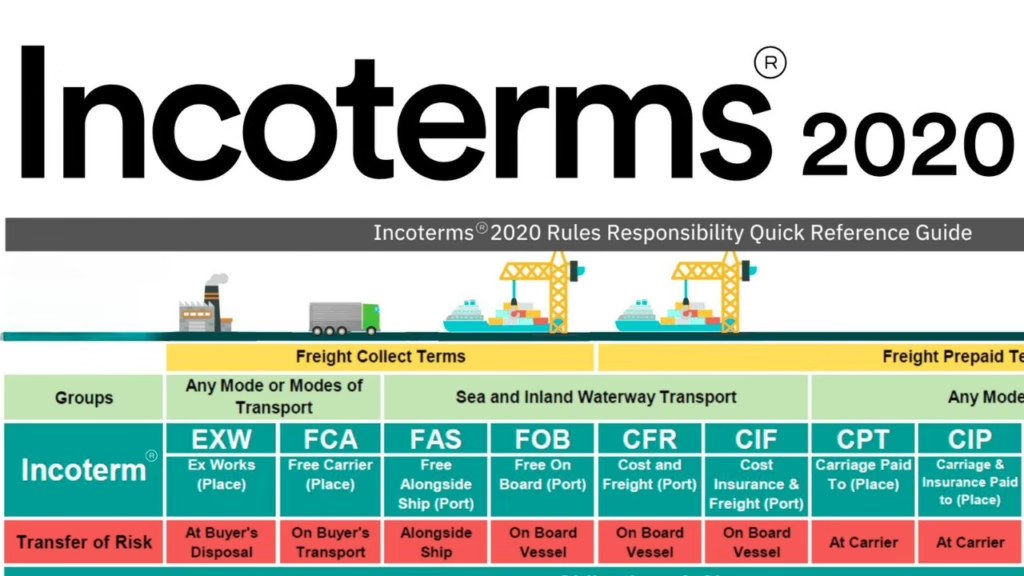
Under Incoterms 2020, there are 11 Incoterms in total. These are divided based on how the goods are transported.
Two Main Groups of Incoterms
1. Incoterms for Any Mode of Transport
These apply to all forms of transport, including road, rail, air, sea, or multimodal shipments.
2. Incoterms for Sea and Inland Waterway Transport Only
These apply strictly to sea freight or inland waterways and should not be used for air or containerized multimodal shipments.
This Incoterms classification exists for a reason. Using a sea only Incoterm for air cargo is not a small technical error. It’s a structural mistake that can break responsibility and insurance logic.
Once you understand this split, the types of Incoterms make sense, and the full Incoterms list becomes far easier to apply correctly in real export import contracts.
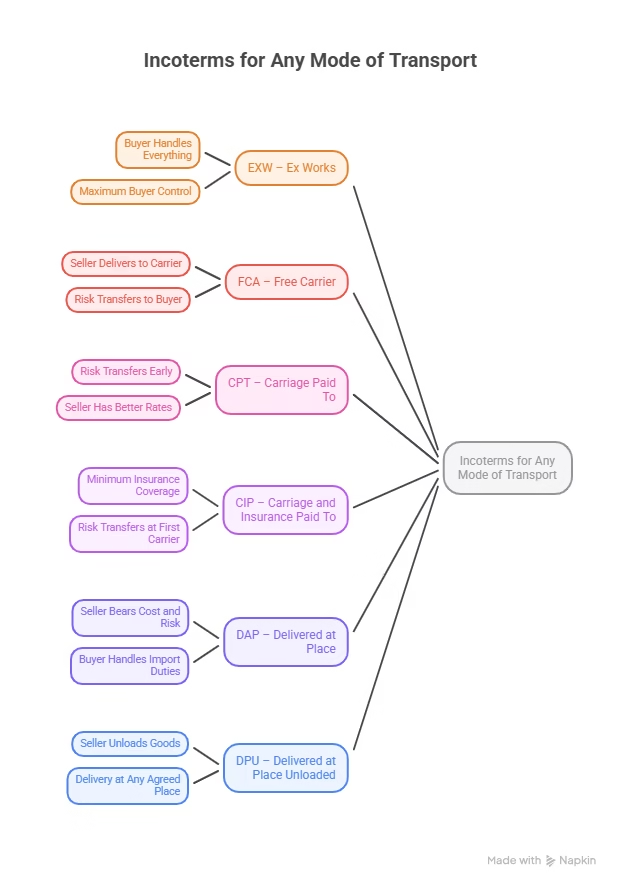
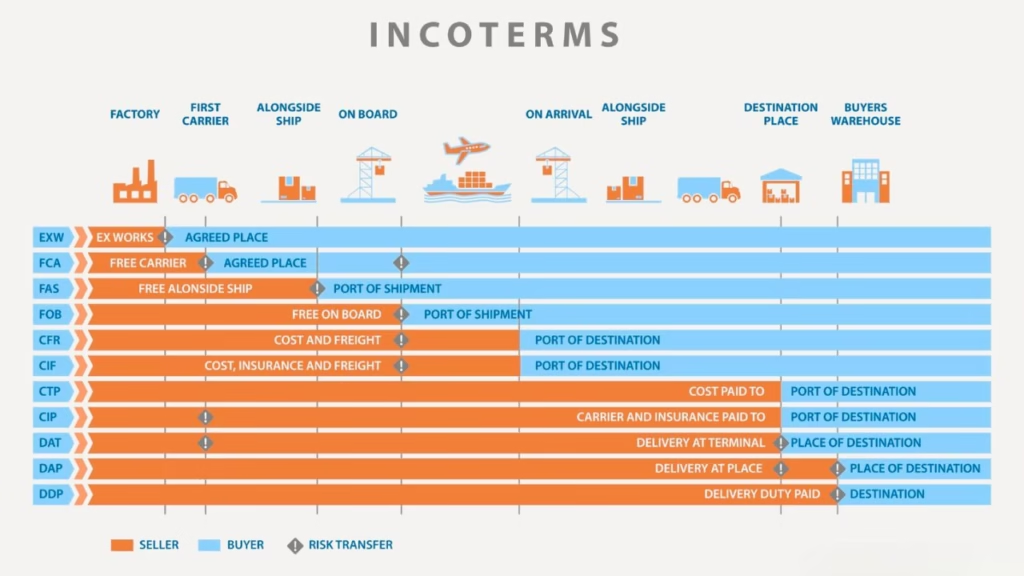
Incoterms for Any Mode of Transport (7 Types)
These Incoterms apply regardless of how the goods move. Road, rail, air, sea, or multimodal shipments all fall under this group. If your cargo involves containers or mixed transport, this is usually where you should be looking first.
EXW – Ex Works
EXW Incoterms represent the minimum obligation for the seller.
Under Ex Works, the seller simply makes the goods available at their premises or another agreed location. From that point onward, the buyer handles everything loading, transport, export customs, insurance, and risk.
Ex Works meaning in practice maximum control for the buyer, minimum responsibility for the seller. This term is often misunderstood and misused, especially in international shipments where export clearance becomes messy.
FCA – Free Carrier
FCA Incoterms strike a more balanced approach.
The seller delivers the goods to a carrier or another party nominated by the buyer at a named place. Once delivered to that carrier, risk transfers to the buyer.
Free Carrier Incoterms are commonly used for containerized cargo and are often a better alternative to EXW, especially when the seller can handle export customs clearance more efficiently.
CPT – Carriage Paid To
With CPT Incoterms, the seller pays for the main carriage to a named destination.
Here’s the catch most people miss risk transfers earlier, when the goods are handed over to the first carrier, not at the destination.
Carriage Paid To Incoterms work well when the seller has better freight rates, but buyers need to understand they still carry transit risk.
CIP – Carriage and Insurance Paid To
CIP Incoterms build on CPT by adding insurance.
The seller pays for transport and also provides minimum insurance coverage for the buyer’s risk during transit. Risk still transfers at the first carrier, just like CPT.
Carriage and Insurance Paid To is common for higher value goods, but buyers should always check whether the insurance level is actually sufficient.
DAP – Delivered at Place
Under DAP Incoterms, the seller bears the cost and risk of delivering the goods to a named place in the destination country.
The seller does not unload the goods, and the buyer handles import duties and taxes.
Delivered at Place is popular because it offers buyers visibility and sellers control, without pushing the seller into import customs obligations.
DPU – Delivered at Place Unloaded
DPU Incoterms are unique because the seller must unload the goods at the destination.
This term replaced DAT under Incoterms 2020 and allows delivery at any agreed place, not just a terminal.
Delivered at Place Unloaded shifts more responsibility to the seller and should only be used when unloading at the destination is practical and clearly defined.
DDP – Delivered Duty Paid
DDP Incoterms place the maximum obligation on the seller.
The seller handles transport, unloading, import customs clearance, and pays all duties and taxes. The buyer simply receives the goods.
Delivered Duty Paid sounds attractive to buyers, but it can be risky for sellers who are unfamiliar with local regulations, taxes, or compliance in the buyer’s country.
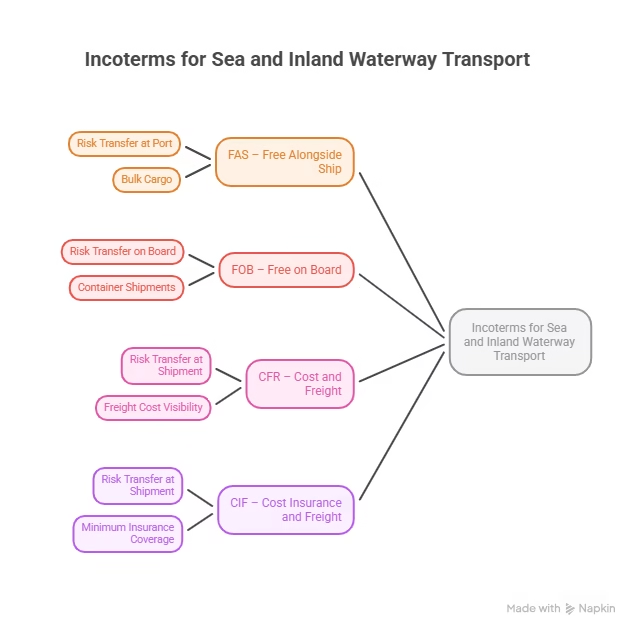
Incoterms for Sea and Inland Waterway Transport (4 Types)
These Incoterms apply ONLY to sea freight or inland waterways. Using them for air cargo or multimodal container shipments is a common and costly mistake.
FAS – Free Alongside Ship
Under FAS Incoterms, the seller places the goods alongside the vessel at the named port of shipment.
Once the goods are alongside the ship, risk transfers to the buyer.
Free Alongside Ship is mainly used for bulk or non containerized cargo where loading is handled by the buyer.
FOB – Free on Board
FOB Incoterms require the seller to load the goods on board the vessel at the port of shipment.
Risk transfers once the goods are on board the ship.
Free on Board is widely used but also widely misused, especially for container shipments where FCA is often more appropriate.
CFR – Cost and Freight
With CFR Incoterms, the seller pays the cost and freight to bring the goods to the destination port.
However, risk transfers at the port of shipment, once the goods are on board the vessel.
Cost and Freight gives buyers freight cost visibility but still leaves them exposed to transit risk.
CIF – Cost Insurance and Freight
CIF Incoterms are similar to CFR, with one key addition the seller provides minimum insurance coverage.
Risk transfers at shipment, not at destination.
Cost Insurance Freight terms are common in commodity trading, but buyers should verify the insurance level rather than assuming full protection.
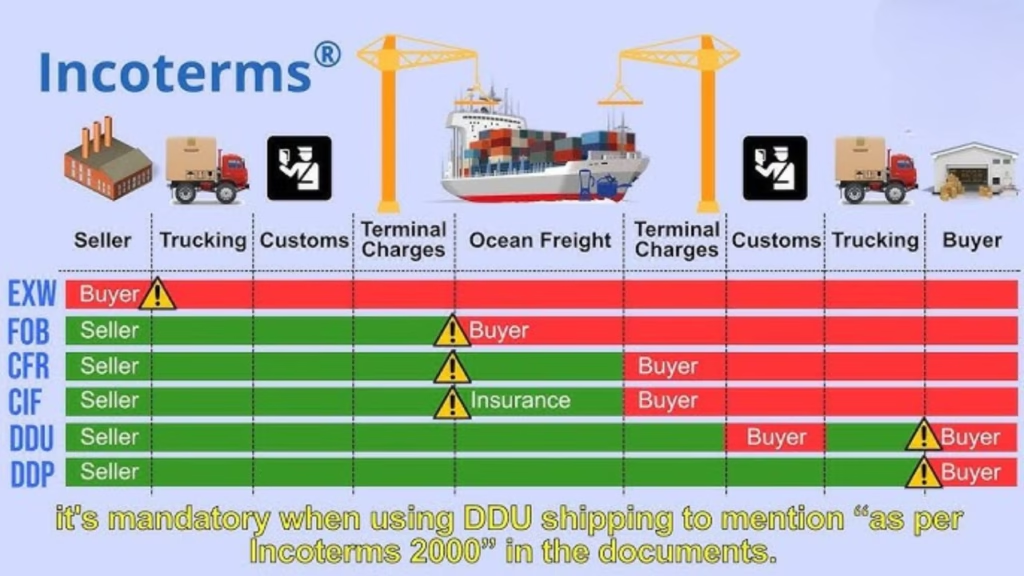
Key Differences Between Major Incoterms (Buyer vs Seller Responsibility)
Most traders don’t lose money because they chose the wrong product. They lose money because they chose the wrong Incoterm. This is where Incoterms comparison actually matters.
Below are the differences that cause the most confusion in real export import deals.
EXW vs FCA
This is a classic beginner mistake.
Under EXW, the seller’s job ends the moment the goods are made available at their premises. The buyer handles loading, export customs, transport, and carries risk from the start.
Under FCA, the seller delivers the goods to a carrier nominated by the buyer and usually clears them for export. Risk transfers only after that handover.
What this means in practice:
EXW gives maximum responsibility to the buyer. FCA is usually more realistic and compliant for international trade.
FOB vs CIF
This is one of the most searched Incoterms comparisons, and also one of the most misunderstood.
Under FOB, the seller loads the goods on board the vessel. Once the cargo is on the ship, risk transfers to the buyer. The buyer arranges insurance and pays freight.
Under CIF, the seller pays for freight and provides minimum insurance, but risk still transfers at the port of shipment, not at destination.
The key difference between FOB and CIF is cost and insurance responsibility, not the risk transfer point. Risk shifts at the same stage in both.
CFR vs CIF
These two are nearly identical, which is why people mix them up.
Under CFR, the seller pays the cost and freight to the destination port, but provides no insurance.
Under CIF, the seller pays cost, freight, and minimum insurance.
In both cases, risk transfers once the goods are loaded on the vessel. Insurance is the only real difference.
DAP vs DDP
This comparison is all about customs and taxes.
Under DAP, the seller delivers the goods to the named place, but the buyer handles import customs clearance and pays duties and taxes.
Under DDP, the seller handles everything, including import clearance and payment of duties.
This is where many sellers get exposed to risk. DDP sounds simple, but it exposes the seller to foreign tax laws and compliance risks.
How to Choose the Right Incoterm for Your Shipment
There is no “best” Incoterm in general. There is only the right Incoterm for your situation. Choosing blindly is how costs and risks quietly stack up.
Control Preference
If you want control over logistics, choose Incoterms where you arrange transport.
If you want minimal involvement, choose Incoterms where the other party manages carriage.
Example Buyers seeking control avoid DDP. Sellers seeking control avoid EXW.
Cost Visibility
Some Incoterms give clean, upfront cost visibility. Others hide costs until later.
Terms like CIF or DDP may look expensive initially but reduce surprise charges. EXW often looks cheap on paper and turns expensive later.
Risk Appetite
Ask yourself a simple question how much risk are you willing to carry during transit?
Lower risk tolerance means choosing Incoterms where risk transfers later. Higher risk tolerance allows earlier transfer in exchange for lower seller obligations.
Exporter vs Importer Advantage
This is where preferences diverge.
- Sellers prefer EXW because it limits responsibility and exposure.
- Buyers prefer DDP because it simplifies delivery.
But here’s the reality check both preferences come with risk. EXW creates operational chaos for buyers. DDP creates legal and tax exposure for sellers.
If you’re serious about choosing Incoterms intelligently, align them with your operational strength, not your comfort zone. That’s how you find the best Incoterms for exporters and importers, not by copying what others use.
Common Incoterms Mistakes Traders Make
Most Incoterms problems don’t come from ignorance. They come from overconfidence. Traders think they understand the rules, then use them casually. That’s how Incoterms mistakes arises.
Here are the ones that show up again and again.
Using FOB for Air Shipments
FOB is a sea only Incoterm. Full stop.
Yet it’s routinely used for air cargo and containerized multimodal shipments. This is wrong Incoterms usage and it breaks the logic of risk transfer and insurance.
If there’s no ship, there is no “on board.” Simple as that.
Not Mentioning the Incoterms Version
“FOB Shanghai” is incomplete and legally imprecise.
Incoterms change over time. Without specifying the version, both parties can claim different interpretations. That’s not a technical issue. That’s a dispute waiting to happen.
Always state the version. Every time.
Assuming Insurance Is Always Included
This assumption costs money.
Only CIF and CIP include seller provided insurance, and even then it’s minimum coverage, not full protection. Every other Incoterm leaves insurance either optional or entirely on the buyer.
Assuming insurance exists when it doesn’t is one of the most expensive Incoterms errors traders make.
How to Write Incoterms Correctly in Contracts
Incoterms only work if they’re written correctly. Half written Incoterms are almost as bad as none.
The correct Incoterms format has three parts:
- The Incoterm
- The named place or port
- The Incoterms version
Correct Example
- FOB Shanghai Incoterms 2020
- CPT Dubai Airport, Incoterms® 2020
That’s it. No extra wording. No abbreviations. No assumptions.
This format makes Incoterms enforceable within the sales contract and removes ambiguity about responsibilities, costs, and risk.
If Incoterms are not written clearly in the contract, they will not protect you. Proper Incoterms usage isn’t optional. It’s basic trade hygiene.
Are Incoterms Legally Binding?
Short answer: no, Incoterms are not laws.
They are rules published by the International Chamber of Commerce, not legislation passed by any government. On their own, they have no legal force.
So why do they matter?
Because Incoterms become legally valid when they are written into a contract. Once both parties agree to a specific Incoterm, place, and version, those rules become part of the contractual obligations. At that point, courts and dispute panels treat them as enforceable contract terms.
This is the real Incoterms legal status:
Not law by default, but contractually binding by agreement.
There’s also an important interaction with local laws. For example, in the United States, the Uniform Commercial Code (UCC) may apply to domestic or certain international sales. Incoterms don’t replace local laws like the UCC. They work alongside them, clarifying logistics responsibilities while local law governs ownership, remedies, and enforcement.
If you’re asking are Incoterms legally binding, the correct answer is only if you make them binding by using them properly in your contract.
Conclusion: Incoterms Are Simple If You Stop Making Assumptions
Incoterms exist to remove confusion, not create it. When used correctly, they give buyers and sellers a shared understanding of cost, risk, and responsibility.
But here’s the hard truth choosing the wrong Incoterm doesn’t just cause minor issues. It leads to unexpected costs, damaged relationships, and avoidable disputes.
There’s nothing complex about using Incoterms properly:
- Choose the right rule
- Match it to the transport mode
- Specify the place and version every time
Incoterms reward clarity and punish assumptions.
Frequently Asked Questions
Q1. Which Incoterm is best for beginners in export import?
There is no beginner-friendly Incoterm. That’s a myth. What usually works better for new exporters is FCA, not EXW, because it avoids export clearance confusion. For new importers, DAP is often safer than DDP because it limits tax and compliance exposure. Picking an Incoterm based on simplicity instead of responsibility is how beginners lose money.
Q2. Can Incoterms be used for domestic trade?
Yes, Incoterms can be used in domestic contracts, including within the USA and India, if both parties agree. That said, local laws like the UCC in the US may still govern ownership and remedies. Incoterms clarify logistics, not legal rights. Use them deliberately, not automatically.
Q3. Do Incoterms decide who pays customs duty and taxes?
Only partially. Some Incoterms, like DDP, clearly place duty and tax responsibility on the seller. Others, like DAP or CIF, leave import duties to the buyer. Incoterms never override customs law. If local regulations require the importer of record to pay duties, Incoterms won’t change that.
Q4. Is insurance mandatory under Incoterms?
No. Insurance is not mandatory under most Incoterms. Only CIF and CIP require the seller to provide insurance, and even then it’s minimum coverage. Assuming insurance exists without checking is one of the fastest ways to take a financial hit in transit.
Q5. What happens if the Incoterms version is not mentioned in the contract?
You invite ambiguity. Different versions assign responsibilities differently, and without a version reference, each party can argue their interpretation. Always specify the version, like Incoterms 2020. Skipping this step is careless and completely avoidable.
About the Author
Hi, I’m Sriharsha, founder of shxhub.in.
I focus on explaining import export business topics in a practical, beginner friendly way, based on how exports actually work on the real ground especially documentation, quality control, and buyer expectations.

6 thoughts on “What Are Incoterms? The 11 Essential Rules Every Importer and Exporter Must Know”