
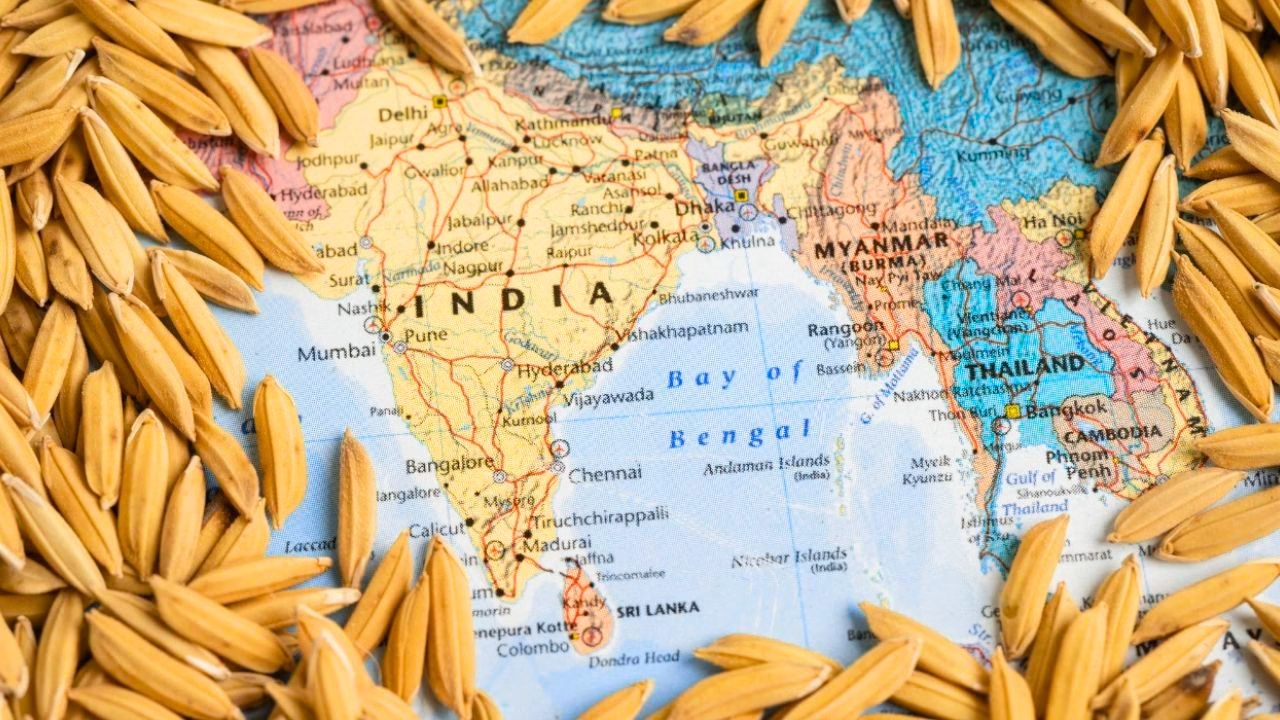
Here’s the thing. When people talk about global rice trade, they’re not talking about a balanced market. They’re talking about India dominating it. Rice export from India isn’t just another export category. It’s the backbone of global rice supply.
India controls 30–35% of global rice exports. That’s not a lead, that’s a monopoly level influence. If India slows exports, global prices react. If India opens exports, supply floods the market.
Now look at the scale.
India produces over 150 million tonnes of rice annually. That’s not just enough for domestic consumption, it creates a massive surplus that feeds international demand. And that surplus doesn’t sit idle.
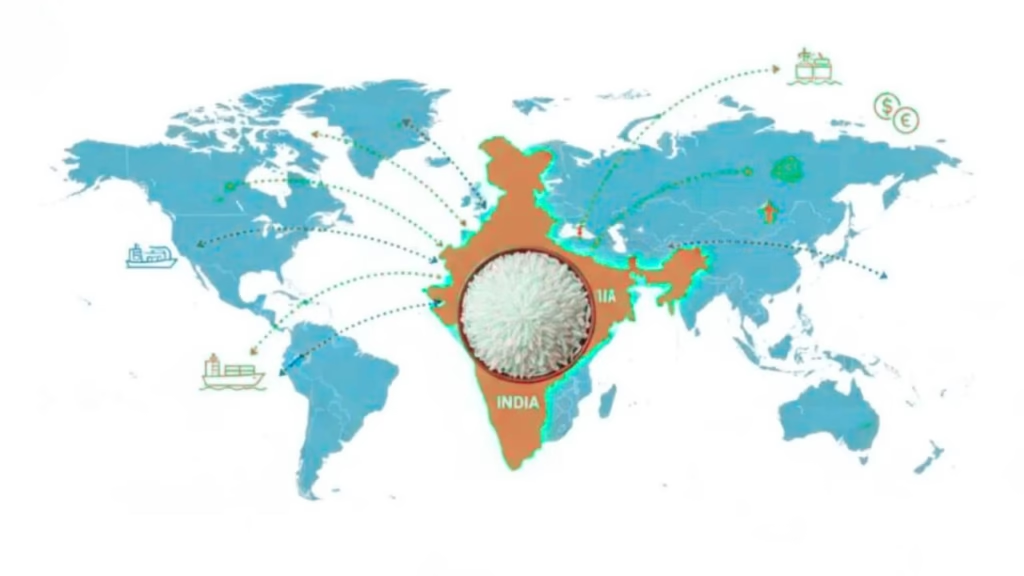
Indian rice is exported to 150+ countries, covering everything from premium basmati in the Middle East to bulk non-basmati shipments in Africa.
The money side is just as serious.
Rice exports from India crossed 12+ billion USD annually, making it one of the most valuable agricultural export segments in the country.
What this really means is simple:
If you’re entering exports and you ignore rice, you’re ignoring one of the most stable and scalable opportunities available.
Two realities you need to accept early:
- This market runs on volume and consistency, not quick wins
- This is a policy driven business, not a free flowing one
Get those wrong, and you’ll struggle. Get them right, and rice export becomes one of the most predictable export businesses you can build.
Table of Contents
India’s Position in the Global Rice Market
Let’s break down why India sits at the top and stays there.
Global Share of Indian Rice Exports
India has held the position of the largest rice exporter since 2012, consistently supplying 30–35% of the global market.
That kind of dominance doesn’t happen by accident.
Two reasons explain it:
- India produces both premium and low cost rice, covering multiple market segments
- It has an established export network that reaches both developed and developing countries
Example:
- Middle Eastern countries import Indian basmati because of its aroma and grain quality
- African countries depend on Indian non-basmati rice because it’s cost-effective and available in bulk
This dual positioning is what keeps India ahead of competitors like Thailand and Vietnam.
Total Production Capacity in India
India’s strength starts with production. The country produces around 150 million tonnes of rice every year, making it one of the largest producers globally.
But here’s the part most people miss:
- High production alone doesn’t make a country export leader. Exportable surplus does.
- India consistently produces more rice than it consumes, which creates a steady export pipeline.
Example:
- Even during years of export restrictions, India still maintained strong shipment volumes because of surplus stock
- Policy easing in 2025 immediately pushed exports higher because supply was already available
This is why the indian rice export market doesn’t collapse easily. It’s backed by scale.
Key Rice Producing States in India
Production isn’t evenly distributed. A few states carry most of the load.
Top rice producing states in India include:
- Uttar Pradesh
- Telangana
- West Bengal
- Punjab
- Andhra Pradesh
Each plays a different role in the supply chain.
Example 1
Punjab and Haryana focus heavily on basmati rice, which drives high value exports
Example 2
States like West Bengal and Andhra Pradesh contribute significantly to non-basmati and parboiled rice, which supports bulk export demand
India doesn’t rely on a single region. It has a diversified production base, which reduces risk and ensures consistent supply.
If you step back and look at the full picture:
- Massive production
- Strong global demand
- Multi category supply
- Established export ecosystem
That combination is why India isn’t just part of the rice trade.
It controls it.
Types of Rice Exported From India
Most beginners mess this up.
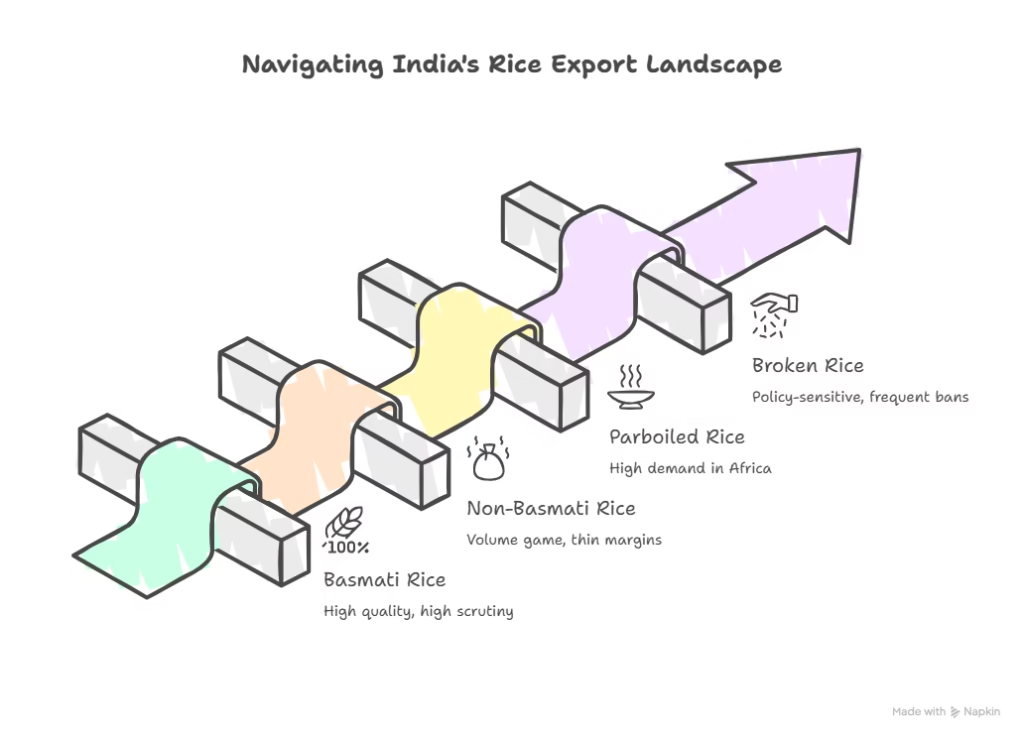
They think rice is one product. It’s not. It’s a category with completely different markets, margins, and rules. If you don’t understand this split, you’ll pick the wrong product, target the wrong buyers, and kill your margins before you even start.
Let’s break it down properly.
Basmati Rice Export
This is the premium segment. Basmati rice export from India is driven by quality, not price. Long grain, aroma, aging, polishing, everything matters.
Main markets:
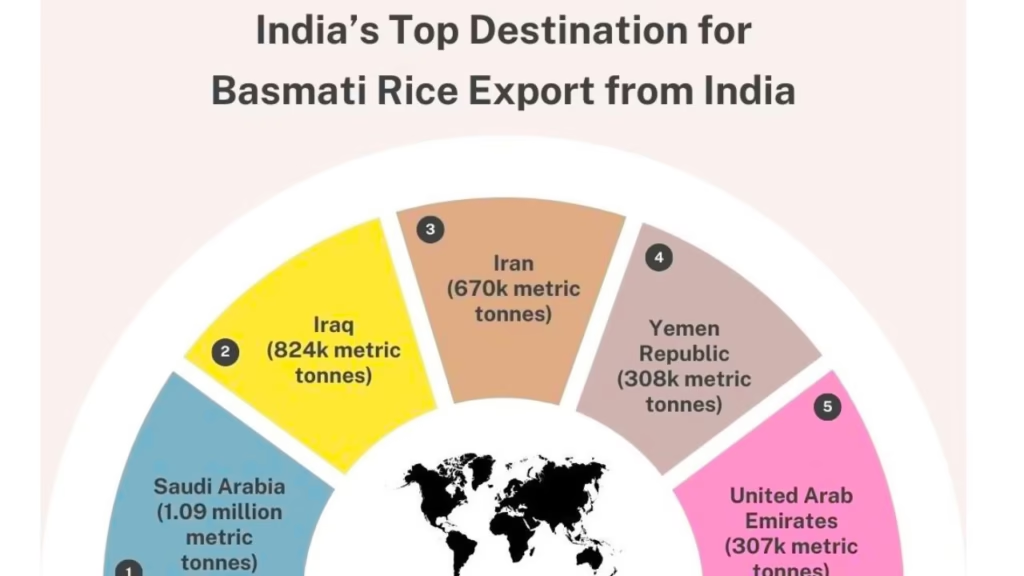
- Middle East (UAE, Saudi Arabia, Iran, Iraq)
- Europe
- USA
Why buyers choose Indian basmati:
- Consistent grain length
- Strong aroma profile
- Established supplier base
Example:
- UAE importers prefer aged basmati with strict grading standards and packaging expectations
- European buyers demand residue compliance and certifications, or shipments get rejected
Higher margins, but higher scrutiny. One quality mistake, and you lose the buyer.
Non-Basmati Rice Export
This is the volume game.
Non basmati rice export from India dominates bulk shipments, especially to price-sensitive markets.
Main markets:
- Africa
- Southeast Asia
Why it works:
- Lower cost compared to competitors
- Reliable supply in large quantities
Example
- Countries like Benin and Côte d’Ivoire import bulk non-basmati for mass consumption
- Asian markets import non-basmati for reprocessing or blending
Here’s the blunt truth:
Margins are thinner, competition is higher, and buyers negotiate hard.
Parboiled Rice Export
This sits inside non-basmati, but it’s big enough to treat separately. Parboiled rice export from India has massive demand, especially in Africa.
Why buyers prefer it:
- Longer shelf life
- Better nutritional retention
- Stronger grains during cooking
Example:
- West African countries prefer parboiled rice because it handles storage and transport better
- Bulk buyers choose parboiled over raw rice due to lower breakage during shipping
What this means:
If you’re targeting Africa, ignoring parboiled rice is a mistake.
Broken Rice Export
This is where most beginners underestimate the opportunity. Broken rice export from India is not for retail consumers.
It’s used in:
- Animal feed
- Alcohol production
- Industrial processing
Example:
- Distilleries use broken rice for ethanol production
- Feed manufacturers import broken rice as a cost effective input
But here’s the catch:
This category is heavily policy sensitive.
- Frequent bans
- Export restrictions
- Government control
So don’t build your entire business around it.
Latest Rice Export Statistics
Here’s the actual trend.
| Year | Volume (Million Tonnes) | Value (USD Billion) | Key Notes |
| FY24 | 16.36 | ~11 | Pre-policy easing |
| FY25 | 19.86–20.19 | 12.47 | Strong recovery |
| 2025 (Cal.) | 21.55 | N/A | 19.4% growth |
| FY26 (Proj.) | 22+ | 12.95+ | Demand-driven growth |
What These Numbers Actually Tell You
Most people just read stats. You need to interpret them.
1. Export Growth Trend
Exports are not flat. They’re growing aggressively.
Example:
- From 17.73 million tonnes (FY21) to nearly 20+ million tonnes (FY25)
- Calendar year 2025 hit 21.55 million tonnes, one of the highest ever
This shows one thing clearly Global demand is not slowing down.
2. Policy Easing Impact
Rice export from India is heavily controlled. When restrictions were relaxed, exports jumped immediately.
Example:
- Lifting curbs in 2025 directly pushed volumes higher
- Even restricted categories saw recovery once policies eased
What this means:
Your business depends on government decisions as much as market demand. Ignore policy, and you’ll get stuck shipments.
3. Global Demand Increase
Demand is not coming from one region. It’s spread across multiple markets.
Example:
- Africa continues to drive bulk non-basmati and parboiled demand
- Middle East maintains steady demand for basmati rice
This diversification reduces risk and keeps the Indian rice export market stable.
Reality Check on the Numbers
- India is still the largest rice exporter
- Export volumes are growing, not declining
- Demand is global and consistent
But don’t misunderstand this. High export numbers don’t mean easy profits.
They mean:
- more competition
- tighter margins
- stricter compliance
Major Countries Importing Rice From India
If you don’t understand where Indian rice goes, you’ll chase the wrong buyers. Different countries import different types of rice for different reasons. There’s no “one market fits all” here.
So let’s answer the real question which countries import rice from India and why?
Middle East Markets (High Value Buyers)
Key countries:
- Saudi Arabia
- Iran
- Iraq
- UAE
These are basmati driven markets.
Why they import from India:
- Preference for long grain aromatic rice
- Established consumption habits
- Strong trade relationships
Example:
- Rice export from India to UAE is dominated by premium basmati, with consistent demand year round
- Saudi Arabia imports large volumes of basmati with strict quality and certification requirements
What this means:
These markets pay better, but they expect consistency. You send one bad shipment, and you’re done.
African Markets (Volume Buyers)
Key countries:
- Benin
- Guinea
- Côte d’Ivoire
- Togo
This is where bulk business happens.
Why Africa depends on Indian rice:
- Competitive pricing
- Large scale availability
- Suitable for mass consumption
Example:
- Benin acts as a major re-export hub, importing Indian rice and redistributing it across West Africa
- Countries like Côte d’Ivoire import parboiled rice in bulk due to its storage advantages
Africa is not about premium branding. It’s about volume, pricing, and logistics efficiency.
The Real Breakdown You Should Understand
Two completely different markets:
- Middle East → High margin, quality-driven
- Africa → High volume, price-driven
If you try to sell premium basmati like bulk rice, you lose margin.
If you try to sell cheap rice to premium buyers, you lose trust.
Key Takeaway
Your success in rice export from India to Africa or the Middle East depends on Matching the right rice type to the right market and Most beginners ignore this and wonder why buyers don’t respond.
Step by Step Rice Export Procedure From India
This is where theory ends and execution starts. You can read all the stats in the world, but if you mess up the process, your shipment gets stuck, delayed, or rejected.
Let’s break down the rice export procedure in India step by step.
Step 1: Choose the Rice Variety to Export
Everything starts here.
Your choice determines:
- target country
- pricing
- compliance requirements
Example:
- Basmati → UAE, Saudi Arabia (premium market)
- Non-basmati/parboiled → Africa (bulk market)
Pick wrong, and you’ll struggle to find buyers.
Step 2: Verify Export Policy and Restrictions
This is non negotiable. Rice exports are policy sensitive.
You must check:
- DGFT notifications
- export bans
- minimum export price (MEP)
- allowed HS codes
Example:
- Broken rice exports have faced bans multiple times
- Non-basmati exports were restricted but later eased
Ignore this step, and you risk shipment rejection or legal issues.
Step 3: Obtain Import Export Code (IEC)
You cannot export without this. Issued by DGFT, IEC is your basic license for international trade.
Example:
- Without IEC, customs will not process your shipment
- Banks will not handle export payments without IEC
This is the foundation of your rice export business in India.
Step 4: Register with APEDA
For rice exports, this is mandatory. APEDA handles agricultural export compliance.
You need:
- APEDA registration (RCMC)
- product category approval
Example:
- Without APEDA, food exports face clearance issues
- Basmati exports often require additional contract registration
Step 5: Source Rice from Mills
Your supplier decides your quality. You can’t fix bad rice with good packaging.
Example:
- Work with mills that already supply exporters
- Avoid unknown suppliers offering “cheap rates” without consistency
Cheap sourcing leads to:
- rejection
- disputes
- loss of buyers
Step 6: Quality Testing and Inspection
This is where most shipments fail.
Buyers check:
- moisture content
- grain uniformity
- pesticide residue
Example:
- EU markets reject shipments for residue violations
- Middle East buyers reject mixed or broken grains in basmati
Quality is not optional. It’s survival.
Step 7: Packaging and Labeling
This is more technical than it looks.
Requirements vary by country:
- bag size (25kg, 50kg, etc.)
- labeling format
- branding
Example:
- UAE buyers expect proper branding and labeling compliance
- African buyers prioritize durability for bulk handling
Wrong packaging = shipment delays or rejection.
Step 8: Shipping and Customs Clearance
Final step, but high risk.
Process includes:
- documentation submission
- customs clearance
- loading and shipping
Example:
- Incorrect documents can delay shipments at port
- Mismatch in invoice and packing list can trigger inspections
At this stage, small mistakes become expensive.
Reality Check on the Process
People thinks rice export from India is complicated. It’s not complicated. It’s strict.
Two truths:
- The process is straightforward but unforgiving
- Most failures happen due to carelessness, not complexity
If you follow the system properly, rice export becomes repeatable. If you cut corners, it becomes a series of losses.
Documents Required for Rice Export From India
This is where most beginners get exposed. Not because the paperwork is complicated, but because they treat it casually. In exports, documents are not “formalities.” They are the shipment.
If your documents don’t match, your cargo doesn’t move.
Let’s break down the documents required for rice export and what they actually do.
1. Commercial Invoice
This is the financial backbone of your shipment.
It includes:
- buyer and seller details
- product description
- quantity and price
- payment terms
Example:
- If the price in the commercial invoice doesn’t match the LC or agreement, payment gets delayed
- Wrong HS code can trigger customs queries or penalties
2. Packing List
This explains what’s physically inside the shipment.
It includes:
- number of bags
- weight (gross and net)
- packaging details
Example:
- Mismatch between packing list and actual cargo leads to inspection
- Incorrect weight details can delay port clearance
3. Bill of Lading (B/L)
This is the most important shipping document.
It acts as:
- proof of shipment
- title of goods
- contract with the shipping line
Example:
- Without B/L, the buyer cannot claim the goods at destination
- Errors in consignee details can block cargo release
4. Shipping Bill
This is filed with Indian customs.
It confirms:
- export details
- duty status
- product classification
Example:
- Incorrect declaration can delay clearance
- Missing details can lead to shipment hold at port
5. Certificate of Origin
This proves that the rice is from India.
Required for:
- customs clearance in importing country
- availing trade benefits
Example:
- Some countries offer lower duty for Indian origin goods
- Missing certificate can increase import duty for the buyer
6. Phytosanitary Certificate
This is non-negotiable for agricultural exports. Issued by plant quarantine authorities.
It certifies:
- the rice is pest free
- meets plant health standards
Example:
- EU countries reject shipments without proper phytosanitary clearance
- Presence of pests or contamination can lead to cargo destruction
7. APEDA Registration (RCMC)
For rice export, this is mandatory.
APEDA monitors:
- product standards
- export compliance
Example:
- Without APEDA registration, food exports face serious delays
- Basmati exports often require additional registration steps
The Brutal Truth About Documentation
Most exporters don’t fail because they lack buyers.
They fail because they can’t manage rice export documentation in India properly.
Two common mistakes:
- Treating documents as copy paste work
- Not cross checking consistency across all documents
One mismatch is enough to:
- delay shipment
- block payment
- damage your reputation
Government Regulations and Compliance
If you think rice export is just buying and shipping, you’re setting yourself up for problems. This business is controlled.
Not loosely. Strictly.
Understanding rice export regulations in India is what separates serious exporters from beginners who lose money.
1. Export Quality Control Act
This law ensures that exported products meet quality standards.
For rice:
- grading standards apply
- inspection may be required
Example:
- Substandard quality can lead to rejection before shipment
- Non-compliance can result in penalties or export restrictions
2. DGFT Notifications
DGFT controls whether you can export or not.
They decide:
- export bans
- minimum export price (MEP)
- allowed categories
Example:
- Broken rice exports have been banned in the past
- Non-basmati exports were restricted and later reopened
Here’s the reality If you don’t track DGFT updates, you’re operating blind.
3. APEDA Monitoring
APEDA is not just for registration.
It actively monitors:
- export quality
- basmati authentication
- contract registration
Example:
- Basmati exports require proper traceability and verification
- Failure to meet APEDA standards can stop shipments
This is where most people misunderstand apeda rice export rules. It’s not a one time registration. It’s ongoing compliance.
4. Country Specific Certifications
This is where things get serious. Each country has its own rules. You cannot standardize exports.
EU Requirements
- Certificate of Inspection (CoI)
- strict pesticide residue limits
Example:
- Even minor residue issues can lead to full shipment rejection
- Missing CoI blocks entry into EU markets
Saudi Arabia Requirements
- SFDA certification
- food safety compliance
Example:
- Products without SFDA approval won’t clear customs
- Labeling issues can delay clearance
Japan Requirements
- strict quota system
- limited import permissions
Example:
- Exports allowed only under specific quotas
- Unauthorized shipments won’t be accepted
The Real Problem Most Exporters Face
They assume one system works everywhere. It doesn’t.
Two critical mistakes:
- Sending the same documents to every country
- Ignoring country specific compliance
That’s how shipments get:
- rejected
- delayed
- stuck at ports
Reality Check
Rice export looks simple from the outside.
But underneath, it runs on:
- documentation accuracy
- regulatory awareness
- country specific compliance
If you treat compliance seriously, you build a long term business. If you treat it casually, you’ll keep fixing problems instead of scaling.
Profit Margin in Rice Export Business
Let’s cut the fantasy.
Most people think export = high profit.
Rice export doesn’t work like that.
This is a volume driven business with tight margins. You don’t make money on one shipment. You make money on consistency and scale. If you’re expecting 20–30% margins, you’re in the wrong industry.
What Actually Affects Profit Margin
1. Rice Variety
Not all rice pays the same.
- Basmati → higher margin, lower volume
- Non-basmati → lower margin, higher volume
Example:
- Premium basmati shipments can give better per-ton profit due to branding and quality
- Bulk non-basmati deals run on razor-thin margins but large quantities
2. Freight Costs
Freight can destroy your profit if you don’t calculate it properly.
- ocean freight rates fluctuate
- insurance costs increase during geopolitical issues
Example:
- Middle East tensions increased freight costs, cutting exporter margins
- Late booking during peak season leads to higher shipping charges
3. Packaging
Looks simple. It’s not.
Packaging affects:
- cost
- buyer perception
- damage risk
Example:
- Branded retail packaging for UAE increases cost but improves selling price
- Cheap bulk bags for Africa reduce cost but increase breakage risk
4. Government Duties & Policies
This is the silent profit killer.
- export duties
- minimum export price (MEP)
- sudden restrictions
Example:
- Higher export duty can wipe out already thin margins
- Policy changes can force you to renegotiate deals or cancel shipments
5. Buyer Volume
Volume decides your real income.
Example:
- A small 1 container deal may barely cover operational costs
- Regular bulk orders from a stable buyer create predictable cash flow
Two Real Export Models You Should Understand
Model 1: Bulk Non-Basmati to Africa
- Low margin per ton
- High volume
- Price sensitive buyers
Example:
- Supplying parboiled rice to West Africa with competitive pricing
- Repeat bulk shipments through traders in Benin acting as redistribution hubs
Reality:
You win on scale and repeat orders, not premium pricing.
Model 2: Premium Basmati to UAE
- Higher margin per ton
- Lower volume compared to bulk
- Quality focused buyers
Example:
- Exporting aged basmati in branded packaging to UAE retailers
- Selling premium-grade rice to Middle East wholesalers with strict specifications
Reality:
You win on quality, branding, and relationships, not just price.
Reality Check on Profit
Your rice export profit margin depends less on the product and more on execution.
Two harsh truths:
- Bad planning kills profit faster than low pricing
- One rejected shipment can wipe out months of earnings
If you manage costs tightly and build repeat buyers, rice export business profitability becomes stable. If not, it becomes unpredictable and frustrating.
Challenges in Rice Export From India
Most people avoid this section because it scares beginners.
Good. It should.
If you don’t understand the risks, you’ll walk straight into them.
Let’s break down the real rice export challenges.
1. Logistics Delays
Shipping is not as smooth as people think.
Problems include:
- port congestion
- container shortages
- delayed vessel schedules
Example:
- Cargo stuck at port due to congestion leads to missed delivery timelines
- Delay in vessel loading increases storage and demurrage costs
What this means:
You can do everything right and still lose time and money because of logistics.
2. Quality Compliance Issues
This is the biggest deal breaker. Rice export is heavily quality controlled.
Buyers check:
- pesticide residue
- grain consistency
- moisture levels
Example:
- EU rejects shipments for exceeding residue limits
- Buyers reject basmati shipments due to mixed grains or poor polishing
One rejection doesn’t just cost money. It damages your credibility.
3. Global Competition
India is the largest exporter, but not the only one.
Main competitors:
- Thailand
- Vietnam
Example:
- Thailand competes in premium rice markets with strong branding
- Vietnam competes aggressively on price in bulk segments
What this means:
You’re not competing locally. You’re competing globally.
The Real Problem Behind These Challenges
Most exporters fail because they underestimate complexity.
Two common mistakes:
- assuming export is just buying and shipping
- ignoring cost control and compliance
That’s how small problems turn into expensive ones.
Reality Check
Yes, rice export is a strong opportunity.
But it comes with:
- operational pressure
- policy risk
- global competition
If you handle these well, you build a scalable business. If you ignore them, you’ll keep fixing problems instead of growing.
Future Opportunities in the Rice Export Market
They look at current demand and assume it will stay the same. It won’t. The exporters who grow are the ones who move early, not the ones who react late.
If you’re thinking long term, you need to understand where the future of rice export of India is actually heading.
1. Organic Rice Exports
This is a premium shift, not a mass trend.
Demand is growing in:
- Europe
- USA
Why it works:
- health conscious consumers
- stricter food standards
Example:
- European buyers pay higher prices for certified organic basmati
- US retailers prefer traceable, pesticide free rice with certification
Reality:
Margins are higher, but certification and compliance are stricter. You can’t fake this segment.
2. Specialty Rice Varieties
This is where differentiation happens.
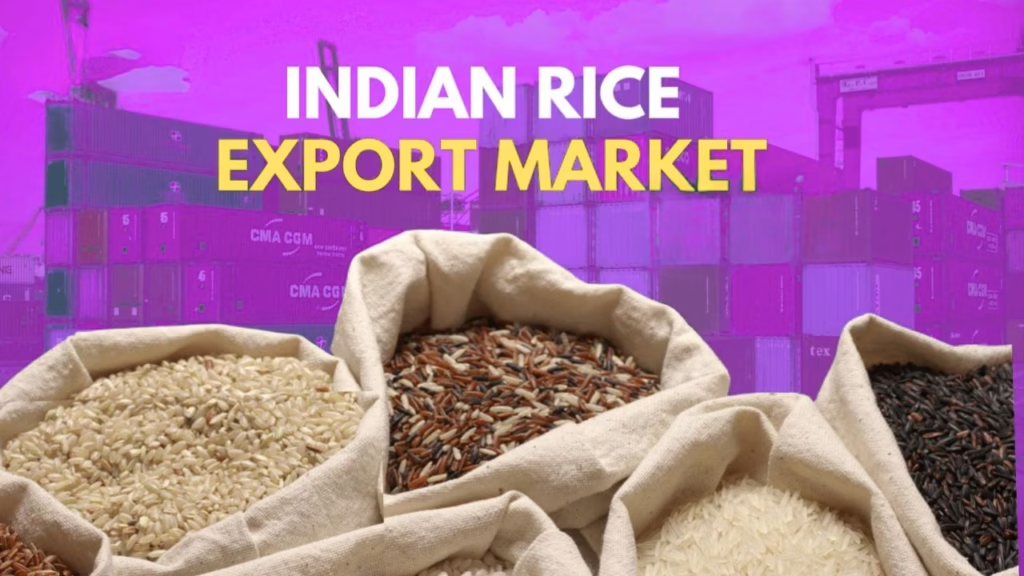
Beyond basmati and non-basmati, there’s demand for:
- black rice
- red rice
- fortified rice
Example:
- Black rice is gaining traction as a “superfood” in premium markets
- Fortified rice is used in government and health focused programs
What this means:
If you keep selling only standard rice, you stay stuck in competition. Specialty products give you pricing power.
3. African Demand Growth
Africa is not slowing down. It’s expanding.
Population growth + food demand = long term opportunity.
Example:
- West African countries continue increasing imports of parboiled rice
- Urbanization is driving demand for packaged and branded rice
This is the backbone of Indian rice export opportunities. But don’t misunderstand it. Africa is not easy. It’s price sensitive, logistics heavy, and relationship driven.
4. Technology in Milling and Logistics
This is the silent advantage most exporters ignore.
Technology improves:
- grain quality
- sorting accuracy
- supply chain efficiency
Example:
- Advanced milling reduces broken grains, improving export quality
- Better logistics tracking reduces delays and improves delivery timelines
This means the exporters who adopt tech early will outperform those relying on outdated processes.
Reality Check on Future Growth
Growth will not come from doing the same thing better.
It will come from:
- moving into premium segments
- improving efficiency
- targeting growing markets early
If you stay stuck in basic trading, your margins will shrink. If you evolve, your business scales.
Other Rice Based Export Products
If you’re only thinking about raw rice, you’re leaving money on the table. Smart exporters don’t just sell rice. They build around it. There’s a growing market for rice by products export, and in many cases, these face fewer restrictions than raw rice.
1. Rice Bran Oil
Extracted from rice bran, this is a high demand edible oil.
Used in:
- cooking
- food processing
Example:
- Health conscious markets prefer rice bran oil for its cholesterol benefits
- Food manufacturers use it as a stable cooking oil alternative
This is where rice bran oil export from India is gaining traction.
2. Rice Flour
Widely used in:
- food industry
- gluten free products
Example:
- Export demand is rising in gluten-free food markets
- Used in snacks, bakery, and processed food manufacturing
Low competition compared to raw rice.
3. Rice Husk
Often ignored, but valuable.
Used for:
- fuel
- biomass energy
Example:
- Industrial buyers use rice husk as a low-cost energy source
- Power plants use it for biomass generation
4. Rice Husk Ash
This is a niche but growing segment.
Used in:
- construction
- cement industry
Example:
- Construction companies use it as a silica source
- Used in eco-friendly building materials
The Real Advantage of By-Products
Two things most beginners don’t realize:
- By-products often face fewer export restrictions
- Competition is lower compared to raw rice
That makes them a smart add on to your export business.
Reality Check
If you only focus on rice, you build a single income stream.
If you expand into by-products, you:
- diversify revenue
- reduce dependency on policy changes
- increase long term stability
Final Thoughts: Is Rice Export From India Worth It?
Let’s not pretend this is easy money. Rice export looks simple from the outside. Buy rice, ship it, get paid. That’s the illusion.
The reality is different.
This business runs on three things:
- Policy driven → One government notification can change your entire plan
- Volume focused → Small deals won’t build a real business
- Relationship based → Repeat buyers matter more than one-time profits
If you ignore even one of these, you’ll struggle.
What This Really Means for You
If you’re planning to start rice export business India, understand the game first.
Example:
- A beginner chases random buyers, sends inconsistent quality, and loses credibility after one shipment
- A serious exporter focuses on one market, builds relationships, and gets repeat bulk orders
Same product. Completely different outcomes.
The Right Way to Approach It
If you treat this like a structured business, it works.
You need:
- proper documentation
- awareness of export policies
- clear target market
- reliable supplier network
That’s the difference between guessing and following a real rice export guide.
Final Reality Check
Rice export is not complicated. But it is strict.
If you’re careless:
- shipments get delayed
- payments get stuck
- buyers stop responding
If you’re disciplined:
- orders become repeatable
- margins stabilize
- business scales
So is it worth it?
Yes. But only if you approach it like a system, not a shortcut.
FAQ
1. Is rice export banned from India?
No, but it depends on the type of rice and current government policy. Restrictions change, so always check DGFT updates before exporting.
2. How much profit margin in rice export business?
Margins are moderate. Bulk rice gives low margins with high volume, while basmati offers better margins but requires strict quality.
3. Which country imports the most rice from India?
There is no single top country. Middle Eastern nations import basmati, while African countries dominate bulk rice imports.
4. What documents are required for rice export?
Key documents include commercial invoice, packing list, bill of lading, phytosanitary certificate, and certificate of origin.
5. How to find buyers for rice export?
Use B2B platforms, export directories, and build direct connections through trade networks. Random outreach rarely works.
About the Author
Hi, I’m SriHarsha, founder of shxhub.in.
I focus on explaining import export business topics in a practical, beginner friendly way, based on how exports actually work on the real ground especially documentation, quality control, and buyer expectations.