
When someone starts exporting for the first time, one of the most confusing roles to understand is that of a freight forwarder. Many beginners assume a freight forwarder is just someone who “books a container” or “arranges shipping.” In reality, their role goes far beyond that.
If you’re serious about exports, understanding the role of freight forwarder in export business can save you money, time, and a lot of unnecessary stress. This post is written from a practical exporter’s point of view, not theory.
Table of Contents
Freight Forwarder Meaning (In Simple Terms)
A freight forwarder is a logistics professional who plans, coordinates, and manages the movement of your cargo from your location in India (any country) to the buyer’s destination country.
They don’t usually own ships or airplanes. Instead, they act as a bridge between exporters, shipping lines, airlines, customs, transporters, and warehouses.
In summary, the freight forwarder ensures your products are transported legally, securely, and on time.
Why Freight Forwarders Are Important in Export Business
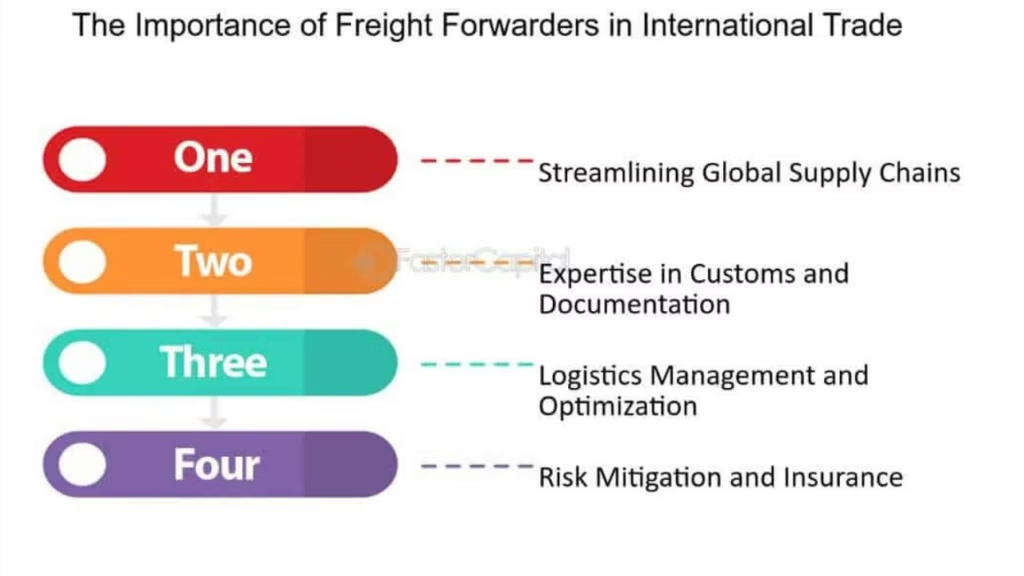
Exporting involves more than just selling a product. Once the order is verified, the actual work starts:
- Booking space with carriers
- Preparing shipping documents
- Coordinating customs clearance
- Tracking cargo
- Handling delays or inspections
Trying to manage all this alone especially as a beginner often leads to costly mistakes. This is where freight forwarding companies play a key role.
In countries like India, where port procedures, documentation, and compliance are complex, freight forwarders in India are almost unavoidable for smooth exports.
Role of Freight Forwarder in Export Business (Big Picture)
Before getting into individual responsibilities, understand this:
A freight forwarder is not your buyer, not your banker, and not your customs officer.
Their job is to:
- Coordinate logistics
- Reduce risk
- Simplify the export process
Now let’s break down their actual responsibilities.
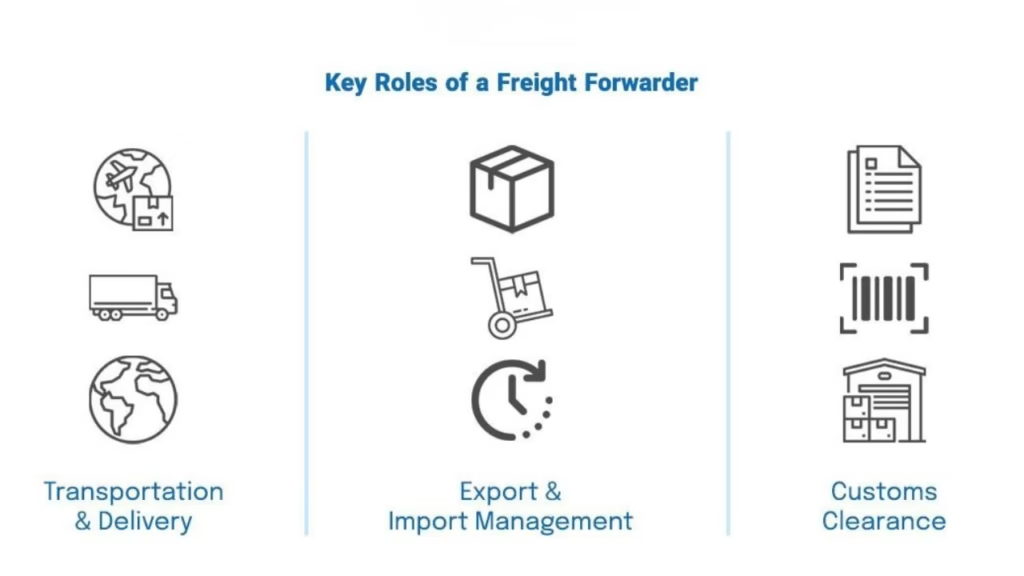
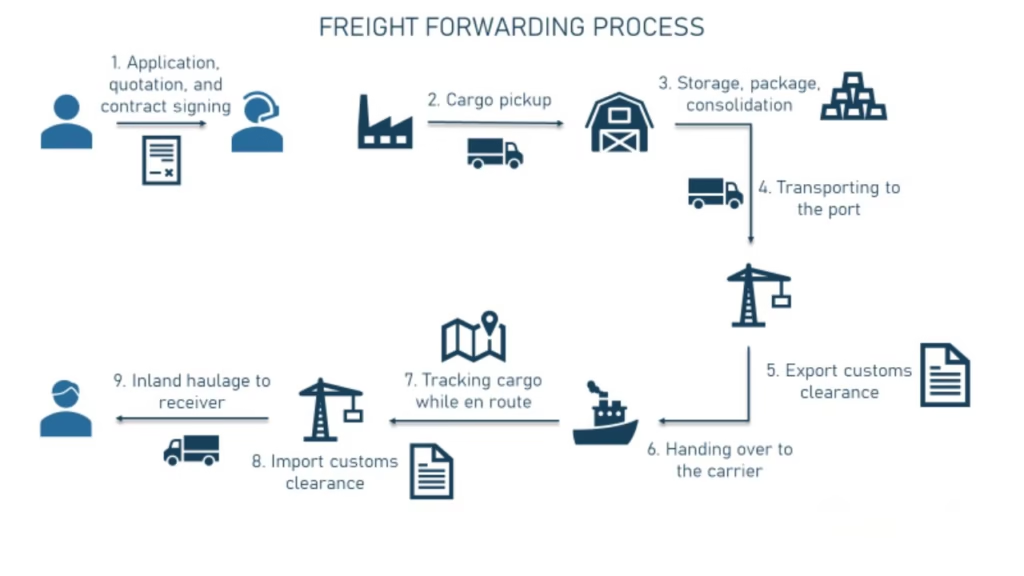
1) Planning the Export Shipment from Start to Finish
One of the most important roles of a freight forwarder in export business is shipment planning.
This includes:
- Choosing the right mode of transport (sea, air, road, multimodal)
- Suggesting suitable container type
- Deciding transit routes
- Estimating transit time
An experienced freight forwarder looks at:
- Cargo type
- Destination country
- Delivery urgency
- Cost vs speed
For example, a shipment going to the USA may need a completely different routing strategy than one going to Bangladesh or Dubai.
2) Booking Cargo Space with Shipping Lines or Airlines
Exporters cannot directly negotiate with every shipping line or airline. Freight forwarders already have commercial agreements and volume contracts with carriers.
Their responsibility includes:
- Booking container space
- Securing better freight rates
- Avoiding overbooking risks
- Managing last minute changes
This is where established freight forwarding companies in India provide a real advantage, especially during peak seasons when space is limited.
3) Managing Export Documentation
One of the most sensitive areas in exporting is documentation. Even a small mistake can lead to cargo delays and causing penalties.
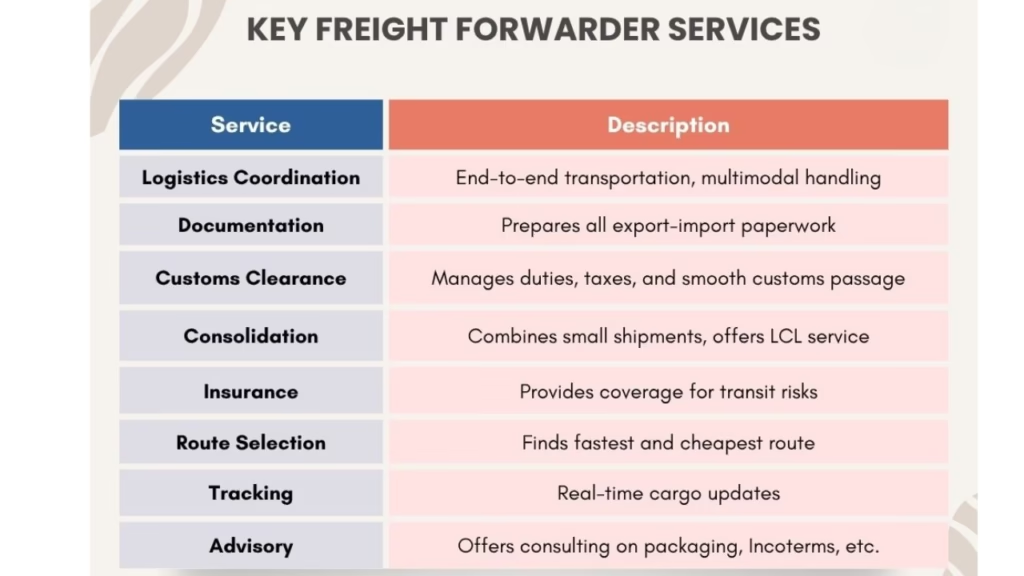
The role of freight forwarder in export documentation usually includes assisting with:
- Shipping Bill coordination
- Commercial Invoice & Packing List verification
- Bill of Lading preparation
- Certificate of Origin coordination
- Insurance paperwork
Although the exporter holds legal responsibility, freight forwarders assist in ensuring that documents align with customs clearance and carrier specifications.
This is especially important in international trade, where documentation standards differ country to country.
4) Coordinating Customs Clearance
Although customs clearance is handled by a CHA (Customs House Agent), freight forwarders coordinate closely with CHAs.
The freight forwarder role in shipping includes:
- Sharing shipment details with the CHA
- Ensuring documents are ready before cargo arrival
- Coordinating customs inspection schedules
- Resolving queries raised by customs
In many cases, freight forwarding firms additionally offer in-house CHA services, which helps make the entire process smoother and more seamless.
This coordination is crucial in ports like Mumbai and Chennai, where traffic and inspection volumes are high.
5) Cargo Handling, Stuffing & Port Coordination
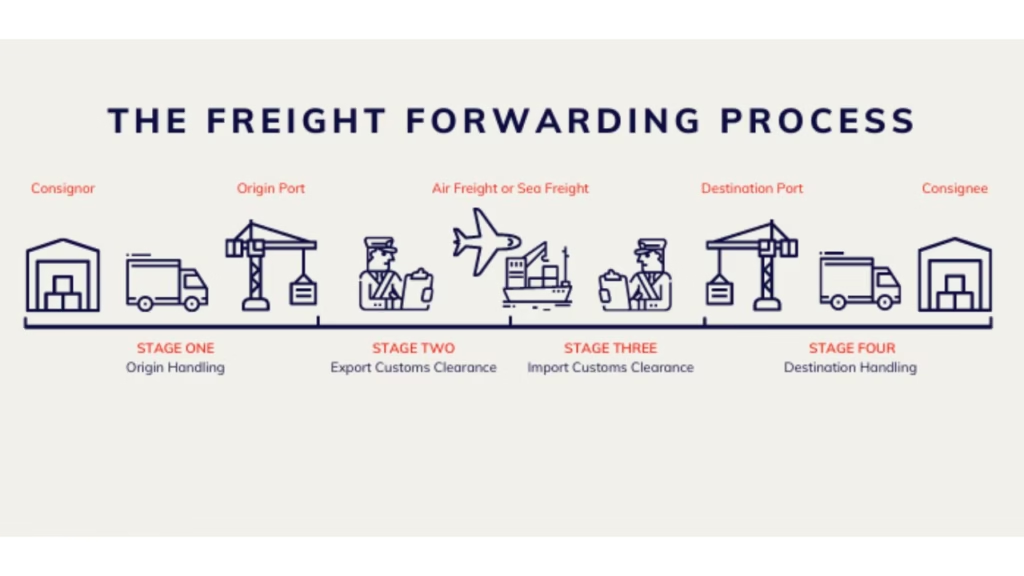
The freight forwarding process doesn’t start at the port it starts at your warehouse or factory.
Freight forwarders help manage:
- Empty container pickup
- Factory stuffing or CFS stuffing
- Seal placement
- Transport to port
- Gate in coordination
If anything goes wrong at this stage wrong container, improper sealing, incorrect weight it can cause serious delays.
This is why exporters collaborating with skilled freight forwarders in Mumbai or freight forwarders in Chennai typically encounter fewer operational challenges.
6) Tracking Shipments & Handling Problems
Once cargo leaves the port, many exporters assume the job is done. In reality, this is where monitoring becomes critical.
A freight forwarder:
- Tracks shipment movement
- Updates exporters on delays
- Coordinates transshipment issues
- Assists during port congestion or vessel rollovers
In international trade, delays are common. What matters is how fast issues are identified and resolved.
This is a major reason why exporters stick with reliable freight forwarding companies instead of choosing the cheapest option.
7) Acting as a Single Point of Contact
One underrated role of a freight forwarding company is acting as a single coordination point.
Instead of exporters chasing:
- Transporters
- CHAs
- Shipping lines
- Warehouses
The freight forwarder handles communication and updates everyone involved.
For new exporters especially, this simplifies the process and reduces confusion.
Role of Freight Forwarder in Export Business in India
In India, the export ecosystem is documentation heavy and compliance driven. This makes freight forwarders even more important.
Key reasons:
- Port procedures differ across locations
- Customs processes are strict
- DGFT, ICEGATE, and shipping line coordination is complex
Regardless of whether you are shipping spices, rice, textiles, or engineering goods, freight forwarders in India are familiar with regional port operations and global trade regulations.
Freight Forwarder vs CHA (Common Confusion)
Many beginners ask:
“Is a freight forwarder the same as a CHA?”
No.
- CHA handles customs clearance
- Freight forwarder manages the entire logistics chain
Consider the CHA as managing only a segment of the process, whereas the freight forwarder directs and coordinates all aspects from beginning to end.

Freight Forwarder Examples (Real Life Scenarios)
Example 1:
A Exporter transports spices from India to the United States. The freight forwarder books containers, manages phytosanitary documentation, collaborates with CHA for customs clearance, and monitors cargo until it arrives.
Example 2:
A garment exporter shipping to Europe uses a freight forwarder to switch routes due to port congestion, avoiding delays and penalties.
These examples show how freight forwarders actively protect exporters’ interests.
What Is Freight Forwarding in Logistics?
Freight forwarding in logistics involves managing the transportation of goods internationally, guaranteeing compliance to regulations, safety, and effectiveness.
It includes:
- Transport planning
- Documentation coordination
- Customs interface
- Risk management
Without freight forwarding, international trade would be chaotic.
Role of Freight Forwarder in Import vs Export
While this post focuses on exports, the role of freight forwarder in import is equally important.
In imports, they:
- Track inbound cargo
- Coordinate customs clearance
- Manage delivery to importer’s warehouse
Many exporters later become importers, so understanding both sides helps long term growth.
Choosing the Right Freight Forwarding Company
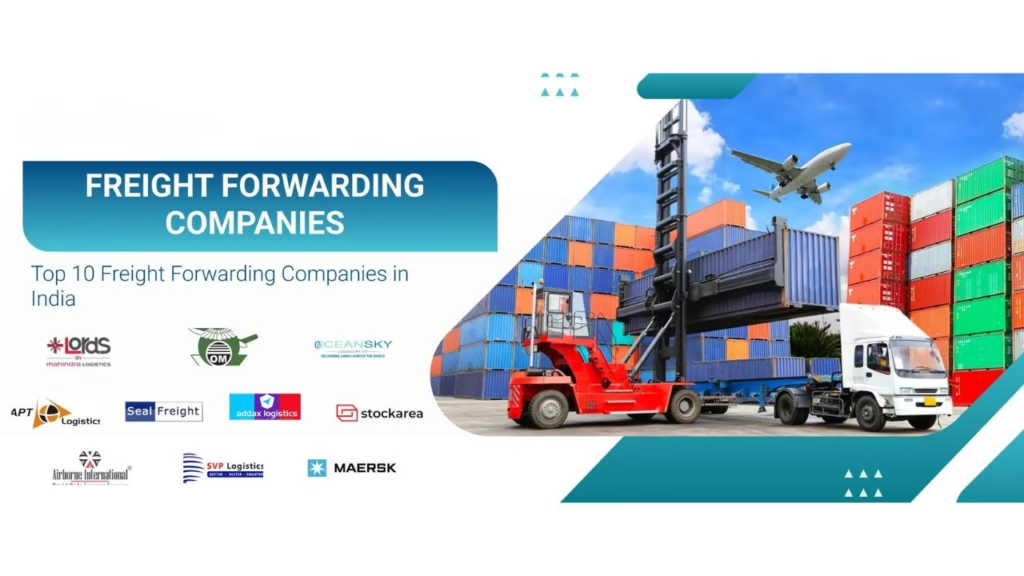
Not all freight forwarders are same.
When selecting:
- Check experience in your product category
- Ask about destination expertise
- Verify port handling strength
- Evaluate communication quality
The cheapest freight forwarder often becomes the most expensive mistake.
Why Freight Forwarders Matter More as You Scale
As export volumes grow:
- Shipments increase
- Destinations diversify
- Risks multiply
At this stage, a reliable freight forwarding company becomes a strategic partner, not just a service provider.
Final Thoughts
The role of freight forwarder in export business is not limited to booking cargo or preparing documents. They are planners, coordinators, problem solvers, and risk managers.
For beginners, freight forwarders simplify complexity.
For experienced exporters, they enable scale.
If you plan to export consistently, choosing the right freight forwarder is as important as choosing the right buyer.
Will the freight forwarder handles customs clearance for exports?
A freight forwarder only clears customs directly if they possess an in-house CHA license. Nevertheless, the majority of freight forwarders work closely with CHAs or provide CHA services directly. From the exporter’s perspective, it generally appears to be a seamless operation managed by a unified group.
Do freight forwarders assist once the cargo departs from India?
Certainly. A freight forwarder keeps monitoring your shipment, providing updates on vessel movement, managing delays, and coordinating with international agents if problems occur. Their responsibilities don’t conclude at the port gate-in—it persists until the cargo arrives at the destination port.
Will the freight forwarder take responsibility if something goes wrong?
A freight forwarder manages coordination, not ownesrhip of the cargo. While they help prevent problems and resolve issues, the exporter still carries legal responsibility. That’s why clear communication, proper insurance, and choosing a reliable forwarder are important.