
Foundations Every Exporter Must Understand
Knowing the difference between LCL and FCL shipments is one of those things that looks simple on the surface, but quietly decides whether an export shipment makes profit or loss.
Many beginners think FCL and LCL are just shipping terms.
In real export business, they decide:
- how much you actually pay (not just what’s quoted)
- how fast your cargo reaches the buyer
- how much risk your goods face in transit
- how many problems you’ll handle at destination
From what I’ve seen in real export transactions, choosing the wrong shipment type causes more losses than pricing mistakes.
This guide explains FCL and LCL in export exactly the way exporters experience it on the ground not textbook definitions, not shipping line marketing language.
Whether you’re exporting for the first time or already handling regular shipments, understanding fcl vs lcl properly can save you serious money and stress.
Table of Contents
Why FCL and LCL Confuse Most Exporters
If you search online for fcl and lcl meaning, you’ll usually see neat definitions like:
- FCL = Full Container Load
- LCL = Less than Container Load
That’s technically correct but incomplete.
What exporters actually need to know is:
- When does LCL become more expensive than FCL?
- Why do buyers complain more about LCL shipments?
- Why do experienced exporters slowly move away from LCL?
- How do destination charges change everything?
This is why understanding what is fcl and lcl terms in shipping matters far beyond theory.
What Is FCL in Shipping? (Detailed Explanation)
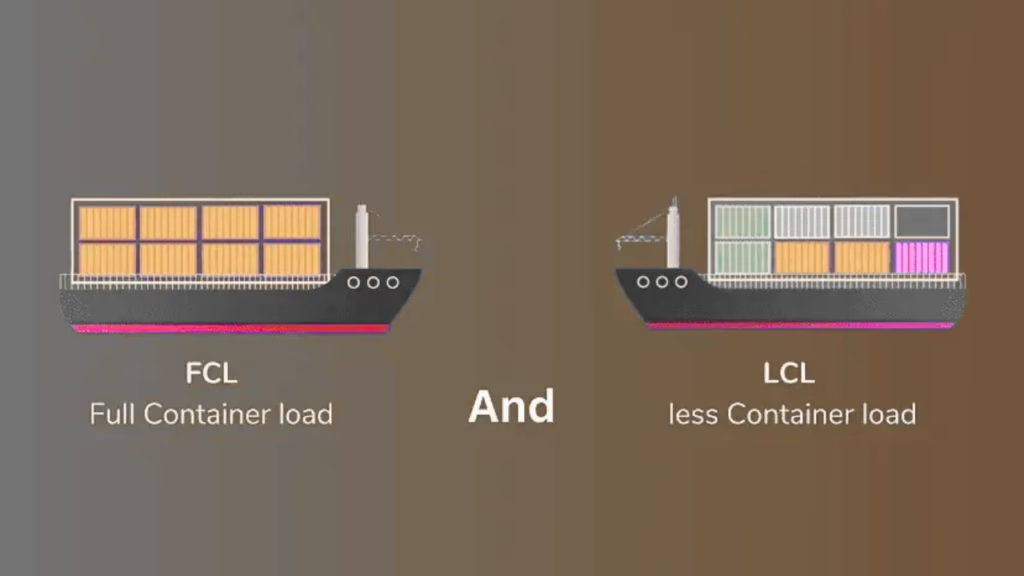
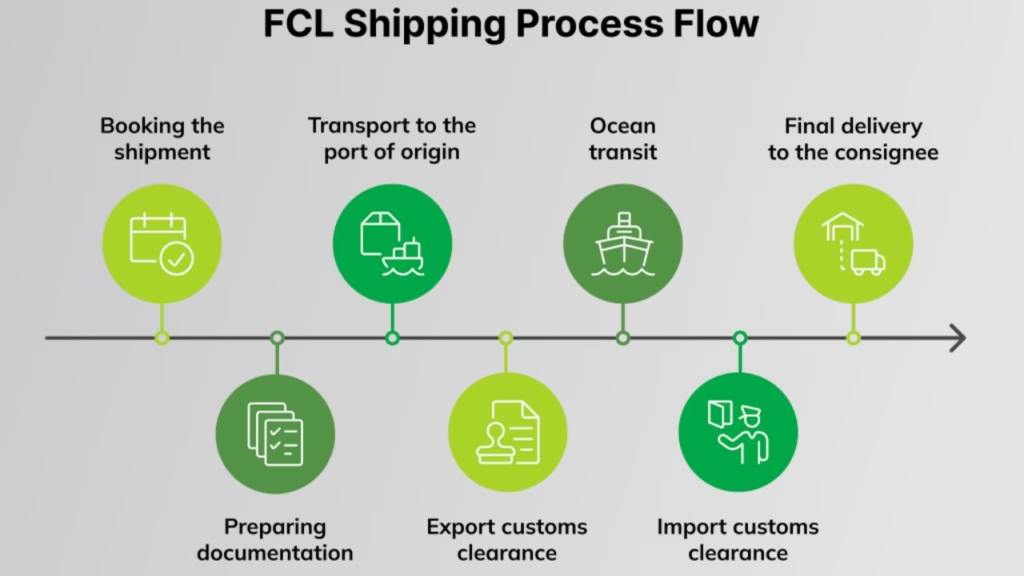
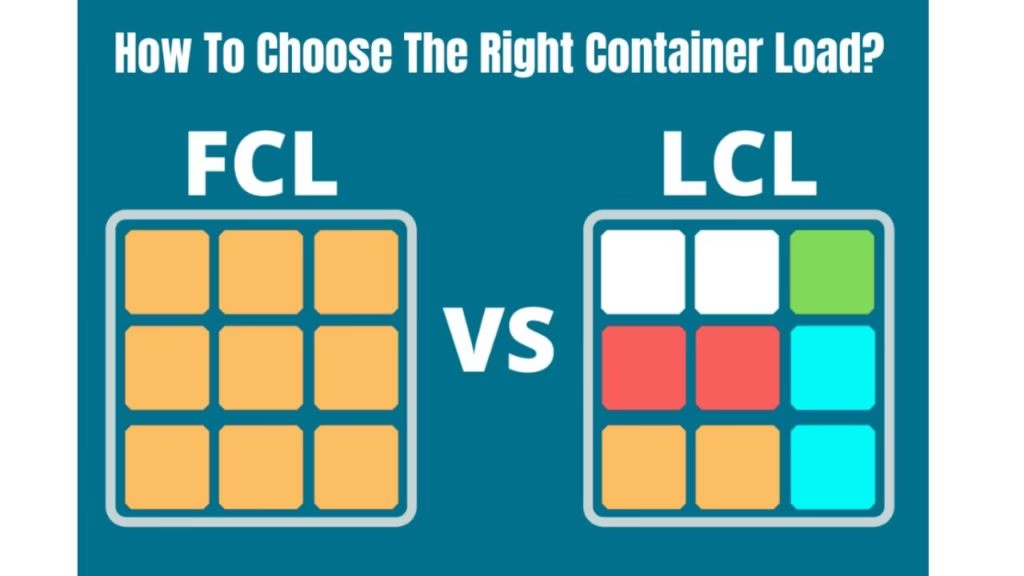
FCL (Full Container Load) means one exporter uses an entire container only for their cargo. It does not always mean the container is physically full. It means the container is booked, sealed, and shipped for one shipper only.
FCL Meaning in Shipping (Simple Words)
- One shipper
- One container
- No cargo sharing
- Container sealed at origin
- Opened only at destination
This is why many buyers prefer FCL shipments because fewer hands touch the cargo.
How FCL Works in Real Export Shipments
In an FCL shipment:
- Cargo is stuffed at factory, warehouse, or CFS
- Container is sealed
- It moves directly to port
- Loaded onto vessel
- Reaches destination port
- Cleared and delivered
There is no consolidation or deconsolidation with other exporters’ cargo.
From an exporter’s point of view, this means:
- better control
- predictable cost
- fewer surprises
What Is LCL in Shipping?
LCL (Less than Container Load) means your cargo shares container space with other exporters’ cargo.
This is where things start getting complicated.
LCL Meaning in Shipping (Simple Words)
- Multiple shippers
- One shared container
- Cargo consolidated at origin CFS
- Deconsolidated at destination CFS
LCL exists mainly to help exporters ship small volumes without paying for a full container.
How LCL Works in Real Export Shipments
In an LCL shipment:
- Cargo moves to a CFS (Container Freight Station)
- It waits for other shippers’ cargo
- Container is consolidated
- Shipped overseas
- At destination, container goes to CFS again
- Cargo is separated and released
Each extra step means:
- more handling
- more time
- more cost points
This is where most beginners underestimate LCL risks.
FCL and LCL Full Form
- FCL full form: Full Container Load
- LCL full form: Less than Container Load
Difference Between FCL and LCL
Let’s clarify the difference between fcl and lcl shipment.
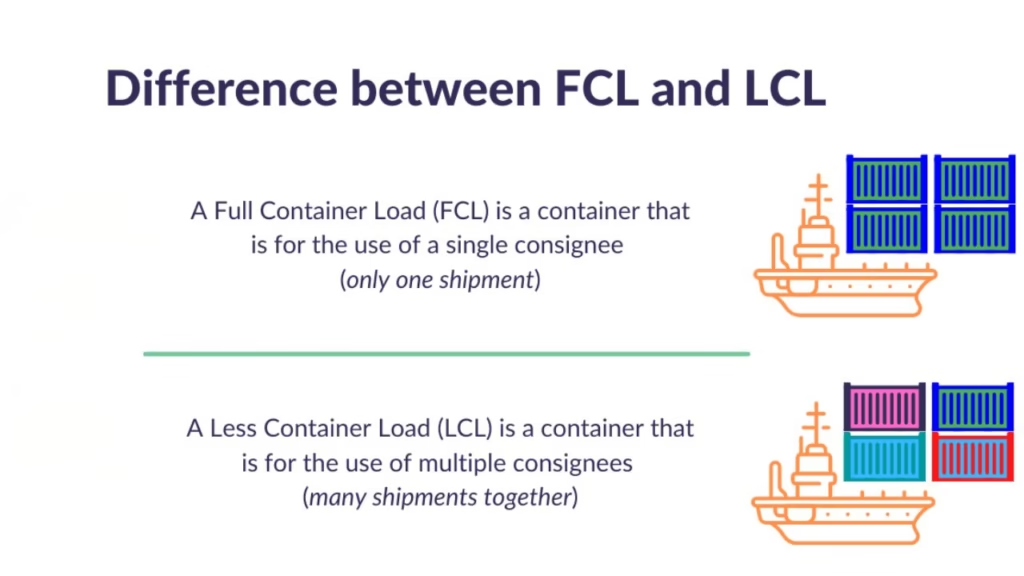
FCL is about control
- You control the container
- You control packing
- You control sealing
- You control timelines better
LCL is about sharing
- Shared space
- Shared handling
- Shared risk
- Shared delays
This difference alone explains why experienced exporters slowly shift toward FCL as volumes grow.
FCL vs LCL: Which One Looks Cheaper (and Why That’s Misleading)
This is where most exporters go wrong.
At quotation stage:
- LCL looks cheaper
- FCL looks expensive
At final settlement:
- LCL often costs more
- FCL looks reasonable
Why?
Because LCL charges don’t stop at origin.
What Exporters Usually See (Origin Quotation)
LCL quotation shows:
- Low ocean freight per CBM
- Small origin charges
FCL quotation shows:
- One big container rate
- Looks scary at first glance
This is why beginners choose LCL.
What Exporters Realize Later (Destination Reality)
At destination, LCL shipments attract:
- CFS handling charges
- Deconsolidation fees
- Storage charges
- Per-CBM documentation fees
This is where buyers start complaining.
From real experience:
“Many exporter buyer relationships break not because of product quality, but because of unexpected LCL destination charges.”
FCL and LCL Shipment Meaning for Buyers
Buyers don’t care about shipping terms they care about:
- landed cost
- delivery time
- cargo condition
When buyers hear:
- FCL → they expect smoother delivery
- LCL → they expect delays and extra charges
This perception matters more than exporters realize.
Types of Shipment: FCL, LCL, CY & CFS (Basic Understanding)
To truly understand shipment type fcl and lcl, you must know these terms:
CY – Container Yard
- Used mainly for FCL
- Container moves port to port
CFS – Container Freight Station
- Used for LCL
- Cargo consolidated and separated
Simple rule:
- FCL = CY to CY
- LCL = CFS to CFS
This single line clears half the confusion exporters have.
Why Exporters Start With LCL (And Later Regret It)
Most exporters start with LCL because:
- small orders
- limited capital
- fear of big container cost
That’s normal.
Exporters who don’t move from LCL eventually struggle with scaling. LCL is useful , but not scalable forever.
Real Exporter Observation (Important)
In real export operations:
- LCL is used for testing markets
- FCL is used for building businesses
This distinction is rarely explained clearly online.
Cost, Time, Risk & What Exporters Learn the Hard Way
This is the section most exporters wish they had read before their first shipment.
Comparison 1: FCL and LCL Shipment Cost (Real Exporter Reality)
When exporters ask, “Which is cheaper FCL or LCL?”
The honest answer is: it depends on where you look.
How LCL Shipment Cost Looks at First
At beginning, LCL appears cheaper because:
- You pay per CBM (cubic meter)
- No need to book an entire container
- Smaller upfront commitment
For example (illustrative):
- LCL rate: USD 60–90 per CBM
- Shipment size: 3 CBM
- Exporter thinks: “Why pay for a full container?”
This is exactly how most first time exporters decide.
Where LCL Shipment Cost Actually Increases
Here’s what many exporters don’t calculate properly.
In LCL shipments, costs are charged at:
- Origin CFS
- Destination CFS
- Per CBM
- Per document
- Per handling activity
Common LCL charges include:

- Origin CFS handling
- Consolidation fees
- Documentation charges
- Destination CFS handling
- Deconsolidation charges
- Storage (if clearance is delayed)
From what I’ve seen, destination charges shock buyers, not exporters.
Buyers often call and say:
“We didn’t expect these charges. Why is clearance so expensive?” This conversation damages trust instantly.
How FCL Shipment Cost Behaves Differently
In FCL:
- Most charges are fixed per container
- No CFS handling at destination
- Less surprise billing
Even if the ocean freight looks higher, total landed cost often becomes predictable. This is why experienced exporters prefer FCL once volume stabilizes.
Comparison 2: FCL vs LCL Shipment Time
Exporters often underestimate how much time variability matters.
LCL Shipment Time Reality
LCL shipment time is affected by:
- Waiting for other cargo at origin
- Consolidation delays
- Vessel cut-off dependency
- Deconsolidation queues at destination
In real life, this means:
- Cargo may sit at CFS for days
- Vessel schedules get missed
- Buyers wait longer than promised
Even if ocean transit time is the same, LCL overall delivery time is longer.
FCL Shipment Time Reality
FCL shipments move faster because:
- Container is booked directly
- No waiting for consolidation
- Faster port movement
- Easier customs coordination
This matters when buyers have:
- production deadlines
- seasonal demand
- retail delivery commitments
From real exporter experience:
Buyers are far more forgiving of price than delivery delays.
Comparison 3: Cargo Safety – FCL and LCL Cargo Risk
This is one of the most underrated differences.
LCL Cargo Risk
In LCL:
- Cargo is handled multiple times
- Goods are moved during consolidation
- Goods are moved again during deconsolidation
- Cargo sits alongside unknown products
This increases risk of:
- physical damage
- moisture exposure
- pilferage
- contamination
For food products, chemicals, or fragile items, this becomes critical.
FCL Cargo Safety
In FCL:
- Container is stuffed once
- Sealed once
- Opened only at destination
This reduces:
- handling
- exposure
- risk points
That’s why many buyers insist on FCL for high value or sensitive cargo, even if volume is smaller.
Comparison 4: Buyer Experience (Where Exporters Lose Repeat Orders)
This is something exporters rarely think about early.
Buyers judge exporters based on:
- landed cost clarity
- delivery smoothness
- clearance experience
Buyer Experience with LCL
Common buyer complaints:
- “Too many local charges”
- “Cargo delayed at CFS”
- “Storage charges added suddenly”
- “Hard to predict final cost”
Even when exporters are honest, buyers feel frustrated.
Buyer Experience with FCL
Buyers usually experience:
- faster clearance
- fewer surprise charges
- easier coordination
This improves:
- repeat orders
- long-term contracts
- trust
From what I’ve seen, buyers who receive clean FCL shipments tend to reorder faster.
Comparison 5: FCL and LCL Shipment Tracking
Tracking sounds minor until something goes wrong.
LCL Shipment Tracking Reality
LCL tracking often shows:
- consolidated container number
- limited visibility
- unclear cargo status at CFS
When buyers ask:
“Where exactly is my cargo?”
Exporters sometimes don’t have a clear answer.
FCL Shipment Tracking Reality
FCL shipment tracking is simpler:
- one container number
- direct vessel movement
- clear milestones
This matters when buyers request:
- regular updates
- compliance reporting
- insurance documentation
Comparison 6: Documentation & Compliance Impact
LCL documentation involves:
- House Bill of Lading
- Multiple party coordination
- CFS involvement
FCL documentation is usually:
- Straight Bill of Lading
- Fewer parties
- Cleaner paperwork flow
From experience:
Documentation errors happen more frequently in LCL shipments because more hands are involved.
Comparison 7: Scaling Your Export Business
This is the long-term perspective.
Why LCL Is Good for Starting
LCL is useful when:
- testing a new market
- shipping samples or trial orders
- volume is genuinely small
It lowers entry barriers.
Why FCL Supports Growth
FCL supports:
- consistent buyers
- predictable costing
- professional perception
- better negotiation power
Most exporters who survive beyond the first year gradually move toward FCL.
Real Exporter Mistakes (Seen Repeatedly)
Here are mistakes I’ve seen across real shipments:
- Choosing LCL only because ocean freight looks cheap
- Ignoring destination charges
- Not explaining LCL costs clearly to buyers
- Using LCL for fragile or sensitive cargo
- Staying in LCL even after volume justifies FCL
Each mistake costs money or relationships.
Quick Reality Check (Exporters Perspective)
Ask yourself:
- Is my buyer sensitive to delivery delays?
- Can my cargo tolerate multiple handling?
- Do I want predictable landed cost?
- Am I planning repeat shipments?
Your answers often point clearly toward FCL or LCL.
How Exporters Actually Decide (CY vs CFS, Real Scenarios )
By this stage, you already understand the definitions, cost behaviour, time impact, and buyer side consequences of FCL and LCL shipments.
Now comes the most important part: how exporters actually decide in real life situations not in textbooks, not in freight brochures.
This is where experience matters.
CY vs CFS Explained
When people talk about FCL and LCL, they often hear terms like CY and CFS and they get confused.
Let’s be clear with this.
What Is CY (Container Yard)?
CY refers to a container terminal where:
- A full container is received
- The container belongs to one exporter
- It is sealed and moved as a single unit
FCL = CY to CY
This means:
- Stuffing happens at exporter’s premises or ICD (Inland Container Depot)
- Container is sealed once
- Opened only at destination
This is why FCL is safer and faster.
What Is CFS (Container Freight Station)?
CFS is where:

- Cargo from multiple exporters is collected
- Goods are consolidated into one container
- Later deconsolidated at destination
LCL = CFS to CFS
This means:
- Cargo is handled multiple times
- More paperwork
- More waiting
- More coordination
From what I’ve seen, most exporter confusion comes from not understanding this CY vs CFS flow.
Types of Shipment: FCL, LCL, CY, CFS
Here’s a simple breakdown exporters actually use:
- FCL (CY–CY): One exporter, one container
- LCL (CFS–CFS): Multiple exporters, shared container
- CY stuffing: Exporter controls stuffing
- CFS stuffing: Forwarder controls stuffing
If control matters to you, FCL + CY stuffing wins every time.
Real Shipment Scenarios (How Exporters Choose)
Let’s look at real decision scenarios exporters face.
Scenario 1: First Export Order (Small Quantity)
- Cargo: 2–3 CBM
- Buyer: New
- Market: Trial order
Best choice: LCL
Why?
- Lower upfront cost
- Easy entry
- Risk is manageable
This is where LCL actually makes sense.
Scenario 2: Repeat Buyer, Monthly Orders
- Cargo: 12–15 CBM
- Buyer: Established
- Frequency: Regular
Here’s where many exporters go wrong.
They stay with LCL because:
“It’s still not a full container.”
In reality:
- LCL destination charges add up
- Buyers get irritated
- Transit delays affect planning
Smarter choice: Move to FCL
Even if container isn’t fully stuffed, control and predictability matter more.
Scenario 3: Fragile or High-Value Cargo
- Products: Electronics, ceramics, food items
- Damage risk: High
Always choose FCL
From real export cases:
One damaged LCL shipment container can wipe out profits of three successful shipment containers.
Scenario 4: Time Sensitive Shipments
- Seasonal demand
- Retail delivery schedules
- Production deadlines
FCL wins every time
LCL delays are unpredictable. Buyers don’t accept excuses when shelves are empty.
Scenario 5: Exporting to Strict Markets (EU, USA)
- High compliance
- Buyer audits
- Tight documentation
FCL preferred
Auditors trust sealed containers more than consolidated cargo.
Common Exporter Assumptions That Cost Money
Let’s call these out clearly.
“LCL is always cheaper”
Not true. Landed cost often proves otherwise.
“Buyers understand destination charges”
They don’t. They blame exporters.
“Tracking is the same”
It’s not. FCL tracking is clearer.
“I’ll shift to FCL later”
Many exporters lose buyers before “later” comes.
FCL and LCL Shipment, Tracking & Records

Exporters often search for:
- fcl and lcl shipment pdf
- fcl and lcl shipment tracking
Here’s the practical truth:
- PDFs explain theory
- Real clarity comes from freight invoices
- Tracking quality depends on shipment type
If you want:
- clean records
- easier audits
- professional image
FCL simplifies everything.
How Freight Forwarders See FCL vs LCL
This is something exporters rarely consider.
Forwarders prefer:
- LCL for volume based margins
- FCL for operational simplicity
That’s why:
- Some forwarders push LCL aggressively
- Exporters must ask the right questions
Always ask:
- Destination charges estimate
- Transit time range
- Handling points
Final Decision Framework
Before choosing FCL or LCL, ask yourself:
- Is my buyer new or repeat?
- Can my cargo tolerate multiple handling?
- Will destination charges upset the buyer?
- Is delivery time critical?
- Do I want predictability or flexibility?
Your answers usually make the decision obvious.
Final Thoughts
FCL and LCL are not just shipping terms.
They are business decisions.
From what I’ve seen across real export operations, exporters who understand this early:
- lose less money
- face fewer disputes
- build stronger buyer relationships
- scale faster
There is no “always right” option.
But there is a right option for each shipment.
Choose based on total cost, risk, and buyer experience not just ocean freight. That mindset alone separates struggling exporters from sustainable ones.
Frequently Asked Questions
What is FCL and LCL in Export logistics?
FCL means Full Container Load where one exporter uses the entire container. LCL means Less than Container Load where container is shared among various other exporters.
What is the main difference between FCL and LCL shipment?
The main differences are cost structure, handling, transit time, and risk. Exporter will have more control and predictability on FCL shipment , while LCL is flexibility for small shipments.
Which one is cheaper FCL or LCL?
For very small volumes, LCL may be cheaper initially. For regular or medium volumes, FCL often becomes more cost-effective in total landed cost.
What is LCL full form?
LCL stands for Less than Container Load.
What is FCL meaning in shipping?
FCL means Full Container Load.
How does FCL and LCL shipment tracking differ?
FCL tracking is simpler and more transparent. LCL tracking depends on consolidation and CFS processes.
Is FCL safer than LCL?
Yes. FCL involves fewer handling points and lower risk of damage or loss.
About the Author
Hi, I’m SriHarsha, founder of shxhub.in.
I focus on explaining export business topics in a practical, beginner friendly way, based on how Indian exports actually work on the real ground especially documentation, quality control, and buyer expectations.



1 thought on “FCL and LCL in Export: 7 Smart Comparisons That Actually Save Money”