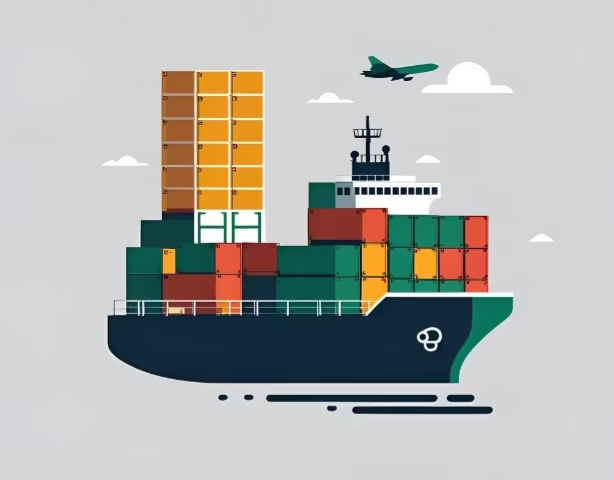

Exporting goods from India begins with one non negotiable step booking your cargo space. Whether you are arranging a container booking for sea freight or an air shipment booking for urgent goods, this initial action is what sets your entire logistics chain in motion.
Without a confirmed booking, your products cannot legally or physically leave the country. Consider this simple but brutal equation No booking equals no space, which means no export. Your cargo remains stationary, your international buyer is left waiting, and your business’s cash flow starts to drain.
Many exporters, both new and experienced, discover this truth through costly mistakes. A booking is not just a initial step it is the primary trigger for all processes that follow export logistics. Without it, critical processes like customs clearance, documentation preparation, cargo stuffing, and final dispatch grind to a halt.
If you miss a carrier’s cut off time, select the wrong shipping mode, or provide inaccurate details, your shipment isn’t just delayed it’s often rejected outright.
This comprehensive guide is designed for:
- Indian Exporters who need their cargo to move on schedule, every time.
- Customs House Agents (CHAs) and Logistics Teams who manage the complexities of freight bookings daily.
- Small and Medium sized Enterprises (SMEs) that cannot afford the financial drain of demurrage, rollovers, or penalties.
If your work involves freight shipping services, logistics solutions, or managing the supply chain, this is the process you cannot afford to get wrong.
Table of Contents
Container Booking vs. Air Shipment Booking: The Strategic Choice
At a high level, the choice between sea and air freight is a strategic decision balancing cost, speed, and volume. It’s not just about moving a box it’s about aligning your logistics with your business goals. Let’s break down what each process involves and why understanding the details matters.
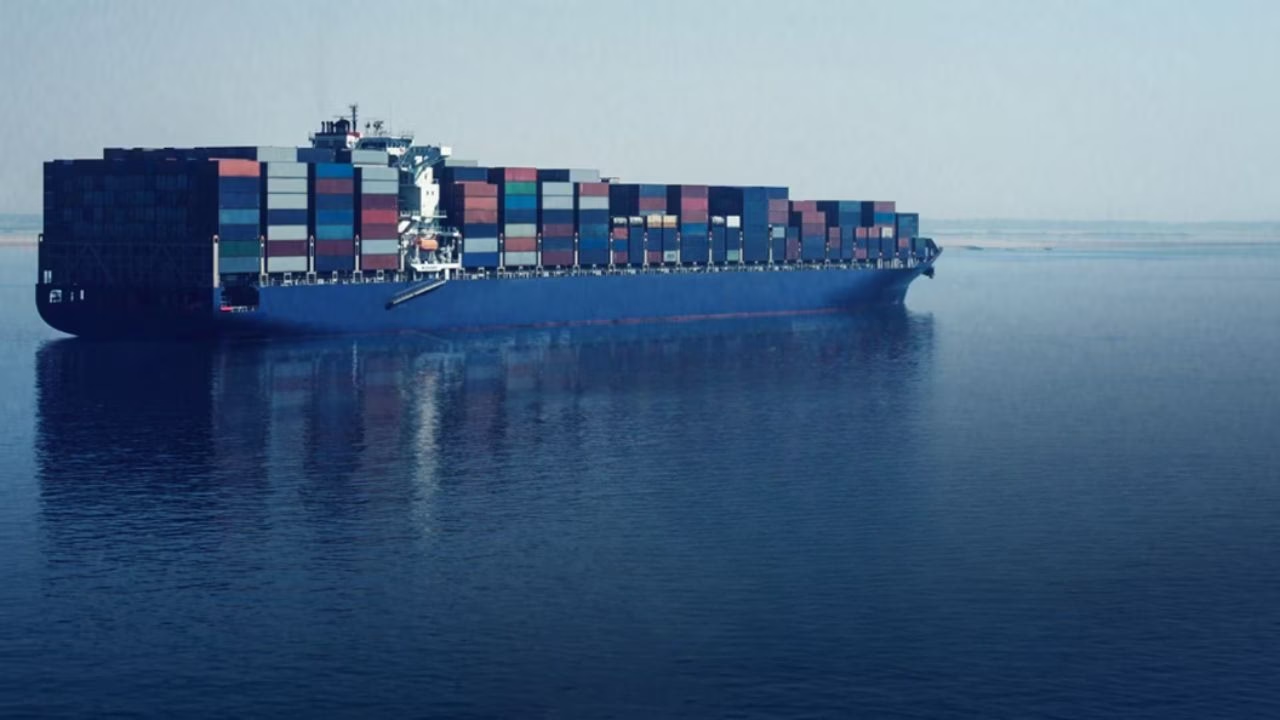
Sea Container Booking (Sea Freight)
Container booking for sea freight involves reserving a physical container (like a 20ft or 40ft box) and securing a slot for it on a cargo vessel. This is typically managed through a shipping line, a freight forwarding company, or a CHA.
The core workflow looks like this:
- Detailed Cargo Submission: You provide comprehensive information about your cargo, including its weight, dimensions, type, and the desired origin and destination ports. This isn’t just a formality shipping lines use this data for stowage planning on massive vessels.
- Booking Confirmation: Based on this, you receive a booking confirmation number (often called a Booking Note or B/N), which acts as the unique identifier for your shipment. This number is your golden ticket without it, the terminal gate won’t open.
- Physical Execution: You then arrange to pick up an empty container, load (stuff) your cargo into it, seal it securely, and transport it to the port or an Inland Container Depot (ICD) for customs clearance and loading onto the vessel.
Sea freight is the backbone of global trade, ideal for bulk commodities, heavy machinery, and any goods where cost effectiveness is a higher priority than transit speed. It is the lifeblood of industrial logistics.
Air Shipment Booking (Air Cargo)
Air shipment booking secures space for your cargo on a passenger aircraft (in the belly hold) or a dedicated freighter aircraft. The process is centered strictly around the cargo’s weight and volume, as space on an aircraft is a premium commodity.
The core workflow is as follows:
- Quote and Availability Check: You send your cargo details specifically the chargeable weight and dimensions to a logistics company or directly to an airline’s cargo division.
- Flight Selection: You receive quotes, compare flight schedules and transit times, and confirm your choice. Unlike sea freight, options here can vary by hours, not just days.
- Rapid Execution: Upon confirmation, you deliver the packed cargo to the designated airport warehouse, where it is screened and prepared for loading. You receive an Air Waybill (AWB) as your contract of carriage.
Air freight is the preferred solution for high value, time sensitive, or perishable goods where speed is the dominant factor. It is the engine of supply chain logistics for just in time manufacturing and retail.
The Fundamental Decision Logic:
- If cost and volume are your primary concerns, choose sea freight.
- If speed and urgency are your primary concerns, choose air freight.
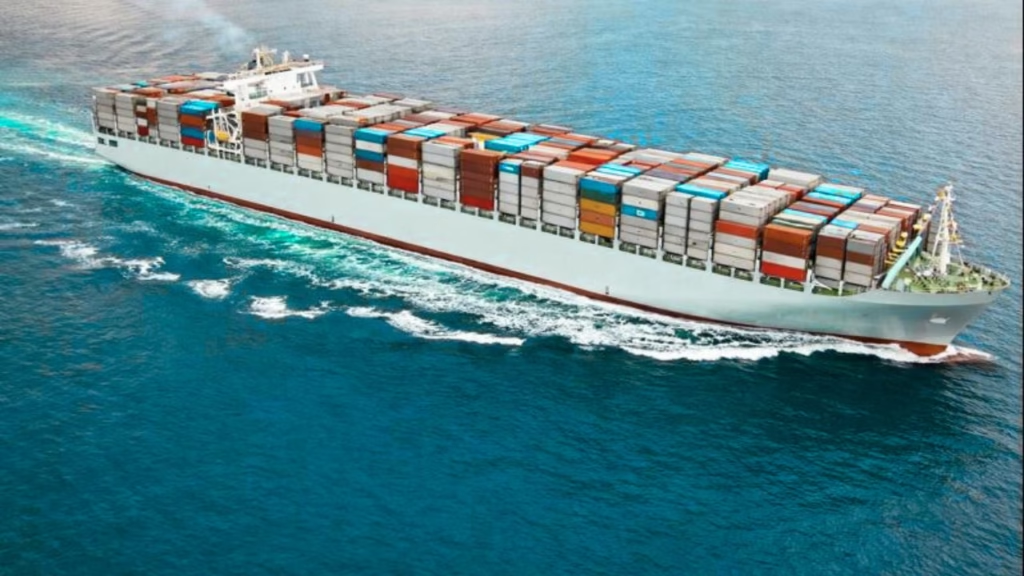
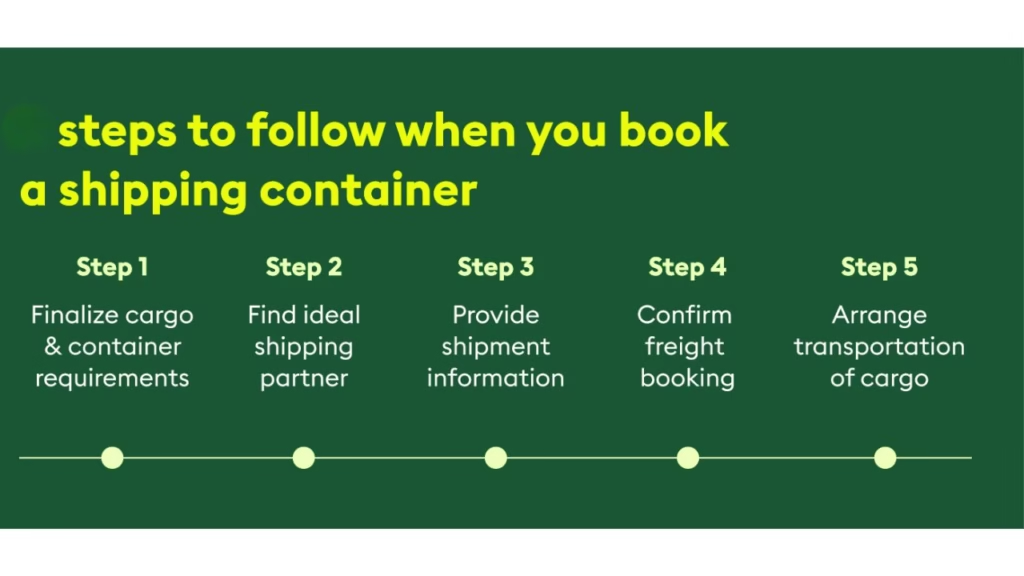
Step by Step Container Booking Process (Sea Freight)
Executing a sea freight booking requires precision. Each step builds upon the last, and a mistake at any stage can cause significant downstream problems. Let’s dive deep into the mechanics of sea freight shipping.
1. Prepare Your Cargo Details
Before contacting any booking channel, you must have exact, verified details about your cargo. “About 5 tons” or “standard pallets” are phrases that kill efficiency. Approximations are the root cause of re-bookings, rate changes, and customs delays.
Essential Information You Need:
- Exact Dimensions (L × W × H): Measure your final packed goods. These dimensions determine the cubic meter (CBM) volume, which influences which container is most efficient. For example, knowing if your pallets are stackable can save you thousands of dollars by allowing you to utilize the vertical space of a High Cube container.
- Gross Weight: This is the total weight of your cargo plus all packaging materials (pallets, crates, wrapping, dunnage). Shipping lines have strict weight limits for safety and vessel stability. Overweight containers are a major safety hazard and are aggressively policed at ports.
- HS Code (Harmonized System Code): This standardized international code classifies your goods for customs. An incorrect HS code can lead to customs holds, duty recalculations, or even seizure. It also determines if your goods require specific licenses or permits before booking.
- Cargo Type: Is it general cargo? Or does it require special handling?
- Hazardous (DG): Requires specific Material Safety Data Sheets (MSDS), specialized packaging, and specific stowage instructions on the vessel (e.g., on deck only).
- Reefer: Needs a temperature controlled container. You must specify the temperature setting, ventilation (CBM/hr), and humidity levels.
- Oversized (OOG): Won’t fit in a standard container and needs a flat rack or open top unit. This requires precise measurements of the “over dimensions” (how much it sticks out).
Why It Matters: A wrong weight declaration can lead to your container being rejected at the port gate or flagged during the Verified Gross Mass (VGM) check. An incorrect HS code will bring your customs clearance to an immediate halt. Get these details right from the start to ensure smooth logistics services.
2. Choose Your Booking Channel
You have three primary channels for booking a shipping container. Your choice depends on your level of expertise, available resources, and desired convenience.
Freight Forwarding Companies:
A forwarder is a logistics partner who manages the entire process for you. They leverage their relationships with multiple shipping lines to find competitive rates and reliable schedules. They handle the paperwork, coordinate with the carrier, and troubleshoot issues like port congestion or rollovers.
While you pay a service fee, it often saves you from costly errors and time consuming follow ups. They are essentially your outsourced logistics department.
Shipping Line (Direct):
You can book a container directly with a carrier like Maersk, MSC, or Hapag Lloyd through their online portals or sales representatives. This can sometimes be cheaper as it cuts out the middleman.
However, it means you are responsible for managing the entire process, including handling any exceptions or problems that arise. If your container gets rolled, you are the one calling the hotline. This channel is best for experienced exporters with stable, high volume shipments.
CHA (Customs House Agent):
In India, many CHAs offer booking services as part of a bundled package with customs clearance. This creates a single point of contact, simplifying coordination. The exporter hands over the details, and the CHA manages both the booking and the customs formalities that follow.
This is convenient but requires you to trust and verify the work your CHA does on your behalf. Ensure your CHA has strong relationships with lines or freight logistics partners.
Pro Tip: Your choice should be based on a practical assessment of control versus convenience, not on ego or a desire to save a small fee. For most SMEs, a reliable freight forwarder provides the best balance of cost and security.
3. Select the Right Container Type and Size
Choosing the correct container is crucial for cost efficiency and compliance. Using the wrong type leads to wasted money or logistical nightmares. It’s a game of Tetris with real world financial consequences.
Common Container Types:
- 20ft Standard Dry Container (20′ GP): Ideal for heavy, dense cargo like metals, machinery parts, paper reels, or bagged goods (cement, sugar). It has a lower volume capacity (approx 33 CBM) but a high weight tolerance.
- 40ft Standard Dry Container (40′ GP): Best suited for lighter but more voluminous cargo, such as furniture, textiles, toys, or electronics. It offers double the volume (approx 67 CBM) of a 20ft container but typically carries a similar maximum weight.
- 40ft High Cube (40′ HC): Provides an extra foot of vertical height compared to a 40′ GP. This is perfect for tall or stacked cargo, maximizing space utilization for low density goods. It is the industry standard for light consumer goods.
- Reefer Container: A refrigerated unit for perishable goods like pharmaceuticals, fruits, or seafood. It maintains a specific temperature throughout the journey. These require an external power source (genset) during trucking.
- Open Top / Flat Rack: Special equipment for oversized or overweight cargo that cannot be loaded through standard container doors. These are significantly more expensive and require specialized freight management companies to handle the booking.
Mistake to Avoid: Don’t try to squeeze overweight cargo into a 40ft container to save on freight you’ll face penalties. Similarly, booking a 40ft container for a small, dense shipment means you’re paying for unused space (“shipping air”).
4. Finalize the Sailing Date and Route
Your booking isn’t just about space it’s about a specific schedule. In the world of global logistics services, timing is everything.
Key Decisions to Make:
- Vessel Schedule: Review the available sailings and select one that aligns with your production timeline and the buyer’s required delivery date.
- Transit Time: This is the estimated time the vessel will take to travel from the port of loading to the port of discharge. Be realistic. “Estimated” is the keyword here.
- Transshipment vs. Direct Route: A direct route is faster and has less risk of delay. A transshipment route involves the container being unloaded at an intermediate port (like Singapore or Jebel Ali) and re-loaded onto another vessel. It’s often cheaper but adds time and handling risk to your shipment. For high value goods, direct is almost always better.
Peak Season Reality: During peak seasons (e.g., pre Diwali or pre Christmas), demand for space skyrockets. Rates increase, vessel slots fill up weeks in advance, and “rollovers” (where your container is bumped to a later sailing) become common. To survive peak season, book 4-6 weeks in advance and maintain close contact with your logistics service provider.
5. Confirm the Booking
Once you agree on the rate, schedule, and route with your chosen channel, you will receive a formal booking confirmation. This document is critical. It contains your booking number, the unique identifier for your shipment until the Bill of Lading is issued. This number is used for all subsequent coordination, including container pickup and port gate in.
Check the Details: Immediately check the booking confirmation for errors. Are the origin and destination correct? Is the cut off time achievable? Is the equipment type correct? Fixing an error now costs nothing fixing it later costs hundreds of dollars.
6. Execute Empty Pickup, Stuffing, and Sealing
With the booking confirmed, the physical movement begins. This is where the rubber meets the road literally.
- Pick Up Empty Container: Your trucker uses the booking number (often via a Delivery Order or DO) to pick up an assigned empty container from the shipping line’s designated yard or ICD(In land container depot). Inspect the empty container rigorously for holes, bad odors, or damaged floorboards before accepting it.
- Stuff the Cargo: The cargo is loaded into the container at your factory or warehouse. Proper strapping and securing are vital to prevent damage during transit. The cargo should not shift when the ship rolls at sea.
- Seal the Container: After stuffing (and customs inspection, if applicable), a high security bolt seal is affixed to the container doors. The seal number is recorded for all shipping documents. This seal is the guarantee of your cargo’s integrity.
A Note on FOB Shipments: If your sales term is Free on Board (FOB), the buyer is responsible for booking the main freight. They or their 3rd party logistics agent will provide you with the booking reference. Your responsibility is to stuff the container and get it to the port on time. Do not book the freight yourself under FOB terms unless explicitly instructed.
7. Track and Prepare for Customs
Using your booking number, you can track the container’s status as it moves to the port. In parallel, you must finalize all necessary documents for customs clearance, including the commercial invoice, packing list, and the shipping bill (export declaration).
This closes the loop on the pre sailing phase of the booking process. Your logistics consultant or CHA should be guiding you through this documentation phase to ensure compliance.
Step by Step Air Shipment Booking Process
The air freight booking process is faster and more dynamic, with deadlines measured in hours, not days. It requires a different mindset one of agility and precision.
1. Request a Quote with Accurate Details
Your first step is to request a rate from an airline or freight forwarding company. The accuracy of your information directly impacts the validity of the quote. In air freight, unclear details lead to rejected cargo.
Key Details to Provide:
Gross Weight and Chargeable Weight:
Airlines charge based on “chargeable weight,” which is the greater of the actual gross weight and the volumetric weight. The standard formula for air freight volume is: (Length x Width x Height in cm) / 6000. If your cargo is light but bulky (like foam or cotton), you will pay for the volume, not the weight.
Dimensions of Each Piece: L × W × H for every box or pallet. This is critical because aircraft doors have size limits. A pallet that fits in a sea container might be too tall for a passenger aircraft.
Commodity Type and Nature: Is it general cargo, perishables, valuables, or dangerous goods (like items with lithium batteries)? This affects handling procedures and cost. “General cargo” is the cheapest anything else attracts surcharges.
Pro Tip: Airlines and forwarders quote what you declare. If the actual weight or dimensions differ upon delivery to the airport, your rate will be adjusted accordingly and never in your favor. This is a common friction point in air cargo logistics.
2. Compare Flights, Rates, and Cut-Offs
Don’t select a flight based on the base freight rate alone. A comprehensive comparison includes:
- Surcharges: Check the fuel surcharge (FSC), security surcharge (SSC), and war risk surcharges. These can sometimes exceed the base freight rate.
- Cut-Off Times: Every flight has a strict deadline for cargo delivery and documentation submission. A cheap flight is worthless if you can’t meet its cut off. Airlines operate on strict slots they will not wait for your truck.
- Transit Routes: Is it a direct flight or will it have layovers? Layovers add time and increase the risk of offloading or damage during transfer. For sensitive pharma or perishable goods, direct flights are non-negotiable.
A low base rate with a missed cut off creates risk. Your cargo will be offloaded, and you will have to wait for the next available flight, often at a premium rate.
3. Confirm the Booking
Once you accept a quote, you will receive a booking confirmation with the flight number, date, and routing details. Critically, note the cargo terminal or warehouse address and the cargo acceptance cut off time. Missing this deadline means your slot will be given to another shipment.
4. Deliver Cargo to the Airport Warehouse
You must arrange for your cargo to be delivered to the specified airline warehouse before the cut off time. At the terminal, the cargo will undergo rigorous checks:
- Weight and Dimension Check: The airline will verify the details you declared using calibrated scales and scanners.
- Security Screening: All air cargo is X rayed or physically inspected to ensure it is safe for flight. This is a regulatory requirement for aviation security.
- Acceptance: Once cleared, the cargo is formally accepted by the airline. If the packaging is damaged or leaking, the airline will reject the cargo until it is repacked.
No screening means no loading. This is a non-negotiable security regulation in international logistics.
5. Receive the Air Waybill (AWB)
After your cargo is accepted, the airline or forwarder will issue an Air Waybill (AWB). The AWB is the contract of carriage for your air shipment. It contains all the shipment details and serves as proof of receipt by the carrier.
Simultaneously, you must submit your commercial invoice, packing list, and export declaration to facilitate customs clearance. Unlike sea freight, the AWB travels with the cargo, facilitating rapid clearance at the destination.
Container vs. Air Shipment: The Strategic Choice
Choosing between sea and air freight is a strategic business decision, not just a logistical one. It’s a direct trade off between time, cost, and flexibility. Understanding this trade off is essential for optimizing your supply chain logistics.

| Factor | Container (Sea Freight) | Air Shipment (Air Cargo) |
| Lead Time | Slow, measured in weeks or even months. Highly susceptible to port congestion, weather, and vessel schedule changes. “Fast” sea freight is still slow compared to air. | Fast, measured in days. Ideal for meeting tight deadlines and for just in time supply chains. The fastest way to move goods globally. |
| Cost Factors | Priced per container (FCL) or per CBM/ton (LCL). The most cost-effective mode for large volumes. Economies of scale kick in heavily here. | Priced per kilogram based on chargeable weight. Significantly more expensive than sea freight. Costs can be 5-10x higher per kilo. |
| Volume & Weight Capacity | Virtually unlimited capacity. Can handle anything from small boxes to massive project cargo, vehicles, and raw materials. | Limited by aircraft size and weight restrictions. Unsuitable for very large or heavy items (e.g., massive generators) unless using specialized charters. |
| Flexibility | Very low. Once a vessel sails, re-routing or making changes is nearly impossible and expensive. The container is buried in a stack of thousands. | High. Flights are frequent, and if space is available, re-booking or re-routing is relatively simple. You can often change the destination mid transit more easily. |
| Best Use Cases | Bulk goods (raw materials, agricultural products), heavy machinery, furniture, automobiles, and any non-urgent cargo. | High value electronics, pharmaceuticals, fashion apparel, product samples, critical spare parts, and perishables. |
Decision Recap:
- If your buyer needs the goods urgently to meet a retail launch or production schedule, choose air. The premium price is the cost of saving the sale.
- If you need to protect your profit margins on a low value, high volume order, choose sea.
- If the shipment is small (e.g., under 2 CBM and 300 kg), the cost difference between sea LCL and air freight can sometimes be surprisingly small due to the high minimum charges of sea freight (port handling, documentation, etc.). Always get quotes for both modes from your logistics provider.
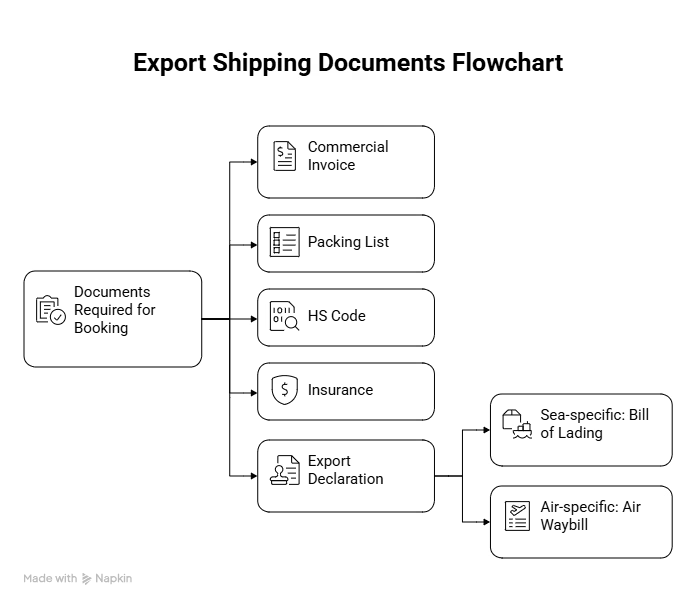
Documents Required for Container & Air Booking
Without the correct documentation, your cargo goes nowhere. These documents are the lifeblood of your export shipment, acting as the legal and financial bridges between you, the carrier, and the buyer.
Core Documents for Both Modes:
- Commercial Invoice: The primary bill of sale between you and the buyer. Customs authorities use it to determine the transaction value and calculate applicable duties and taxes. It must accurately reflect the price paid or payable. Undervaluing goods is fraud overvaluing them raises money laundering red flags.
- Packing List: A detailed inventory of what is inside each package, including weights, dimensions, and markings. It’s used by customs for inspection and by the buyer for verification upon receipt. It must match the invoice and the physical cargo exactly.
- HS Code: This 8-digit code must be accurately declared on your export documentation. A single wrong digit can lead to classification disputes, fines, and delays. It dictates the duty rate your buyer pays, so accuracy is vital for their landed cost.
- Insurance Policy: While not legally mandatory for all Incoterms, shipping without cargo insurance is extremely risky. It protects you from financial loss if your goods are damaged, stolen, or lost in transit. Given the risks of rough seas or air disruptions, this is a small price for peace of mind.
- Export Declaration (Shipping Bill): In India, this filed is electronically handled on the ICEGATE portal. It is the legal declaration to customs that you intend to export goods, and its approval (Let Export Order or LEO date) is required for the cargo to be loaded.
Mode Specific Proof of Carriage:
- Sea Freight: Bill of Lading (B/L): Issued after the vessel has sailed, the B/L serves three functions it’s a receipt for the goods, evidence of the contract of carriage, and, most importantly, the document of title. The consignee needs the original B/L (or a telex release) to claim the cargo at the destination. It is a negotiable instrument, meaning ownership can be transferred while the goods are at sea.
- Air Freight: Air Waybill (AWB): Issued after the cargo is accepted by the airline, the AWB is the contract of carriage. Unlike the B/L, it is not a document of title. The goods are delivered to the consignee named on the AWB upon proof of identity. This makes air freight payment terms slightly riskier for sellers, as they cannot “hold” the goods as easily as with a B/L.
No B/L or AWB means no proof of shipment, which can threaten your payment from the buyer, especially under Letter of Credit (LC) terms.
The Role of Technology in Modern Booking
The days of faxing booking requests are largely over. The modern logistic companies utilizes advanced digital platforms.
- eBooking Platforms: Digital portals that show live rates, flight options, and instant confirmations. These are excellent for speed and visibility, allowing you to compare shipping and logistics options in real time.
- Track and Trace: Most 3rd party logistics companies now offer real time tracking dashboards. You can see exactly where your container is, receive automated alerts for delays, and share this visibility with your customers.
- Digital Documentation: Platforms now allow for the digital upload and approval of drafts (like the HBL(House Bill of Lading) or HAWB(House Air Way Bill)), reducing errors and speeding up the process.
Embracing these tools can give you a competitive edge by reducing administrative overhead and increasing speed to market.
Common Booking Mistakes That Delay Shipments
Most export delays aren’t caused by carriers or customs they are self caused wounds stemming from simple, avoidable mistakes. Recognizing these pitfalls is the first step to avoiding them.
- Inaccurate Cargo Details: Declaring an estimated weight and having the terminal find it’s 500 kg heavier. This leads to rate recalculations, potential rejection for being overweight, and re-booking delays. Always weigh your cargo before booking.
- Missing Cut-Off Times: Every booking comes with strict deadlines for documentation submission (SI Cut-off) and physical cargo delivery (Gate in Cut off). Missing the documentation cut off means the shipping line won’t plan your container for loading, even if the cargo is at the port. Missing the cargo cut off means your container will be left behind as the vessel sails.
- Choosing the Wrong Container Size: Ordering a 20ft container only to realize your cargo is too voluminous and requires repacking into a 40ft unit. Or booking a 40ft container and only using half the space, effectively burning money on freight. Accurate volumetric planning is key.
- Ignoring Transshipment Risks: Opting for a cheaper, multi stop transshipment route for a time sensitive order. A delay at any of the intermediate ports can have a domino effect, causing you to miss your final delivery deadline. For urgent goods, “cheap” is often expensive in the long run.
- Poor Communication with Your CHA/Forwarder: Assuming your agent knows everything. You must provide clear, written instructions and documentation. A verbal “OK” is not enough. Follow up and ensure your booking has been made exactly as you requested. Treat your logistics service provider as a partner, not just a vendor.
- Failure to verify VGM: Under the SOLAS(Safety of life at sea) convention, the shipper is legally responsible for declaring the Verified Gross Mass (VGM). Guessing this weight is illegal and dangerous. If the terminal weighs your container and finds a discrepancy, it will not be loaded.
Pre Booking Checklist for Flawless Execution
Before you send that booking request email or click “confirm” on a portal, run through this final checklist. This simple discipline can save you thousands of dollars.
Cargo Readiness:
- Have you verified the exact final dimensions (L × W × H) of the packed cargo?
- Have you obtained the verified gross mass (VGM) of the cargo?
- Have you confirmed the correct 8-digit HS Code for your product?
- Have you clearly identified the cargo type (General, DG, Reefer, OOG)?
- Is the packaging export worthy and able to withstand the rigors of transit?
Booking Setup:
- Have you chosen the appropriate mode (sea or air) based on cost, urgency, and volume?
- Have you selected the most efficient container size or calculated the chargeable weight for air?
- Have you reviewed and approved the proposed route, transit time, and schedule?
- Have you locked in the freight rate and all applicable surcharges in writing?
- Is the validity of the quote covering your intended shipment date?
Confirmation and Execution:
- Have you received a booking number (sea) or flight confirmation (air)?
- Have you noted the documentation and cargo cut off dates and times?
- Do you have the correct address for the container pickup yard or airport cargo terminal?
- Are all your export documents (invoice, packing list) ready and accurate?
- Is your trucker booked and aware of the cut off times?
If you can’t tick every box with confidence, pause. Fix the missing piece first, then proceed with the shipment. A few hours of diligence upfront can save you weeks of delays and thousands of rupees in penalties.
Detailed Scenarios: Applying the Knowledge
Let’s look at two hypothetical scenarios to see how this applies in the real world.
Scenario A: The Urgent Fashion Sample
You are a garment exporter in Tirupur. A buyer in London needs 500kg of samples for a fashion show in 5 days.
- Choice: Air Cargo Logistics. Sea freight is impossible.
- Action: You contact your forwarder for a direct flight to Heathrow (LHR). You pack the samples in cartons, ensuring they are not crushed. You declare the volume carefully as clothes are bulky.
- Booking: You confirm a flight departing in 48 hours. You rush the goods to Bangalore airport, meet the cut off, and the buyer receives them 24 hours later. The cost is high, but the contract is saved.
Scenario B: The Heavy Machinery Order
You are an engineering firm in Pune exporting a 15 ton industrial press to Dubai. The buyer is price sensitive but needs it in 3 weeks.
- Choice: Sea Freight. Air freight for 15 tons would be astronomically expensive.
- Action: You choose a 20ft Open Top container because the machine is slightly too tall for a standard door but fits within the width. You book a direct vessel from Nhava Sheva to Jebel Ali (transit time 5 days).
- Booking: You book 2 weeks in advance to secure the special equipment. You ensure a heavy duty crane is available for stuffing. The low freight cost protects your margin.
Final Thoughts
By mastering these booking processes and avoiding common pitfalls, you transform logistics from a headache into a competitive advantage. Your goods move faster, your costs stay predictable, and your customers remain happy. That is the ultimate goal of effective global logistics services.
Frequently Asked Questions (FAQs)
1. How early should I book a container or air shipment?
Sea Freight: For standard routes, aim for 2–3 weeks before the desired sailing date. During peak season or for congested ports (like US West Coast or Europe), book 4–6 weeks in advance.
Air Freight: Typically, 3–5 days before the flight is sufficient. For very large shipments or during peak times (like the Q4 rush), booking a week in advance is wise.
Last-minute bookings rarely result in faster service; they result in higher rates, rolled shipments, or no space at all.
2. Can I book directly with a carrier without a freight forwarder?
Yes, you can. However, you should only do this if you are confident in managing the entire process and have a deep understanding of HS codes, container weight limits, port procedures, and carrier-specific rules. Large corporations often have in-house logistics teams for this. For most businesses, a good forwarder’s fee is an investment that pays for itself by preventing costly mistakes and providing logistics solutions.
3. What happens if my cargo weight is different from what I declared?
The carrier will correct it and charge you accordingly. At the port, a container exceeding its declared weight may be rejected at the gate or charged a misdeclaration fee. For air freight, the chargeable weight will be adjusted upwards, increasing your cost. There are no warnings; carriers and terminals simply charge for discrepancies. Accuracy is the only policy.
4. Who books the shipment under FOB (Free On Board) terms?
Under FOB incoterms, the buyer is responsible for arranging and paying for the main carriage (the sea or air freight). The buyer or their nominated agent provides the seller (you) with the booking details. Your responsibility is to deliver the goods, packed and cleared for export, to the vessel at the named port. Never book the freight yourself under FOB unless you have a written agreement to be reimbursed, as you legally assume the risk.
5. Is air shipment always safer than sea freight?
Air shipment is faster, not inherently safer. The shorter transit time reduces the window of opportunity for theft or damage. However, the risk of improper handling, documentation errors, and customs issues exists for both modes. Air cargo is handled more frequently (truck to warehouse to tarmac to plane), increasing handling risks. Proper packing and comprehensive cargo insurance are the best ways to mitigate risk, regardless of the mode of transport.
About the Author
Hi, I’m SriHarsha, founder of shxhub.in.
I focus on explaining import export business topics in a practical, beginner friendly way, based on how exports actually work on the real ground especially documentation, quality control, and buyer expectations.



1 thought on “Container & Air Shipment Booking Made Easy in 12 Practical Steps”