
You shipped your goods. Everything looked fine. The buyer confirmed. Payment terms were set. You handed over the cargo. And then… nothing moved. Days pass. Then a week. Your buyer starts asking questions. You don’t have answers.
Now you’re stuck in a loop:
- Customs is asking for a document you’ve never heard of
- Your shipment is “on hold,” but no one explains why
- Charges start piling up quietly in the background
Here’s another scenario.
Your buyer is ready. Demand is there. But your shipment is stuck at customs because of one small mistake in documentation. Not a big mistake. Just a missing detail.
But that “small” mistake costs you:
- Delay penalties
- Storage charges
- Damaged trust with your buyer
What this means is exporting is not about shipping. It’s about managing a system you don’t fully understand yet. Documents, regulations, carriers, routes, compliance, coordination. Miss one piece, and the entire chain breaks.
And if you’re a beginner, this isn’t confusing. It’s overwhelming. This is exactly where a freight forwarder comes in.
Table of Contents
What is a Freight Forwarder
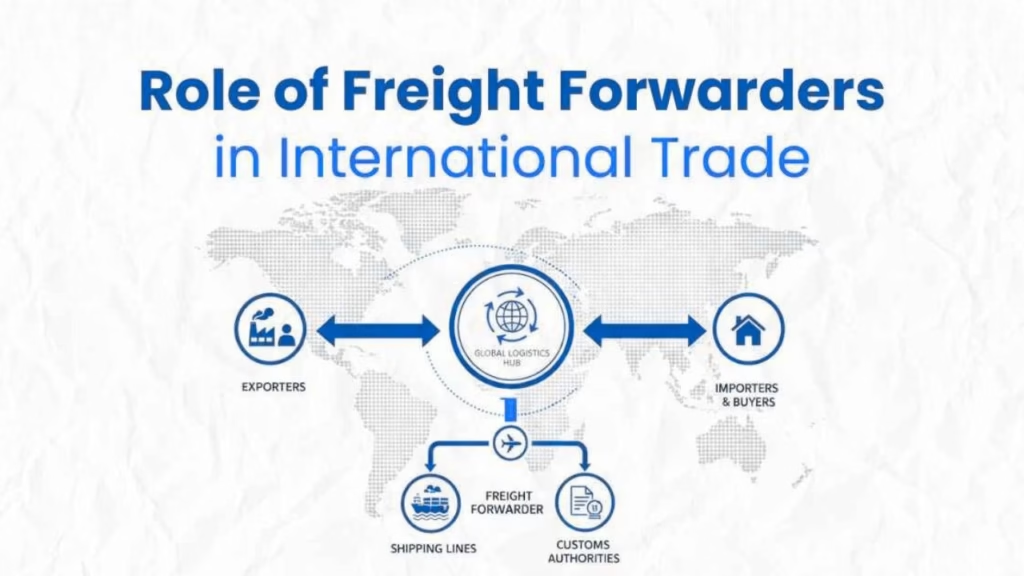
A freight forwarder is not the one moving your goods. They’re the one making sure your goods actually move without problems. Think of them as the operator behind the entire export process.
They sit between you and everything else:
- Shipping lines
- Airlines
- Customs authorities
- Transport providers
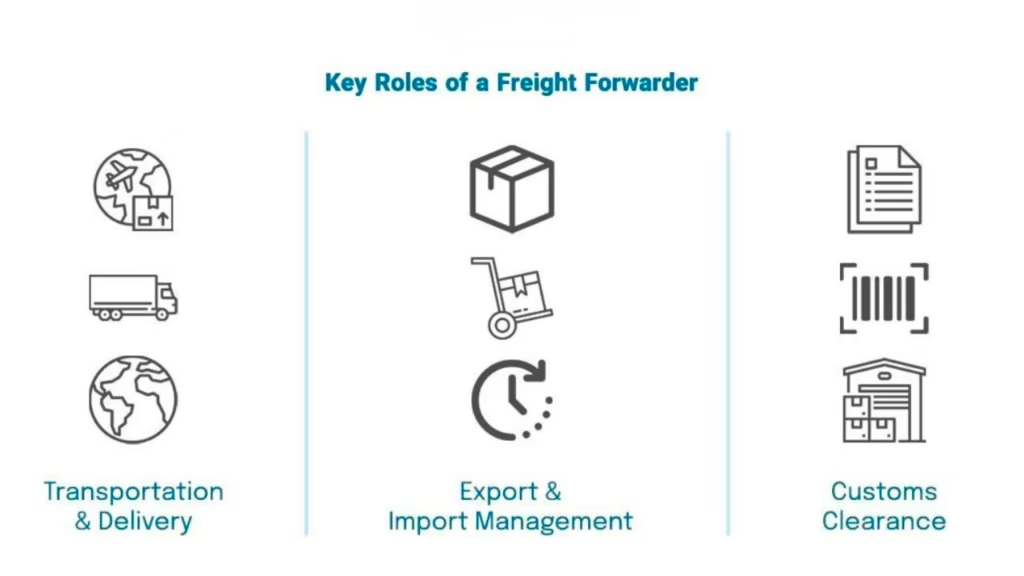
Their job is simple in theory, but critical in reality. They coordinate the entire journey of your shipment from your warehouse to your buyer’s location.
Not just transport. Everything.
- They plan the route
- They book the carriers
- They prepare and file documents
- They handle customs clearance
- They track the shipment and fix issues when things go wrong
Here’s the part most people get wrong.
A freight forwarder doesn’t own ships or planes. They don’t “transport” your goods. They control the process that makes transportation happen smoothly.
What this really means is:
They act as your logistics manager and compliance expert rolled into one.
Two quick examples so this actually sticks:
- You’re exporting spices for the first time. You don’t know export documentation or customs rules. The forwarder prepares everything, files it correctly, and ensures your shipment clears without delays.
- You’re shipping bulk goods. Multiple transport modes are involved (truck → port → ship). The forwarder coordinates the entire chain so your cargo doesn’t get stuck between transitions.
Without them, you’re guessing your way through a system that punishes mistakes. With them, you’re operating with structure, clarity, and far fewer surprises.
Why Freight Forwarders Matter in Export Business
Let’s break a common illusion first.
Exporting is not shipping.
Shipping is one step. Exporting is a chain of decisions, documents, approvals, and coordination across countries. Miss one link, and the whole thing stalls. This is where the importance of freight forwarder in export becomes obvious.
International Trade is Messy
You’re dealing with:
- Different country regulations
- Changing compliance rules
- Multiple transport modes
- Government systems (like ICEGATE in India)
- Unpredictable delays
This isn’t something you “figure out as you go.” Because mistakes here don’t just slow you down. They cost you.
The Risk: Small Errors, Big Consequences
Two real world type scenarios:
- You enter the wrong HS code.
Sounds minor. It’s not. Your shipment gets flagged, held for inspection, and delayed. In some cases, you may even face penalties.
- You miss a required document.
Customs doesn’t “adjust.” They reject. Your cargo sits at the port while storage charges quietly stack up.
You’re not just managing a shipment. You’re managing risk. And freight forwarders exist to reduce that risk. They know the system, the loopholes, the requirements, and the sequence. You don’t have to guess. They already know where things usually go wrong and prevent it before it happens.
Core Responsibilities of a Freight Forwarder
Now let’s get practical.
The term freight forwarder responsibilities gets thrown around a lot, but most explanations are vague. Here’s what they actually do, broken down properly.
Logistics & Transportation Management
This is the visible part. But even here, it’s more complex than it looks. They don’t just “book a shipment.”
They decide:
- Which mode to use (air, sea, road, or combination)
- Which carrier gives the best balance of cost and speed
- Which route avoids delays or congestion
Two examples:
- You choose sea freight because it’s cheaper. A forwarder might still suggest air for a small urgent shipment to avoid losing a buyer.
- Your cargo can go via two ports. One is cheaper, the other faster and more reliable. They help you pick based on your priority, not guesswork.
Documentation & Compliance
This is where most exporters struggle. Because this part is not forgiving.
A freight forwarder handles and prepares:
- Commercial invoice
- Packing list
- Bill of lading
- Certificates (based on product and country)
In India, they also:
- File export documents through ICEGATE
- Ensure compliance with DGFT and CBIC requirements
Two examples:
- You describe your product incorrectly in the invoice. Customs flags it. The forwarder fixes it before submission.
- You forget a required certificate for agricultural goods. The forwarder already knows and arranges it in advance.
Customs Clearance
This is the choke point of your entire export process.
No clearance = no movement.
Freight forwarders:
- File export declarations
- Coordinate with customs officials
- Handle inspections and queries
Two examples:
- Customs raises a query on your shipment value. The forwarder responds with proper justification and documents.
- Your shipment gets selected for inspection. The forwarder manages the process so it moves faster instead of sitting idle.
Cargo Safety & Risk Management
Most beginners ignore this. Until something goes wrong.
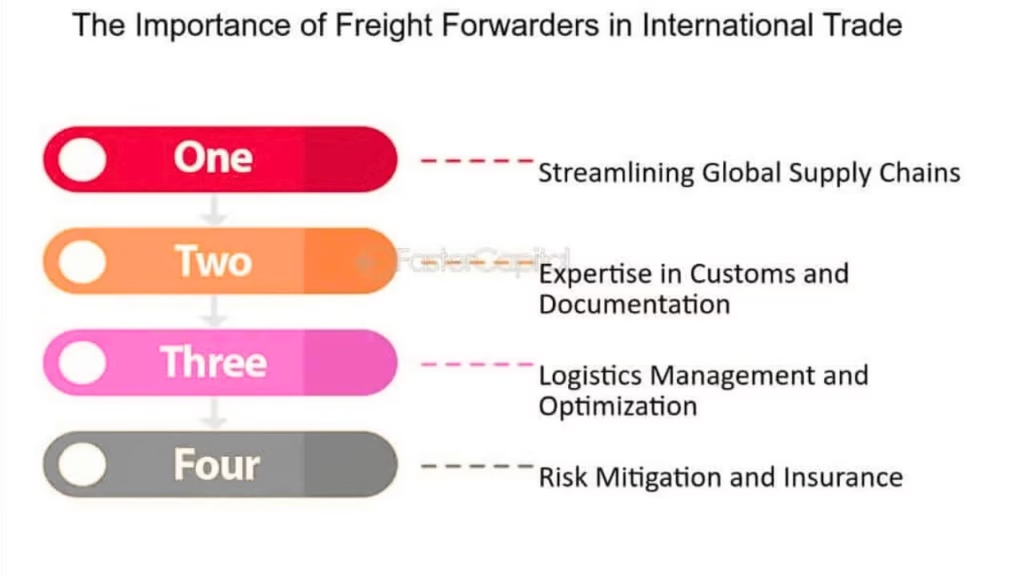
Freight forwarders help protect your goods by:
- Advising proper packaging based on cargo type
- Arranging cargo insurance
Two examples:
- You pack goods in standard cartons. Not enough for sea moisture exposure. The forwarder suggests reinforced packaging.
- Your shipment gets damaged in transit. Without insurance, you absorb the loss. With it, you recover.
Tracking & Problem Handling
Shipping doesn’t go perfectly. Ever. Delays, port congestion, missed connections. It happens.
Freight forwarders:
- Provide real time tracking
- Act when something goes off track
- Resolve issues before they escalate
Two examples:
- Your shipment is delayed at a transshipment port. The forwarder reroutes or expedites the next leg.
- There’s a documentation mismatch mid transit. The forwarder fixes it before it turns into a customs hold.
A freight forwarder isn’t doing “one job.” They’re managing multiple failure points across your export process and making sure none of them break your shipment.
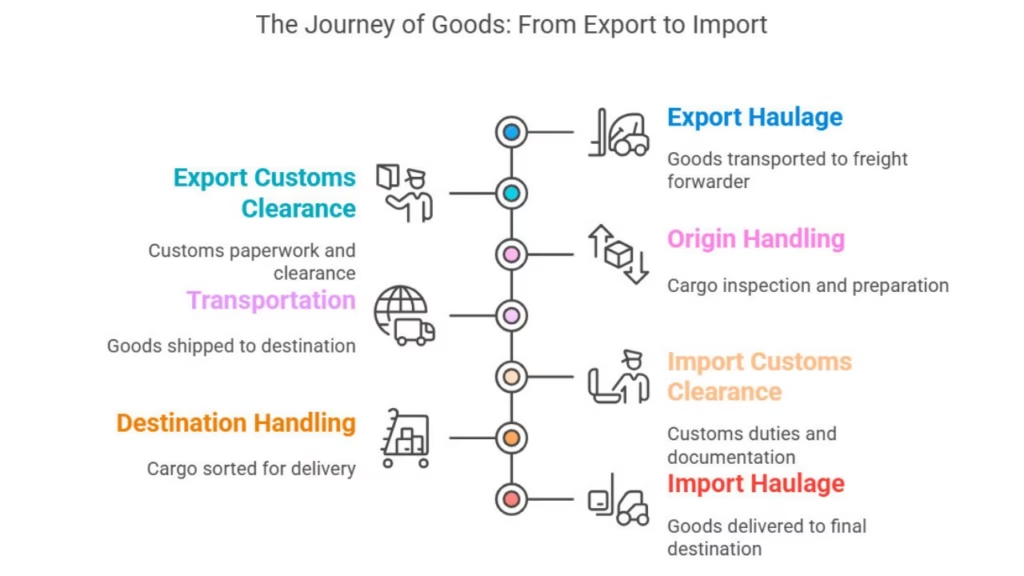
Step by Step Export Process
You don’t need theory. You need to know what actually happens and where things can go wrong. Here’s the real breakdown of export process steps with freight forwarder involvement
| Stage | What Happens | Forwarder’s Role |
| Planning & Booking | Shipment details finalized, route decided | Chooses best route, books carriers, plans multimodal transport |
| Documentation | Export documents prepared and submitted | Prepares, verifies, and files documents correctly (ICEGATE in India) |
| Customs Clearance | Shipment reviewed by customs authorities | Handles declarations, resolves queries, ensures compliance |
| Cargo Handling & Transit | Goods loaded, shipped, and moved across locations | Oversees loading, container stuffing, tracking, and updates |
| Final Delivery | Shipment reaches destination and is delivered | Coordinates last-mile delivery and final clearance |
Now let’s break each stage down so you actually understand where the forwarder earns their money.
Planning & Booking
This is where most mistakes start.
You decide:
- How to ship
- When to ship
- Through which route
If you guess wrong here, everything downstream suffers.
A freight forwarder:
- Selects the right transport mode (air vs sea vs combination)
- Chooses efficient routes (not just cheapest, but reliable)
- Books space with carriers in advance
Two examples:
- You pick the cheapest sea route. It has frequent delays. Your buyer gets frustrated. A forwarder would’ve flagged that risk early.
- You delay booking during peak season. No container availability. A forwarder secures space before it becomes a problem.
Documentation
This is where beginners get hit the hardest. Because documents look simple. Until they’re not.
A freight forwarder:
- Prepares commercial invoice, packing list, bill of lading
- Ensures product classification is correct
- Files documents through ICEGATE (for Indian exports)
Two examples:
- You mismatch product details between invoice and packing list. Customs flags it. Forwarder fixes it before submission.
- You miss a required export declaration. Shipment doesn’t move. Forwarder ensures everything is filed properly upfront.
Customs Clearance
This is the gatekeeper. No clearance = no export.
A freight forwarder:
- Files export declaration
- Coordinates with customs officials
- Handles inspections and objections
Two examples:
- Customs questions your shipment value. Forwarder provides supporting documents and clears it faster.
- Your cargo gets selected for inspection. Forwarder manages the process so it doesn’t sit for days.
Cargo Handling & Transit
Now your goods are moving. But this phase is not “set and forget.”
A freight forwarder:
- Oversees loading and container stuffing
- Ensures VGM (Verified Gross Mass) compliance
- Tracks shipment in real time
Two examples:
- Improper loading damages your goods mid transit. Forwarder ensures proper handling at origin.
- Shipment gets delayed at a transshipment port. Forwarder updates you and takes corrective action.
Final Delivery
Most people think the job ends at shipping. It doesn’t.
A freight forwarder:
- Coordinates with destination agents
- Ensures final customs clearance
- Arranges last mile delivery
Two examples:
- Your shipment reaches destination but gets stuck due to local clearance issues. Forwarder resolves through their network.
- Buyer needs door delivery, not port pickup. Forwarder arranges end to end delivery without you managing multiple parties.
Benefits of Using a Freight Forwarder
The benefits of freight forwarder are not “convenience.” They’re leverage.
Cost Savings
You think handling it yourself saves money. Most of the time, it doesn’t.
Freight forwarders:
- Have negotiated rates with carriers
- Optimize routes to avoid hidden costs
Two examples:
- You book directly at retail freight rates. Forwarder gets bulk pricing and saves you margin.
- You choose a cheaper route that causes delays and extra port charges. Forwarder avoids that trap.
Time Efficiency
Time is not just time. It’s buyer trust.
Freight forwarders:
- Speed up documentation
- Ensure faster customs clearance
Two examples:
- You take 2–3 days figuring out paperwork. Forwarder does it in hours.
- Shipment stuck due to minor error. Forwarder prevents it before submission.
Risk Reduction
This is the biggest one.
Freight forwarders reduce:
- Compliance errors
- Shipment delays
- Financial penalties
Two examples:
- Wrong HS code leads to fines. Forwarder ensures correct classification.
- Missing document causes rejection. Forwarder cross checks everything.
Expertise in Regulations (India Focus)
Export rules are not static. They change.
Freight forwarders stay updated with:
- DGFT guidelines
- CBIC regulations
- Country specific requirements
Two examples:
- You’re unaware of a new export compliance rule. Forwarder already accounts for it.
- Your product needs special certification. Forwarder guides you before shipment.
Focus on Core Business
This is where you either grow or get stuck.
You can:
- Spend time managing logistics chaos
- Or focus on getting more buyers
Freight forwarders take over the operational burden.
Two examples:
- Instead of chasing documents and agents, you focus on closing export deals.
- Instead of tracking shipments manually, you focus on scaling your product line.
You can try to manage exports yourself and learn through mistakes. Or you can use a freight forwarder and skip most of those mistakes entirely.
Freight Forwarder vs Courier vs Shipping Line
Most people mix these up.
That confusion alone causes bad decisions, wrong pricing, and delayed shipments.
Let’s clean it up.
Freight Forwarder vs Shipping Company
- A shipping company (like a shipping line or airline) moves cargo.
- A freight forwarder manages the entire process of moving cargo.
That difference matters.
Shipping Company:
- Owns ships or planes
- Only handles transport from point A to B
- Doesn’t care about your documents, compliance, or coordination
Freight Forwarder:
- Doesn’t own ships or planes
- Chooses the best carrier for you
- Handles documentation, customs, routing, and coordination
Two examples:
- You book directly with a shipping line. Your cargo reaches the port, but gets stuck due to documentation issues. The shipping company won’t help. That’s not their job.
- You use a freight forwarder. They book the carrier, prepare documents, clear customs, and ensure your cargo actually moves end-to-end.
A shipping company is a service provider.
A freight forwarder is a process manager.
Freight Forwarder vs Courier (DHL, FedEx)
This is where beginners make the biggest mistake. They try to use courier services for export business.
That works… until it doesn’t.
Courier (DHL, FedEx, etc.):
- Best for small parcels
- Fast delivery
- Limited customization
- Higher cost per kg for bulk
Freight Forwarder:
- Designed for bulk shipments
- Flexible transport options (air, sea, multimodal)
- Handles full export process
- More cost effective at scale
Two examples:
- You send 2–5 kg samples to a buyer. Courier is perfect. Fast and simple.
- You try sending 500 kg via courier. Costs explode, documentation becomes messy, and you lose margin. A freight forwarder would handle it cheaper and more efficiently.
Simple way to think about it:
Courier = speed + small shipments
Freight forwarder = scale + system
When Do You Actually Need a Freight Forwarder?
Let’s not overcomplicate this.
You don’t always need a freight forwarder. But when you do, not using one is a mistake.
Here’s how to decide.
When You SHOULD Use a Freight Forwarder
(Target: when to use freight forwarder)
If even one of these applies, stop trying to DIY it.
1. You’re a First time Exporter
You don’t know the process yet. Guessing here is expensive.
- You’re unsure about documents
- You don’t understand customs procedures
A forwarder removes that learning curve.
2. You’re Handling Bulk Shipments
Once volume increases, complexity increases.
- Container shipments
- Large weight consignments
At this level, cost optimization and coordination matter.
3. You’re Dealing with International Buyers
Different country = different rules.
- Import regulations vary
- Documentation requirements change
A forwarder ensures you don’t get caught off guard.
4. You’re Exporting Agricultural or Regulated Products
This is not optional. It’s critical.
- Certifications required
- Strict compliance checks
One mistake = rejection or delay.
When You DON’T Need a Freight Forwarder
Be practical. Don’t overuse them.
1. Very Small Samples
- 1–5 kg shipments
- Trial samples for buyers
Use courier. Faster and simpler.
2. Domestic Shipping
- Within India
- No customs, no export compliance
Forwarder adds no value here.
The Bottom Line
Use a freight forwarder when:
- Complexity is high
- Risk is high
- Volume is high
Avoid them when:
- Shipment is small
- Process is simple
If you get this wrong, you either:
- Overpay for simple shipments
- Or lose money trying to handle complex exports alone
Both are avoidable.
How to Choose the Right Freight Forwarder in India
Here’s the uncomfortable truth.
Most exporters don’t choose a freight forwarder. They pick the first one who gives a quote. That’s lazy. And expensive. If you’re serious about exporting, you need to evaluate like you’re hiring a partner, not booking a service.
Because the best freight forwarder in India for you is not the biggest one. It’s the one that fits your product, route, and business stage.
Let’s break what actually matters.
Experience in Your Product Category
Not all cargo is the same.
Different products = different rules, risks, and handling requirements.
Two examples:
- Exporting spices or agricultural products
You need someone who understands certifications, phytosanitary requirements, and moisture sensitive handling. A generic forwarder will miss details.
- Exporting machinery
You need a forwarder experienced in heavy cargo, special handling, and possibly oversized shipments. Wrong choice = damage or delays.
If they’ve never handled your product type, you’re their experiment.
Network Coverage
Exporting is not local.
Your forwarder’s strength depends on their network at:
- Origin
- Transit points
- Destination country
Two examples:
- Your shipment reaches Europe, but the forwarder has no strong agent there. Clearance gets delayed.
- A well connected forwarder resolves destination issues quickly because they have reliable local partners.
Weak network = strong chance of delays.
Pricing Transparency
Cheap quotes are seductive. And dangerous.
A lot of forwarders:
- Underquote upfront
- Add hidden charges later
Two examples:
- You get a low quote. Later, you’re billed for handling, documentation, and port charges you didn’t expect.
- A transparent forwarder gives a slightly higher quote but includes all costs upfront. No surprises.
If the pricing feels unclear, it’s not a good deal. It’s a trap.
Documentation Support
This is where real value shows up. A good forwarder doesn’t just “process” documents. They guide you.
Two examples:
- You’re unsure about invoice structure. They correct it before submission and prevent customs issues.
- You miss a required certificate. They flag it early instead of letting your shipment get stuck.
If they’re not proactive here, they’re just a middleman, not a partner.
Real Time Tracking & Communication
Silence during shipping is a red flag. You should never be guessing where your shipment is.
Two examples:
- Shipment delayed, and you only find out after your buyer complains. Bad forwarder.
- Forwarder updates you proactively, explains delays, and gives solutions. That’s how it should work.
Good communication is not a bonus. It’s basic.
Quick Reality Check
If you’re choosing based only on price, you’re setting yourself up for problems.
Pick based on:
- Fit
- Experience
- Reliability
Price comes after that.
Common Mistakes Exporters Make (Without a Forwarder)
Let’s be blunt.
Most export problems are self created. Not because the system is impossible, but because people underestimate it.
Trying to Handle Everything Alone
This is the biggest mistake.
You think:
“I’ll save money if I do it myself.”
What actually happens:
- You spend hours figuring out documents
- You make avoidable mistakes
- You pay for delays anyway
Two examples:
- You file documents incorrectly. Shipment gets held. You end up paying storage charges that are higher than a forwarder’s fee.
- You coordinate with multiple parties (transport, customs, port). One miscommunication delays everything.
You’re not saving money. You’re shifting risk onto yourself.
Ignoring Compliance
Compliance is not optional. You either follow it, or you deal with consequences.
Two examples:
- You use the wrong HS code. Customs flags your shipment. Now you’re stuck explaining something you don’t fully understand.
- You miss a mandatory document. Shipment gets rejected or delayed. Buyer loses trust.
One compliance mistake can undo your entire shipment.
Choosing Cheapest Instead of Reliable
This one is predictable.
You pick the lowest quote. Then pay for it later.
Two examples:
- Cheapest forwarder doesn’t guide you properly. Your shipment faces delays and extra charges.
- Slightly higher cost forwarder would have handled everything smoothly and saved you time and stress.
Cheap is not cheap if it creates problems.
Final Take
You can try to cut corners in exporting. But logistics and compliance don’t reward shortcuts. They expose them. And when they do, you pay in delays, money, and lost credibility.
Conclusion
Let’s cut through the noise.
A freight forwarder is not an “extra cost” in your export business. They’re a risk manager.
They sit between you and:
- Delays
- Compliance mistakes
- Unexpected charges
- Broken coordination
You can try handling exports on your own. Some people do.
But what usually happens is:
- You learn through costly mistakes
- You lose time fixing avoidable issues
- You damage buyer trust without realizing it
Or you use a freight forwarder and operate with structure from day one.
That’s the real trade off.
Two scenarios:
- You manage everything yourself. Save a bit upfront. Lose more in delays, errors, and stress.
- You work with the right forwarder. Pay for expertise. Avoid most problems before they happen.
That’s not an expense. That’s leverage.
FAQs
1. Is a freight forwarder mandatory for export in India?
No, it’s not legally mandatory. But in real-world exporting, that doesn’t mean much.
If you’re sending small samples, you can manage with a courier and keep things simple. But once you move into full shipments, especially bulk or regulated goods, handling everything yourself increases the chances of delays, errors, and penalties.
2. How much does a freight forwarder cost?
There’s no standard price because it depends on your shipment and how you’re moving it. Size, destination, transport mode, and services all affect the cost.
For example, a small air shipment will cost more per kg but gets delivered faster. On the other hand, a full container load reduces cost per unit, but the total shipment value is much higher.
3. Can I export without a freight forwarder?
Yes, but only if you understand the process clearly.
You’ll have to manage documentation, customs clearance, and coordination with carriers on your own. If you already have experience, it’s manageable. If you’re new, you’ll likely run into mistakes that lead to delays and extra costs.
4. What documents does a freight forwarder handle?
A freight forwarder takes care of the key export documents like the commercial invoice, packing list, bill of lading, and export declarations. They also handle additional certificates depending on the product and destination country.
For example, agricultural exports often require extra certifications, while general goods follow standard documentation but still need to be accurate to avoid issues.
5. Do freight forwarders help with customs clearance?
Yes, that’s one of their main roles.
They handle export declarations, coordinate with customs authorities, and deal with any queries or inspections that come up. If customs raises a question, the forwarder responds with the required documents. If a shipment is selected for inspection, they manage the process so it moves as quickly as possible.
About the Author
Hi, I’m SriHarsha, founder of shxhub.in.
I focus on explaining import export business topics in a practical, beginner friendly way, based on how exports actually work on the real ground especially documentation, quality control, and buyer expectations.